

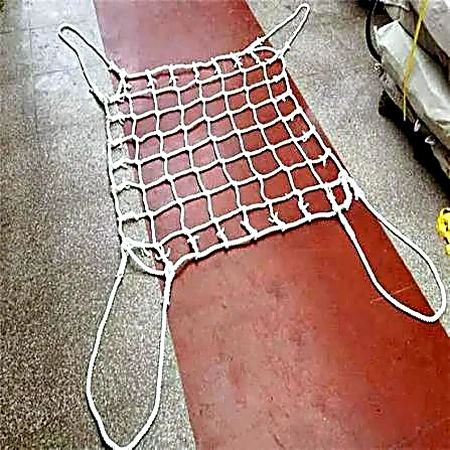
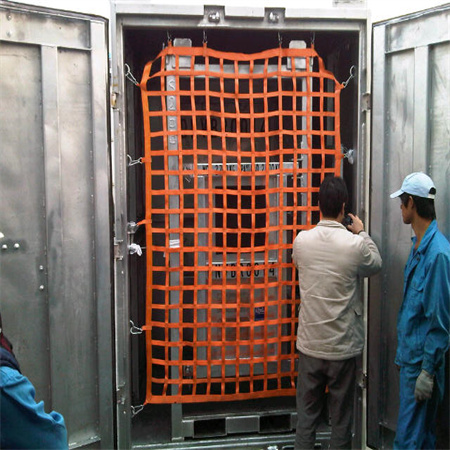
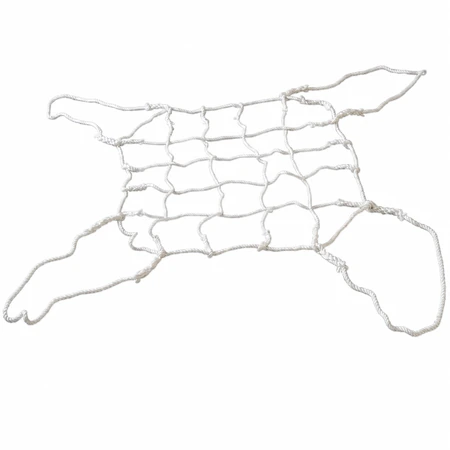
Khampani ea li-sling rigging e phahamisang thepa e hlahisa Heavy Duty Nylon Cargo Net Sling,Boima ba ho Phahamisa Sling Net,Safety Cargo Lifting Net Strap,Boima ba ho Phahamisa Cargo Net,Mokotla oa Sling o Boima oa Nylon,Flat Nylon Sling Hoisting Net,Safety Cargo Lifting Net Strap,Heavy Duty Cargo Net Square Mesh Tear Resistant bakeng sa ho Laola le ho Laolla Boima ba Boima.
SHAFA ULLAH KHAN ROKHRI kar Net Sling
Closed-bottom webbing net bag, 2 t - 30 t · high-strength polyester, nylon, UHMWPE or aramid · mesh, depth and leg length made to your drawing · CE and GS certified
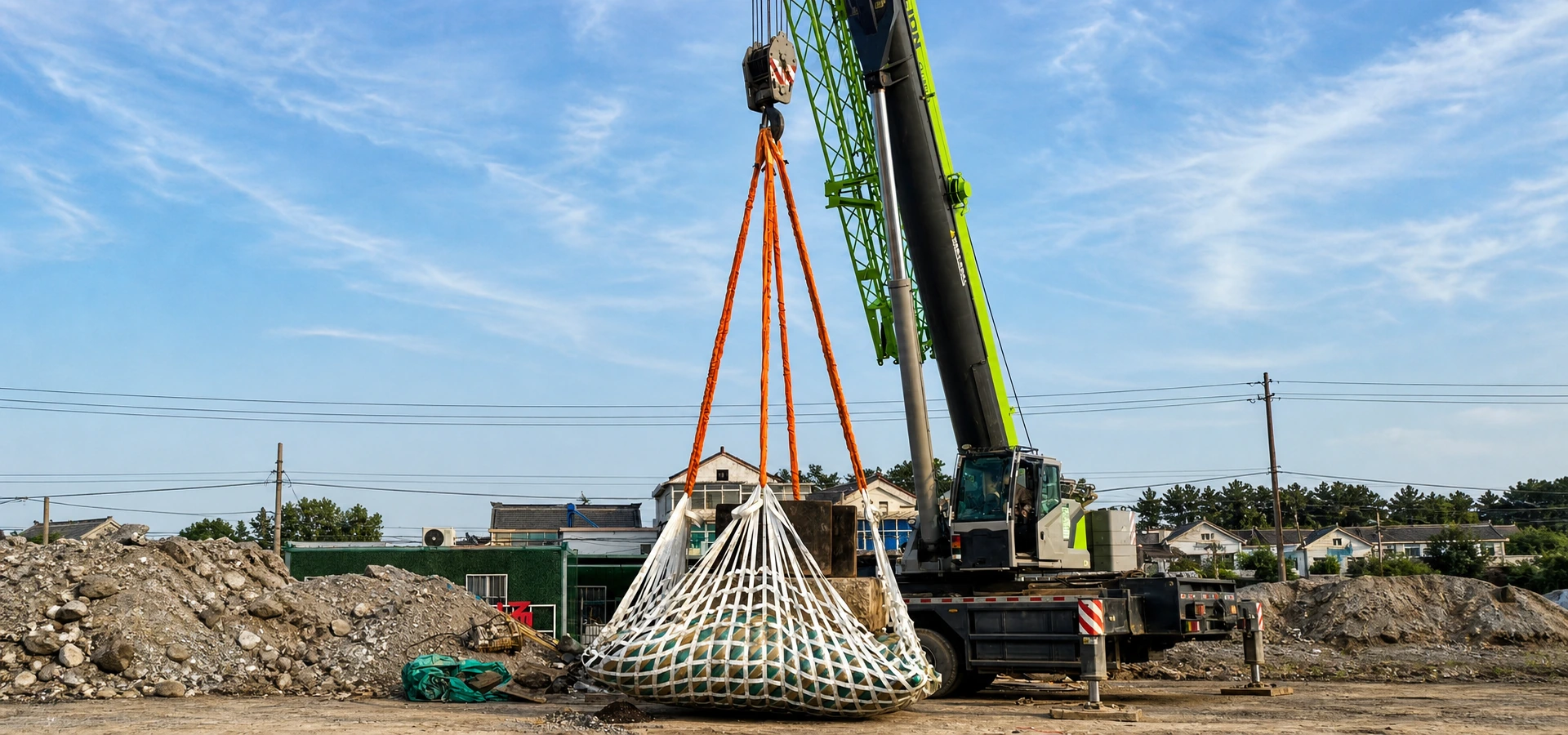
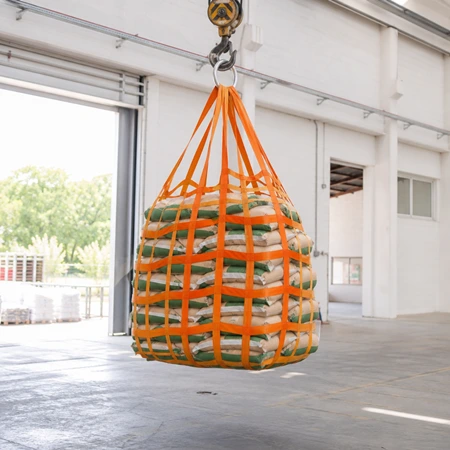
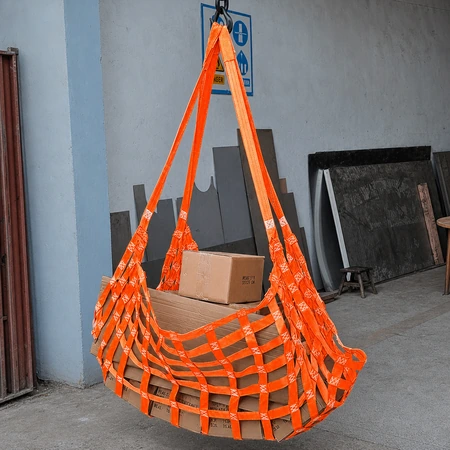
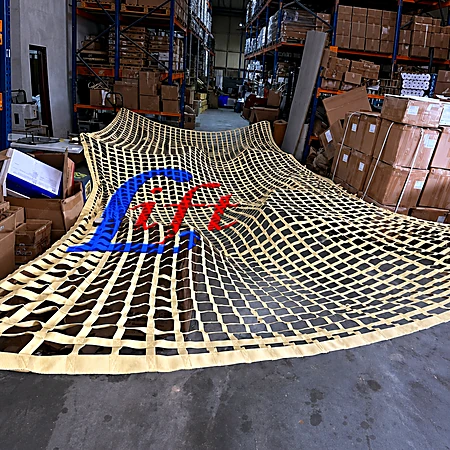
A mosebetsi o boima nylon cargo sling is a closed-bottom webbing net bag that lifts loose, awkward or heavy cargo in a single pick. High-strength webbing is woven into a lattice, tlase e kwetswe, and four webbing lifting legs run from the reinforced rim up to a master ring under the crane hook. Laola mokotla, qeaqea, and the mesh closes around the cargo — nothing has to be strapped piece by piece, and nothing falls out on the way.
Khampani ea Lift Sling Rigging e loha sehlopha, stitches the bag and proof-tests every sling in Taizhou, Jiangsu. E lekantsoeng ea matla e tsoa ho 2 t ho 30 t, band width from 50 mm ho 150 mm, and mesh opening, botebo ba mokotla, leg length and colour are made to your drawing. Every sling leaves the works with a capacity label and a material test report, backed by CE and GS certification.
- Fully customizable — safety ratio 5:1 / 6:1 / 7:1, bag opening and depth, bolelele ba leoto, letlooeng, colour and printed logo all set on the order.
- Premium high-strength materials - polyester e phahameng ea tenacity joalo ka maemo, with nylon, UHMWPE and aramid webbing on request.
- Apara, cut and high-temperature resistant — wide duplex band takes abrasion, and the band is rated for −40 °C to +100 °C in polyester.
- Bonolo, tenyetsehang le bobebe — the bag lies against the load instead of biting into it, marks nothing, and folds into a fraction of its working size.
- Certified and tested — CE and GS certified, ISO 9001 mesebetsi, and the breaking load of every sling checked on our own 1000 t mochini oa teko.
Why a closed-bottom net bag, eseng letlooa le bataletseng
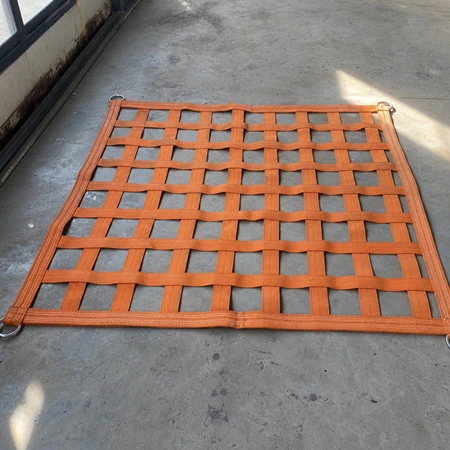
A flat cargo net is an open lattice: the load sits on it and it is lifted from four corner eyes. A net sling closes underneath. The lattice continues across the bottom, a doubled rim carries the load into the four lifting legs, and the legs gather at a master ring, so the bag tightens around the cargo as the crane takes up the slack. That is what keeps rubble, matlakala, thepa e phuthetsoeng, firewood and drums inside the lift. If your loads hold their own shape, the flat nete ea nylon e bataletseng is the cheaper tool; haeba ba sa etse joalo, this page is the one.
The wide, flat band is also why the sling is safe on finished cargo. Webbing spreads the load across the full width of every band under the bag instead of concentrating it at a few contact points, ho paka joalo, penta, plating and machined faces come through the lift unmarked — something wire rope and chain cannot promise. The same band is used in our matjeketjane a tepo, so a net and a sling on the same lift match in elongation and colour coding.
What “heavy duty” means on this sling
Heavy duty has to be measurable, otherwise it is only a word on a label. On this sling it comes from six design decisions we take on every heavy-duty order, and each one can be quoted separately if you want to know what you are paying for.
| Design decision | Standard net | This heavy duty sling |
|---|---|---|
| Bophara ba sehlopha | 25 - 50 mm | 50 - 150 mm; the wider band spreads load and resists abrasion |
| Band layers | Lera le le leng | Duplex or triplex — two or three layers woven and stitched as one band |
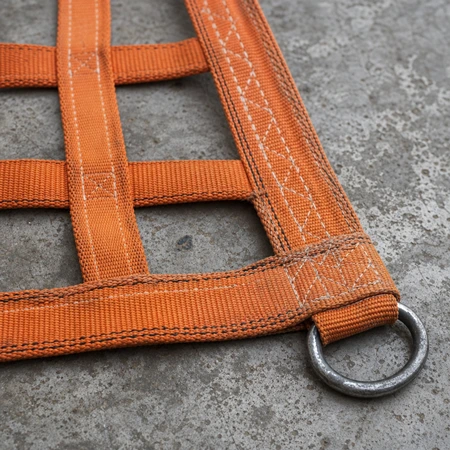
| Rim | Folded border | Doubled rim with a reinforced corner panel at every leg root |
| Bottom closure | Open or lightly closed | Reinforced closed bottom, the highest-stress part of a bag |
| Tšireletseho ntlha | 5:1 | 5:1, 6:1 kapa 7:1 joalo ka ha ho boletsoe, webbing rated to the EN 1492-1 motheo |
| Tlhahlobo ea bopaki | Sampled | Every sling breaking-load tested on our own 1000 t mochini |
Where the load is long, or where the bag has to stay square in the wind, the same construction is built with six or eight legs and lifted from a ho phahamisa sephara instead of a single ring.
Litekanyetso tsa tekheniki
The table below covers the standard heavy-duty range. Bophara ba sehlopha, palo ea lera, letlooeng, botebo ba mokotla, bolelele ba leoto le matla a lekantsoeng kaofela li entsoe ho laela, so treat it as the starting point for a quotation rather than a fixed catalogue.
| Paramethara | Tlhaloso |
|---|---|
| Mofuta oa sehlahisoa | Letlooeng la thepa e koetsoeng ka tlase (mokotla oa letlooa) e nang le maoto a mane a phahamisang |
| Lisebelisoa tsa sehlopha | Polyester ea boleng bo phahameng (PET) maemo; nayilone e phahameng (PA), UHMWPE kapa aramid ka kopo |
| Bophara ba sehlopha | 50 mm / 75 mm / 100 mm / 150 mm |
| Sehlopha sa sehlopha | Duplex (mekhahlelo e 'meli) kapa triplex (mekhahlelo e meraro) bakeng sa mosebetsi o boima |
| Botenya ba sehlopha | 2.5 mm - 6.0 mm ho latela bophara le palo ea lera |
| Ho bula letlooeng | 100 - 300 mm, sekwere kapa taemane |
| Bag opening | 1.0 × 1.0 m ho 4.0 × 4.0 m; made to drawing |
| Bag depth | 0.8 m - 2.0 m joalo ka maemo; deeper bags to order |
| Foromo ea mokotla | E koetsoe ka tlase (sephara kapa se chitja), bokahodimo bo bulehileng kapa bokahodimo bo koalehang |
| Rim | Mothapo oa tepo o habeli o nang le sekhutlo se tiisitsoeng motsong o mong le o mong oa leoto |
| Ho phahamisa maoto | Tse nne joalo ka maemo; tsheletseng kapa robedi ka kopo |
| Top fitting | Master ring kapa mahlo a mane; mahlo a matsutla-tsutla ka kopo |
| E lekantsoeng ka matla | 2 t - 30 t; mekotla e boima e hahiloeng ho laela |
| Tšireletseho ntlha | 5:1 / 6:1 / 7:1 |
| Elongation | 7 % kapa tlase mosebetsing (sehlopha sa polyester) |
| Tšireletso ea moeli | Sleeve sa PU sa boikhethelo kapa pate ea ho roala libakeng tsa ho ikopanya |
| Mmala | namunu (maemo), putsoa, botala, ntsho kapa tloaelo |
| Ho tshwaya | SEBELE, boholo ba mokotla, mesh le mofuta oa hau o hatisitsoeng haufi le sehlopha, plus a sewn capacity label |
| Mocheso o sebetsang | −40 °C ho ea +100 °C polyester; −40 °C ho ea +80 °C nylon |
| Motheo o tloaelehileng | Webbing e fuoe lintlha tsa EN 1492-1 |
| Setifikeiti | CE / GS / HEHANG; ISO 9001; CNAS laboratori; DNV |
| Boikemisetso | Karolelano ea polokeho, boholo, bolelele ba leoto, mmala, packing and logo all configurable |
| HS khoutu | 630790 - ho phahamisa matlooa a thepa ea masela |
Standard bag sizes and working load limits
A heavy duty nylon cargo net sling is quoted by its opening and its depth, not by a flat length and width. The opening is measured along the rim; the depth is measured from the rim to the bottom of the bag when it is empty and laid flat. The working load limit then follows from the band width, the layer count and the number of legs.
| Bag size (opening × depth) | Ho bula letlooeng | Sehlopha | Bokhoni bo tloaelehileng | Tšebeliso e tloaelehileng |
|---|---|---|---|---|
| 1.0 × 1.0 m | 100 mm | 50 mm duplex | 2 t - 3 t | Meropa, likarolo tsa mochini, pallets e le 'ngoe |
| 1.5 × 1.5 m | 100 mm | 50 mm duplex | 2 t - 5 t | Bagged material, thepa ea mabokose, small block |
| 2.0 × 2.0 m | 100 - 150 mm | 75 mm duplex | 4 t - 8 t | Mekotla e mengata, matlakala, patsi |
| 2.5 × 2.5 m | 150 mm | 100 mm duplex | 6 t - 12 t | Scrap, lejoe, lithako tsa ho heletsa |
| 3.0 × 3.0 m | 150 - 200 mm | 100 - 150 mm triplex | 10 t - 20 t | Heavy rubble, mosebetsi oa likoari le koung |
| 4.0 × 4.0 m | 200 mm | 150 mm triplex | 20 t - 30 t | Large loose cargo, barge and ship loading |
| E etselitsoe ho taka | 100 - 300 mm | 50 - 150 mm | 2 t - 30 t+ | Bethe ea teraka, setshelo, litekanyo tsa ho tšoara le hopper |
Custom openings, depths, mesh and leg lengths are made to drawing. For palletised loads that need a flat base, the crane pallet cargo net keeps the load square; for a bag with a hoisting rather than a carrying bottom, bona le letlooa la ho phahamisa polyester.
Choosing the webbing fibre
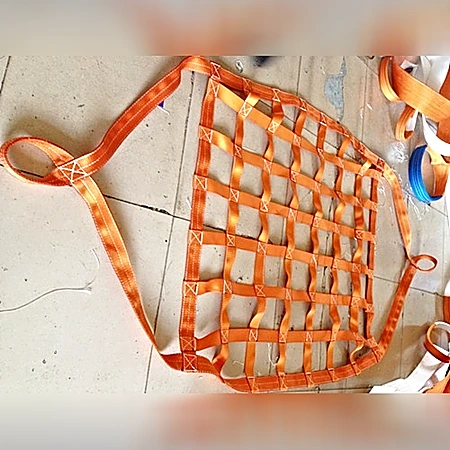
The band is the load path. Every kilo the crane lifts passes through the webbing, so the fibre is the single most important line on the drawing — and the four fibres below are not interchangeable.
| Fiber | Matla bakeng sa boima ba 'mele | Elongation nakong ya khefu | Mocheso | E khethiloe bakeng sa |
|---|---|---|---|---|
| Polyester ea boleng bo phahameng (PET) | Phahameng - ho phahamisa maemo | Tlase, ka 12 - 20 % | Ho fihlela ho +100 °C | Sehlopha sa kamehla: matla a matle ka ho fetisisa, kotlo e tlase, good UV resistance |
| Nylon e matla haholo (PA) | Phahameng; toughest of the four against abrasion | Phahameng, ka 18 - 22 % | Ho fihlela ho +80 °C | Meroalo e tšosang le thepa e sa tloaelehang moo ho fana ha nyane ho bolokehile ho feta |
| UHMWPE (Dyneema type) | E phahameng ka ho fetisisa ho tse 'nè bakeng sa boima ba eona | Tlase haholo, ka 3 - 4 % | Low melting point | Maximum capacity for minimum net weight where handling weight matters and cargo is not hot |
| Aramid (Kevlar type) | Holimo haholo | Tlase haholo | Best of the four | Thepa e chesang, le moo mocheso o laolang tse ling tse tharo |
Lintlha tse peli tse sebetsang. UHMWPE le aramid li hloka tšireletso e le hore li pholohe UV le abrasion, kahoo mosebetsing oa ka ntle rea li apesa; polyester le nylon li tsitsitse ka UV 'me li ka siuoa li le feela. And the fibre sets the band, but the rated capacity comes from band width, layer count and number of legs together — which is why we quote from those four numbers rather than from the fibre alone.
Lifting configurations and bag forms
How the bag is closed and how it is picked up decide how well it holds the load. These are the four arrangements we build most often.
- Four-leg bag lift — the standard. The four legs meet at a master ring under the hook and the bag closes around the cargo as the slack comes out.
- Six or eight-leg basket. Extra legs for long or awkward loads, kahoo rim e tšehetsoa ka lintlha tse ngata 'me mokotla ha o molala bohareng.
- Phahamiso ea sephara. The legs go to a beam instead of a ring: the bag stays square, the load stays level and every leg carries a predictable share.
- Lashing or securing duty. Tensioned across a load rather than lifted from a ring — a different duty with a different rating, covered by the letlooa la ho boloka thepa.
| Foromo ea mokotla | Tlhaloso | E sebelisoa neng |
|---|---|---|
| Mokotla o bulehileng | Mokotla oa Mesh o nang le rim e bulehileng | Mokotla o laetsoe ka letsoho, ho tsoa ho sepalangoang kapa ka ho hapa; ho tlala kapele |
| Topsable top | Moqomo o ka bokelloa mme oa koaloa | Phahlo e hlephileng kapa e bobebe e ka phahamang ka moya, terakeng kapa lewatleng |
| Tlase e bataletseng | Karolo e ka tlase e fihla sebakeng se bataletseng | Meroalo e phalletsoeng kapa e nang le mabokose a hlokang sebaka se bataletseng ho lula holim'a sona |
| Tlase e chitja | Botlaaseng bo bokella ho fihlela ntlha | Bongata bo hlephileng, matlakala, patsi, matlakala |
| Sehlopha se ka tlase se matlafalitsoeng | Sehlopha se eketsehileng se pota-pota ka tlase ho koaloa | Mojaro ofe kapa ofe o boima - o hlalosoa kamehla moo matla a fetang teng 5 t |
Moo ho sebedisoang ka letlowa le matla
| Indasteri | Seo mokotla o se phahamisang | Ke hobane'ng ha mokotla o koetsoeng o ka tlaase o o tšoanela |
|---|---|---|
| Lisebelisoa le ho tsosolosa | Tšepe e hlephileng, lithako tsa ho heletsa, thapo | E na le lintho tse hlephileng le tse bohale tse ka tšolloang ke letlooa le bataletseng |
| Kaho le ho heletsa | Matlakala, thibela, thepa ea mokotla, sebopeho | Loaded by grab or by hand and lifted straight onto a truck |
| Quarry le aggregates | Lejoe, curbs, bokella ka mekotleng e mengata | Triplex band and reinforced bottom take the abrasion |
| Li-ports le li-terminals | Thepa e kentsoeng ka mekotleng le e phalletsoeng, ho kenya sekepe le sekepe | Khetho e potlakileng ea ntlha e le 'ngoe ka mokotla o koalang mojaro |
| Temo le meru | Patsi, fepa, lihlahisoa, lithaere | Botlaaseng bo pota-potileng lintho tse hlephileng ntle le ho bo tlama |
| Ts'ebetso ea tšepe le tšepe | Mangata, mefokolo, likarolo tse entsoeng ka mochini | Webbing e bonolo e tšoara mojaro ntle le ho e tšoaea kapa ho e ngoaea |
| Litšila le tikoloho | Hlophisa litšila, manyolo, tse ka sebelisoang hape | E ka hlatsuoang, e senang mafome ebile e bobebe ho lekana ho tshoaroa ka letsoho |
| Thuso ea sesole le likoluoa | Thepa e phalletsoeng le e hlephileng ea liphallelo ka crane kapa helikopta | Tlase e koetsoeng e na le thepa e hlephileng e tsamaeang le moea |
On the same sites the bag is often paired with a letlooa la ho phahamisa koloi for RoRo and breakbulk work, or with our liropo tsa nylon where the load is lashed as well as lifted.
Boikemisetso, marking and OEM
Most of the slings we ship are made to drawing rather than picked from a list, because the bag has to fit the skip, the truck bed or the container it works in.
- Ho bula mokotla le botebo, mesh opening and leg length built to your drawing or to the dimensions of your container.
- Bophara ba sehlopha, palo ea lera, fibre and colour selected for the cargo, not for what happens to be in stock.
- Moeli oa mojaro o sebetsang, bag size and mesh printed along the band, with a sewn capacity label so the sling and the paperwork always match.
- Own brand, aterese, warning text or certificate number printed for OEM and distributor orders.
- Export packing — folded into a bag or a crate, with a set of six bags taking the space of one pallet.
Taolo ea boleng le setifikeiti
Ho loha band ka borona ke hona ho etsang hore mokotla o entsoeng ho odara o sebetse: bophara, lera, fiber, mmala, khatiso le mesh kaofela li behiloe ka har'a polante ea rona, kahoo letjeketjane le hahiloe setšoantšong ho e-na le ho bokelloa ho tloha sehlopheng sefe kapa sefe seo morekisi a se etsang setokong.
- 40 lilemo tsa tlhahiso ea lisebelisoa tsa ho phahamisa - e thehiloe ka 1985 naheng ea Taizhou, Jiangsu, ka tse fetang 200 employees and one of China’s largest lifting sling and net production bases.
- Own weaving mill supplying the same looms used for our webbing slings and round slings.
- Own testing laboratory with CNAS accreditation, plus CE and DNV certification of the facilities.
- 1000 t horizontal test machine — the breaking load of every sling is tested and documented, mme tlaleho ya teko ya thepa e tsamaya le odara.
- CE le GS lihlahisoa tsa ho phahamisa tse netefalitsoeng, ka setifikeiti sa JIS mabapi le litaelo tsa thomello.
How to specify your sling
Nine numbers are enough for us to quote a heavy duty nylon cargo net sling correctly the first time. Haeba u na le setšoantšo sa bethe ea teraka, setshelo, tlola kapa ho phunya se tlameha ho lekana, romella seo ho fapana le hoo - re sebetsa ho tsoa ho litšoantšo khafetsa.
| Boitsebiso boo re bo hlokang | Hobaneng ho le bohlokoa |
|---|---|
| Boima ba mojaro le kamoo bo hlahisoang kateng | E beha boemo bo reriloeng, palo ya maoto le lebanta le jereng moroalo |
| Ho bula mokotla le botebo | Mokotla o tlameha ho ba moholo ho feta mojaro hore thepa e lule ka pokothong, eseng mothapong |
| Ho bula letlooeng | E tšoara lintho ka hare; boholo ho tloha nthong e nyane ka ho fetisisa moroalo, eseng ho tloha boima bohle |
| Bophara ba sehlopha, lera le fiber | Sets the strength and the wear life of every band |
| Foromo ea mokotla le ho koaloa ka tlase | Bokaholimo bo bulehileng kapa bo koalehang, botlase bo sephara kapa bo chitja, sehlopha se matlafalitsoeng sa tlase |
| Ho phahamisa maoto | Tse nne joalo ka maemo, tse tšeletseng kapa tse robeli bakeng sa mejaro e telele le mosebetsi oa maballo a li-spreader |
| Crane, hoko kapa sephara | E khetha lesale la master, lehlaahlela kapa thimble e kentsoeng hodimo |
| Tikoloho | UV, metsi a letsoai, lik'hemik'hale, phahlo e hlabang kapa e chesang; mocheso o laola UHMWPE |
| Litokomane | Tšireletseho ntlha, CE / GS ho tšoaea, tlaleho ea teko, khatiso ea mofuta oa hau le ho paka kantle ho naha |
Lipotso tse botsoang khafetsa
What is the difference between a cargo net sling and a flat cargo net?
The bottom. A flat net is an open lattice that the load sits on and which is lifted from four corner eyes. A net sling has a closed bottom and webbing lifting legs that gather at a master ring, so the bag closes around the cargo as it is picked up. A bag contains loose material; a flat net suits loads that hold their own shape.
What can a 2.5 × 2.5 m bag carry?
Ka tloaelo 6 t ho 12 t ho 100 mm duplex band with four legs, which covers most scrap, stone and demolition duty. The exact working load limit is confirmed on the drawing: capacity follows the band width, layer count and number of legs together, not the bag size alone.
Is the sling nylon or polyester?
Polyester is our standard band, because it gives the best balance of strength, ho otlolla ho tlase le ho hanyetsa UV. Nylon, UHMWPE and aramid are all available, and the fibre is always named on the drawing: nayilone e phahameng, polyester e matla haholo, UHMWPE or aramid. Tell us if you specifically need nylon — for shock loads it is the better choice.
Ke hloka boholo bofe ba letlooeng?
Size the mesh from the smallest item in the load, ho hang ho tloha boima ba 'mele kaofela. A 100 mm ho bula ho tšoara mekotla, boloko le thepa ea mabokose; 150 mm ho 200 mm e lumellana le sekhechana, matlakala le dithako tsa ho heletsa. Send us the smallest piece and we will size the mesh to it.
Bokhoni bo pakoa joang?
Li-slings li fanoa ho 5:1, 6:1 kapa 7:1 joalo ka ha ho boletsoe, ka tepo e lekantsoe ho EN 1492-1 motheo. Moroalo o robehang oa letjeketjane le leng le le leng o lekoa ka borona 1000 t mochini le tlaleho ea teko ea thepa e tsamaea le taelo. Our products are CE and GS certified and the facilities hold CNAS, Setifikeiti sa CE le DNV.
Na letjeketjane le tla senya phahlo ea ka?
Che - ke lona lebaka la ho sebelisa marang-rang ho fapana le thapo kapa ketane. Sehlopha se bonolo, tenyetsehang le bobebe, e robala kgahlanong le morwalo ho ena le ho loma ho wona, mme morwalo o phatlaladitswe ka bophara bo tletseng ba sehlopha se seng le se seng se tlasa phahlo. Sephutheloana, penta, lifahleho tse pentiloeng le tse entsoeng ka mochini kaofela li pholoha ha li phahama.
Can you print our brand and supply in our colour?
Ee. Moeli oa mojaro o sebetsang, bag size and mesh are printed as standard, and OEM orders can carry your own brand, aterese, warning text or certificate number. Orange is the standard high-visibility colour; putsoa, botala, black and custom colours are available for fleet identification.
What do you need to quote, and how fast?
Send the load weight and how it is presented, ho buleha le ho teba ha mokotla, ho bula letlooeng, bophara ba sehlopha le fiber, the number of legs and the working environment — or a drawing of the container, skip or hopper. Baenjiniere ba rona ba tiisa kaho, boleng bo lekantsoeng le ho paka, le ho qotsa karabong e le 'ngoe; lead time is confirmed with the quotation once the drawing and quantity are fixed.
Kopa qotso
Re bolelle morwalo, the bag size and the environment, and we will come back with the construction and the rated capacity rather than a price list. For the wider range, start from the cargo lifting net range, the woven letlooa la ho phahamisa thepa or the round-rope letlooa la ho phahamisa thepa ea nylon; to talk it through first, ikopanye le baenjiniere ba rona.
Khamphani ea Lift Sling Rigging - Lifute Industrial Park, Motse oa Taizhou, Profinseng ea Jiangsu, China
Mohala: +86 523 8693 5818 | WhatsApp: +86 180 6600 2268 | E-mail: lift98@jslift.com