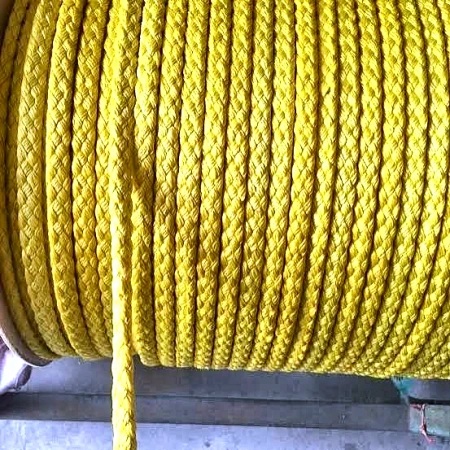
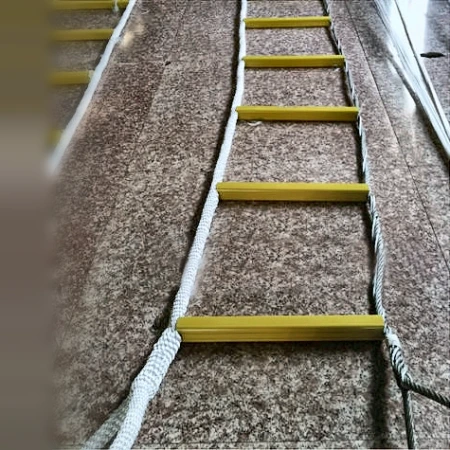
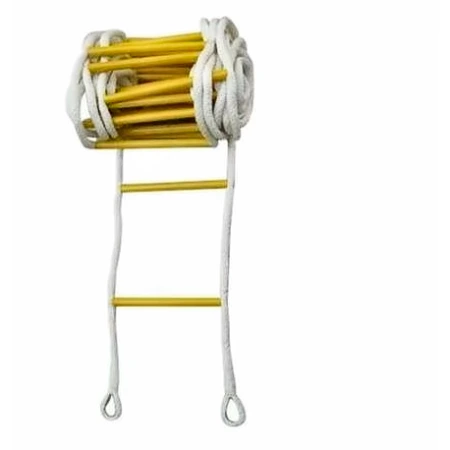
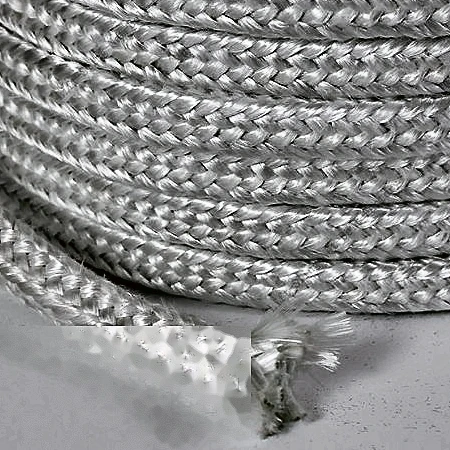
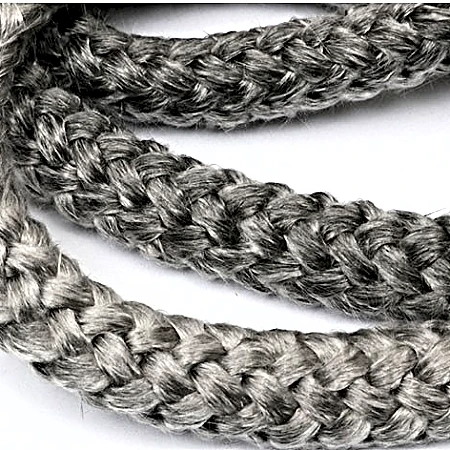
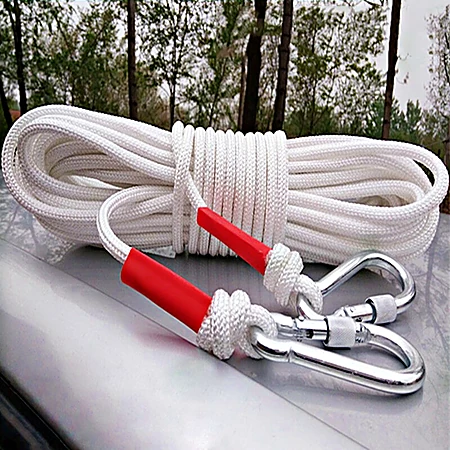
Thapo ea nylon mona ho bolela thapo e lohiloeng ka fiber ea maiketsetso, 'me e rekoa bakeng sa mesebetsi e meraro e shebahalang ka ho tšoana holim'a shelofo le ho itšoara ka tsela e fapaneng ha e sebelisoa. Ho hloa ho kopa thapo e makatsang, o dutse ka letsoho mme o phonyoha pheletsong; ho phahamisa ho kopa thapo e sa otlolleng, kahoo mojaro o lula moo o neng o behiloe 'me bophahamo ha bo lahlehe tseleng ea ho nyoloha; ho hula ho kopa thapo e sa senngweng ke bokahodimo bofe kapa bofe boo e huloang ho yona.
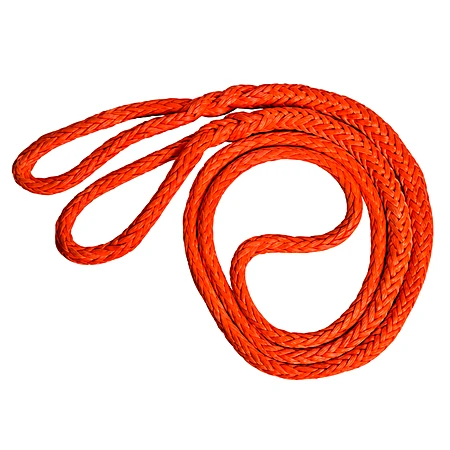
Mofuta ona o koahela thapo e sothehileng ea likhoele tse tharo, robedi, thapo e lohiloeng ea likhoele tse leshome le metso e 'meli le tse leshome le metso e ts'eletseng le marako a mabeli a nang le motheo o sirelelitsoeng, e entsoeng ka bophara ba litlhoko tsa mosebetsi mme e felile ka mahlo a spliced, thimbles, likhoketsane kapa likhoele. Re bolelle mosebetsi, mojaro le bolelele, mme re tla tiisa thapo le dipheletso tse e tshwanelang.
One rope, mesebetsi e meraro: what each of them actually asks for
The three duties in this category are usually bought on the same enquiry, and the first thing worth separating is what each one is really paying for. A climbing rope is bought for energy absorption and handling; a lifting rope for stability, because stretch under load is height lost and a swinging load; a pulling rope for abrasion resistance, because the surface it drags over is the thing most likely to end its life. A rope that is excellent for one of these is often the wrong choice for another.
What the duty decides
| Mosebetsi |
What the rope is really chosen for |
Seo u lokelang ho se ngola ha u botsa |
| Climbing and access |
Ho monyela ho tshosang, a firm hand, grip and resistance to abrasion over an edge or a rung. |
The duty in detail (mola oa lere, phihlello, boemo ba mosebetsi), bolelele, bophara, mme thapo e tla rwala ntlha efe kapa efe. |
| Ho phahamisa |
Ho otlolla ho tlase le pheletso e tsebahalang: thapo ke tsela ya moroalo, kahoo splice le taba ea ho tšoaea e lekana le fiber. |
Mojaro, thapo e hlophiswa jwang, bolelele, pheletso ya pheletso, le hore na sehlooho se tla tšoauoa e le letjeketjane le phahamisang kapa che. |
| Ho hula le ho hula |
Ho hanyetsa abrasion le matla ka millimeter, e nang le bophara ba letsoho, capstan kapa winch e khona ho sebetsana. |
Ho hula ho hlokahala, bolelele, bophara, bokaholimo le lirolara thapo e matha, le li-fittings qetellong e 'ngoe le e' ngoe. |
| Ho ikoetlisa le ho sireletsa |
Elasticity ho nka tshoho, le ho hana kganya ya letsatsi le metsi ka nako e telele. |
Bolelele, bophara, kamoo e lokisitsoeng, le hore na e lula nako e kae sebakeng sa leholimo. |
Kaho: se sothileng, phetoho e lohiloeng le e habeli
- Likhoele tse tharo tse sothehileng - moruo le bonolo ho splice ka letsoho, e nang le boitšoaro bo botle ba abrasion. It tends to rotate under load, which is a handling matter on a lift and a nuisance on a climb.
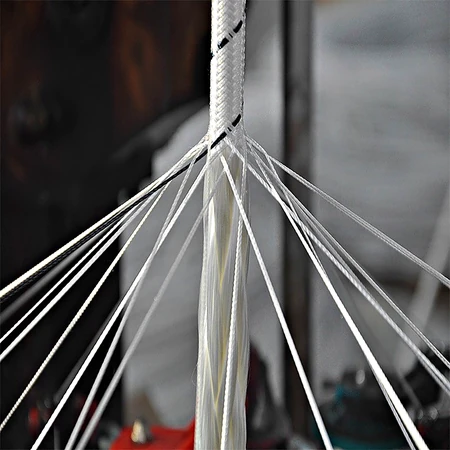
- Eight, twelve and sixteen-strand braided — no rotational twist, higher strength for the same diameter and a better hand. This is the general-purpose construction for access lines and pulling.
- Double braid — a braided core inside a braided cover: the cover takes the abrasion and the core carries the load, so the two can be chosen separately for the job.
Fiber, and the honest difference between them
Nylon is tough, e thibang mahlaba mme e monya tshoho, which is why it is the usual choice for access lines, ladders and mooring. The same elasticity is why it is not always the right answer for lifting or precise pulling: under a load it stretches, and stretch means the load settles lower than it was set. Moo boemo bo tlase bo leng bohlokoa hofeta ho monya ho tshoha, polyester kapa UHMWPE ke likhoele tse lokelang ho nahanoa, le leqephe ho UHMWPE thapo e hohelang e matla haholo e nka taba eo ka botlalo.
Lipheletso ke karolo ea litlhaloso
Thapo e na le thuso feela joalo ka lipheletsong tsa eona. Leihlo le arohaneng le boloka matla a thapo ho feta lefito, 'me ke qetello ea ho bolela mosebetsi ofe kapa ofe moo thapo e jarang mojaro; moqomo o tshireletsa leihlo moo le kopanang le lehlaahlela kapa phini; ho shapa kapa ntlha e koaletsoeng mochesong e emisang thapo ho phutholoha moo e tshoeroeng teng. Bolela hore na pheletso e ea kae, hobane pheletso e phethiloeng e khutsufatsa bolelele bo ka sebelisoang 'me e tlameha ho lumeloa setšoantšong seo u se laelang.
Mehala e 'meli ea tšireletso e lokelang ho ngoloa fatše
Thapo e sebelisoang ho phahamisa ke tsela ea mojaro: e lokela ho etsoa ka mahlakoreng a mabeli, e tšoailoeng ka seo e tla se jara, le ho ts'oaroa joalo ka sehloho sa phahamiso ho e-na le thapo e akaretsang. And a rope used where a person could fall is only acceptable if the article itself is made and certified for that duty — a general-purpose rope, however strong it is, is not a fall-protection device.
E botsoa khafetsa
Which is better for lifting, nylon or polyester? For a rated sling, low stretch is normally preferred, which favours polyester or UHMWPE; nylon is chosen where shock absorption and abrasion resistance matter more than stability.
What diameter do I need? It follows from the duty and the load, then from what a hand, capstan kapa winch e khona ho sebetsana. Give us the duty and the load rather than a diameter alone, and the two answers can be reconciled.
Can two ropes be joined with a knot? They can, at a cost — a knot gives away a large part of the rope’s strength, mme ke ntlha eo ho ka etsahalang hore thapo e hlolehe. Li-splices le li-fittings tse lekantsoeng ke karabo moo mojaro o amehang.
E hloka setifikeiti? Re bolelle hore na thapo ke ea eng. Moo e leng karolo ya tokisetso ya ho phahamisa kapa ho tshireletsa, sehlooho, ho tšoaea ha eona le lipampiri li hlalositsoe hammoho ho tloha qalong.
Moo u lokelang ho ea teng
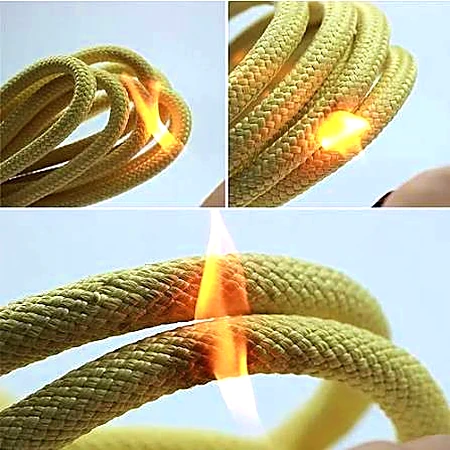
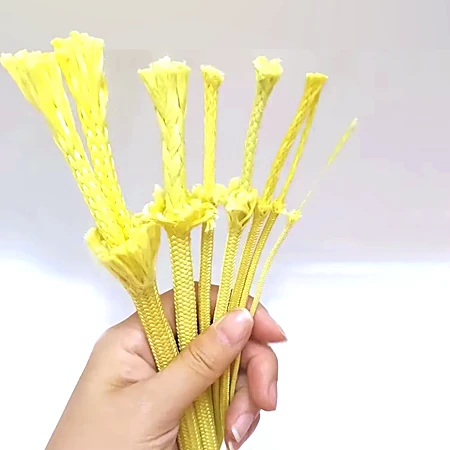
Lihlopha tse amanang: thapo ya nylon, lere la thapo, likhoele tsa polokeho, letjeketjane la ho phahamisa. Bakeng sa liforomo thapo ena e entsoe ka, bona thapo e lohiloeng ea nayilone e fetolang mmala, thapo ya ho phahamisa nayilone habeli, thapo ya ho phonyoha mollo le thapo ya tshepe ya motheo ya mollo le letlooa la ho phahamisa thepa.
Ikopanye
Lift Sling Rigging Co., Ltd - mohala le WeChat 18066002268, lengolo-tsoibila 702461526@qq.com, Lifute Industrial Park, Motse oa Taizhou, Profinseng ea Jiangsu, China. HS khoutu 630790. Romela mosebetsi, mojaro, bolelele le dipheletso, mme re tla tiisa thapo pele e kgaolwa.