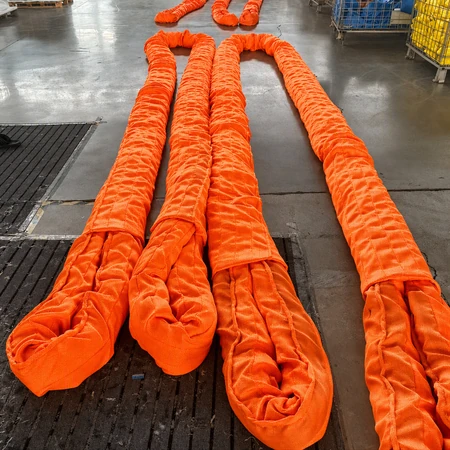
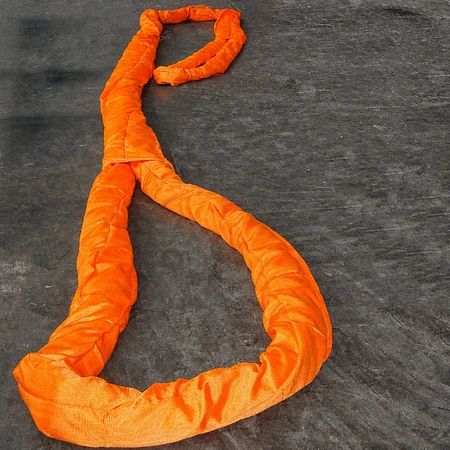
Gbe sling rigging ile gbe awọn Eye-Eye Yika Sling,Oju & Oju Yika Sling,Oju ati Eye Polyester Yika Sling,ilopo-oju yika sling.
Eye-Eye Round Sling — Double Eye Sling, 1–1000 t
An oju-oju yika sling is a round sling terminated at each end: awọn hun apo ti wa ni jọ ati ki o stipped si meji fikun oju, nitorina sling ni a ti o wa titi ipari ati meji mọ gbe-soke ojuami dipo ti ohun ailopin lupu. It is made in high-tenacity polyester across 27 LFTERS articles, lati 1,000 kg si 1,000,000 kg, in eye-to-eye lengths from 0.5 m si 80 m. The table below gives the article, awọn ṣiṣẹ fifuye ifilelẹ, the body thickness and width, the length range and the weight per metre — enough to pick the model before you send the enquiry.
- Iwọn fifuye ṣiṣẹ1,000 kg si 1,000,000 kg
- Ìwé ibiti oLFTERS-1 si LFTERS-1000, 27 awọn iwọn
- Awọn iwọn ara6 × 40 mm soke si 320 × 1,050 mm
- Gigun0.5–80 m eye-to-eye
- Iwọn ẹyọkan0.4 si 222 kg/m
- Ailewu ifosiwewe7:1 meji ỌKAN 1492-2 iwa
Kí nìdí pato ohun oju-oju yikaka sling kuku ju ohun ailopin
Sling ti ko ni ailopin n lọ yika ohunkohun ti o si ntan yiya tirẹ. An oju ati oju yika sling yoo fun soke kekere kan ti ti ominira fun nkankan a rigging egbe iye siwaju sii lori a tun gbe soke: dajudaju. Gigun ti o paṣẹ ni gigun ti o gba, oju de ibi kanna ni gbogbo igba, ati awọn ìkọ tabi dè gba a akoso oju dipo ti a ìdìpọ apo.
- A ipari ti o tun. Ijinna oju-si-oju jẹ sipesifikesonu kan, kii ṣe abajade, nitorina gbigbe ti a gbe jade ni oṣu ti n bọ baamu ti eyi ti a ṣe loni.
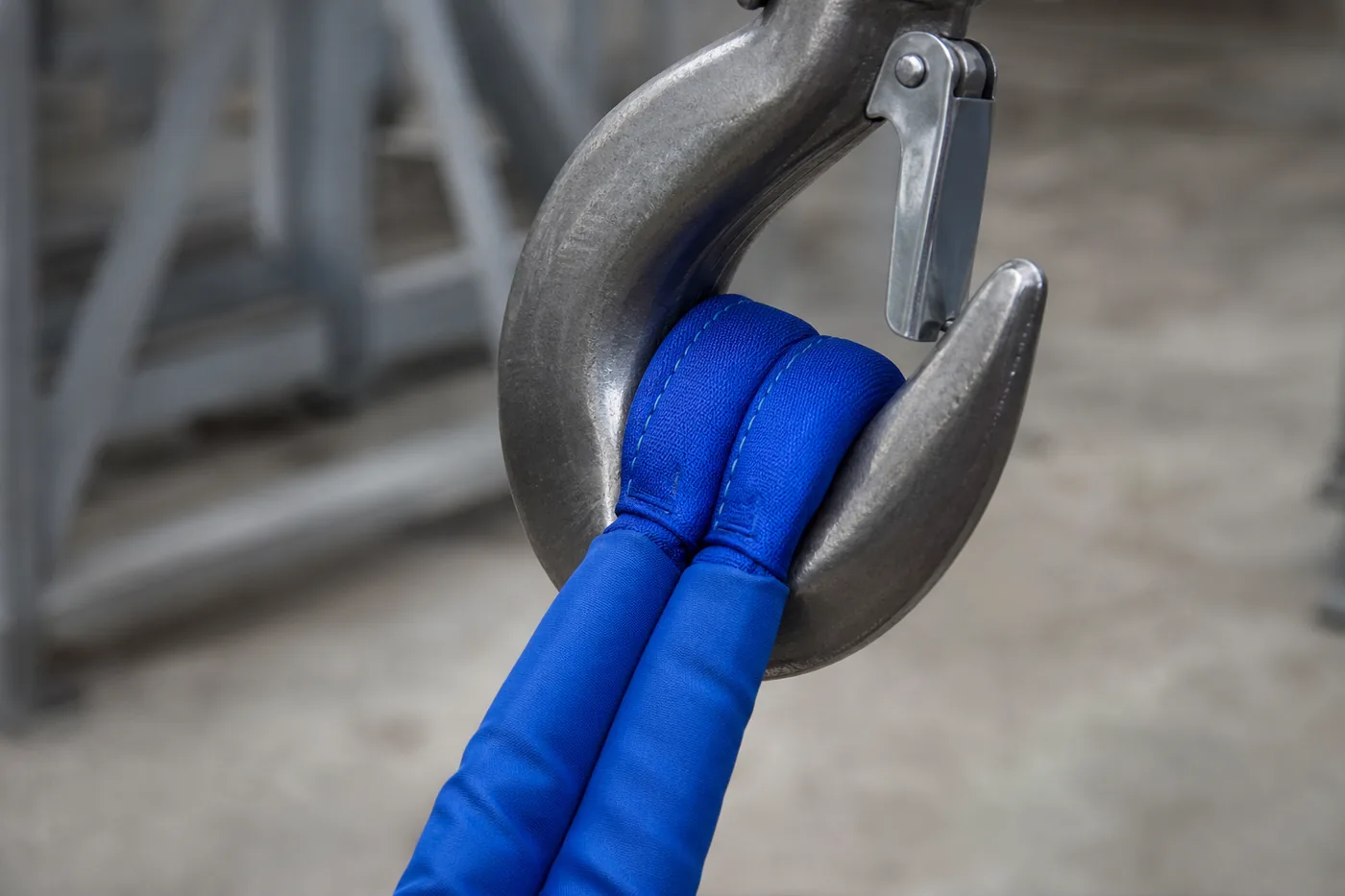
- Meji telẹ gbe-soke ojuami. Oju naa joko ninu ọpọn kio tabi pin dè bi ẹyọkan - yara lati rig, yara lati ṣayẹwo, rọrun lati fi laarin awọn iyipada.
- Ara yika ko yipada. Under the load the sleeve still conforms to a roll, a pipe, a trunnion or a machined face, so nothing is marked and nothing is point-loaded.
- One place to look first. Load transfers through the two stitched eyes, so inspection starts and usually ends there.
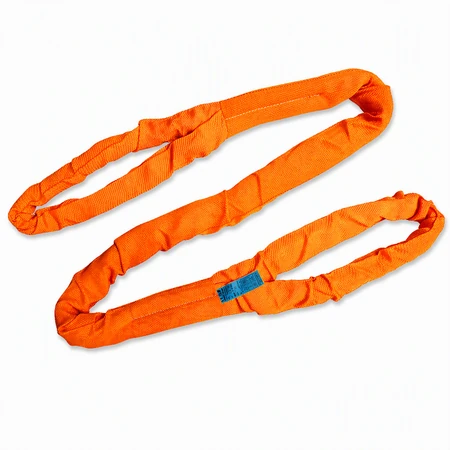
Eye-Eye Round Sling specifications
| Orukọ ọja | Oju-oju yika sling / oju ati oju yika sling / oju si oju yika sling / ė oju yika sling |
|---|---|
| Ikole | Tesiwaju ni afiwe mojuto inu kan hun tubular apo, gathered and stitched at both ends into two reinforced eyes |
| Koju | Owu ti o jọra polyester giga-tenacity, boṣewa; UHMWPE ati aramid ohun kohun lori ìbéèrè |
| Ọwọ | hun ga-tenacity poliesita, nikan tabi ė Layer; heat-resistant sleeve to order |
| Iwọn fifuye ṣiṣẹ | 1,000 kg si 1,000,000 kg across 27 articles — LFTERS-1 · -2 · -3 · -4 · -5 · -6 · -8 · -10 · -12 · -15 · -20 · -25 · -30 · -40 · -50 · -60 · -80 · -100 · -200 · -300 · -400 · -500 · -600 · -700 · -800 · -900 · -1000 |
| Ara | Sisanra 6-320 mm, iwọn 40-1.050 mm; see the article table for the exact figure of each size |
| Gigun | Oju-si-oju, 0.5 m si 80 m; the minimum rises with the article — 0.5 m at LFTERS-1, 9.0 m at LFTERS-1000 |
| Iwọn ẹyọkan | 0.4 kg/m ni LFTERS-1 si 222 kg/m ni LFTERS-1000, used for shipping and for crane load calculations |
| Ailewu ifosiwewe | 7:1 meji ỌKAN 1492-2 iwa; awọn ifosiwewe miiran lati paṣẹ nibiti ọja nbeere |
| Iru oju | Flat stitched eye standard; oju fikun ati yiya pad iyan |
| Àwọ̀ | Ọsan iṣura tabi buluu; IN 1492-2 capacity colour applied when the order asks for the standard code |
| Siṣamisi | Sewn aami: article number, ṣiṣẹ fifuye iye to, oju-si-oju gigun, ipele nọmba |
| Iṣakojọpọ | Coil ni poli apo tabi gbe apo, ike paali, okeere packing |
| MOQ / OEM | MOQ kekere fun awọn aṣẹ idanwo; full OEM on article, ipari, awọ apa aso, aami akọkọ ati iṣakojọpọ |
Ìwé ibiti o: yan awoṣe
The article number carries the capacity — LFTERS-10 ni 10,000 kg sling, LFTERS-100 awọn 100,000 kg ọkan. Sisanra ati iwọn ṣe apejuwe ara; the last columns give the shortest and longest eye-to-eye length made in that article, and what the sling weighs per metre so it can be added to the crane load.
| Art.No. | WLL (kg) | WLL (t) | Sisanra (mm) | Ìbú (mm) | Min (m) | O pọju (m) | Iwọn (kg/m) |
|---|---|---|---|---|---|---|---|
| LFTERS-1 | 1,000 | 1 | 6 | 40 | 0.5 | 80 | 0.40 |
| LFTERS-2 | 2,000 | 2 | 7 | 50 | 0.5 | 80 | 0.61 |
| LFTERS-3 | 3,000 | 3 | 8 | 60 | 0.5 | 80 | 0.75 |
| LFTERS-4 | 4,000 | 4 | 9 | 70 | 0.5 | 80 | 0.80 |
| LFTERS-5 | 5,000 | 5 | 11 | 75 | 0.5 | 80 | 0.84 |
| LFTERS-6 | 6,000 | 6 | 12 | 80 | 1.0 | 80 | 0.98 |
| LFTERS-8 | 8,000 | 8 | 13 | 90 | 1.0 | 80 | 1.10 |
| LFTERS-10 | 10,000 | 10 | 15 | 100 | 2.0 | 80 | 2.20 |
| LFTERS-12 | 12,000 | 12 | 16 | 110 | 2.0 | 80 | 3.20 |
| LFTERS-15 | 15,000 | 15 | 18 | 125 | 2.0 | 80 | 3.80 |
| LFTERS-20 | 20,000 | 20 | 20 | 150 | 2.5 | 80 | 5.20 |
| LFTERS-25 | 25,000 | 25 | 24 | 180 | 2.5 | 80 | 6.50 |
| LFTERS-30 | 30,000 | 30 | 32 | 200 | 2.5 | 80 | 7.80 |
| LFTERS-40 | 40,000 | 40 | 40 | 200 | 2.5 | 80 | 10.4 |
| LFTERS-50 | 50,000 | 50 | 45 | 220 | 2.5 | 80 | 13.0 |
| LFTERS-60 | 60,000 | 60 | 65 | 220 | 4.0 | 80 | 15.6 |
| LFTERS-80 | 80,000 | 80 | 70 | 260 | 4.0 | 80 | 20.8 |
| LFTERS-100 | 100,000 | 100 | 80 | 290 | 4.0 | 80 | 25.0 |
| LFTERS-200 | 200,000 | 200 | 120 | 450 | 5.0 | 80 | 64.0 |
| LFTERS-300 | 300,000 | 300 | 160 | 525 | 5.0 | 80 | 79.0 |
| LFTERS-400 | 400,000 | 400 | 200 | 670 | 5.0 | 80 | 95.5 |
| LFTERS-500 | 500,000 | 500 | 220 | 750 | 8.0 | 80 | 113.4 |
| LFTERS-600 | 600,000 | 600 | 240 | 820 | 8.0 | 80 | 136.0 |
| LFTERS-700 | 700,000 | 700 | 260 | 870 | 8.0 | 80 | 152.0 |
| LFTERS-800 | 800,000 | 800 | 280 | 930 | 9.0 | 80 | 175.0 |
| LFTERS-900 | 900,000 | 900 | 300 | 990 | 9.0 | 80 | 199.0 |
| LFTERS-1000 | 1,000,000 | 1,000 | 320 | 1,050* | 9.0 | 80 | 222.0 |
* LFTERS-1000 body width is 1,050 mm. The width column steps up by roughly 60 mm fun 100 t lati LFTERS-900 (990 mm), ati 1,050 mm jẹ nọmba ti o ni ibamu pẹlu akojọ 222 kg/m; the source sheet carries one zero too many. O pọju ipari jẹ 80 m ni gbogbo nkan, and the minimum is the shortest eye-to-eye distance the body can be gathered and stitched into.
What the sling lifts in each arrangement
The working load limit in the article table is the inaro figure. Gbigbọn tabi agbọn sling kanna n yi ohun ti o le gbe soke, and the multipliers below are applied to that figure — they are not added to it. Three articles are worked out; the same factors apply to all 27.
| Eto | Okunfa | LFTERS-10 | LFTERS-50 | LFTERS-100 |
|---|---|---|---|---|
| Inaro | × 1.0 | 10,000 kg | 50,000 kg | 100,000 kg |
| Ti parun | × 0.8 | 8,000 kg | 40,000 kg | 80,000 kg |
| Agbọn, 0–7° | × 2.0 | 20,000 kg | 100,000 kg | 200,000 kg |
| Agbọn, 7–45° | × 1.4 | 14,000 kg | 70,000 kg | 140,000 kg |
| Agbọn, 45–60° | × 1.0 | 10,000 kg | 50,000 kg | 100,000 kg |
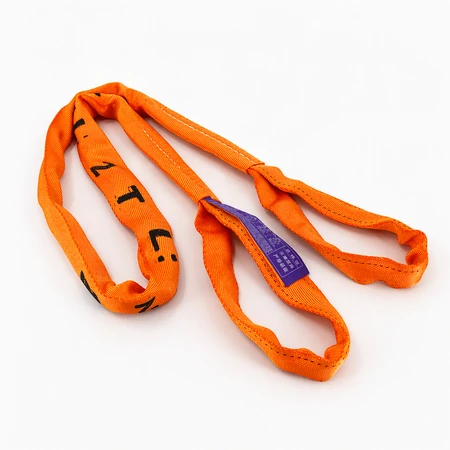
Bawo ni lati paṣẹ
- The article. Take the load at each leg, divide by the arrangement factor above, and choose the first article whose working load limit covers the result.
- Oju-si-oju gigun. Wiwọn oju inu si oju inu, lẹhinna ṣafikun yara ori ki awọn ẹsẹ ko ba tan sinu igun nla ti o ni idiyele agbara. It has to sit between the Min and Max columns of that article.
- Iru oju. Alapin stitched oju fun deede iṣẹ; reinforced eyes or wear pads where the hook bowl is worn or the sling is repeated on the same edge.
- Ayika ati isamisi. Iwọn otutu, awọn kemikali, omi, ojumomo, ati idanimọ tabi ijẹrisi aaye gbigba ni lati ka.
Quote it as article, length and option — for example LFTERS-10, 6 m oju-si-oju, flat stitched eye, apo polyester kan. Any article can be built in any length inside its range, and the weight per metre lets you confirm the total before the crane is booked.
Ikole: ohun ti o ru eru, ati ohun ti o ndaabobo
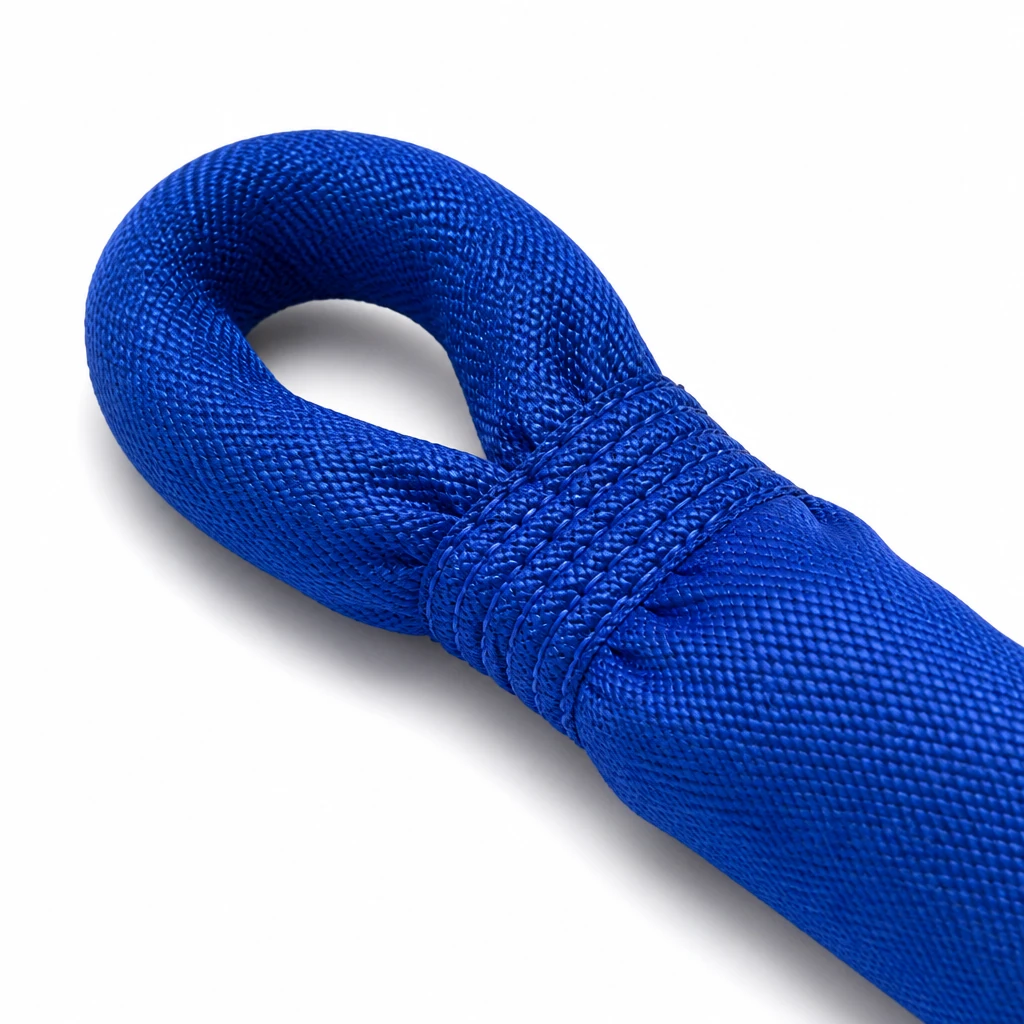
Awọn ẹya mẹta pinnu igbesi aye iṣẹ ti ẹya oju si oju yika sling. Awọn mojuto jẹ opo ti owu polyester ti o jọra ti nṣiṣẹ ti ko ni fifọ lati oju si oju; o gbe gbogbo ẹrù ati elongates pupọ diẹ. Awọn apa aso jẹ tube hun lori mojuto ti o gba abrasion, o dọti ati if'oju, and carries the colour, the printed working load limit and the label. Awọn oju ni o wa awọn meji ibi ibi ti awọn apo ti wa ni jọ ati awọn stitching gba awọn fifuye ona.
Ti o logalomomoise salaye julọ feyinti: a apo ge nipasẹ ki awọn mojuto ni han ifẹhinti sling paapaa nigba ti mojuto si tun wulẹ ohun, ati stitching ti o baje, ọlẹ tabi fa ifẹhinti rẹ paapaa nigba ti apa aso jẹ mule. Lori sling ailopin, ẹru naa n kọja ni igbagbogbo yika lupu naa; nibi o ni lati sọdá awọn ifopinsi stitched meji, ati awọn ifopinsi wọnyẹn ni ibi ti yoo kuna ni akọkọ.
Oju-oju, ailopin tabi alapin webbing: eyi ti o fun awọn gbe soke
| Ohun ini | Oju-oju yika sling | Ailopin yika sling | Alapin webbing sling |
|---|---|---|---|
| Ipari | Oju meji ti a hun | Kò - titi oruka | Oju meji, alapin ara |
| Gigun | Itumọ, oju si oju | Yipo yipo | Itumọ, oju si oju |
| Wọ ojuami | Ti o wa titi ni awọn oju | Rotatable yika lupu | Ti o wa titi pẹlú awọn iye |
| Kan si pẹlu fifuye | Yika ara ni ibamu | Yika ara ni ibamu | Oju alapin jakejado |
| Agbara ninu profaili tẹẹrẹ | Ga - ni afiwe mojuto | Ga - ni afiwe mojuto | Nilo iwọn ati plies |
| Ti o dara ju fun | Tun gbe soke, hooking ati shackling, ti o wa titi geometry | Awọn apẹrẹ ti o buruju, ntan yiya, awọn agbara ti o tobi pupọ | Awọn šiši dín, han fifuye ona |
Awọn fọọmu sling mejeeji ni a ṣe lori laini kanna lati inu mojuto kanna ati apo, nitorinaa yiyan laarin wọn jẹ ipinnu rigging, kii ṣe agbara kan. Fun fọọmu ailopin wo wa ailopin yika sling ibiti o; fun alapin fọọmu wo alapin webbing slings.
Ibi ti oju-oju sling n gba aaye rẹ
- Tun gbe soke ti awọn kanna ẹrọ tabi m, nibiti geometry ko gbọdọ yipada laarin awọn iyipada.
- Rigging oju-si-oju pẹlẹpẹlẹ kio kan, ẹwọn tabi a gbígbé itankale tan ina ti o ntọju awọn ẹsẹ inaro.
- Agbọn gbe soke labẹ yipo, paipu, ọpọn ati ẹrọ ọpá, ibi ti yika ara murasilẹ ti tẹ.
- Irin awo, dì ati awọn akopọ okun ti o nilo gbigbe rirọ ati agbara giga ninu sling tẹẹrẹ kan.
- Ya, ti a bo tabi didan ọgbin ibi ti a pq tabi a okun waya sling yoo samisi awọn dada.
- Very heavy work at the top of the range — the WLL 30T poliesita yika slings ati awọn 1100 tonne UHMWPE yika sling ya kanna ikole siwaju.
Ayewo, itoju ati ifilelẹ
- Oju akọkọ, lẹhinna apa aso, lẹhinna ara - ni ibere, ṣaaju lilo gbogbo.
- Feyinti lori baje tabi fa stitching, apa aso tinrin ni oju, mojuto han nipasẹ awọn apo, ooru glazing, tabi kẹmika idoti.
- Dabobo eti. Awọn apa aso ni abrasion Idaabobo, kii ṣe ihamọra; lo olugbeja eti nibikibi ti ara ba kọja eti ge.
- Maṣe pa oju mọ. Awọn oju ti wa ni won won ifopinsi, kii ṣe aaye lati tẹle ara pada nipasẹ.
- Maṣe fa sling ti kojọpọ, ki o si tọju rẹ gbẹ, pa pakà ati ki o jade ti if'oju.
- Ṣe igbasilẹ awọn gbigbe ati eyikeyi bibajẹ, ki o si tẹle iṣe ti ẹgbẹ iṣakoso orilẹ-ede rẹ ati ikẹkọ ti o ti gba.
Awọn ibeere ti a beere nigbagbogbo
Ohun ti jẹ ẹya oju-oju yika sling?
Sling yika ti apa rẹ ti ṣajọ ati ti didi sinu oju ti a fikun ni opin kọọkan, dipo ti a ni pipade sinu ohun ailopin oruka. Awọn mojuto ati awọn apo-lori-mojuto ikole jẹ kanna bi eyikeyi yika sling; awọn iyato jẹ meji telẹ pari, ipari ti a ti pinnu ati awọn aaye iyasilẹ meji ti asọye.
What do the LFTERS article numbers mean?
The number is the working load limit in tonnes on the 1-2-3-4-5-6-8-10-12-15-20-25-30-40-50-60-80-100-200-300-400-500-600-700-800-900-1000 àkàbà. LFTERS-10 is rated 10,000 kg inaro, LFTERS-100 jẹ 100,000 kg ati LFTERS-1000 jẹ 1,000,000 kg. There is no article for 7 t, 9 t tabi 11 t — the range steps in the sequence shown.
Bawo ni ipari wọn lori oju ati oju yika sling?
Laarin awọn oju - lati inu ti ọkan oju si inu ti awọn miiran. Awọn oju ṣe afikun si iwọn apapọ ṣugbọn kii ṣe apakan ti ipari iṣẹ. Each article has its own minimum, lati 0.5 m at LFTERS-1 to 9.0 m at LFTERS-1000, ati 80 m is the maximum in every size.
How much does the sling weigh?
The last column of the article table is the weight per metre: 0.40 kg/m at LFTERS-1, 2.20 kg/m at LFTERS-10 and 222 kg/m ni LFTERS-1000. Multiply by the eye-to-eye length and add the eyes and fittings to get the figure to put against the crane’s capacity.
Kini o le a 10,000 kg eye-eye round sling lift in a basket?
20,000 kg at a basket angle of 0–7°, 14,000 kg between 7° and 45°, ati 10,000 kg between 45° and 60°. Ti parun, kanna sling ti wa ni won won 8,000 kg. Awọn 10,000 kg figure printed on the sleeve is the vertical rating only.
Ṣe a le ṣe idanimọ agbara lati awọ apa aso?
Nibo ni EN 1492-2 koodu ti wa ni pato lori ibere, beeni: eleyi ti 1 t, alawọ ewe 2 t, ofeefee 3 t, grẹy 4 t, pupa 5 t, brown 6 t, buluu 8 t ati osan lati 10 t soke. Awọn slings iṣura jẹ osan tabi buluu laibikita agbara, with the working load limit and article number printed on the sleeve — so read the printed figure, kii ṣe awọ.
Ṣe o ṣe awọn gigun aṣa, awọn oriṣi oju ati awọn awọ apa aso?
Bẹẹni. Eyikeyi oju-si-oju gigun laarin Min – Max ti nkan naa, Awọn oju alapin alapin bi boṣewa pẹlu awọn oju ti a fikun ati yiya awọn paadi yiyan, aramid tabi UHMWPE ohun kohun, heat-resistant sleeves, ati apẹrẹ aami tirẹ, ede ati iṣakojọpọ. Firanṣẹ ẹru naa, awọn aaye-soke, awọn headroom ati awọn ayika fun iwọn finnifinni.
Beere agbasọ kan fun awọn slings yika oju-oju
Firanṣẹ nọmba nkan tabi fifuye naa, awọn aaye laarin rẹ gbe-soke ojuami, eto ti o yoo rig, awọn headroom, ati eyikeyi siṣamisi tabi iwe-ẹri ọja rẹ nbeere. A yoo pada wa pẹlu apa aso, awọn ipari, a ayẹwo ati ki o kan factory-taara owo. Jẹmọ ni pato: ė apo eru ojuse yika sling fun lile iṣẹ, ati UHMWPE yika slings ibi ti àdánù ọrọ diẹ sii ju iye owo. Fun ifopinsi lori ara rẹ, laisi alaye aṣẹ, wo awọn kikuru yika sling pẹlu oju Akopọ.