

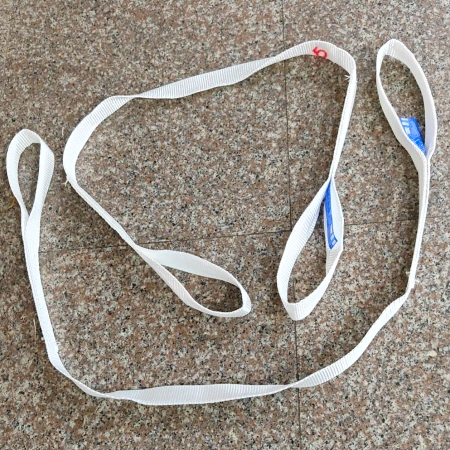
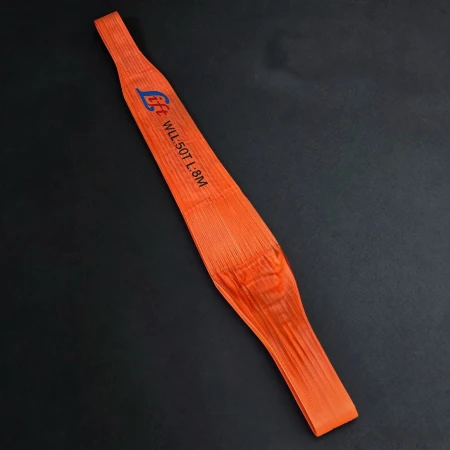
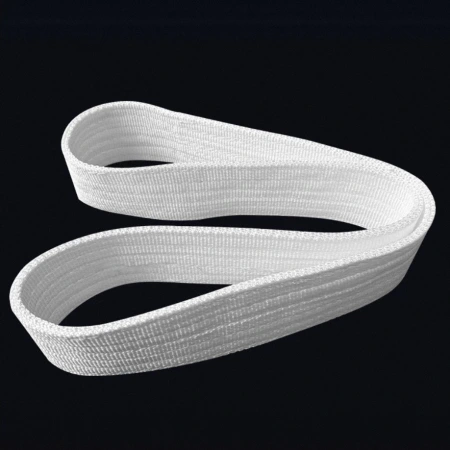
Lift sling rigging company produce 2PLY / 3PLY / 4PLY / 6PLY / 8PLY SLING,3 Ply Polyester Web Sling,2 Ply Webbing Sling,4 Ply Nylon Eye & Sling Hiki Mata.
2PLY / 3PLY / 4PLY / 6PLY / 8PLY SLING: Five Bodies, 2 t ki he . 80 t
Five bodies, one cover. HA 2 ply, 3 ply, 4 ply, 6 ply or 8 ply webbing sling is built the same way – layers of load-bearing polyester stacked inside one flat cover – so the only real question is how much capacity you need in the width your hook and your load will accept. This page puts all five on one ladder: working load limits from 2 t ki he . 80 t, widths from 50 mm ki he . 300 mm, 7:1 me'a malu, ʻI LOTO 1492-1 fakakouti lanu, and the same stitching, labelling and batch testing behind every one of them.
- 2 / 3 / 4 / 6 / 8 ply
- WLL 2-80 t
- Maokupu 50-300 mm
- Ko e meʻa malu 7:1
- ʻI LOTO 1492-1 / ASME B30.9
- Lōlōa 1-12 m
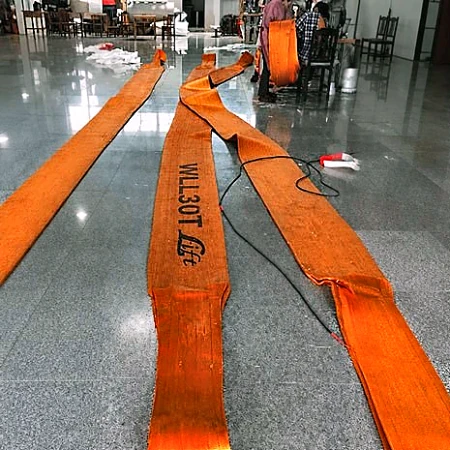
What ply count actually means
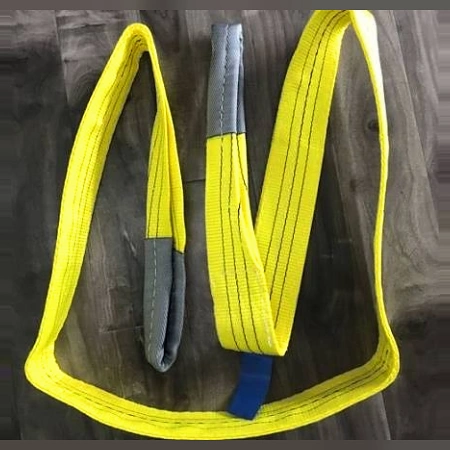
A ply is one continuous woven band of polyester. A single-ply sling is one band; ha 4 ply sling is four identical bands laid together and closed with stitching so they act as one body. Nothing else changes – filo tatau, lalanga tatau, same eyes, same label. Capacity rises roughly in proportion to the number of plies, because each ply adds a full layer of load-bearing yarn to the same footprint.
That makes ply count the cheapest way to buy capacity without buying width. If a hook opening or a pipe bundle only allows 100 mm of sling, ha 8 ply body at that width carries about 21 t, where the same 100 mm 'i he . 3 ply carries 8 t. You get the lift, but you do not get a wider sling that will not fit the gap.
The cost is stiffness and weight. Every extra ply makes the body harder to bend around a small radius and heavier to carry, so above 6 ply a sling tends to be rigged once and left on the hook rather than carried up a ladder. That is a handling decision, not a strength one, and it is usually what settles the choice between 6 ply and 8 ply.
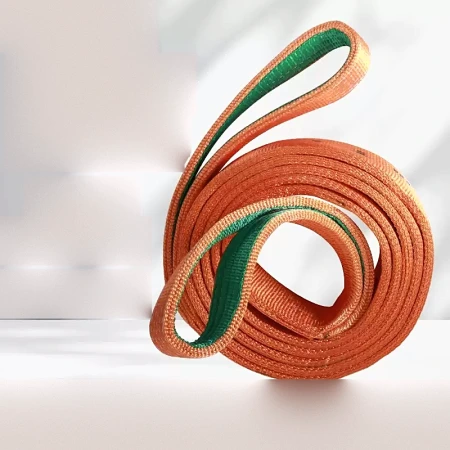
Ko e lueʻanga .: working load limit by ply count and width
Typical ratings for eye-and-eye slings in vertical hitch. Every column uses the same weave and stitch pattern; only the number of plies changes. Values are rounded to the nearest tonne and scaled from the 3-ply ladder by ply ratio – confirm the exact figure on the order drawing, because yarn grade and weave density move it by a few percent.
WLL 'i he kg . – fakapipiki tuʻu, mata mo e mata .
| Maokupu (mm) | 2 ply | 3 ply | 4 ply | 6 ply | 8 ply |
|---|---|---|---|---|---|
| 50 | 2,000 | 3,000 | 4,000 | – | – |
| 75 | 3,000 | 5,000 | 7,000 | – | – |
| 100 | 5,000 | 8,000 | 11,000 | 16,000 | 21,000 |
| 125 | 7,000 | 10,000 | 13,000 | 20,000 | 27,000 |
| 150 | 8,000 | 12,000 | 16,000 | 24,000 | 32,000 |
| 200 | – | 20,000 | 27,000 | 40,000 | 53,000 |
| 250 | – | 25,000 | 33,000 | 50,000 | 67,000 |
| 300 | – | 30,000 | 40,000 | 60,000 | 80,000 |
A dash is a combination outside our standard range: 2-ply bodies above 150 mm are too floppy to control on site, mo e 6- and 8-ply bodies below 100 mm are better replaced by a narrower high-tenacity weave. Both can be quoted as specials if your lift needs them.
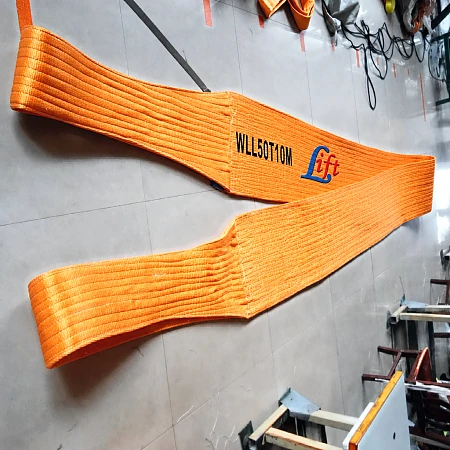
For the detailed single-body pages, sio 2 ply webbing sling, 3 ply webbing sling mo e 4 ply webbing sling; this page is the comparison between them.
Choose by load first, by width second
- A'u ki he 100.00. 2 t – 2 ply at 50-75 mm. Maama, vave, one-handed, and cheap enough to keep a dozen on the truck.
- 3 t ki he . 12 t – 3 ply at 50-150 mm. The default general-lifting body, and the one we ship most.
- 12 t ki he . 25 t – 4 ply at 150-200 mm, pē 6 ply at 125-150 mm when the hook will not take the width.
- 25 t ki he . 50 t – 6 ply at 200-300 mm; 8 ply if the sling has to stay under 150 mm.
- 50 t ki he . 80 t – 8 ply at 250-300 mm, or a round sling if the load is round and the sling has to bend.
When two options fit, take the lower ply count and the wider body. A wider 3 ply sling is easier to handle, easier to inspect, cheaper to replace and less likely to be damaged in the container than a narrow 8 ply of the same rating. Go up a ply only when the width is fixed by the hook, the shackle or the gap in the load.
Same width, different body: what changes in service
Two slings can share a width and a colour and behave completely differently. At a fixed 100 mm sino ., moving from 3 ply to 8 ply roughly triples the capacity – and roughly triples the weight, the stiffness and the price. The eye gets thicker, the body does not fold as tightly around a pipe, and the sling takes longer to inspect because there is more material to look at.
More plies do buy wear reserve. The outer plies absorb abrasion from concrete, scaffold tube and steel edges while the inner plies keep carrying, ko ia ko ha 6 pē 8 ply body on a rough site often outlasts two thinner slings of the same rating. On a clean lift in a factory, that reserve is wasted money.
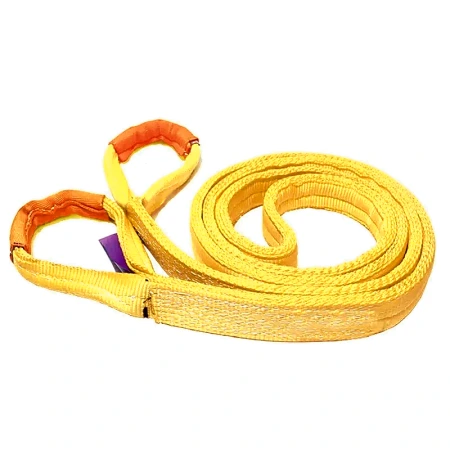
Colour coding does not change with ply
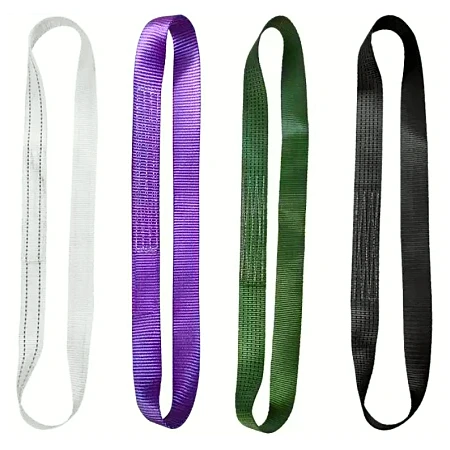
The colour follows the working load limit, not the ply count. Two slings of the same colour can be built from different ply counts and different widths, because colour tracks WLL while ply tracks the width you have available. Lau ʻa e fakaʻilonga ., 'ikai ko e lanu ..
ʻI LOTO 1492-1 kouti lanu
| WLL | Lanu |
|---|---|
| 1,000 kg | Vaioleti |
| 2,000 kg | Lanu mata |
| 3,000 kg | Lanu engeenga |
| 4,000 kg | Kulei |
| 5,000 kg | Kulokula |
| 6,000 kg | Lanu koko |
| 8,000 kg | Lanu pulū |
| 10,000 kg | Moli |
ʻolunga 10 t we fit a high-visibility cover with an oversized WLL label and the ply count printed on it, because colour coding alone stops being reliable at that size.
Where each ply count earns its keep
- 2 ply – site work, service trucks, light precast, plant hire, and anything lifted hundreds of times a week where weight matters more than capacity.
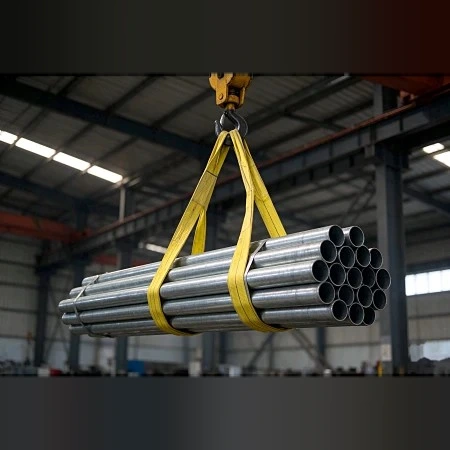
- 3 ply – the general-purpose body: steel bundles, concrete panels, misini, port work, 3 t ki he . 12 t.
- 4 ply – heavy fabrication, shipyard blocks, wind components, where 3 ply would need a width the hook cannot take.
- 6 ply – 25 t ki he . 50 t lifts with a narrow attachment: coil handling, large castings, heavy machine beds.
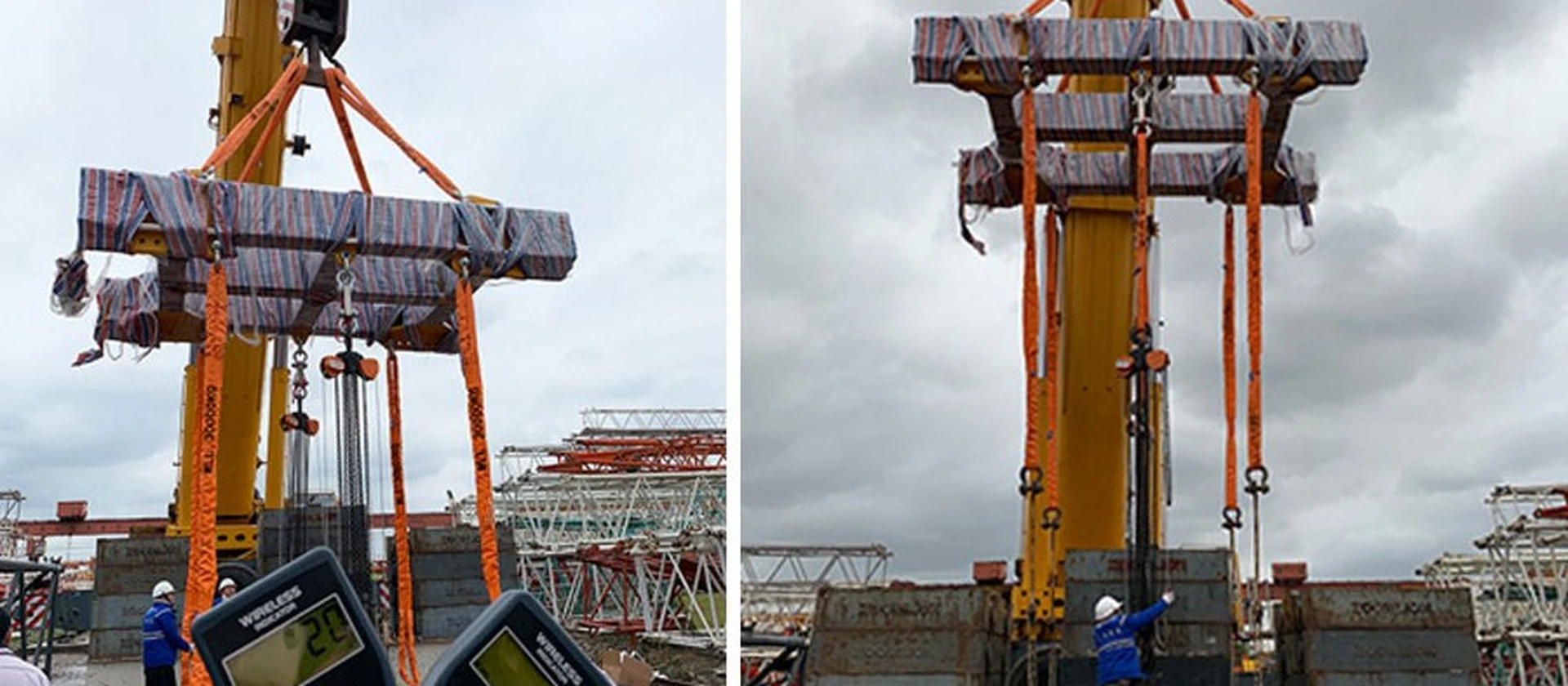
- 8 ply – 50 t ki he . 80 t, shipyards and heavy modules, and anywhere the sling stays on the hook for the whole shift.
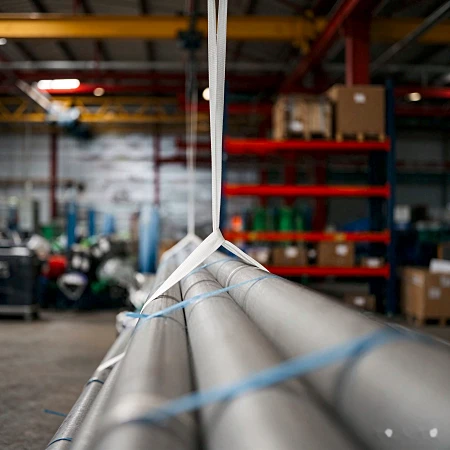
One construction standard across all five bodies
- 100% polyester ma'olunga-fefeka (PES), fakaloloa 3% pe si'i hifo 'i he WLL ., no strength loss when wet.
- Double-lock stitching in four rows of contrasting thread on every body, whatever the ply count.
- Mata kuo fakamālohia .: flat eyes as standard, twisted (holomui) eyes for narrow hooks, wear pads on request.
- Red warning yarn inside the core – once a cut exposes red, the sling is withdrawn.
- Sewn label carrying WLL, lōlōa, lau ply, tu'unga, serial number and date of manufacture.
- Ngaahi Fili: PU impregnation, flame-retardant finish, anti-static yarn, branded labels.
Tested before it is labelled
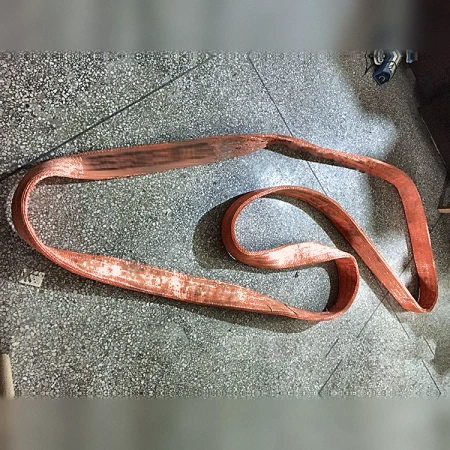
Every batch is sampled and pulled to destruction in our own laboratory – CNAS accredited, mo ha 1,000 t horizontal test bed for the large bodies that most suppliers cannot test in house. Each sling is inspected, measured and labelled one by one, and the certificate quotes the serial number on the label. Facilities hold CE and DNV certification; we test to EN 1492-1 and ASME B30.9.
Ordering checklist
- Working load limit and the hitch you will use.
- Maximum width your hook, shackle or bundle allows – this is what fixes the ply count.
- Lōlōa, fua ki he fua ., in metres.
- Fa'ahinga mata: feleti, twisted / holomui, or with wear pads.
- Quantity per size, and whether the legs must be matched as a set.
- Standard and certificate language: ʻI LOTO 1492-1, ASME B30.9, or your national code.
- Faka'ilonga'i: your logo, fika konga, or the ply count printed on the label.
- Delivery date and destination port.
Send the WLL and the maximum width and we will work out the ply for you. For a mixed order, contact our lifting engineers with the full schedule and we will quote the set, 'ikai ko e sling fakafo'ituitui ..
Ngaahi fehu'i 'oku toutou 'eke .
- Which ply count do I need for a 10 t hiki?
- HA 3 ply webbing sling ʻi 125 mm is rated 10 t, mo ha . 4 ply at 100 mm is rated about 11 t. Take the 3 ply unless the hook or the bundle will not take 125 mm 'o e laulahi.
- Is an 8 ply sling stronger than a 3 ply sling at the same width?
- ʻIo – roughly two and a half to three times the working load limit at the same width, because each ply adds a full layer of load-bearing yarn. It is also about three times the weight and far stiffer, so it is the right answer only when width is the constraint.
- Does the colour tell me the ply count?
- ʻIkai. Colour follows the working load limit in EN 1492-1; ply count follows the width. Two slings of the same colour can be different bodies. The sewn label states both WLL and ply.
- Can I mix ply counts in one lifting assembly?
- Te ke lava, provided every leg is rated for its share of the load and the assembly is matched so no leg is overloaded. We build mixed sets and mark each leg with its own WLL.
- Do you make a single-ply sling?
- ʻIo, up to about 2 t, and it is the cheapest body we sell. Above that the width needed for a single ply becomes impractical, mo e 2 ply or 3 ply is the better buy.
- Can I get custom lengths and OEM labels?
- ʻIo – mei 1 m ki he . 12 m, widths to 300 mm, twisted eyes, PU coating, and labels printed with your brand and part numbers.
Send the lift, get a specification
Tala mai e uta ., ko e haʻi, the maximum width and the quantity. Our engineers confirm the ply count and eye type, then send a drawing, a price and a lead time – usually within one working day. contact our lifting engineers.