

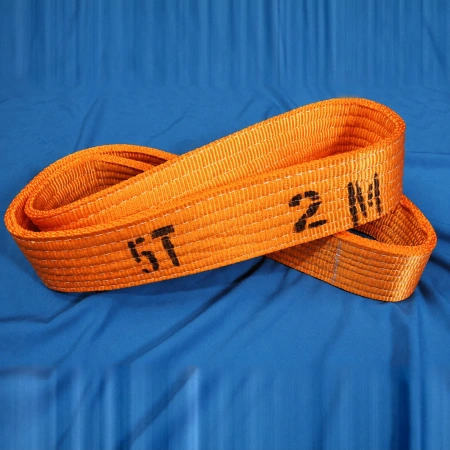
Hiki 'a e kautaha rigging sling ngaohi 2 Ply Webbing Sling,2-ply web sling,2-Ply Web Lifting Sling,2-ply Flat Web Sling with a Twisted Eye,Double Ply Polyester Web Sling,2-Ply Lifting Sling Strap,2-Ply Nylon Eye & Eye Web Sling,2-Ply Web Lifting Sling,Double ply webbing sling.
2 Ply Webbing Sling
Two layers in the one band, an eye at each end. The same width as a single ply sling with twice the section — more capacity where the width is capped, and a softer face on finished work.
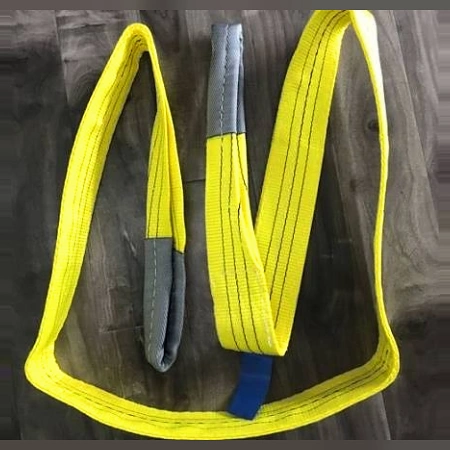
The number in front of the word ply answers one question only: how many layers of webbing are in the band the sling is made from. It does not mean two slings, and it does not mean a band doubled over on the hook. Everything else follows from it — the thickness, ko e mamafa, the capacity a given width can be marked at, how softly the band beds onto the load, and how much material an edge has to work through.
What the second layer buys on an eye-and-eye sling
‘I ha sling mo e mata ., the band does two jobs: it carries the load between the eyes, and it presents a face to the load. The second layer changes both, and a third thing besides:
- Capacity at a fixed width. A wide band is not always available — the hook is small, the gap is tight, the load is narrow. Ply is what is left to raise the figure without widening the band.
- A softer bearing face. Two layers make a thicker, more compliant stack between the load and the load-bearing core, so contact pressure spreads and a machined or coated surface is less likely to be marked.
- Abrasion reserve. Where the band works over a rough but not sharp edge, there is a second layer behind the first: wear has further to travel before the load path is affected.
- A stiffer band. It lies down across a plate or a machined face instead of curling at the edges, which keeps the contact full width — and it also means the eye sits flatter on the hook.
ʻi fē 2 ply sits in the family
The same construction is made in one, ua, tolu, four and more layers. The table is qualitative on purpose: the builds are sold as builds, and the figure that applies to a particular sling is the one proof tested and printed on it, not a number copied off a web page.
| Ply 'e taha | 2 ply | 3 ply | 4 ply | |
|---|---|---|---|---|
| Layers in the band | Taha | Ua | Tolu | Fā |
| Kupu | Thinnest | Roughly twice the single-ply section | Thicker again | Thickest build |
| Capacity at the same width | Laine Fakavaʻe | Ma'olunga ange | Higher again | Ma'olunga taha |
| Bearing face | Kautaha, fā lahi | Molu ange, thicker stack | Softer again | Most forgiving |
| To'oto'o | Folds small, tight radius | Fefeka ange, sits flat on the hook | Stiffer again | Least supple |
| Usual duty | General yard work, light to medium | High figure in a capped width, finished surfaces | Fatongia mamafa ., precast and machined work | Heaviest duty, maximum cushioning |
Two of those neighbours have their own pages: ko e 3 ply webbing sling pea ko e . 4 ply webbing sling, with the whole 2/3/4/6/8 ply family collected in one place.
Ko e ngaahi ngataʻangá .: mata palakū, mata kuo peluki, twisted eye
On an eye-and-eye sling the ends are a specification line, 'ikai ko ha fakaikiiki. They decide how the band sits on a hook, whether the sling can be used in a choker at all, and how the last of the fibres at the end are protected — and the end is where a band wears out first.
| ʻosi | How it sits | Ko e hā ʻoku ʻuhinga ki aí . |
|---|---|---|
| Flat loop | The band turns back on itself and is closed flat; the loop hangs in the plane of the band | Fatongia ma'ama'a, soft loads, the cheapest end and the easiest to inspect |
| Folded eye | The end is folded and closed so the eye presents a thicker, rounder bearing on the hook | Where the hook is small and the band must not crease at the eye |
| Mata kuo fakamālohia | Extra material and stitching at the eye | Heavy duty and repeated choker work — the eye is the wear point |
| Twisted eye | The eye is turned through ninety degrees to the band | Choking: the band lies in the plane of the hook, so the wrap beds down instead of standing off |
If the sling will be choked, say so at the enquiry. A twisted eye costs very little on the order and cannot be added afterwards, and a choked figure is 0.8 of the vertical one either way — so the eye decides whether the choke works, not what it is rated at.
Ko e foʻi hiva ʻe taha, ngaahi fika lahi: the hitch decides the rating
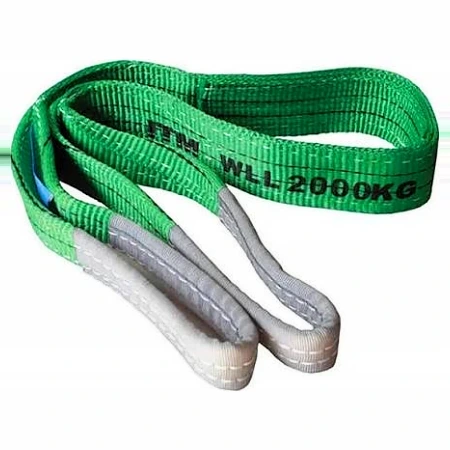
A webbing sling does not have one capacity. It has one in vertical, ko e taha kehe 'i he kato pea ko e taha 'i lalo 'oku 'ohofi ., pea ʻoku fakahā ʻe he fakaʻilonga ʻo kinautolu takitaha .. Buying on “the tonnage” alone is the most common error in this category. The factors below are the standard ones this site publishes; the angle is the leg angle to the vertical, and the label on the article overrides the table.
| Fokotu'utu'u | Mode me'a | Ko e me'a 'oku 'uhinga ki ai 'i he faliki . |
|---|---|---|
| Hangatonu | 1.0 | Vaʻe ʻe taha ., hangatonu hake. 'Oku tautau 'a e fasi pea 'ave .. |
| Kafo | 0.8 | Band round the load and back through its own eye; 'oku puke 'e he takai pea 'oku uta 'a e fusi 'o fakafepaki'i ia .. |
| Kato, 0–45° | 2.0 | Band 'i lalo 'i he kavenga ., both eyes on the hook, va'e ofi ki he tu'u. |
| Kato, 45–60° | 1.4 | The same basket with the legs spread; ko e mafola 'oku fakamole 'a e malava .. |
| Va'e 'e ua ., 0–45° | 1.4 | Two slings to one hook, uta vahevahe. |
| Va'e 'e ua ., 45–60° | 1.0 | The same pair, spread. |
| Tolu mo e va'e fa ., 0–45° | 2.1 | Not three or four times the figure — the load rarely shares evenly. |
| Tolu mo e va'e fa ., 45–60° | 1.5 | Naʻe mafola ʻa e fokotuʻutuʻu tatau .. Toe vakaiʻi kae ʻikai ko e fakakaukau .. |
Ko e ongo nunu‘a ‘oku taau ke fakahaa‘i mahino .. Ko ha sling choked 'oku vaivai ange ia 'i he sling tatau 'oku ngaue'aki fakahangatonu ., ko ia ko ha kavenga kuo pau ke lōmekina ‘oku fiema‘u ki ai ha fo‘i fuo lahi ange ‘i ha fo‘i fuo lōloa ange .. And as the legs spread the capacity falls — a geometric fact, answered by a different arrangement, a spreader or a bigger sling, pea ʻikai ʻi ha meʻa kehe ..
Colour tells you the figure; ko e leipa ko e tali ia .
Flat webbing slings are colour-coded by working load limit under the convention most of the market uses, and this site follows it:
| Lanu | Fakangatangata 'o e kavenga ngaue | Where it helps |
|---|---|---|
| Vaioleti | 1 t | Separating the light bands in a mixed pile |
| Lanu mata | 2 t | The most common general-purpose band in a yard |
| Lanu engeenga | 3 t | Fast identification on a busy site |
| Kulei | 4 t | Mid-range duty |
| Kulokula | 5 t | The step where handling starts to need two hands |
| Lanu koko | 6 t | Heavy general duty |
| Lanu pulū | 8 t | Structural and plant work |
| Moli | 10 t | Top of the coded range |
It is a fast check and nothing more. Ko e me'a 'oku 'ikai lava 'e he lanu 'o fai ko hono fetongi 'o e faka'ilonga ., because the figure that applies is the one printed and affixed to that individual sling — and beyond the top of the coded range there is no colour to read at all. Where the two disagree, or the label cannot be read, kuo 'osi 'a e ngaue 'a e sling.
Width is the other half of the specification
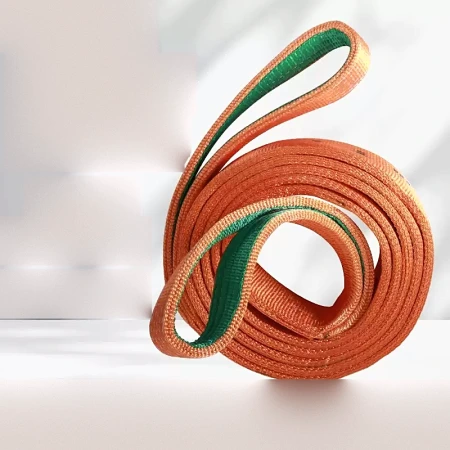
Width sets the pressure on the load and the figure the band can be marked at, and it sets what the band can be folded into. A narrow band concentrates the load and is right on a light, fakamatala fefeka; a wide band spreads it and is right on anything soft, kofukofu pe 'osi. The practical rule is the narrowest width that carries the figure without crushing the load — or the widest the load’s geometry will accept.
The range runs 25 mm ki he . 300 mm mo e lahi ange ., finished slings 0.5 m ki he . 100 m, ʻi 7:1 as standard with 5:1, 6:1 mo e 8:1 ke 'ota. The final width, ply and weight of a given sling are confirmed on the order acknowledgement, with the proof-test certificate behind them.
Against a wire rope, and against an endless loop
Two comparisons decide most enquiries. The first is the swap from steel, which is never about strength but about contact and handling; the second is the choice between an eye sling and a closed loop.
| Condition | 2 ply webbing sling | Sling maea uaea |
|---|---|---|
| Funga kuo 'osi pe vali . | Wide soft contact, no marking — the reason to choose it | Marks and scuffs; fiema'u padding ke fe'auhi |
| Ko e mamafa ke tokanga'i . | Ko ha konga ʻo ha maea ʻo e fakatātā tatau . | Mamafa, stiff and awkward above a certain size |
| Ngaahi tafaʻaki māsila mo e ngaahi burrs . | Needs an edge protector or a sleeve, 'o 'ikai ha tukukehe | Fekuki mo e lahi ange . |
| Hot surfaces | Takatakai 100 °C fakangatangata ngaue; fails by melting | Kātaki mamaʻo ange, neongo 'oku 'ikai ta'e fakangatangata . |
| Abrasion and grit | 'Oku vave hono tui .; the doubled band buys time, 'ikai ko e malu'i | The better answer where the environment is the attack |
| Reach along the load | The eyes fix where the band meets the load; a long load needs a long sling or two | Same constraint |
Against the endless form the difference is the eyes. An eye-and-eye sling presents two defined bearing points, which is what you want when the pick positions are fixed by lugs or a spreader; a closed loop can be wrapped anywhere along its length, which is what you want on a round section with no natural pick point. Ko e double ply endless lifting sling is the same two layers in the other form — same band, different way of meeting the load.
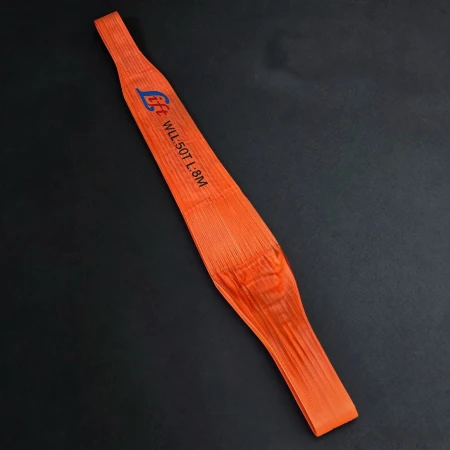
Edges and sleeves: part of the specification
Ko ha fusi 'oku motuhi 'e ha tafa'aki 'oku kamata ia ko ha ki'i notch pea faka'osi ko ha ta'elavame'a ., ko ia ko e malu'i 'o e tafa'aki ko ha laine fakaikiiki kae 'ikai ko ha tu'utu'uni accessory .. Ko e feitu'u 'oku 'i ai ha tuliki māsila 'o e kavenga ., ko ha ngutu mīsini, ko ha burr, weld spatter or a rough casting skin, pe ko e fusi 'oku sleeved pea ko e nima ko e konga 'o e fakamatala ., pe ko e tuliki 'oku malu'i 'aki ha pad 'oku fononga mo e sling .. Ask at the enquiry stage: a sleeve cannot be retro-fitted to a band already woven.
Sivi, and what ends a sling’s life
Siviʻi kimuʻa pea toki fakaʻaongaʻi kotoa pē ., pea fakafo'ituitui 'i he vaha'a taimi 'oku fokotu'u 'e he ngaahi tu'utu'uni 'o e saiti .. The conditions that remove a webbing sling from service are specific:
- vela 'esiti pe faka'auha, vaia pe charring;
- snags, ngaahi tuki, tears or cuts — on a 2 ply band, look for a cut that has gone through the outer layer;
- tuitui motu'a pe maumau, particularly at the eyes and the joins;
- distortion of the eyes or of the band’s lay;
- a label that can no longer be read.
A sling with any of those is out of service because the damage is in the load path, ʻikai koeʻuhí he ʻoku hā taʻe maau .. Tauhi ke ma'a mo momoko ., mei he maama 'o e la'a, pea tauhi ‘a e lekooti mo e kupu ..
Fa'a 'eke .
Ko e hā ʻokú ne . 2 ply mean on a webbing sling?
Two layers of webbing woven into the one band the sling is made from — not two slings and not a band doubled over on the hook. It gives a thicker section, more capacity at a given width and a softer bearing face than the single-ply build.
Fakahoko 2 ply double the capacity of a single ply sling?
Not literally. Two layers add substantial capacity at the same width, but the figure that applies is the one the sling is proof tested and marked at — it is not a multiplication of another sling’s number. Read the label on the article, per hitch.
Ko e mata fē ʻoku totonu ke u fakapapauʻí .?
Twisted eyes if the sling will be choked, because the band then lies in the plane of the hook and the wrap beds down. Folded or reinforced eyes where the eye takes the wear, and flat loops for light duty where the cheapest inspectable end is enough.
Can I use it in a choker if it has flat eyes?
It can be done, but a flat eye stands off the load and the wrap beds unevenly, which is why the choked figure is 0.8 of vertical either way. On repeated choke work, specify the twisted eye and size to the choked figure rather than the vertical one.
Polyester or nylon for a 2 ply sling?
Polyester is the default: it stretches little, tolerates sunlight and keeps the hook height predictable. Nylon takes shock and abrasion better and is the right choice where the load lands rather than rises. Ko e synthetic fibre comparison covers the rest of the range, including the temperature limits.
How is the sling marked?
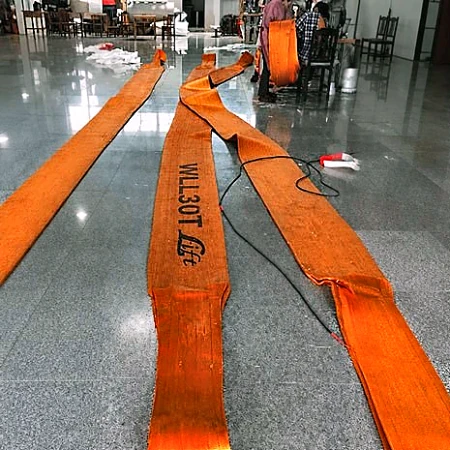
Capacity colour in the weave, the working load limit and length printed on the band where the order calls for it, and a sewn label with the figure, naunau, standard and traceability code. Own-brand labels and packing are available; Kouti HS 630790.
Kole ha fakamatala
Five lines and the sling is settled
The load — what it is, its surface, and where the eyes have to sit;
The figure per hitch — vertical, kato pe faka'auha ., with the leg angle;
The width the hook and the load will accept;
Ko e loloa ., mata ki he mata ., and the eye type (feleti, kuo pelu, fakamālohia, twisted);
The environment — edges, mafana, chemicals — and the marking you need printed.
Ko fe ke 'alu ki ai hono hoko .
- Ngaahi sling uepi — ko e fa'ahinga kotoa ., from the band to the end configuration;
- Ko e 2/3/4/6/8 ply family, ko e 3 ply webbing sling pea ko e . 4 ply webbing sling;
- Synthetic fibre lifting belt slings — poliesita, nailoni, polipolopilini, aramid and UHMWPE compared;
- Double ply endless lifting sling for the closed-loop form of the same band;
- Paipa ukamea hiki ha'i mo e fatongia paipa, ngaahi slings maea uaea where the environment wins, pea ko e . fale ngaohi'anga sling webbing palakū peesi 10 .;
- Fetu'utaki with the load, the figure and the hitch.