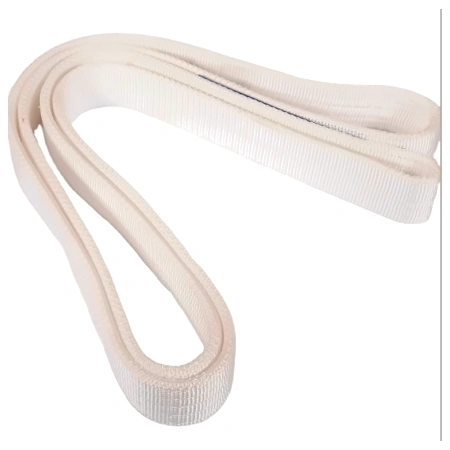
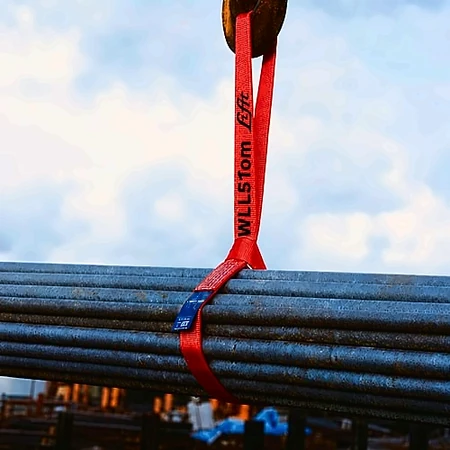
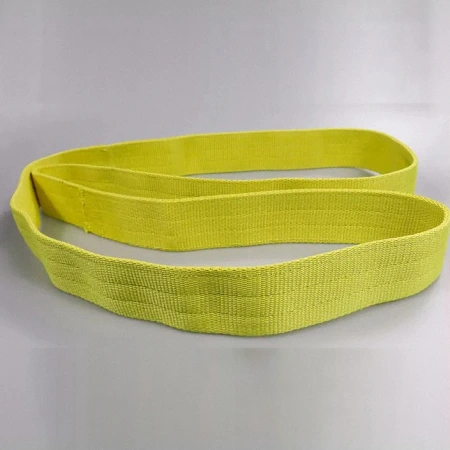
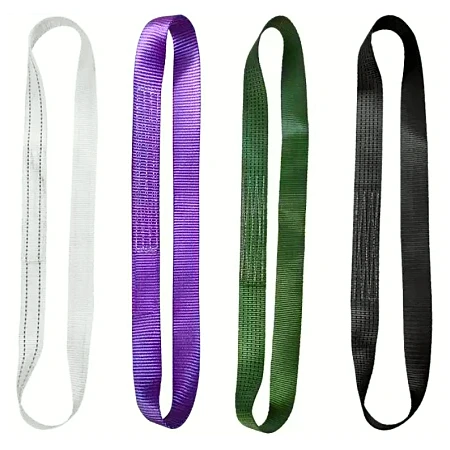
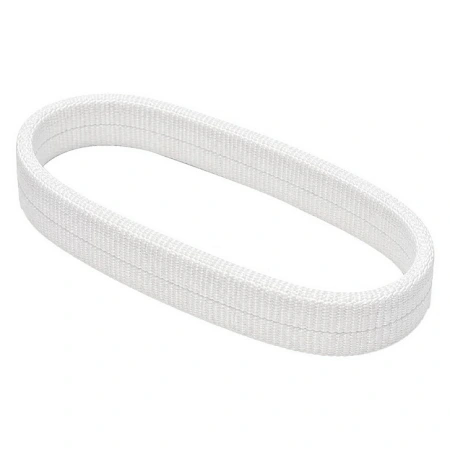
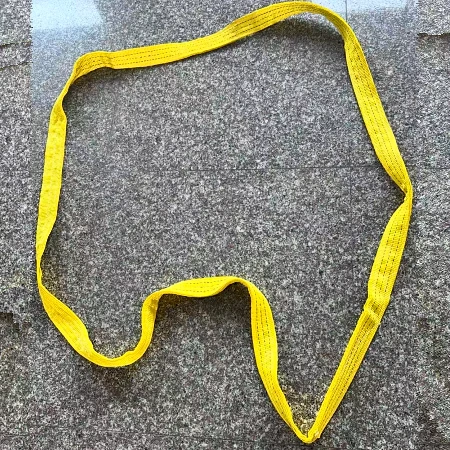
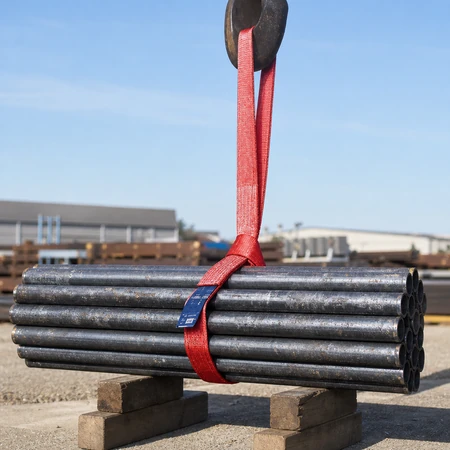
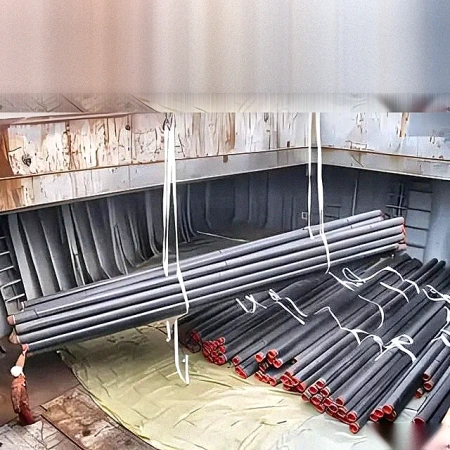
He maʻa hāpai pau ʻole he puka pani me na welau ole: hui ka bana iaia iho, so there is nothing to thread, no eye to place and no metal fitting anywhere on the article. That one property is why it is the sling most often chosen for loads that must not be marked — metal pipe and tube, rubber products, lāʻau, nā ʻāpana alumini a me ka pepa, and copper tube among them.
The same loop works in the vertical, basket and choker arrangements, it is bought in flat woven or sleeved round form, and it is made to the width, thickness and length the load needs. E haʻi mai iā mākou i ka ukana, its diameter or girth, and how it will be picked, and we will confirm the loop that fits it.
Choosing an endless lifting sling by the load, ʻaʻole ma ka tonage
A closed loop is bought from the load outwards. The tonnage decides the band, but the load decides everything else: its section, its girth, its finish, and whether the loop will be used doubled around the article or passed through itself. The five loads this range is most often bought for are different in exactly those respects, and the table below is the practical reading of them.
What each load decides about the loop
| ʻO ka ukana |
Why a closed soft loop suits it |
He aha e kākau ai ma ke kauoha |
| Metal pipe and tube |
Hoʻopili ʻia kahi ʻāpana poepoe ma mua o ka hoʻopaʻa ʻia: the load enters the loop by passing it round the pipe, so there is no eye to be lined up against a machined end and no fitting to bruise a coating. |
The outside diameter and girth at each pick position, the spacing of the two positions, and the coating condition. |
| Rubber products and hose |
Rubber is easily cut by a narrow edge and easily marked by hardware; a wide woven band spreads the force and presents no metal at all. |
The section and its surface, ka nuipa, and whether a compression mark at the contact is a rejection. |
| ʻO nā pūʻolo lāʻau a me nā lāʻau |
ʻOkiʻi ʻo Sharp arisses i kahi kaula haiki; a wide loop spreads the pressure and carries the pack without printing a line into dressed stock. |
Ka nui o ka pūʻolo i kona hele ʻana, the girth at the pick positions, and any edge protection required. |
| Nā ʻāpana alumini a me ka pepa |
The softest load in this table, and the one where a mark is most likely to be a rejection; synthetic fibre is chosen here because it is softer than the load. |
ʻO ka pau ʻana (wili, anodised a pena ʻia), ka lōʻihi, a ina paha e ae ia ka hoailona hoike. |
| Copper tube and fittings |
palupalu, pipiʻi a kala ʻole i ka burr: the absence of any fitting on the article is the whole protection. |
The tube diameter and wall, the surface condition, and the girth at each position. |
What having no ends changes on the job
The closed form is not a sling with its ends hidden; he ʻatikala ʻokoʻa, a ʻekolu mau hopena kūpono. There is no end to measure from, so the size the sling was made to exists in the marking and in the order rather than in the article. There is no end to attach to, so the arrangement — vertical, basket or choker — is decided at the load and changes what the loop carries. And there is no end from which an inspection can begin, so on a closed loop the printed figures are the whole record of what the article is, which is why the marking has to be legible rather than merely present.
Ka lōʻihi, a me ka ʻaha kūkā i haʻi ʻia ma
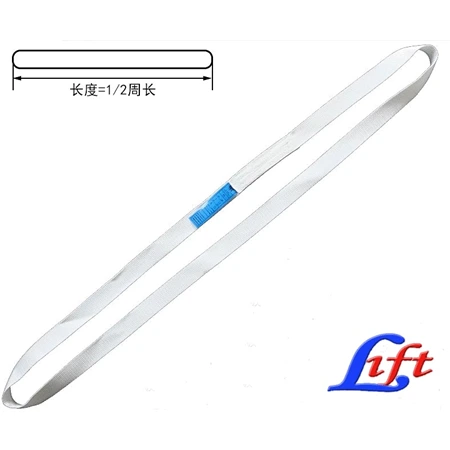
ʻAʻohe hopena o kahi loop e ana i waena, and this trade quotes the same article under two conventions — the circumference of the loop, and the length of the band laid flat — which for the same sling differ by about a factor of two. He kūpono nā mea ʻelua; hoʻokahi wale nō o lākou ke kiʻi āu i manaʻo ai. State the convention with the figure on the enquiry, a i ʻole e haʻi i ka hoʻohana (for example, ʻO ke apo o ka ʻatikala pono e hele a puni ka loop), a nalo ka pohihihi ma mua o ka ʻoki ʻia ʻana o ka bana.
Materials and forms
- Flat woven endless belt — one band closed on itself, the simplest closed article, with a wide face for soft loads.
- Maʻa poʻe lima lima — a load-bearing core inside a protective cover, which keeps the fibre away from the load and shows the capacity clearly on the sleeve.
- Polyester — low stretch and stable under a steady load; the general-purpose choice for repetitive handling.
- Nylon — tough and abrasion-resistant, and the one to consider where shock loads are expected.
- UHMWPE a me ka aramid — for the highest strength to weight, and for high-temperature or flame exposure respectively.
ʻO kēlā me kēia fiber, no metal part is fitted to the article: the loop is the whole sling. Where a fitting is unavoidable at the hook end, it belongs to the lifting set rather than to the sling, which keeps the contact with the load entirely soft.
Nīnau pinepine ʻia
Can an endless lifting sling be used in a choker? ʻAe, a pono e haiia ka hoonohonoho ana, because what the loop carries changes with it. Kū pololei, ʻO ka hīnaʻi a me ka choker ʻekolu mau hana like ʻole ma ka ʻatikala hoʻokahi.
Pehea wau e haʻi ai i ka lōʻihi? With the convention named, or with the use stated instead — the girth of the article the loop goes round. ʻOkoʻa nā kuʻina ʻelua ma kahi o ka helu ʻelua.
Will it mark a copper or aluminium surface? ʻO ke kaula he fiber synthetic a ʻaʻohe mea kūpono e hoʻopā i ka ukana, no laila, ʻaʻole ia e ʻakaʻaka a ʻā. ʻO ka laulā ke ana palekana: ka laula o ka bana, ʻo ka haʻahaʻa o ke kaomi ma luna o ka ʻili.
Can it be made to my diameter? Yes — width, thickness and length are made to order against the load, and the marking is put on as it is made.
Kahi e hele ai
For the closed forms in this family see maa poepoe pau ole a maʻa pau ʻole; for the flat closed belt see circular flat lifting belt; for the one-trip version of the same loop see maʻa hoʻokahi ala hoʻohana a maʻa hoʻohana pōʻai; for pipe duty specifically see maʻa paipu kila ma waho. Nā waeʻano pili: maʻa hāpai.
Hoʻopili
Lift Sling Rigging Co., Ltd - kelepona a me WeChat 18066002268, leka uila 702461526@qq.com, Pāka ʻOihana Lifute, Kulanakauhale o Taizhou, ʻĀpana ʻo Jiangsu, Kina. HS code 630790. Hoʻouna i ka ukana, its girth and the arrangement, and we will confirm the loop before the band is cut.