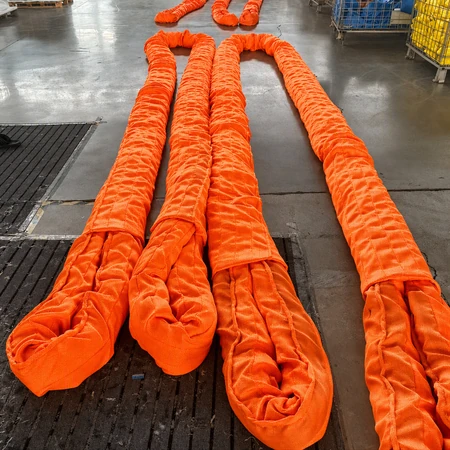
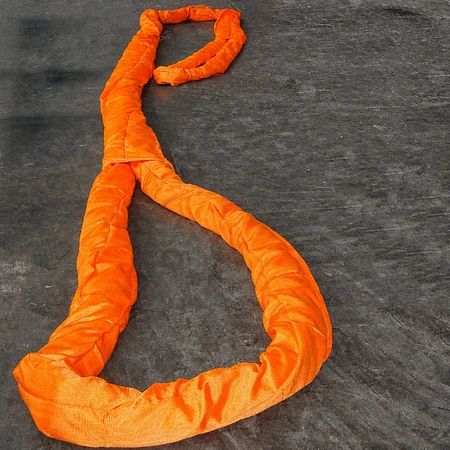
Kamfanin rigingimu na ɗaga majajjawa yana samar da Ido-Eye Round Sling,Ido & Ido Zagaye Sling,Ido da ido Polyester Round Sling,zagaye majajjawa mai ido biyu.
Eye-Eye Round Sling — Double Eye Sling, 1– 1000 t
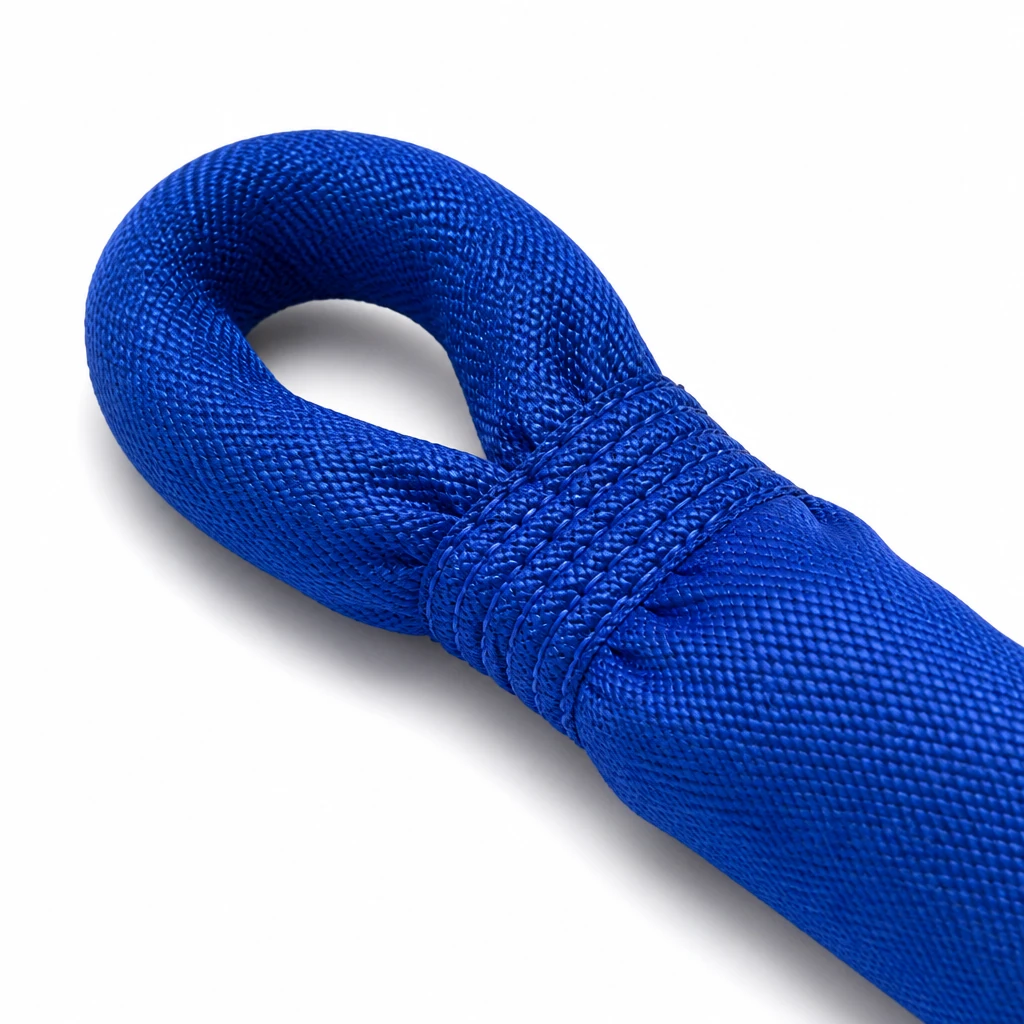
An eye-eye round sling is a round sling terminated at each end: the woven sleeve is gathered and stitched into two reinforced eyes, so the sling has a fixed length kuma two known pick-up points maimakon madauki mara iyaka. It is made in high-tenacity polyester across 27 LFTERS articles, daga 1,000 kg ku 1,000,000 kg, in eye-to-eye lengths from 0.5 m zuwa 80 m. The table below gives the article, iyakar nauyin aiki, the body thickness and width, the length range and the weight per metre — enough to pick the model before you send the enquiry.
- Iyakar nauyin aiki1,000 kg ku 1,000,000 kg
- kewayon labarinLFTERS-1 zuwa LFTERS-1000, 27 masu girma dabam
- Girman jiki6 × 40 mm zuwa 320 × 1,050 mm
- Tsawon0.5–80 m eye-to-eye
- Nauyin raka'a0.4 ku 222 kg/m
- Safety factor7:1 biyu DAYA 1492-2 yi
Why specify an eye-eye round sling rather than an endless one
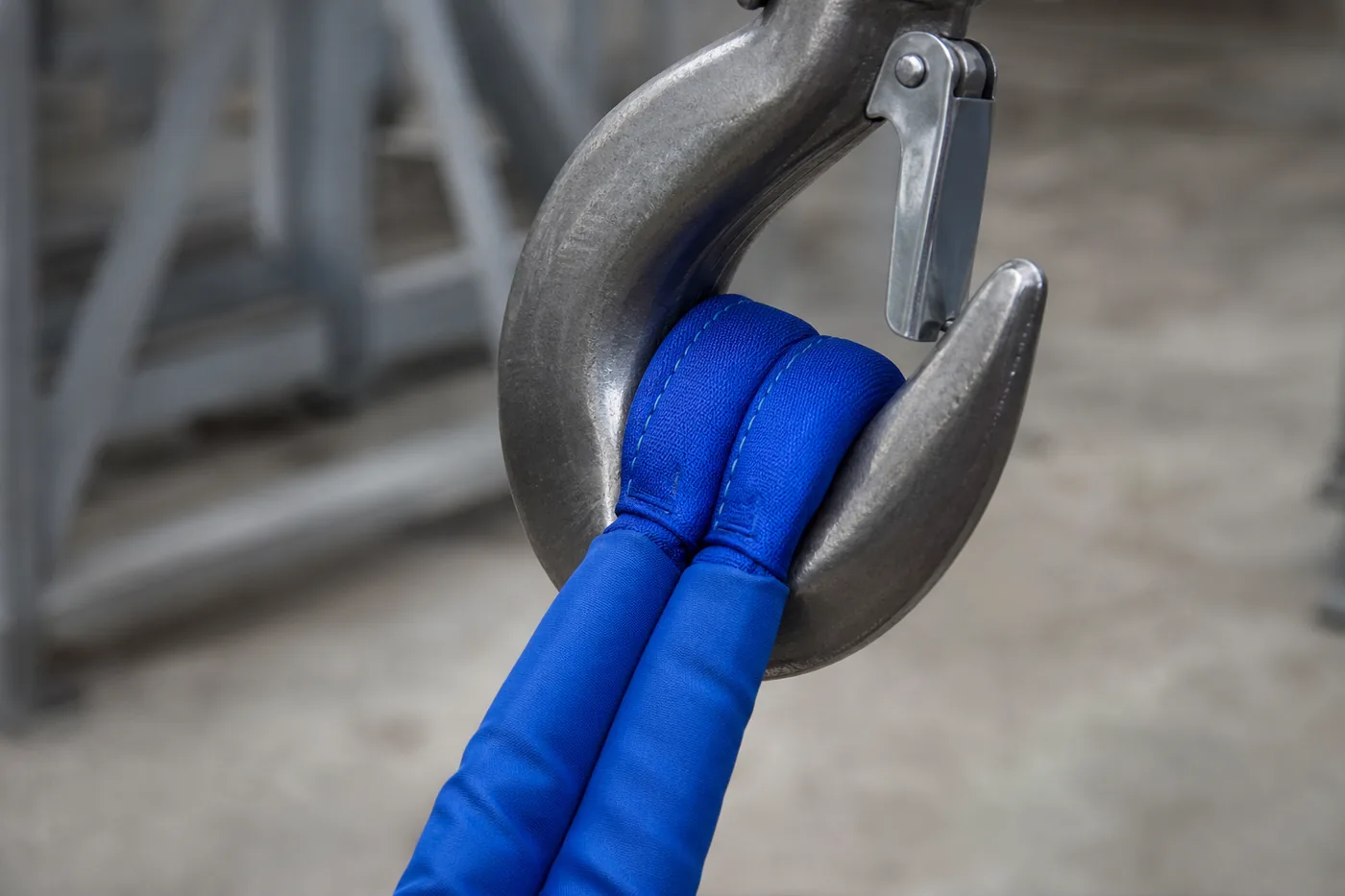
An endless round sling goes round anything and spreads its own wear. An ido da ido zagaye majajjawa gives up a little of that freedom for something a rigging team values more on a repeated lift: certainty. The length you ordered is the length you get, the eyes land in the same place every time, and the hook or shackle takes a formed eye instead of a bunch of sleeve.
- A length that repeats. The eye-to-eye distance is a specification, not a result, so a lift carried out next month matches the one carried out today.
- Two defined pick-up points. The eye sits in the hook bowl or the shackle pin as a unit — quick to rig, quick to check, easy to hand over between shifts.
- The round body is unchanged. Under the load the sleeve still conforms to a roll, a pipe, a trunnion or a machined face, so nothing is marked and nothing is point-loaded.
- One place to look first. Load transfers through the two stitched eyes, so inspection starts and usually ends there.
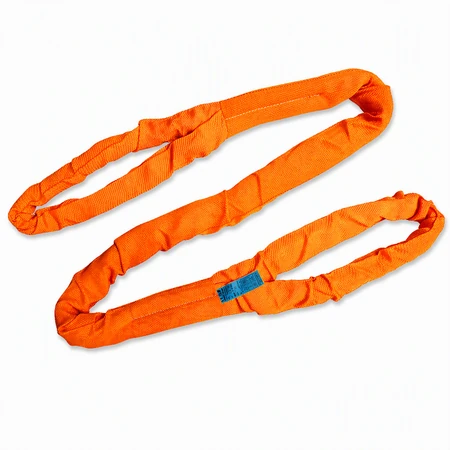
Eye-Eye Round Sling specifications
| Sunan samfur | Ido zagaye majajjawa / ido da ido zagaye majajjawa / eye to eye round sling / majajjawa zagaye ido biyu |
|---|---|
| Gina | Ci gaba da daidaitaccen tsakiya a cikin saƙar hannun rigar tubular, gathered and stitched at both ends into two reinforced eyes |
| Core | Babban ƙarfin polyester daidaitaccen yarn, misali; UHMWPE da aramid cores akan buƙata |
| Hannun hannu | Saƙa polyester mai ƙarfi, Layer ɗaya ko biyu; heat-resistant sleeve to order |
| Iyakar nauyin aiki | 1,000 kg ku 1,000,000 kg across 27 articles — LFTERS-1 · -2 · -3 · -4 · -5 · -6 · -8 · -10 · -12 · -15 · -20 · -25 · -30 · -40 · -50 · -60 · -80 · -100 · -200 · -300 · -400 · -500 · -600 · -700 · -800 · -900 · -1000 |
| Jiki | Kauri 6-320 mm, nisa 40-1,050 mm; see the article table for the exact figure of each size |
| Tsawon | Ido-da-ido, 0.5 m zuwa 80 m; the minimum rises with the article — 0.5 m at LFTERS-1, 9.0 m at LFTERS-1000 |
| Nauyin raka'a | 0.4 kg/m a LFTERS-1 zuwa 222 kg/m a LFTERS-1000, used for shipping and for crane load calculations |
| Safety factor | 7:1 biyu DAYA 1492-2 yi; wasu dalilai don yin oda inda kasuwa ke buƙata |
| Nau'in ido | Flat stitched eye standard; reinforced eye and wear pad optional |
| Launi | Stock orange ko blue; IN 1492-2 capacity colour applied when the order asks for the standard code |
| Alama | Tambarin dinki: article number, aiki iyaka, eye-to-eye length, lambar tsari |
| Shiryawa | Coil in poly bag or carry bag, labeled kartani, shiryawa fitarwa |
| MOQ / OEM | Low MOQ don umarnin gwaji; full OEM on article, tsayi, launi hannun riga, label layout da shiryawa |
kewayon labarin: zabi samfurin
The article number carries the capacity — LFTERS-10 shine 10,000 kg zare, LFTERS-100 da 100,000 kg daya. Kauri da fadi suna kwatanta jiki; the last columns give the shortest and longest eye-to-eye length made in that article, and what the sling weighs per metre so it can be added to the crane load.
| Art. No. | WLL (kg) | WLL (t) | Kauri (mm) | Nisa (mm) | Min (m) | Max (m) | Nauyi (kg/m) |
|---|---|---|---|---|---|---|---|
| LFTERS-1 | 1,000 | 1 | 6 | 40 | 0.5 | 80 | 0.40 |
| LFTERS-2 | 2,000 | 2 | 7 | 50 | 0.5 | 80 | 0.61 |
| LFTERS-3 | 3,000 | 3 | 8 | 60 | 0.5 | 80 | 0.75 |
| LFTERS-4 | 4,000 | 4 | 9 | 70 | 0.5 | 80 | 0.80 |
| LFTERS-5 | 5,000 | 5 | 11 | 75 | 0.5 | 80 | 0.84 |
| LFTERS-6 | 6,000 | 6 | 12 | 80 | 1.0 | 80 | 0.98 |
| LFTERS-8 | 8,000 | 8 | 13 | 90 | 1.0 | 80 | 1.10 |
| LFTERS-10 | 10,000 | 10 | 15 | 100 | 2.0 | 80 | 2.20 |
| LFTERS-12 | 12,000 | 12 | 16 | 110 | 2.0 | 80 | 3.20 |
| LFTERS-15 | 15,000 | 15 | 18 | 125 | 2.0 | 80 | 3.80 |
| LFTERS-20 | 20,000 | 20 | 20 | 150 | 2.5 | 80 | 5.20 |
| LFTERS-25 | 25,000 | 25 | 24 | 180 | 2.5 | 80 | 6.50 |
| LFTERS-30 | 30,000 | 30 | 32 | 200 | 2.5 | 80 | 7.80 |
| LFTERS-40 | 40,000 | 40 | 40 | 200 | 2.5 | 80 | 10.4 |
| LFTERS-50 | 50,000 | 50 | 45 | 220 | 2.5 | 80 | 13.0 |
| LFTERS-60 | 60,000 | 60 | 65 | 220 | 4.0 | 80 | 15.6 |
| LFTERS-80 | 80,000 | 80 | 70 | 260 | 4.0 | 80 | 20.8 |
| LFTERS-100 | 100,000 | 100 | 80 | 290 | 4.0 | 80 | 25.0 |
| LFTERS-200 | 200,000 | 200 | 120 | 450 | 5.0 | 80 | 64.0 |
| LFTERS-300 | 300,000 | 300 | 160 | 525 | 5.0 | 80 | 79.0 |
| LFTERS-400 | 400,000 | 400 | 200 | 670 | 5.0 | 80 | 95.5 |
| LFTERS-500 | 500,000 | 500 | 220 | 750 | 8.0 | 80 | 113.4 |
| LFTERS-600 | 600,000 | 600 | 240 | 820 | 8.0 | 80 | 136.0 |
| LFTERS-700 | 700,000 | 700 | 260 | 870 | 8.0 | 80 | 152.0 |
| LFTERS-800 | 800,000 | 800 | 280 | 930 | 9.0 | 80 | 175.0 |
| LFTERS-900 | 900,000 | 900 | 300 | 990 | 9.0 | 80 | 199.0 |
| LFTERS-1000 | 1,000,000 | 1,000 | 320 | 1,050* | 9.0 | 80 | 222.0 |
* LFTERS-1000 body width is 1,050 mm. The width column steps up by roughly 60 mm da 100 t daga LFTERS-900 (990 mm), kuma 1,050 mm adadi yayi daidai da jera 222 kg/m; the source sheet carries one zero too many. Maximum length is 80 m a cikin kowane labarin, and the minimum is the shortest eye-to-eye distance the body can be gathered and stitched into.
What the sling lifts in each arrangement
The working load limit in the article table is the a tsaye figure. Kwankwasa ko kwando majajjawa iri ɗaya na canza abin da zai ɗagawa, and the multipliers below are applied to that figure — they are not added to it. Three articles are worked out; the same factors apply to all 27.
| Shirye-shirye | Factor | LFTERS-10 | LFTERS-50 | LFTERS-100 |
|---|---|---|---|---|
| A tsaye | × 1.0 | 10,000 kg | 50,000 kg | 100,000 kg |
| An shake | × 0.8 | 8,000 kg | 40,000 kg | 80,000 kg |
| Kwando, 0–7° | × 2.0 | 20,000 kg | 100,000 kg | 200,000 kg |
| Kwando, 7-45° | × 1.4 | 14,000 kg | 70,000 kg | 140,000 kg |
| Kwando, 45-60° | × 1.0 | 10,000 kg | 50,000 kg | 100,000 kg |
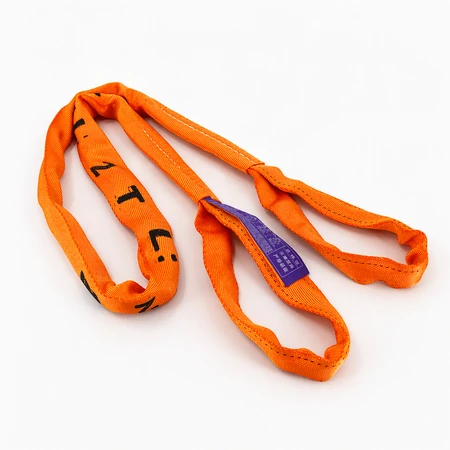
Yadda ake yin oda
- The article. Take the load at each leg, divide by the arrangement factor above, and choose the first article whose working load limit covers the result.
- The eye-to-eye length. Measure inside eye to inside eye, then add headroom so the legs do not splay into a wide angle that costs capacity. It has to sit between the Min and Max columns of that article.
- The eye type. Flat stitched eyes for normal service; reinforced eyes or wear pads where the hook bowl is worn or the sling is repeated on the same edge.
- The environment and the marking. Zazzabi, sunadarai, ruwa, hasken rana, and the identification or certificate the receiving site has to read.
Quote it as article, length and option — for example LFTERS-10, 6 m eye-to-eye, flat stitched eye, single polyester sleeve. Any article can be built in any length inside its range, and the weight per metre lets you confirm the total before the crane is booked.
Gina: what carries the load, and what protects it
Three parts decide the service life of an eye to eye round sling. The cibiya is a bundle of parallel polyester yarn running unbroken from eye to eye; it carries the entire load and elongates very little. The hannun riga is a woven tube over the core that takes abrasion, dirt and daylight, and carries the colour, the printed working load limit and the label. The idanu are the two places where the sleeve is gathered and the stitching takes the load path.
That hierarchy explains most retirements: a sleeve cut through so the core is visible retires the sling even when the core still looks sound, and stitching that is broken, slack or pulled retires it even when the sleeve is intact. On an endless sling the load passes continuously round the loop; here it has to cross two stitched terminations, and those terminations are where it will fail first.
Ido-ido, endless or flat webbing: which one for the lift
| Dukiya | Ido zagaye majajjawa | Zagaye mara iyaka | Flat webbing majajjawa |
|---|---|---|---|
| Ƙarshe | Idanu masu dinki biyu | Babu - rufaffiyar zobe | Ido biyu, flat body |
| Tsawon | Ma'anarsa, ido da ido | Kewaye madaukai | Ma'anarsa, ido da ido |
| Tushen sawa | Kafaffe a idanu | Juyawa zagaye madaukai | Kafaffen tare da bandeji |
| Tuntuɓi tare da kaya | Jikin zagaye ya dace | Jikin zagaye ya dace | Fadin fuska |
| Capacity in a slim profile | High — parallel core | High — parallel core | Needs width and plies |
| Mafi kyau ga | Maimaita ɗagawa, ƙugiya da ɗaure, kafaffen lissafi | Siffofin banƙyama, spreading wear, very large capacities | kunkuntar budewa, bayyane kaya hanya |
Both round sling forms are made on the same line from the same core and sleeve, so the choice between them is a rigging decision, ba mai iyawa ba. For the endless form see our majajjawa mara iyaka iyaka; ga lebur form duba lebur webbing majajjawa.
Where an eye-eye sling earns its place
- Repeated lifts of the same machine or mould, inda geometry ba dole ba ne ya canza tsakanin motsi.
- Riging ido-da-ido akan ƙugiya, a shackle or a dagawa shimfidawa katako that keeps the legs vertical.
- Kwando daga cikin nadi, bututu, tubes and machined shafts, inda jikin zagaye ya nannade lankwasa.
- Farantin karfe, sheet and coil packs that need soft bearing and high capacity in one slim sling.
- Fentin, shuka mai rufi ko gogewa inda sarƙa ko a majajjawa igiya zai yi alama a saman.
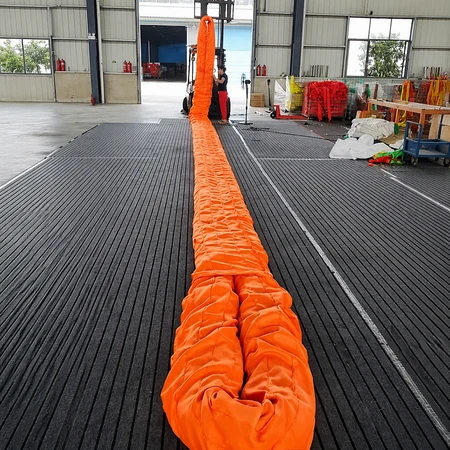
- Very heavy work at the top of the range — the WLL 30T polyester zagaye majajjawa da kuma 1100 tonne UHMWPE zagaye majajjawa take the same construction further.
Dubawa, care and limits
- Idanun farko, then sleeve, then body — in that order, before every use.
- Yi ritaya on broken or pulled stitching, a sleeve worn thin at the eye, core bayyane ta hannun hannun riga, zafi glazing, or chemical staining.
- Kare gefen. The sleeve is abrasion protection, ba makamai ba; use an edge protector wherever the body crosses a cut edge.
- Do not choke on the eye. The eyes are rated terminations, ba wurin zaren jiki baya ba.
- Kada a taɓa ja majajjawa da aka ɗora, and store it dry, kashe kasa kuma daga hasken rana.
- Record the lifts and any damage, and follow the practice of your national governing body and the training you have received.
Tambayoyin da ake yawan yi
What is an eye-eye round sling?
A round sling whose sleeve is gathered and stitched into a reinforced eye at each end, instead of being closed into an endless ring. The core and the sleeve-over-core construction are the same as any zagaye majajjawa; Bambanci shine ƙayyadaddun ƙarewa biyu, a defined length and two defined pick-up points.
What do the LFTERS article numbers mean?
The number is the working load limit in tonnes on the 1-2-3-4-5-6-8-10-12-15-20-25-30-40-50-60-80-100-200-300-400-500-600-700-800-900-1000 tsani. LFTERS-10 is rated 10,000 kg a tsaye, LFTERS-100 is 100,000 kg and LFTERS-1000 is 1,000,000 kg. There is no article for 7 t, 9 t ko 11 t — the range steps in the sequence shown.
How is the length measured on an eye and eye round sling?
Tsakanin idanu - daga cikin ido ɗaya zuwa cikin ɗayan. The eyes add to the overall measurement but are not part of the working length. Each article has its own minimum, daga 0.5 m at LFTERS-1 to 9.0 m at LFTERS-1000, kuma 80 m is the maximum in every size.
How much does the sling weigh?
The last column of the article table is the weight per metre: 0.40 kg/m at LFTERS-1, 2.20 kg/m at LFTERS-10 and 222 kg/m a LFTERS-1000. Multiply by the eye-to-eye length and add the eyes and fittings to get the figure to put against the crane’s capacity.
What can a 10,000 kg eye-eye round sling lift in a basket?
20,000 kg at a basket angle of 0–7°, 14,000 kg between 7° and 45°, kuma 10,000 kg between 45° and 60°. An shake, the same sling is rated 8,000 kg. The 10,000 kg figure printed on the sleeve is the vertical rating only.
Can the capacity be identified from the sleeve colour?
Where the EN 1492-2 code is specified on the order, iya: purple 1 t, kore 2 t, rawaya 3 t, launin toka 4 t, ja 5 t, launin ruwan kasa 6 t, blue 8 t and orange from 10 t zuwa sama. Stock slings are orange or blue regardless of capacity, with the working load limit and article number printed on the sleeve — so read the printed figure, ba launi ba.
Do you make custom lengths, eye types and sleeve colours?
Ee. Any eye-to-eye length inside the Min–Max range of the article, flat stitched eyes as standard with reinforced eyes and wear pads optional, aramid or UHMWPE cores, heat-resistant sleeves, and your own label layout, language and packing. Aika kaya, wuraren karba, the headroom and the environment for a sized quotation.
Request a quote for eye-eye round slings
Aika lambar labarin ko kaya, nisa tsakanin wuraren karbanku, tsarin da za ku yi, headroom, and any marking or certification your market requires. Za mu dawo da hannun riga, tsayinsa, samfurin da farashin masana'anta kai tsaye. Related specifications: double sleeve heavy duty round sling for hard service, kuma UHMWPE zagaye majajjawa where weight matters more than cost. For the termination on its own, without the ordering detail, see the shorter zagaye majajjawa da idanu overview.