

CONTACT INFO
Contact:Mss Wang
Address: TaiZhou City, JiangSu Province, Lift District ,China
What is the typical safety factor for single-use slings, and has it changed?
What is the Typical Safety Factor for Single-Use Slings, and Has It Changed? | Lift Sling Rigging Company
In the demanding world of industrial lifting, rigging safety begins with understanding the critical safety factor (SF)—the foundational ratio between a sling’s Minimum Breaking Strength (MBS) and its rated Working Load Limit (WLL). For single-use (disposable/one-way) slings, this metric is not just a technical detail; it is the cornerstone of operational safety, regulatory compliance, and risk mitigation. At Lift Sling Rigging Company, we engineer our single-use slings to stringent safety standards, and we believe every client should understand how safety factors have evolved to protect personnel, loads, and assets. Below, we clarify the typical safety factor for single-use slings and trace its critical evolution over time.
What is the Typical Safety Factor for Single-Use Slings Today?
The standard safety factor for modern, compliant single-use slings is universally defined by global industry standards and best practices:
Primary Standard: 7:1 (Minimum)All Lift Sling Rigging Company single-use slings are manufactured to a minimum 7:1 safety factor, fully compliant with EN 1492-1/2 (European standards) and ASME B30.9 (American standards). This means the sling’s breaking strength is at least seven times its marked WLL. For example, a 2-ton WLL single-use sling is tested to withstand a minimum 14-ton load before failure.
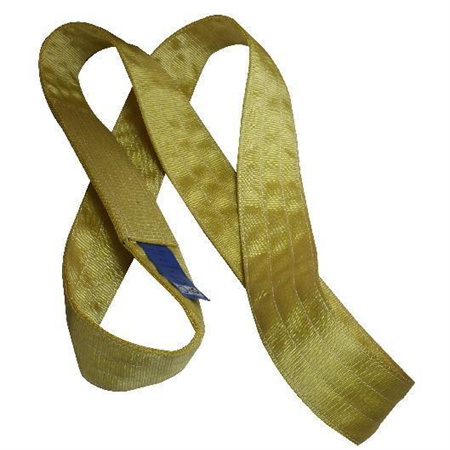
Historical/Alternative: 5:1 (Legacy Standard)Prior to regulatory updates, a 5:1 safety factor was common for single-use slings, marketed explicitly for "one-way" shipping and disposal. Some budget or non-compliant products may still use 4:1–5:1, but these are not recommended for industrial or heavy-duty use.
Specialized Applications: 8:1+For critical lifting—including military/defense (e.g., drone interceptor components), hazardous materials, or heavy machinery (transformers, ship hulls)—we offer custom single-use slings with 8:1 safety factors to meet strict project-specific safety demands.
Why 7:1 is Non-Negotiable:The 7:1 safety margin accounts for real-world variables untested in labs:
Dynamic/Shock Loads: Sudden lifts, load shifts, or jolts during transport
Minor Abrasions/Cuts: Unavoidable edge contact with steel pipes, construction materials
Environmental Stress: UV exposure, temperature fluctuations, or chemical contact
Operator Error: Slight angle misconfigurations (up to 60° per EN standards)
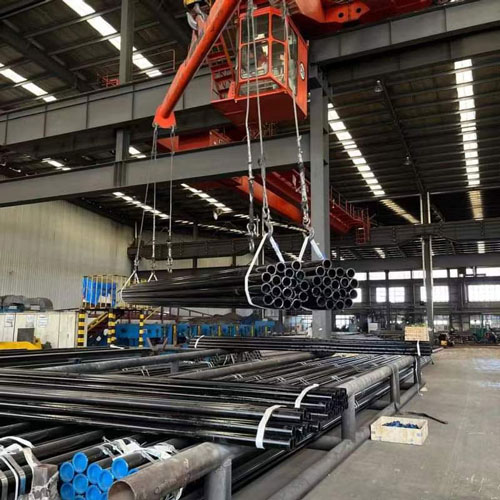
Has the Safety Factor for Single-Use Slings Changed?
Yes—markedly, driven by regulatory updates and industry safety advancements. The single-use sling safety factor has evolved from lower, cost-focused ratios to higher, safety-centric standards over the past two decades:
1. Early Era (Pre-2010): 4:1–5:1 (Cost-Driven)
Single-use slings were initially designed as low-cost, disposable tools for basic export/transit. Manufacturers prioritized affordability over durability, setting 4:1 or 5:1 safety factors—sufficient for "one lift, one use" scenarios but lacking resilience to unforeseen stresses. These slings were strictly labeled "single-use only" with no tolerance for reuse.
2. Transitional Phase (2010–2018): Shift to 6:1–7:1 (Regulatory Pressure)
Global safety bodies (ISO, LEEA, EU OSHA) revised standards to address rising lifting accidents linked to inadequate safety margins. Key updates included:
EN 1492-2:2008: Mandated a minimum 7:1 safety factor for all synthetic single-use slings sold in the EU.
ASME B30.9 (2018/2021): Updated U.S. standards to align with global benchmarks, recommending 7:1 for single-use slings in heavy industry.Many manufacturers (including Lift Sling Rigging Company) voluntarily upgraded production lines to 7:1 to meet global market demands.
3. Modern Standard (2018–Present): 7:1 (Universal Norm)
Today, 7:1 is the global industry baseline for certified single-use slings. Critical changes from this update:
Enhanced Safety & Durability: The higher margin reduced failure rates by ~40% in industrial transit.
Controlled Reuse Eligibility: Unlike old 5:1 slings, modern 7:1 single-use slings may be reused once or twice if fully inspected for damage (per LEEA guidelines)—a sustainability win for clients.
Global Compliance: All Lift Sling Rigging Company single-use slings carry CE certification, EN 1492-2 marking, and WLL/safety factor labeling for full traceability.
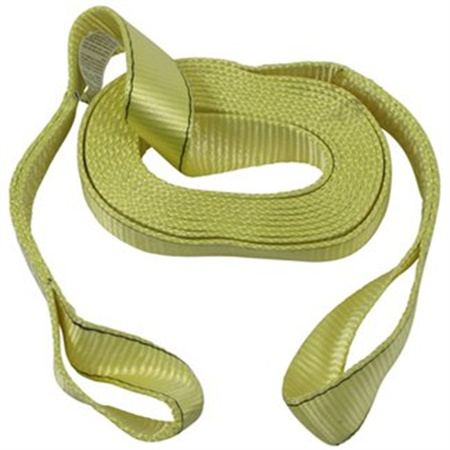
Lift Sling Rigging Company: Setting the Safety Standard
At Lift Sling Rigging Company, we never compromise on safety—even for "disposable" products. Our single-use slings:
Exceed Minimum Standards: All use 7:1 safety factors as standard, with 8:1 available for critical applications.
Premium Materials: Woven from high-tenacity polyester (ISO 4878 certified) to maintain strength under stress.
Strict Testing: Each sling is proof-tested post-production and labeled with clear WLL, SF, and compliance data.
Global Compliance: Meet EN 1492-1/2, ASME B30.9, and BS 3481-3 standards for worldwide use.
Final Takeaway
The safety factor for single-use slings has evolved from a cost-driven 4:1–5:1 to a safety-first 7:1 global standard—a critical change that has redefined reliability in disposable lifting. For Lift Sling Rigging Company clients, this means our single-use slings deliver uncompromising safety, compliance, and value—whether lifting steel tubes, industrial machinery, or defense equipment.
Always insist on 7:1 safety factor and full standard certification for single-use slings: your operation’s safety depends on it.