

CONTACT INFO
Contact:Mss Wang
Address: TaiZhou City, JiangSu Province, Lift District ,China
What materials are single-use slings typically made from?
What Materials Are Single-Use Slings Typically Made From? | Lift Sling Rigging Company
In the global lifting and rigging industry, single-use slings have become a staple for safe, cost-effective load handling—from steel tube logistics to heavy machinery transport and military equipment deployment. At Lift Sling Rigging Company, we understand that the performance, durability, and safety of single-use slings start with carefully selected materials. The right material not only determines a sling’s load-bearing capacity but also its adaptability to harsh environments, compliance with international standards, and suitability for diverse industrial applications.
So, what materials are single-use slings typically made from? Let’s break down the core options, their unique advantages, and how Lift Sling Rigging Company leverages these materials to deliver industry-leading solutions.
Polyester: The Most Versatile Choice for General Industrial Use
Polyester is the gold standard material for most single-use slings—and for good reason. It dominates the market due to its unbeatable combination of strength, flexibility, and resistance to common industrial hazards. At Lift Sling Rigging Company, our polyester single-use slings are woven from high-tenacity polyester filaments, engineered to meet EN 1492-1 and ASME B30.9 standards with a safety factor of 5:1 to 7:1.
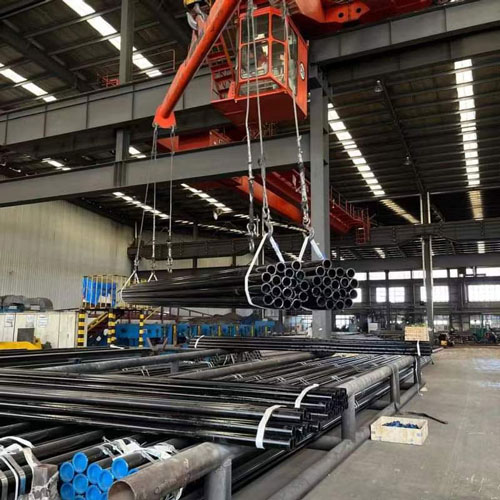
Key benefits of polyester single-use slings include:
Exceptional tensile strength: Capable of handling loads ranging from light packages to heavy steel bundles and transformer components, making it ideal for traditional industrial sectors.
Resistance to abrasion, acids, and alkalis: Polyester holds up well in harsh environments, including chemical plants, construction sites, and marine cargo operations, without compromising structural integrity.
Low stretch performance: Minimizes load shifting during lifting, ensuring stable and safe operations for irregularly shaped loads like hull sections or prefabricated parts.
Temperature tolerance: Performs reliably in temperatures from -40°C to +100°C, suitable for both cold storage logistics and outdoor construction projects.
Polyester single-use slings are our best-selling product at Lift Sling Rigging Company, tailored for one-way shipments, export logistics, and short-term lifting tasks where cost-efficiency and safety are top priorities.
Polypropylene: The Lightweight Solution for Low-Weight Loads
For applications involving lighter loads or moisture-prone environments, polypropylene is a go-to material for single-use slings. While it has a lower tensile strength than polyester, polypropylene offers unique advantages that make it a valuable option for specific use cases.
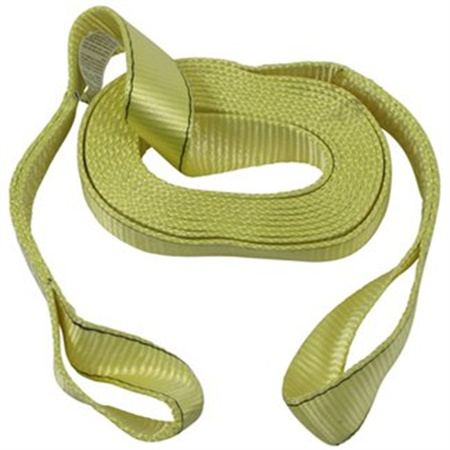
Our polypropylene single-use slings stand out for:
Superior water resistance: Polypropylene is completely hydrophobic, meaning it does not absorb moisture—perfect for marine cargo, fishing industry equipment, or outdoor projects in rainy climates. It resists rot and mildew, eliminating the risk of material degradation over short-term use.
Ultra-lightweight design: Easier to handle and maneuver than polyester slings, making it ideal for manual lifting tasks or operations in tight spaces where heavy equipment is not feasible.
Cost-effectiveness: A budget-friendly alternative for light-load applications such as packaging, agricultural product transport, and small machinery moving.
Lift Sling Rigging Company’s polypropylene single-use slings are widely used in food and beverage logistics, where hygiene and moisture resistance are critical, as well as in temporary event setup and light construction work.
High-Strength Synthetic Fibers: For Specialized Heavy-Duty and Defense Applications
For extreme conditions—such as military and defense operations, high-temperature environments, or ultra-heavy load lifting—single-use slings require advanced materials beyond standard polyester or polypropylene. Lift Sling Rigging Company offers specialized single-use slings crafted from aramid (Kevlar) fibers and high-strength polyethylene (UHMWPE), engineered to meet the rigorous demands of niche industries.
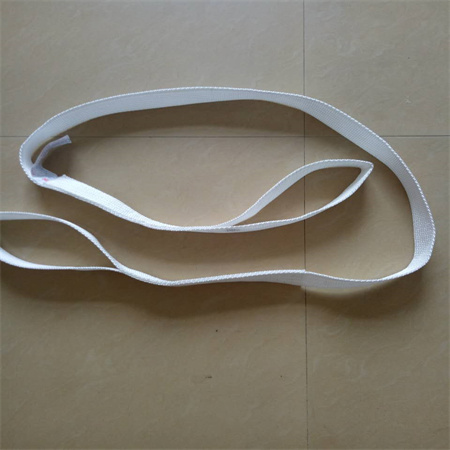
Aramid (Kevlar) single-use slings: Designed for high-temperature environments, aramid fibers can withstand temperatures up to 250°C without melting or losing strength. They are ideal for military applications, such as securing drone components or transporting artillery equipment, as well as for foundry operations and welding projects where heat resistance is non-negotiable.
UHMWPE single-use slings: Boast an impressive strength-to-weight ratio—stronger than steel on a pound-for-pound basis—while remaining lightweight and flexible. These slings are used for ultra-heavy loads, including large-scale construction machinery and shipbuilding components, where maximum load capacity is required without adding excess weight to the lifting system.
Lift Sling Rigging Company: Your Trusted Partner for Material-Customized Single-Use Slings
At Lift Sling Rigging Company, we don’t just supply single-use slings—we engineer solutions tailored to your unique application needs. Our team of rigging experts works closely with clients to select the optimal material, size, and configuration for every project, whether you need a polyester sling for steel tube transport, a polypropylene sling for marine cargo, or an aramid sling for defense equipment handling.
All our single-use slings are manufactured with strict quality control processes, featuring clear labeling of WLL (Working Load Limit), material type, and compliance standards for full traceability. We prioritize both safety and cost-efficiency, ensuring our products deliver unmatched value while meeting the highest global industry benchmarks.
When you choose Lift Sling Rigging Company, you’re choosing a partner that understands the critical role of materials in lifting operations. Let us help you select the perfect single-use sling material for your next project—because the right material makes all the difference in safety and performance.
Would you like me to create a comparative material specification table for Lift Sling Rigging Company’s single-use slings, highlighting key parameters like tensile strength, temperature range, and application scenarios?