

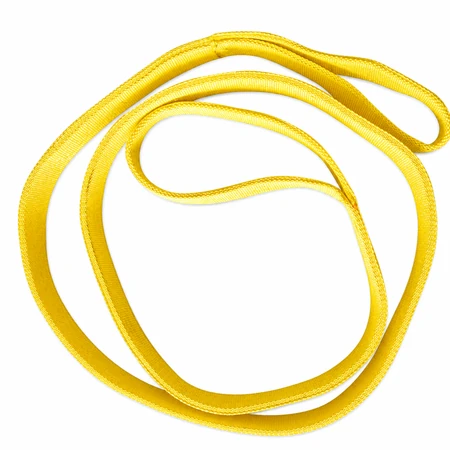
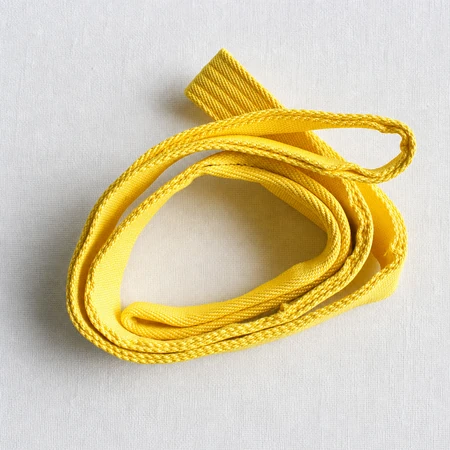
Lift sling rigging company produce High Temperature Webbing Sling,高温吊装带,耐热吊带,High Temperature Resistant Lifting Sling.
High Temperature Webbing Sling
Aramid Flat Webbing Slings & Heat Resistant Protective Sleeves — For Loads Hotter Than Standard Webbing Can Take
一个 高温吊装带 exists because ordinary webbing does not tolerate heat. 聚酯纤维, 以上大致排除了尼龙和聚丙烯织带吊装带 90 ℃ — the fibre softens, glazes and loses strength, and the damage may not be visible from the outside. Our high-temperature range is built on 芳纶 (凯夫拉级) 纤维, which has no melting point at all: it chars and decomposes around 500 °C instead of turning to liquid, so it survives a hot environment that would destroy a polyester sling outright. Where the contact is even hotter, a woven heat resistant protective sleeve takes the radiant and contact heat and the webbing stays cooler behind it.
- Aramid webbing — 无熔点, 附近的字符 500 °C 而不是熔化
- Heat resistant sleeves — a sacrificial layer where the sling nears the hot surface
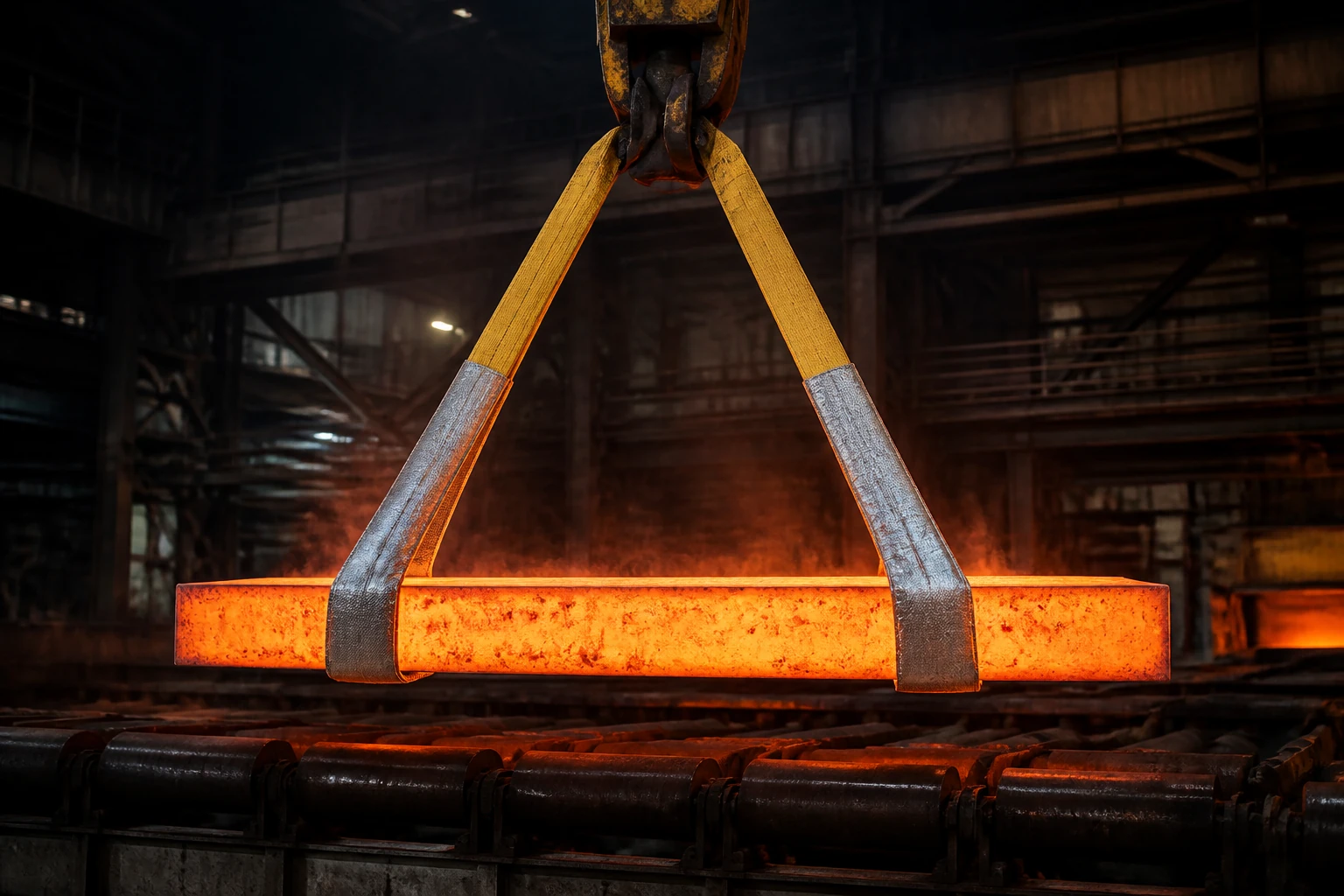
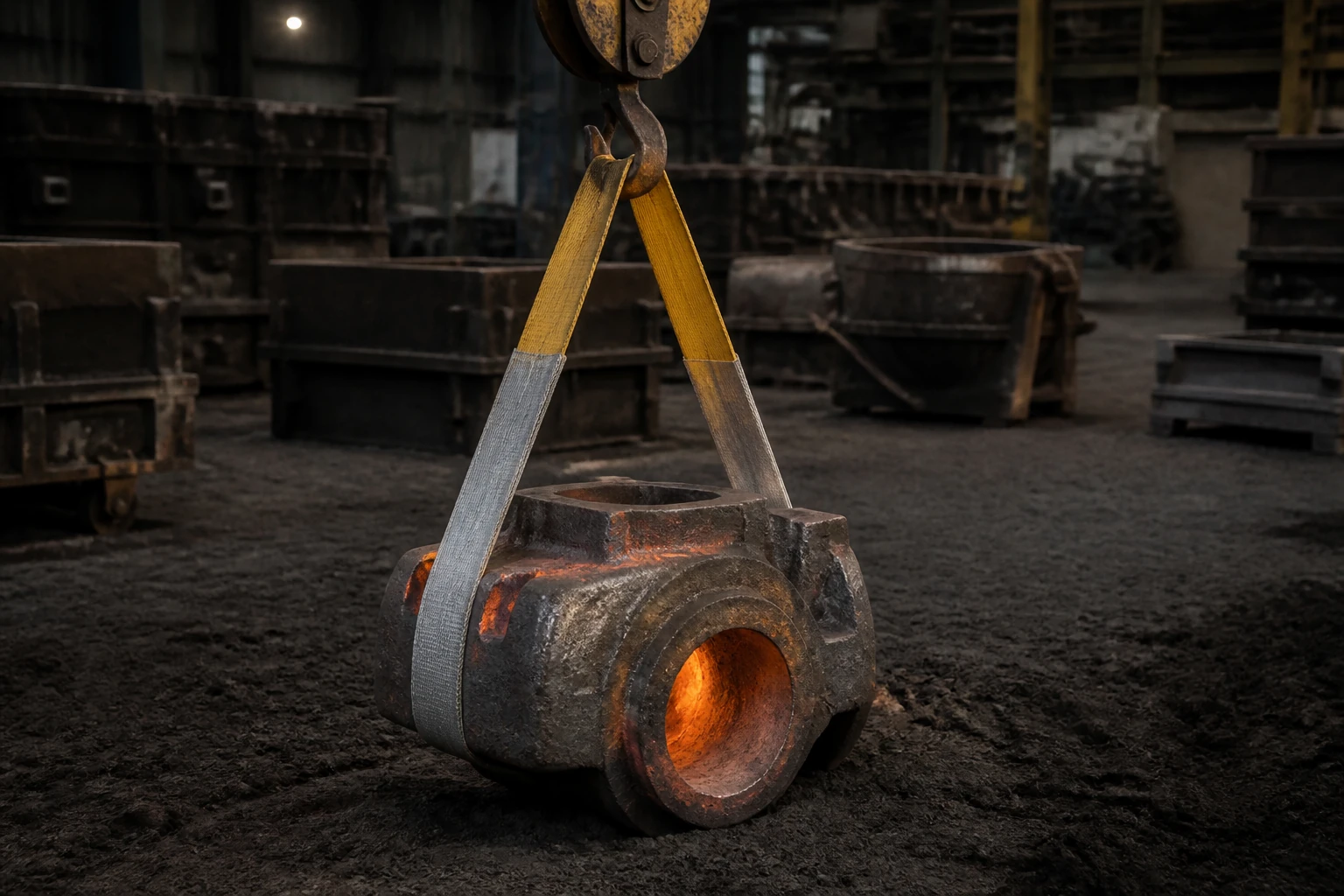
- Trusted in hot work — steel mills, 铸造厂, 压铸, glass and welding shops
- Still soft on the load — a flat band that will not mark a machined or polished surface
主要特点
芳纶, Not Polyester
Aramid fibre has no melting point. Heated far enough it chars and breaks down — but it does not liquefy the way polyester or nylon does, which is what makes it usable in hot work.
Sleeves Take the Heat
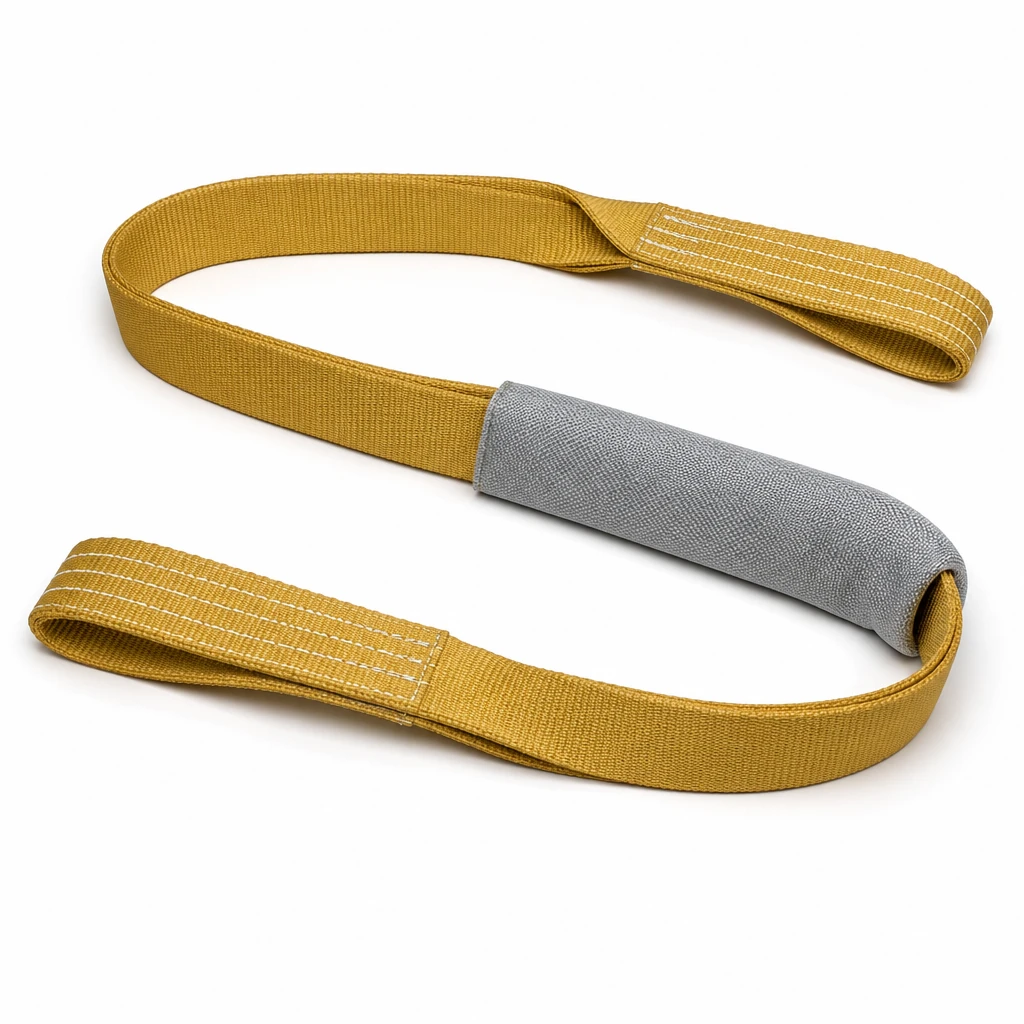
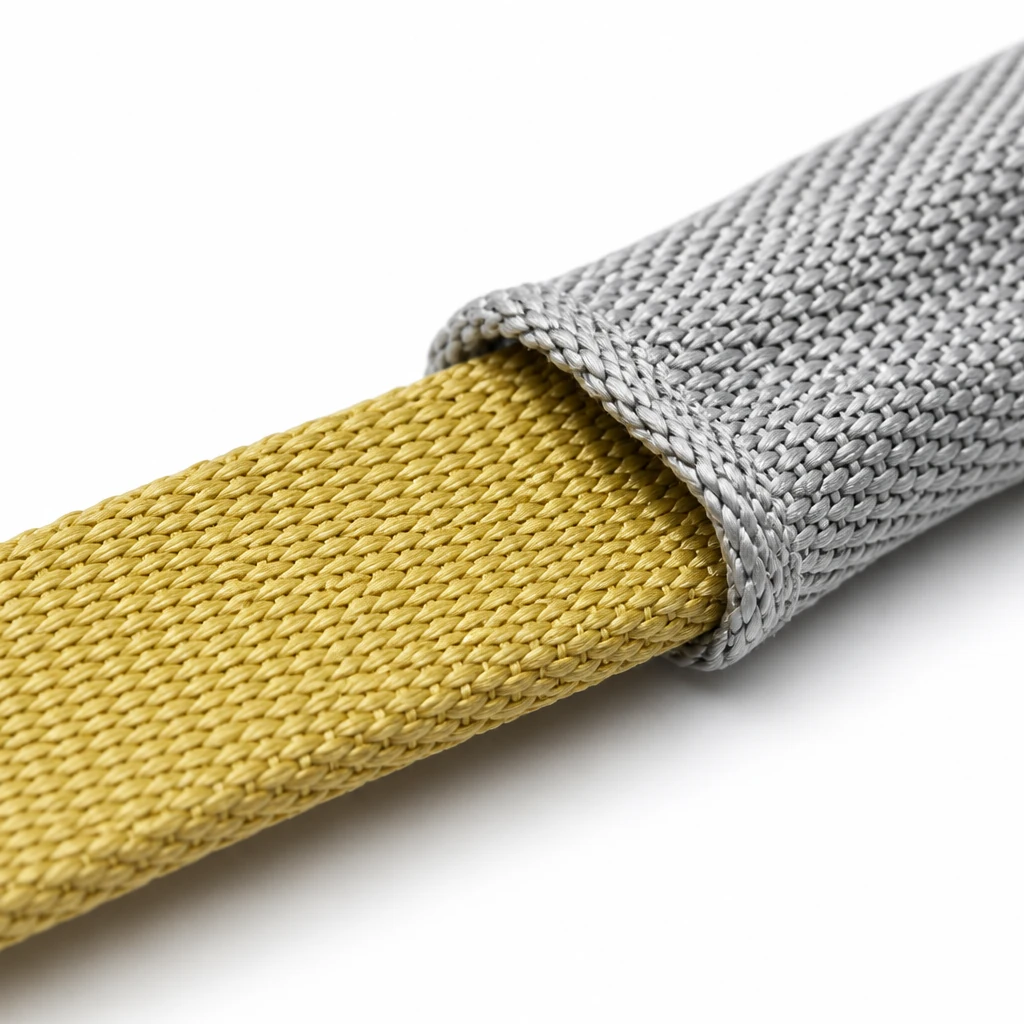
A woven heat resistant sleeve is a sacrificial layer over the load-bearing band. It is cheaper and quicker to replace than a sling, and it is where the heat should arrive.
Inherently Non-Melting
Because the fibre chars rather than melts, the failure mode in an overheat is a scorched patch you can see and feel — not a hidden softening of yarn throughout the band.
Flat Band, Soft on the Load
A flat webbing band spreads the bearing pressure and conforms to the surface, so hot workpieces are lifted without the bruising and marking that chain or wire rope causes.
Rotate to Spread the Burn
The same section of sling tends to meet the same hot corner. Rotating the sling or sliding the sleeve moves the wear and keeps one spot from taking all of it.
Free of Hard Metal
无钩子, 吊索本身的顶针或卸扣. A conductive path or a spark struck off metal rigging is one less hazard beside a hot workpiece.
Why Standard Webbing Stops at 90 ℃
Polyester and nylon are thermoplastics: heat them and they progressively soften, then melt. The melting point — around 255 °C for polyester and roughly 215–265 °C for nylon — is not the number that matters. What matters is what happens well below it. By about 90 °C the yarn has already begun to lose the molecular structure that gives it strength, and because the sling is still intact to look at, the loss is easy to miss.
That is why the industry rule is a working limit of roughly 90 °C for polyester and nylon webbing slings, rather than the fibres’ melting points. A hot workpiece sitting next to a webbing sling is not a small margin — it is the sling’s whole service envelope.
Aramid behaves differently. 它没有熔点, so there is no softening phase and no liquid failure. It keeps its structure until it begins to char and decompose at around 500 ℃. That single difference is what qualifies it for hot work — and it is also why an aramid sling damaged by heat shows as a scorched, brittle or discoloured patch rather than a melted one.
Temperature Ladder: Fibre by Fibre
Choosing a sling for a hot job starts with knowing what the fibre can take. The table below sets out the common options, in the order you should consider them.
| 纤维 | 熔点 | 典型工作频段 | Behaviour when overheated |
|---|---|---|---|
| 聚丙烯 | 大约. 165 ℃ | 高达~90°C | Melts — no useful residual structure |
| 聚酰胺 (尼龙) | 大约. 215–265 °C | 高达~90°C | 软化, glazes, then melts |
| 聚酯纤维 | 大约. 255 ℃ | Up to ~90–100 °C | 软化, glazes, then melts |
| 芳纶 (凯夫拉级) | None — chars instead | ~200 °C continuous | Chars and decomposes near 500 ℃; no liquid phase |
| 玻璃纤维 | Softens approx. 840 ℃ | Up to ~600 °C | Softens and loses strength |
| Basalt fibre | Softens above 1 000 ℃ | ~600–700 °C | 软化; very high temperature work |
Which construction for which temperature band
| Load or ambient temperature | 施工要指定 | 为什么 |
|---|---|---|
| 最多 90 ℃ | Standard polyester or nylon webbing sling | 普通吊带. No derating and no need to pay for aramid. |
| 90–150°C | Standard webbing sling with a heat resistant sleeve | The sleeve takes the contact heat; the webbing behind it stays within its band. |
| 150–200°C | 芳纶织带吊装带 | Aramid’s own working band. Size the band so the sling is not also the weak point. |
| 200–400 °C | Aramid webbing sling with an aramid sleeve, 短曝光 | Workable, but exposure time and geometry decide the outcome. Describe the job to us. |
| 多于 400 ℃ | Glass fibre or a specialist high-temperature construction | A different product from this one. Ask us — we make heat resistant rope down to this band too. |
技术规格
| 产品名称 | 高温吊装带 / heat resistant webbing sling / 芳纶织带吊装带 / Kevlar webbing sling |
|---|---|
| Load-bearing material | 芳纶 (凯夫拉级 / 芳纶 1414) high-modulus fibre, woven into flat webbing; polyester version with sleeve available where the heat is modest |
| 建造 | Flat woven webbing in eye-and-eye or endless form; 单层或多层 |
| Protective sleeve | Woven heat resistant sleeve, 芳纶, glass or coated sleeve depending on the band; sliding or fully sewn, fitted where the sling meets the load |
| 带宽 | 25 毫米至 300 毫米为标准, matched to the working load limit and the ply construction |
| 工作负荷极限 | 1 到 100 t, 按照标准步骤 1 · 2 · 3 · 4 · 5 · 6 · 8 · 10 · 12 · 15 · 20 · 25 · 30 · 40 · 50 · 100 t — the aramid band carries the same ratings as polyester at the same width, at a lower weight |
| 安全系数 | 在 1492-1 实践是 7:1 用于通用平织带吊装带; other factors produced to order |
| 有效工作长度 | 0.5 米至 20 米为标准; 订购时间更长 |
| 温度能力 | Aramid band with no melting point, charring near 500 ℃; the usable working band depends on exposure time and on the sleeve — tell us the job and we will state the figure for your construction |
| 伸长 | Low stretch — aramid elongates far less than nylon under the same load |
| 标记 | 带有工作负载限制的缝制标签, 长度和批次; sleeve identification marking available |
| 包装 | 卷入塑料袋或手提袋中, 贴有标签的纸箱, 定制出口包装 |
| 起订量 & 代加工 | 试订单起订量低; 完整的 OEM — 产能, 宽度, 层数, sleeve length and position, 颜色, 标记和包装 |
处理, 检查和限制
An aramid sling is more tolerant of heat than a polyester one, but it is not immune, and the way it fails is deceptive. A scorched patch may look superficial while the yarn beneath has already lost its strength.
- 每次热升后检查, 不仅仅是在轮班开始时 — look for discolouration, scorching, a brittle or stiff feel, a hard or glazed patch, and any change in colour at the sleeve or the band.
- Feel it as well as look at it — a band that has stiffened, or that crackles when flexed, has been overheated even if the colour looks acceptable.
- Retire on any sign of charring — a charred or brittle section is a permanent loss of strength and cannot be assessed by eye. Take it out of service.
- Inspect the sleeve separately — the sleeve is designed to be damaged and it is expected to be replaced. When it is burnt through, worn through or stiffened, change it before the next lift.
- Do not use aramid where it will be cut or abraded on edges — aramid resists heat, but it is more sensitive to cutting and to flex-fatigue than polyester. 保护其免受锋利边缘的影响.
- Keep it away from other chemicals and UV — aramid is affected by strong acids and degrades under prolonged sunlight. 存放干净, dry and out of the sun.
- 记录下来 — log the number of hot lifts and the highest temperature seen. It is the most reliable retirement guide for this class of sling.
应用领域
- Hot steel slabs, billets and blooms still radiating heat from the furnace
- Foundry and die casting work — castings, dies and moulds handled while still hot
- Rolling mills and forge shops where the ambient temperature alone rules out standard webbing
- Glass industry handling and any operation near a furnace or a kiln
- 焊接, cutting and fabrication bays where spatter and hot offcuts are routine
- Stage and entertainment rigging above hot luminaires and pyrotechnic equipment
- Any lift where a polyester sling has been refused because of the environment, 不是负载
定制和OEM服务
A high-temperature sling is specified around the job rather than picked from a shelf, 因为温度, 暴露时间和热表面的形状都是答案的一部分. Tell us what the sling will touch and for how long, 我们会调整乐队的尺寸, the plies and the sleeve to suit.
- 容量 — 1 到 100 t, 包括标准尺寸之间的中间步骤
- 纤维 — aramid webbing as standard; polyester with a sleeve where the heat is modest and the budget matters
- 结束 — 目不转睛或无尽, 普通或强化眼睛
- Sleeves — sliding or fully sewn, 芳纶, 玻璃或涂层, 定位准确覆盖满足热负载的部分
- 长度和标记 — 有效工作长度需订购; 你的标签布局, 语言和标记约定
- 相关项目 — matching heat resistant round slings, stage slings and aramid rope for the same hot job
质量控制
检查每个带的宽度, 厚度, 闭眼前编织密度和颜色, the sleeve fit is checked against the section it has to protect, 每个成品吊带都会经过缝合检查, 其工作负荷极限标记, 包装前的总长度和标签. 我们生产吊带, 工业用织带和绳索产品, 安全和出口客户近三十年, 我们让流程可见: 根据要求,我们提供纤维证书, 批量测试数据和样品吊带供您在批量生产开始之前处理和测试.
常见问题解答
Why can’t I just use a polyester webbing sling on a hot load?
Because polyester begins to lose strength long before it melts. Polyester and nylon webbing slings are restricted to roughly 90 °C — well under the fibre’s melting point of around 255 ℃. By the time a polyester sling looks damaged it has usually already lost a substantial part of its strength, which makes the failure hard to catch by inspection.
What makes aramid suitable for high temperature lifting?
Aramid has no melting point. Instead of softening and liquefying, it keeps its structure until it begins to char and decompose at around 500 ℃. There is no liquid failure phase and no hidden softening of the yarn across the whole band — heat damage shows as a scorched, brittle or discoloured patch where the heat actually arrived.
Do I need a heat resistant sleeve as well?
Usually, 是的, wherever the sling comes near the hot surface. The sleeve is a sacrificial layer: it takes the contact and radiant heat, it is far cheaper and quicker to replace than a sling, and it protects the band from abrasion on the hot workpiece at the same time. Where the whole environment is hot rather than one contact point, the aramid band does the work and the sleeve may not be needed at all.
Will an aramid sling hold a higher working load than a polyester sling?
Not at the same band width — the standard capacities are published on the same width ladder, and what you gain with aramid is heat tolerance and a lighter band, not a larger number. Sizing still follows the working load limit and the safety factor, exactly as for any other webbing sling.
高温吊带是否经过标准认证?
The general-purpose flat webbing sling standards cover polyester, polyamide and polypropylene slings, 示波器的温度大约在 -40 °C 至 +90 ℃带. A high-temperature aramid sling falls outside that scope, so its temperature rating is a manufacturer’s specification rather than a figure quoted from the standard. Ask us to state the rating for the exact construction you are buying.
How do I know when to retire a high temperature sling?
Retire it on any sign of charring, on a brittle or stiffened section, on a glazed or hardened patch, or where the sleeve has burnt through to the band. Heat damage in aramid is not always obvious from the colour alone, so feel the band as well as looking at it. Keep a log of the hot lifts and the temperatures seen — for this class of sling, that log is the most reliable retirement guide there is.
Request a Quote for High Temperature Webbing Slings
向我们发送工作负荷限制, the temperature the sling will actually see, 无论是辐射热还是接触热, 每次曝光持续多长时间, 和热表面的形状. We will come back with the fibre, 乐队, sleeve and rating for your job, plus a sample to test.