

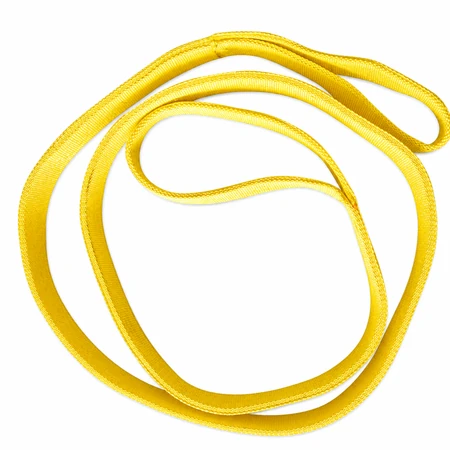
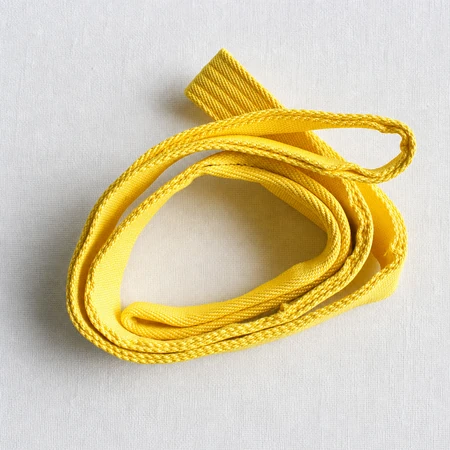
Lift sling rigging company produce High Temperature Webbing Sling,高溫升降吊帶,耐熱吊帶,High Temperature Resistant Lifting Sling.
高溫織帶吊帶
Aramid Flat Webbing Slings & Heat Resistant Protective Sleeves — For Loads Hotter Than Standard Webbing Can Take
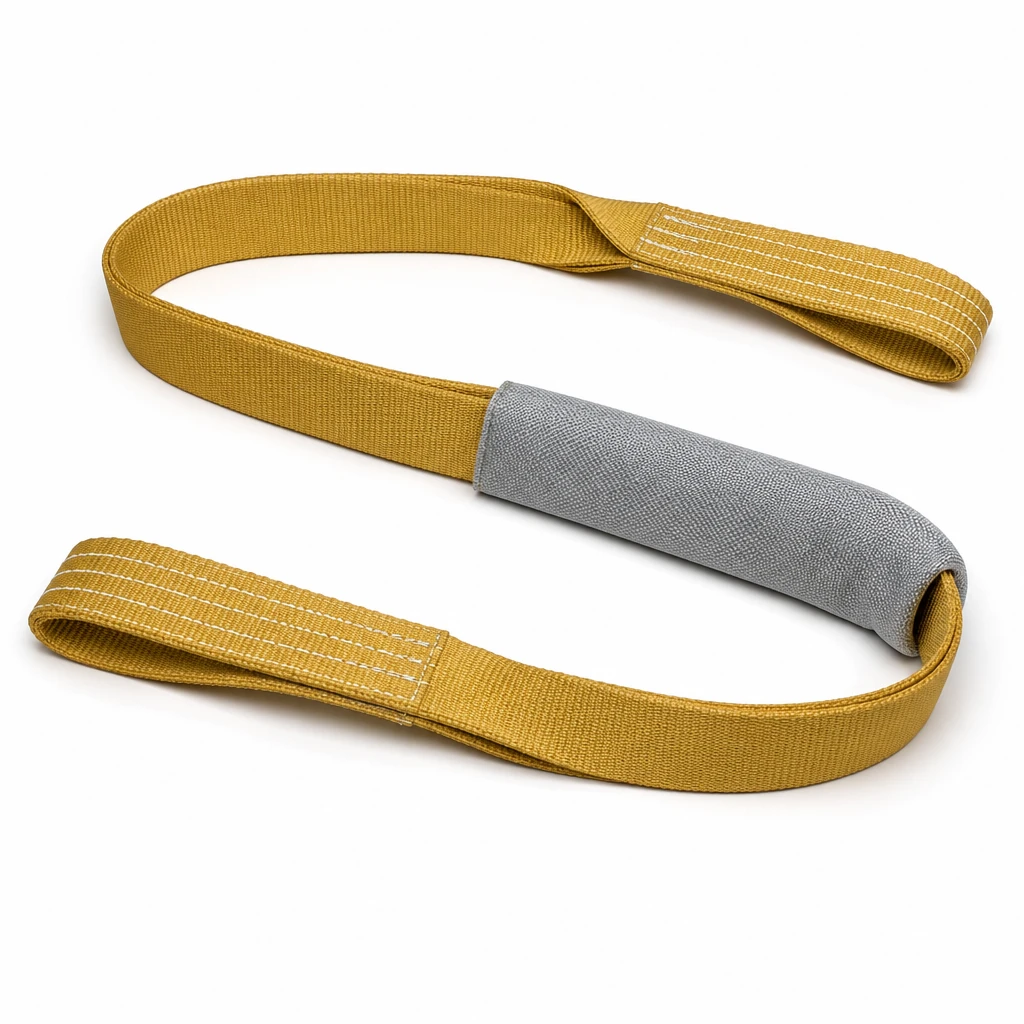
一 高溫織帶吊帶 exists because ordinary webbing does not tolerate heat. 聚酯, 上面大致排除咗尼龍同聚丙烯繩索吊帶 90 °C — the fibre softens, glazes and loses strength, and the damage may not be visible from the outside. Our high-temperature range is built on 芳香族 (凱夫拉級) 纖維, which has no melting point at all: it chars and decomposes around 500 °C instead of turning to liquid, so it survives a hot environment that would destroy a polyester sling outright. Where the contact is even hotter, a woven heat resistant protective sleeve takes the radiant and contact heat and the webbing stays cooler behind it.
- Aramid webbing — no melting point, 附近嘅字符 500 °C instead of melting
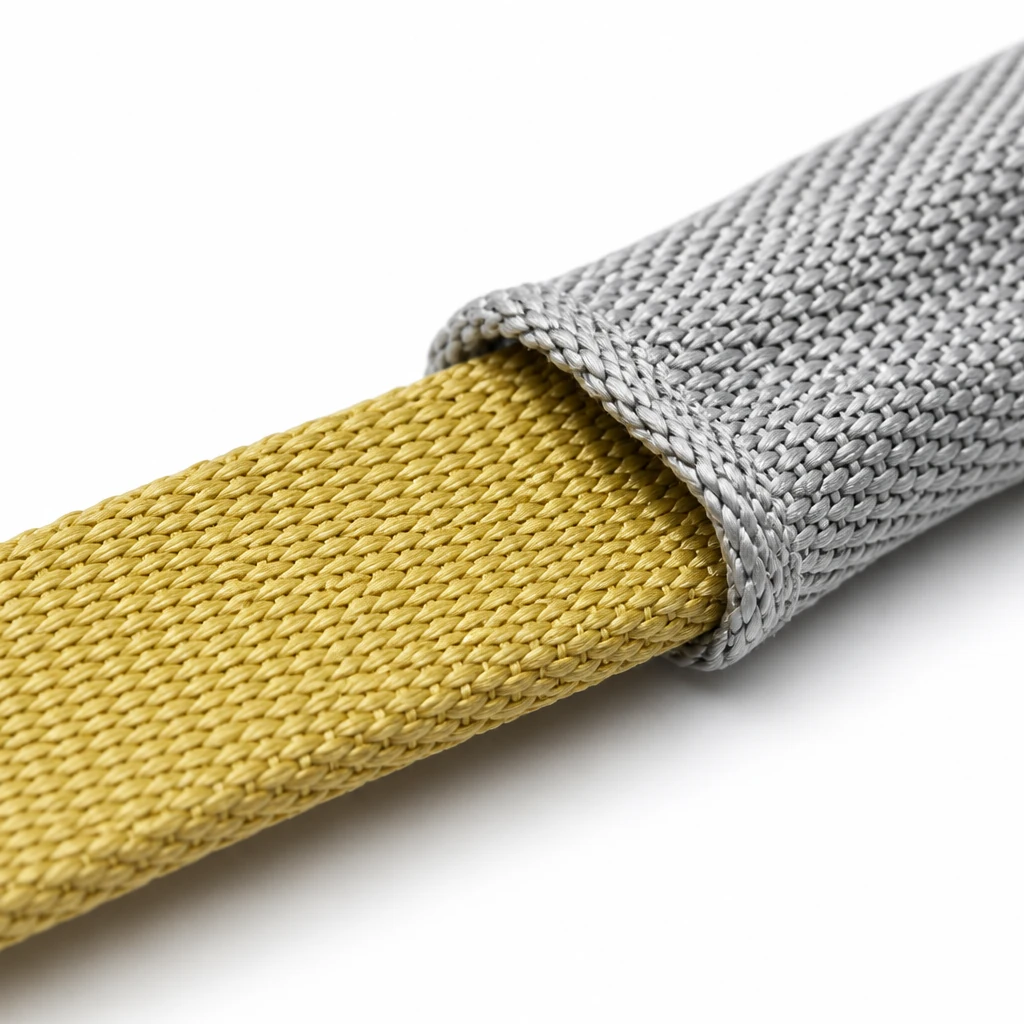
- Heat resistant sleeves — a sacrificial layer where the sling nears the hot surface
- Trusted in hot work — steel mills, 鑄造廠, 壓鑄, glass and welding shops
- Still soft on the load — a flat band that will not mark a machined or polished surface
主要功能
阿拉米德, Not Polyester
Aramid fibre has no melting point. Heated far enough it chars and breaks down — but it does not liquefy the way polyester or nylon does, which is what makes it usable in hot work.
Sleeves Take the Heat
A woven heat resistant sleeve is a sacrificial layer over the load-bearing band. It is cheaper and quicker to replace than a sling, and it is where the heat should arrive.
Inherently Non-Melting
Because the fibre chars rather than melts, the failure mode in an overheat is a scorched patch you can see and feel — not a hidden softening of yarn throughout the band.
Flat Band, Soft on the Load
A flat webbing band spreads the bearing pressure and conforms to the surface, so hot workpieces are lifted without the bruising and marking that chain or wire rope causes.
Rotate to Spread the Burn
The same section of sling tends to meet the same hot corner. Rotating the sling or sliding the sleeve moves the wear and keeps one spot from taking all of it.
Free of Hard Metal
冇勾, 吊帶本身嘅釘釘或者枷鎖. A conductive path or a spark struck off metal rigging is one less hazard beside a hot workpiece.
Why Standard Webbing Stops at 90 °C
Polyester and nylon are thermoplastics: heat them and they progressively soften, then melt. The melting point — around 255 °C for polyester and roughly 215–265 °C for nylon — is not the number that matters. What matters is what happens well below it. By about 90 °C the yarn has already begun to lose the molecular structure that gives it strength, and because the sling is still intact to look at, the loss is easy to miss.
That is why the industry rule is a working limit of roughly 90 °C for polyester and nylon webbing slings, rather than the fibres’ melting points. A hot workpiece sitting next to a webbing sling is not a small margin — it is the sling’s whole service envelope.
Aramid behaves differently. It has no melting point, so there is no softening phase and no liquid failure. It keeps its structure until it begins to char and decompose at around 500 °C. That single difference is what qualifies it for hot work — and it is also why an aramid sling damaged by heat shows as a scorched, brittle or discoloured patch rather than a melted one.
Temperature Ladder: Fibre by Fibre
Choosing a sling for a hot job starts with knowing what the fibre can take. The table below sets out the common options, in the order you should consider them.
| 纖維 | 熔點 | 典型嘅工作頻段 | Behaviour when overheated |
|---|---|---|---|
| 聚丙烯 | 大約. 165 °C | 高達 ~ 90 ° C | Melts — no useful residual structure |
| 聚酰胺 (尼龍) | 大約. 215–265 °C | 高達 ~ 90 ° C | Softens, glazes, then melts |
| 聚酯 | 大約. 255 °C | Up to ~90–100 °C | Softens, glazes, then melts |
| 阿拉米德 (凱夫拉級) | None — chars instead | ~200 °C continuous | Chars and decomposes near 500 °C; no liquid phase |
| 玻璃纖維 | Softens approx. 840 °C | Up to ~600 °C | Softens and loses strength |
| Basalt fibre | Softens above 1 000 °C | ~600–700 °C | Softens; very high temperature work |
Which construction for which temperature band
| Load or ambient temperature | 要指定嘅建築 | 點解 |
|---|---|---|
| 最多 90 °C | Standard polyester or nylon webbing sling | 普通嘅吊帶. No derating and no need to pay for aramid. |
| 90–150 ° C | Standard webbing sling with a heat resistant sleeve | The sleeve takes the contact heat; the webbing behind it stays within its band. |
| 150–200 ° C | 芳香族織帶吊帶 | Aramid’s own working band. Size the band so the sling is not also the weak point. |
| 200–400 °C | Aramid webbing sling with an aramid sleeve, 短曝光 | Workable, but exposure time and geometry decide the outcome. Describe the job to us. |
| 上面 400 °C | Glass fibre or a specialist high-temperature construction | A different product from this one. Ask us — we make heat resistant rope down to this band too. |
技術規格
| 產品名稱 | 高溫織帶吊帶 / heat resistant webbing sling / 芳纶织带吊带 / Kevlar webbing sling |
|---|---|
| Load-bearing material | 阿拉米德 (凱夫拉級 / 阿拉米德 1414) high-modulus fibre, woven into flat webbing; polyester version with sleeve available where the heat is modest |
| 建築 | Flat woven webbing in eye-and-eye or endless form; single-ply or multi-ply |
| 保護袖 | Woven heat resistant sleeve, 芳香族, glass or coated sleeve depending on the band; sliding or fully sewn, fitted where the sling meets the load |
| 頻段寬度 | 25 毫米到 300 mm as standard, matched to the working load limit and the ply construction |
| 工作負荷限制 | 1 t 到 100 t, 喺標準步驟入面 1 · 2 · 3 · 4 · 5 · 6 · 8 · 10 · 12 · 15 · 20 · 25 · 30 · 40 · 50 · 100 t — the aramid band carries the same ratings as polyester at the same width, at a lower weight |
| 安全因素 | 喺 1492-1 練習係 7:1 for general-purpose flat woven webbing slings; other factors produced to order |
| 有效工作長度 | 0.5 m 到 20 m 作為標準; 要落單耐啲 |
| Temperature capability | Aramid band with no melting point, charring near 500 °C; the usable working band depends on exposure time and on the sleeve — tell us the job and we will state the figure for your construction |
| 伸長率 | Low stretch — aramid elongates far less than nylon under the same load |
| 標記緊 | 有工作負荷限制嘅縫製標籤, 長度同批次; sleeve identification marking available |
| 包裝 | 喺聚乙烯袋或者手提袋入面卷起, 標籤咗嘅紙箱, 定制出口包裝 |
| 最低消費額 & OEM | 試用訂單嘅起價低; 全 OEM — 容量, 闊度, 層, sleeve length and position, 顏色, 標記同包裝 |
處理緊, 檢查同限制
An aramid sling is more tolerant of heat than a polyester one, but it is not immune, and the way it fails is deceptive. A scorched patch may look superficial while the yarn beneath has already lost its strength.
- 每次熱升降機之後都要檢查, 唔止喺班次開始嗰陣 — look for discolouration, scorching, a brittle or stiff feel, a hard or glazed patch, and any change in colour at the sleeve or the band.
- Feel it as well as look at it — a band that has stiffened, or that crackles when flexed, has been overheated even if the colour looks acceptable.
- Retire on any sign of charring — a charred or brittle section is a permanent loss of strength and cannot be assessed by eye. Take it out of service.
- Inspect the sleeve separately — the sleeve is designed to be damaged and it is expected to be replaced. When it is burnt through, worn through or stiffened, change it before the next lift.
- Do not use aramid where it will be cut or abraded on edges — aramid resists heat, but it is more sensitive to cutting and to flex-fatigue than polyester. 保護佢免受鋒利嘅邊緣.
- Keep it away from other chemicals and UV — aramid is affected by strong acids and degrades under prolonged sunlight. 儲存乾淨, dry and out of the sun.
- 錄低佢 — log the number of hot lifts and the highest temperature seen. It is the most reliable retirement guide for this class of sling.
應用程式
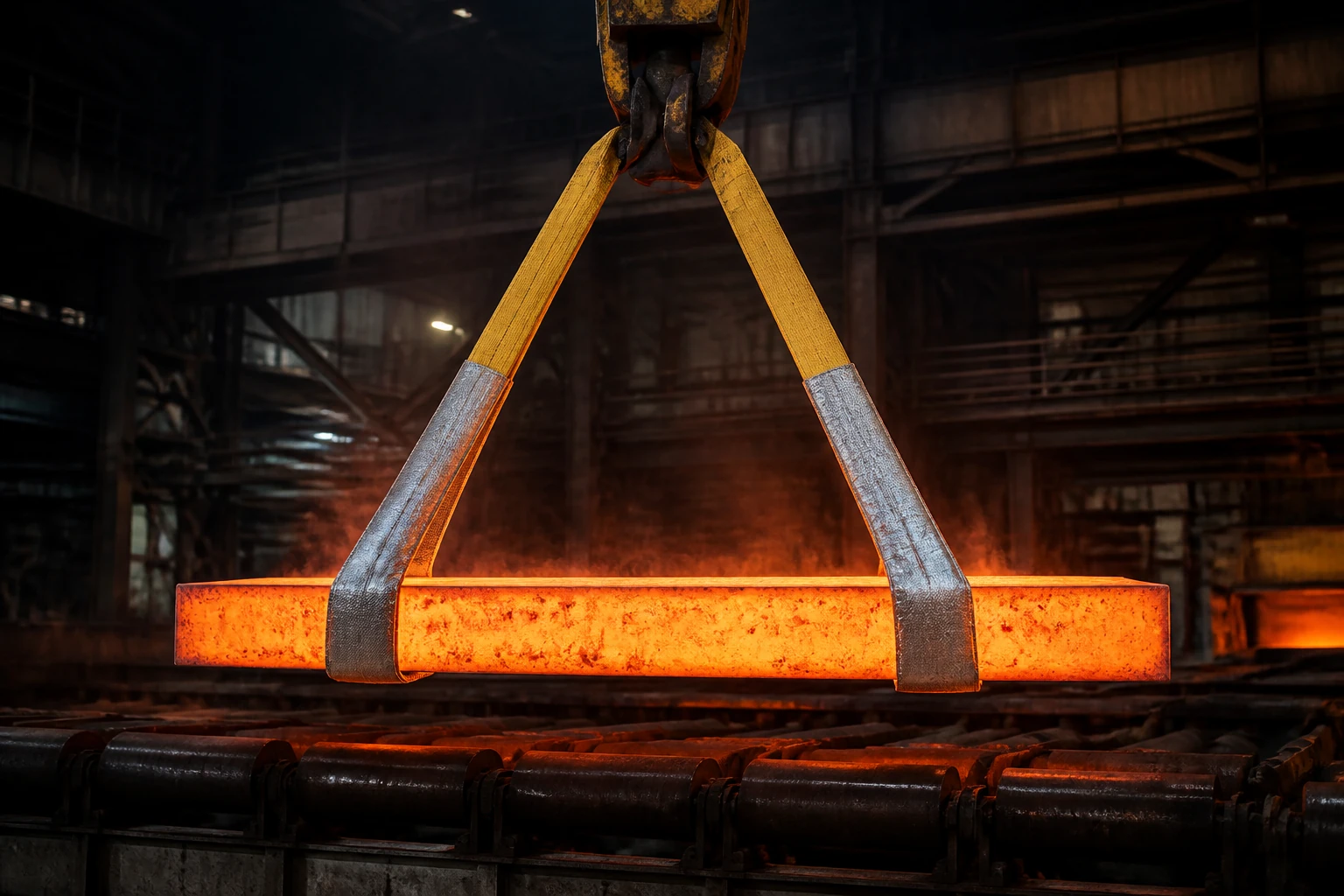
- Hot steel slabs, billets and blooms still radiating heat from the furnace
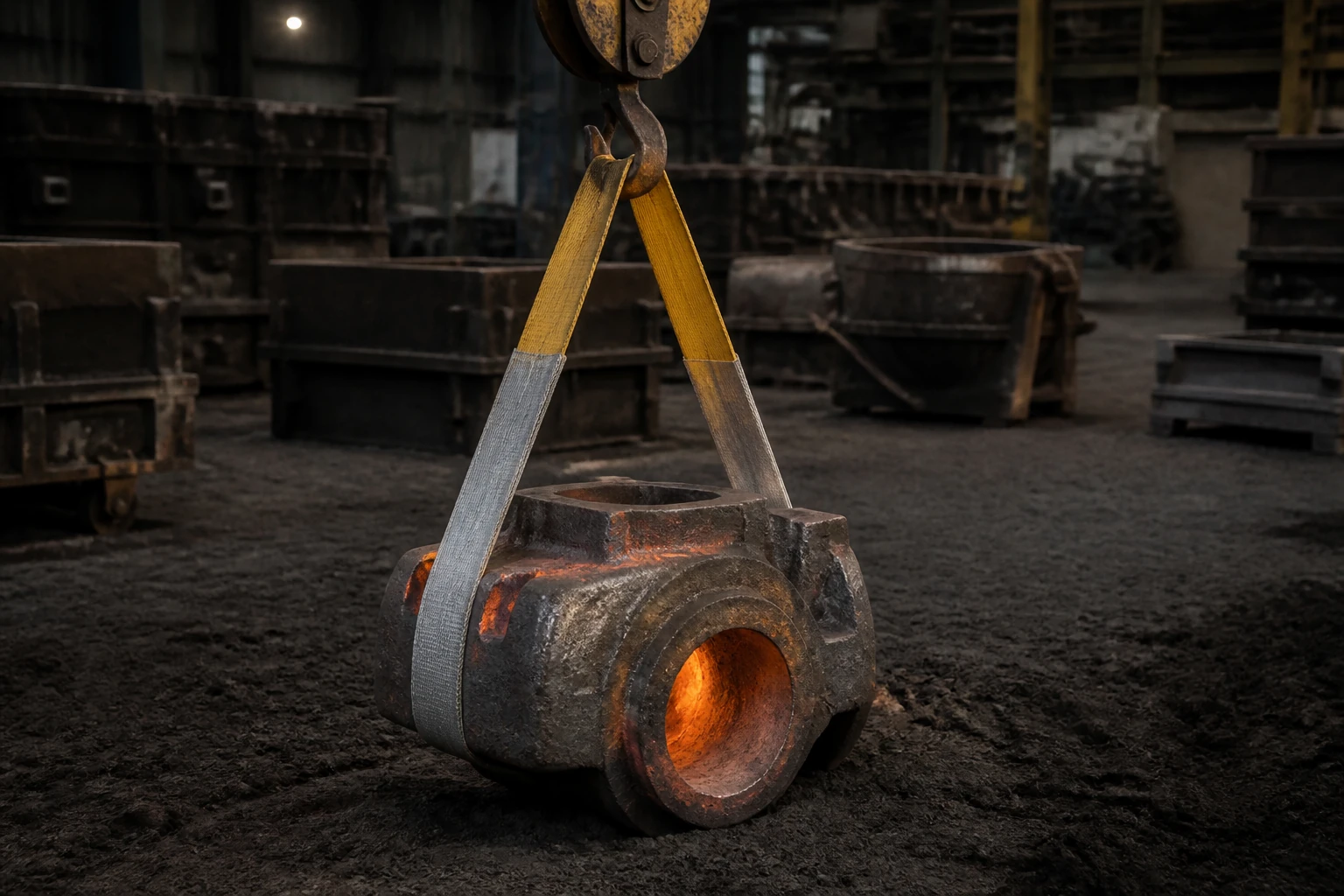
- Foundry and die casting work — castings, dies and moulds handled while still hot
- Rolling mills and forge shops where the ambient temperature alone rules out standard webbing
- Glass industry handling and any operation near a furnace or a kiln
- 焊接, cutting and fabrication bays where spatter and hot offcuts are routine
- Stage and entertainment rigging above hot luminaires and pyrotechnic equipment
- Any lift where a polyester sling has been refused because of the environment, 唔係負荷
定制同 OEM 服務
A high-temperature sling is specified around the job rather than picked from a shelf, 因為溫度, 曝光時間同熱表面嘅形狀都係答案嘅一部分. Tell us what the sling will touch and for how long, and we will size the band, the plies and the sleeve to suit.
- 容量 — 1 t 到 100 t, 包括標準尺寸之間嘅中間步驟
- 纖維 — aramid webbing as standard; polyester with a sleeve where the heat is modest and the budget matters
- 結束 — eye-and-eye or endless, plain or reinforced eyes
- Sleeves — sliding or fully sewn, 芳香族, 玻璃或者塗層, 定位到完全覆蓋滿足熱負荷嘅部分
- 長度同標記 — 有效工作長度按訂單計算; 你嘅標籤版面配置, 語言同標記慣例
- 相關嘅項目 — matching heat resistant round slings, stage slings and aramid rope for the same hot job
質量控制
Every band is checked for width, 厚度, weave density and colour before the eyes are closed, the sleeve fit is checked against the section it has to protect, and every finished sling is checked on its stitching, 佢嘅工作負荷限制標記, its overall length and its label before packing. 我哋製造咗吊帶, 工業用嘅網帶同繩索產品, 安全同出口客戶接近三十年, 同埋我哋會保持個過程可見: 我哋會根據要求提供光纖證書, 喺開始量產之前,你可以處理同測試批次測試數字同埋一個樣本吊帶.
常見問題
Why can’t I just use a polyester webbing sling on a hot load?
Because polyester begins to lose strength long before it melts. Polyester and nylon webbing slings are restricted to roughly 90 °C — well under the fibre’s melting point of around 255 °C. By the time a polyester sling looks damaged it has usually already lost a substantial part of its strength, which makes the failure hard to catch by inspection.
What makes aramid suitable for high temperature lifting?
Aramid has no melting point. Instead of softening and liquefying, it keeps its structure until it begins to char and decompose at around 500 °C. There is no liquid failure phase and no hidden softening of the yarn across the whole band — heat damage shows as a scorched, brittle or discoloured patch where the heat actually arrived.
Do I need a heat resistant sleeve as well?
Usually, 係, wherever the sling comes near the hot surface. The sleeve is a sacrificial layer: it takes the contact and radiant heat, it is far cheaper and quicker to replace than a sling, and it protects the band from abrasion on the hot workpiece at the same time. Where the whole environment is hot rather than one contact point, the aramid band does the work and the sleeve may not be needed at all.
Will an aramid sling hold a higher working load than a polyester sling?
Not at the same band width — the standard capacities are published on the same width ladder, and what you gain with aramid is heat tolerance and a lighter band, not a larger number. Sizing still follows the working load limit and the safety factor, exactly as for any other webbing sling.
係一個經過標準認證嘅高溫吊帶?
The general-purpose flat webbing sling standards cover polyester, polyamide and polypropylene slings, 用一個大致喺 −40 °C 至嘅範圍 +90 °C 頻段. A high-temperature aramid sling falls outside that scope, so its temperature rating is a manufacturer’s specification rather than a figure quoted from the standard. Ask us to state the rating for the exact construction you are buying.
How do I know when to retire a high temperature sling?
Retire it on any sign of charring, on a brittle or stiffened section, on a glazed or hardened patch, or where the sleeve has burnt through to the band. Heat damage in aramid is not always obvious from the colour alone, so feel the band as well as looking at it. Keep a log of the hot lifts and the temperatures seen — for this class of sling, that log is the most reliable retirement guide there is.
Request a Quote for High Temperature Webbing Slings
傳送工作負荷限制畀我哋, the temperature the sling will actually see, 無論係輻射熱定係接觸熱, 每次曝光持續幾耐, 同埋熱表面嘅形狀. We will come back with the fibre, 樂隊, sleeve and rating for your job, plus a sample to test.