

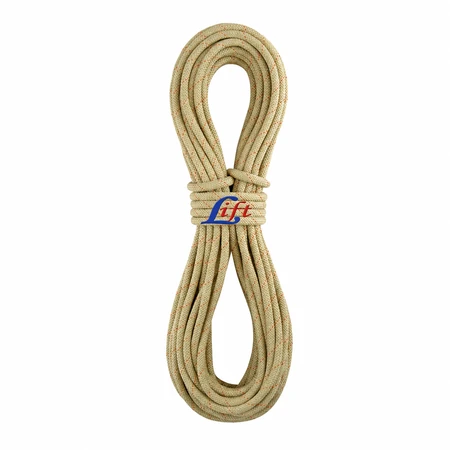
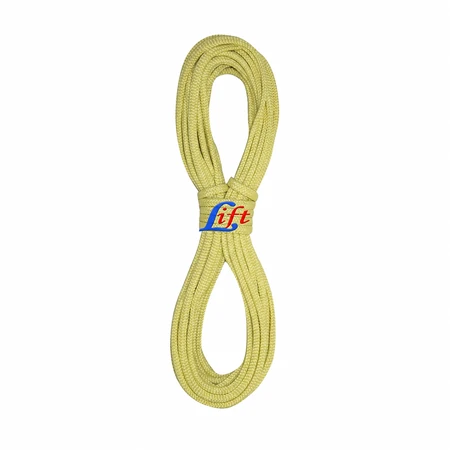
Lift sling rigging company produce Fire Rescue Rope, Fire Climbing Rope,Fire Suppression Rope.
Suumo' u salvar k'áak'
Heat-Resistant Kernmantle Escape Rope & Life Safety Rope — 8 mm u 16 mm, OEM & Longitudes personalizadas
K suumo' u salvar k'áak' is a low-stretch kernmantle safety rope built for fire escape, firefighting and high-rise emergency descent. A 32-strand braided high-tenacity polyester sheath wraps a parallel filament core, so the rope keeps a firm round profile, resists abrasion against window sills and concrete edges, and still runs smoothly through descenders, figure-eight devices and pulley systems. Choose heat-resistant aramid construction or a cut-resistant steel wire core for anti-theft escape routes. Available from 8 mm u 16 mm, ti' u chowakil tak 10 m u 100 m, yéetel wicho'ob empalmados, stainless steel thimbles and custom colours.
- Baja elongación — controlled stretch for stable, predictable descending
- Chokoj ooxolil & flame resistant — polyester sheath, optional aramid version
- High abrasion resistance — dense 32-strand braided sheath
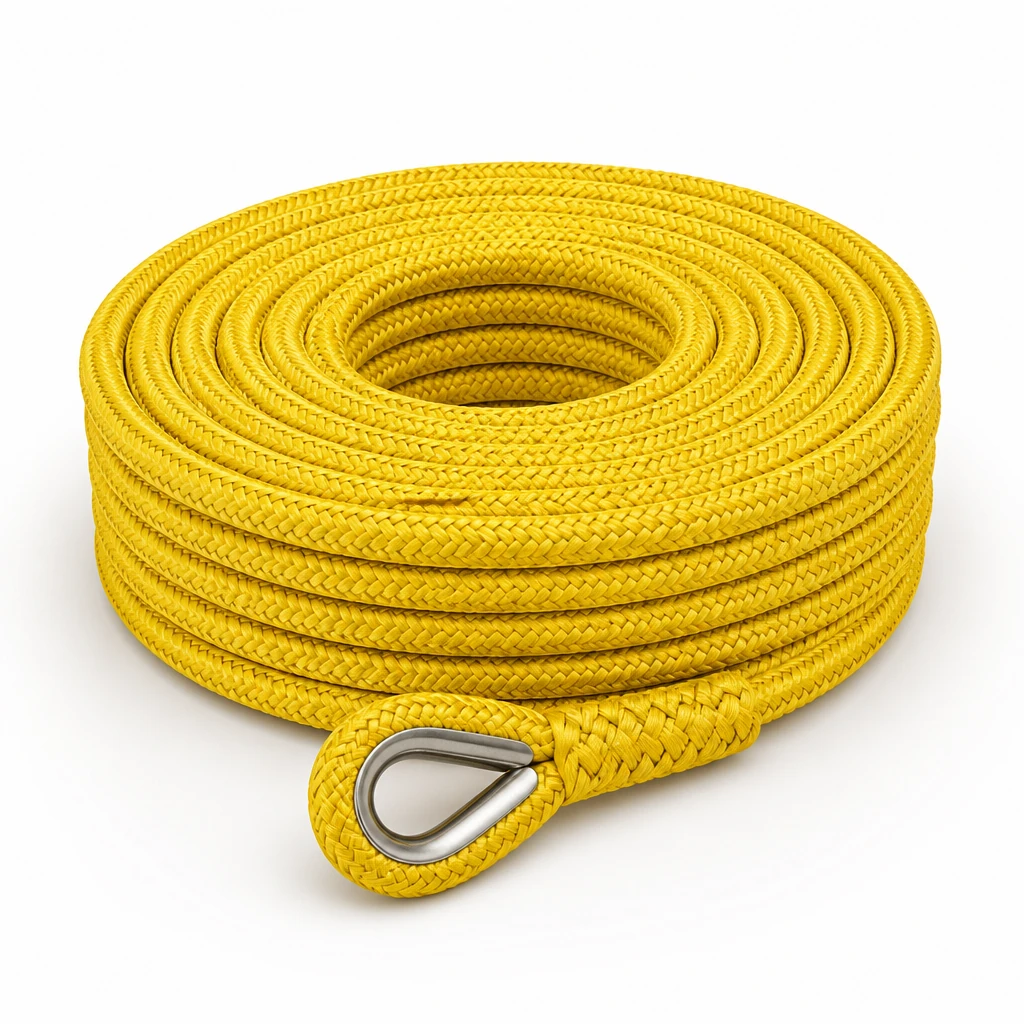
- Custom finished — spliced eye with thimble, wich-ti'-wich, or plain ends
Key Features of Our Fire Rescue Rope
Chokoj ooxolil & Flame Resistance
High-tenacity polyester sheath with an optional aramid (bin yano'ob Kevlar) upgrade for high-temperature rescue work and hot-slag environments.
Low-Stretch Kernmantle Design
Parallel core keeps elongation low, so the rope absorbs less energy and gives the operator a firmer, more predictable feel under load.
Steel Wire Core Option
An integrated galvanised steel wire core resists cutting and theft — a popular specification for fixed high-rise escape and fire-escape routes.
High Abrasion Resistance
The tight 32-strand braided sheath protects the load-bearing core against friction from concrete, metal frames and sharp window sills.
Firm, Non-Kinking Handling
Balanced sheath-to-core ratio keeps the rope round and supple — easy to coil, easy to deploy, and tangle-resistant in an emergency.
Full OEM Customisation
Diámetro, chowakil, boon, sheath material, core type, end terminations, printed logos and retail packaging — all made to order.
Especificaciones técnicas
| K'aaba' le producto | Suumo' u salvar k'áak' / suumo' u púuts'ul k'áak' / fire safety rope / life safety rope |
|---|---|
| Kóonstruksion | Kernmantle — 32-strand braided sheath over a parallel filament core (software core or steel wire core) |
| Xooko'obo' u vaina | Poliéster u ka'anal resistencia (chen wa a k'áat: aramida, flame-retardant treated yarn) |
| Xooko'obo' u noj bejo' | Parallel polyester / nylon filaments (chen wa a k'áat: aramida; galvanised steel wire core) |
| Diámetros estándar | 8 mm · 10 mm · 11 mm · 12 mm · 14 mm · 16 mm (custom range 6–20 mm) |
| Ti' máansaj óolal ti' le metros | ± 0.3 mm |
| Opciones u chowakil | 10 m · 20 m · 30 m · 50 m · 100 m — cut to any length on request |
| Muuk' mínima u jaatik | 8 mm ≥ 13.5 kN · 10 mm ≥ 21 kN · 11 mm ≥ 24 kN · 12 mm ≥ 30 kN · 14 mm ≥ 40 kN · 16 mm ≥ 50 kN |
| Elongación | Low stretch — approx. 2–4 % ti' 10 % of minimum breaking strength |
| Deslizamiento u vaina | ≤ 1 % |
| Límite u kuuch meyaj | Apply a safety factor of at least 5:1 to the minimum breaking strength; confirm against the rescue-operations standard of your market |
| U derretimiento / ch'aaj u descomposición | Polyester sheath approx. 255 °C · aramid sheath approx. 500 °C |
| Working temperature range | Polyester version −40 °C to +80 °C · aramid version up to +200 °C |
| U ch'a'abal ja' | < 1 % (poliéster) — the rope stays light and does not stiffen when wet |
| resistencia ti' le UV | Ma'alob tak jach ma'alob; additional UV-stabilised treatment available |
| Resistencia química | Resistant to most acids, alkalis and organic solvents |
| Boon | Safety yellow (estandáar) — custom colours and traceable strand colours available |
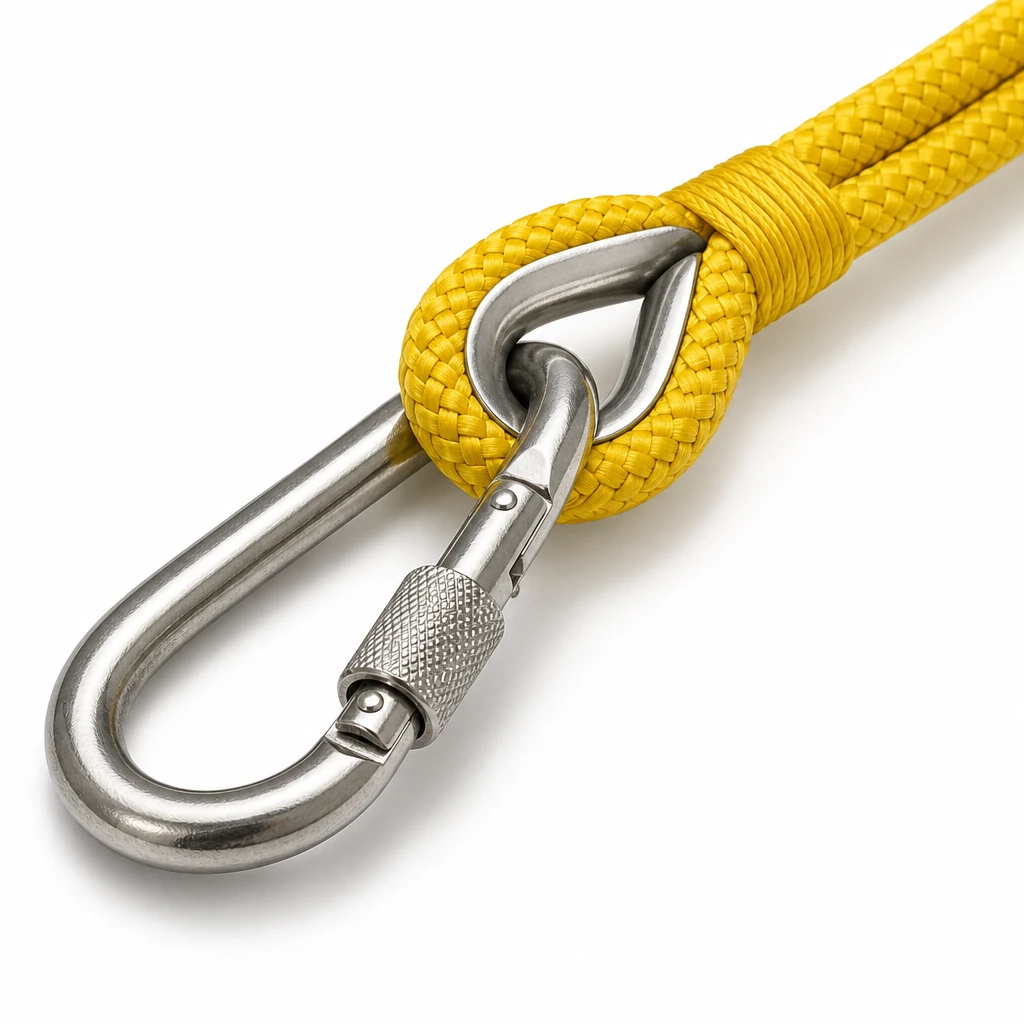
| End terminations | Spliced eye with stainless steel thimble · eye-to-eye · plain cut end · with screw-lock carabiner · with steel wire core loop |
| Normas de referencia | Designed with reference to EN 1891 (low-stretch kernmantle rope) and XF 494 / GA 494 (fire and fall-protection equipment) — certification and detail test reports issued on request |
| Embalaje | Coiled in poly bag, carry bag or carton; etiqueta personalizada yéetel código barras disponible |
| MOQ & OEM | MOQ t'okik uti'al u órdenes u prueba; full OEM — custom length, boon, logotipo impreso yéetel embalaje |
| Lead time | Confirmed per order — sample and volume production schedules quoted on enquiry |
U beeta'al suumo'ob: Vaina yéetel núcleo
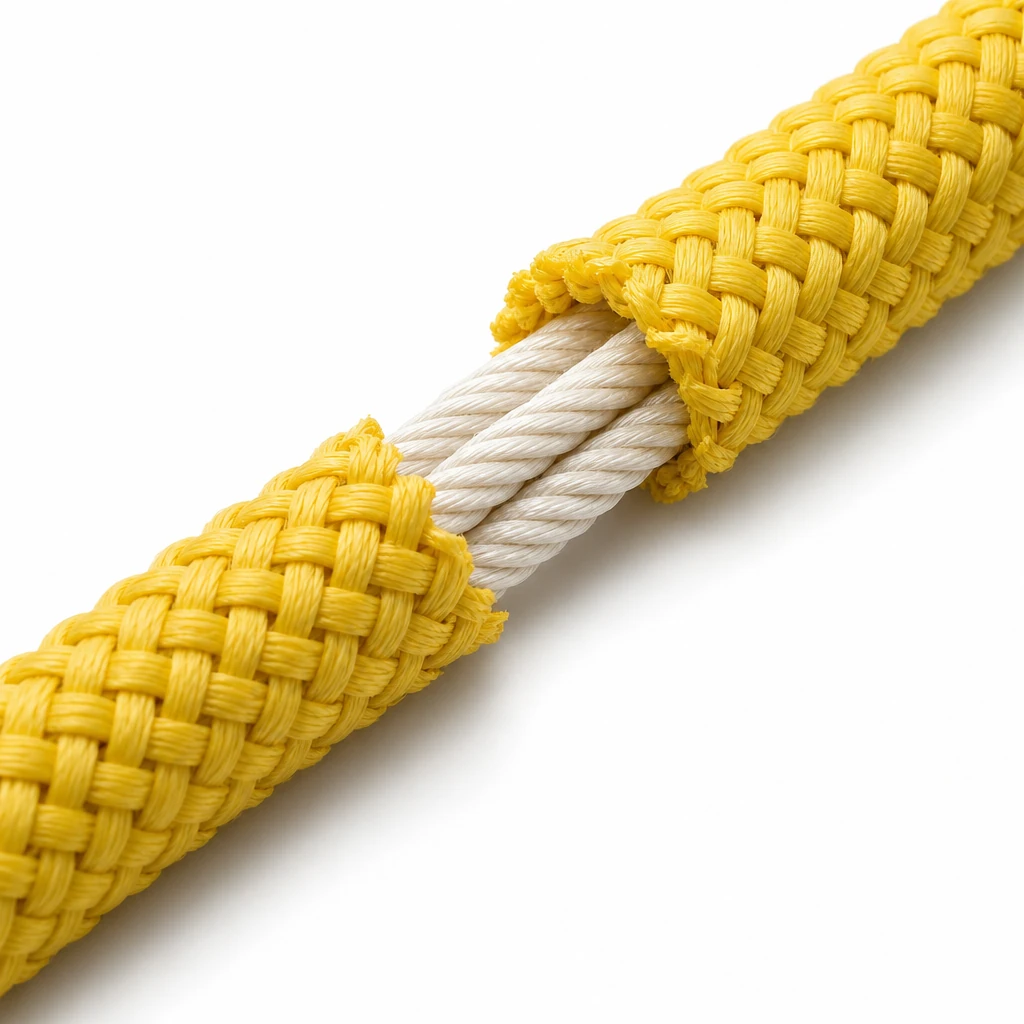
A fire rescue rope has to survive two very different jobs at once. Le ts'u' carries the load, so it is built from parallel filaments that keep the rope’s elongation low and its breaking strength high. Le sheath takes the punishment — window sills, parapet edges, chokoj ooxolil, and repeated contact with hardware — so we braid it from 32 high-tenacity yarns into a dense, tightly packed sleeve that locks the core in place and limits sheath slippage.
Which core should you choose?
- Núcleo u poliéster — the standard choice for escape ropes and general rescue work; sáasil, low-stretch and economical.
- Nylon core — slightly higher energy absorption, useful where some dynamic cushioning is wanted.
- núcleo aramide — for high-temperature environments and where the rope must resist contact with hot surfaces.
- Steel wire core — added cut resistance and anti-theft protection, typically specified for fixed high-rise fire escape routes.
Heat and Flame Resistance
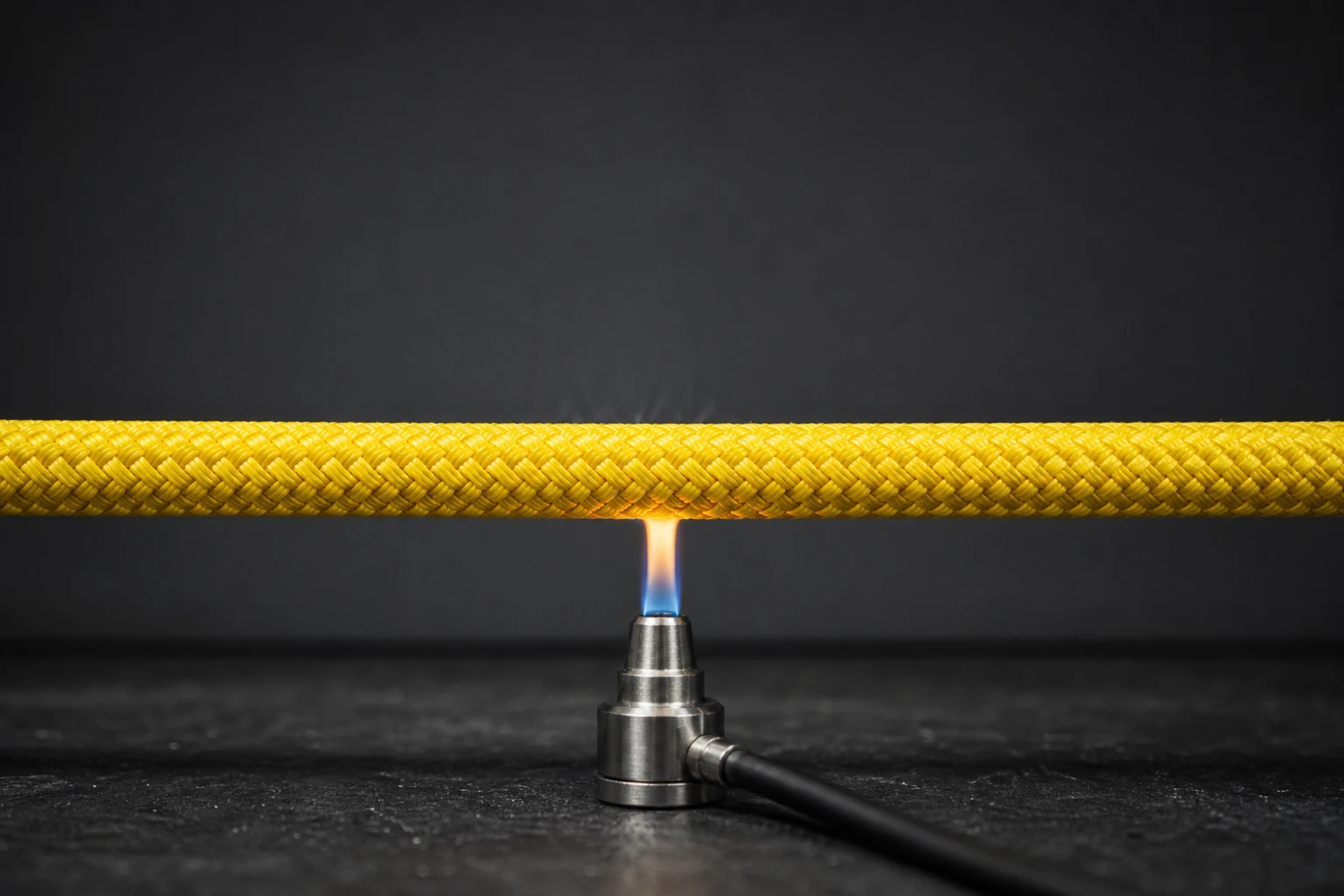
In a real fire, radiant heat reaches a rope long before the flame does. Polyester sheaths begin to soften around 255 °C, so the standard rope is intended for escape and rescue work where direct flame contact is brief. Where the operating environment is consistently hot — industrial rescue, hot slag areas, or routes close to burning structures — specify the versión aramida, whose sheath tolerates far higher temperatures before decomposing. Both versions use the same kernmantle architecture, so the handling and hardware compatibility stay the same.
Aplicaciones
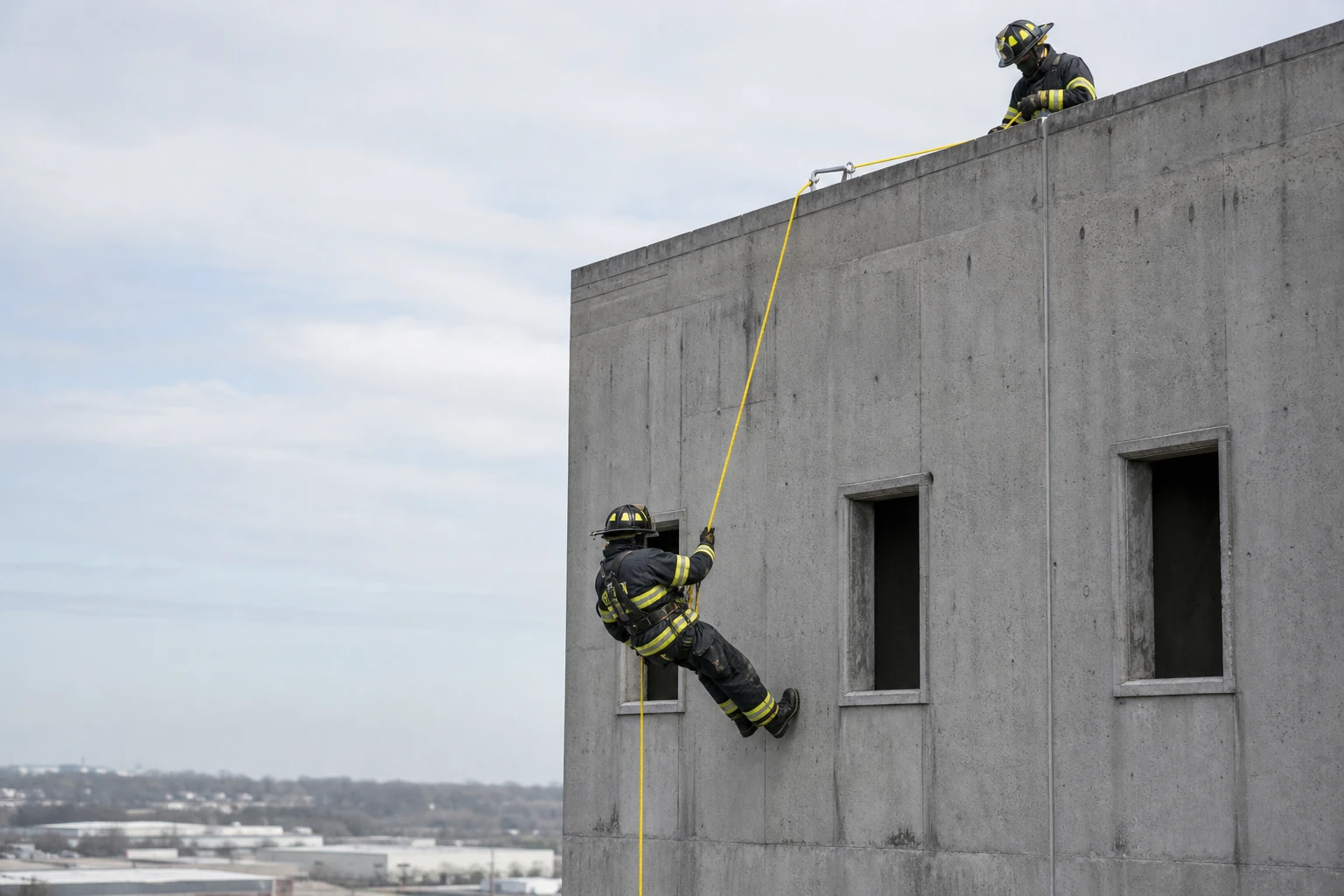
Our fire escape ropes are supplied to fire departments, building-safety contractors, industrial plants and distributors worldwide. Le aplicaciones típicas incluyen:
- Fire escape and emergency evacuation from high-rise buildings and towers
- Firefighting operations, search and rescue, and roof or above-fire-floor work
- Window cleaning and façade access where a heat- or abrasion-resistant line is required
- Industrial height rescue and confined-space recovery
- Utility and power-line work, cable pulling and insulated guide ropes
- Arborist work, rigging and general static rigging lines
- Marina, dock and outdoor rescue training
- Fixed escape-route ropes with steel wire core for public buildings and schools
Personalización yéetel mayaj OEM
As a manufacturer, we build to your specification rather than to a fixed catalogue. Tell us the working load, the operating temperature, the environment and the hardware you already use, yéetel yaan k recomendar le metros ma'alob, core type and sheath material. Le personalizaciones náats'al ku táakbesik:
- Diameter and length — 6–20 mm, any cut length, plus metre markings woven or printed on the sheath
- Boonil yéetel marca — k'an ti' seguridad, pak'aal, chak, sak, black or custom Pantone; printed or woven logo and part number
- Ts'o'oksik u ts'o'okol — spliced eye with stainless steel thimble, wich-ti'-wich, ts'o'okol azotado, or a fitted carabiner
- Embalaje — poly bag, polyester carry bag, rope bag, or retail carton with your own label and barcode
- Accesorios — rope bags, descenders, figure-eight devices, anchors and escape kits supplied as a complete set
Kaambalil yo'osal u calidad
Every production batch is checked on diameter, densidad lineal, sheath tightness and splice integrity, and sampled for breaking strength. We have supplied lifting and safety rope products to industrial and public-safety customers for close to three decades, yéetel k mantener le tuukula' visible: on request we provide the material certificate, the test report for the delivered batch, and a sample before volume production begins.
k'áat chi'oba' suuk u beeta'al
What is a fire rescue rope used for?
A fire rescue rope is a low-stretch safety rope used for emergency escape from buildings, firefighting operations, high-rise evacuation and technical rescue. It is designed to hold a person or a load under controlled descent and to resist heat, abrasion and cutting.
What diameter fire escape rope do I need?
Most escape and rescue work uses 10 mm u 12 mm suum: 10–11 mm is comfortable in the hand and works with standard descenders, while 12 mm gives a higher breaking strength and better grip. Asab sáasil 8 mm rope suits personal escape kits where weight and packed volume matter most.
Is the rope flame retardant or heat resistant?
Both options are available. The standard polyester sheath resists brief contact with flame and has a melting point around 255 °C. For continuous or repeated high-temperature exposure choose the aramid version, which tolerates far higher temperatures.
Can you supply a steel wire core fire rope?
Jaaj. A galvanised steel wire core can be added inside the kernmantle construction. It adds cut resistance and anti-theft protection, which is why it is commonly specified for fixed escape routes in public buildings, schools and dormitories.
What lengths and end fittings can you make?
Standard lengths are 10 m, 20 m, 30 m, 50 m yéetel 100 m, and any custom cut length is possible. Ends can be plain, whipped, spliced into an eye with a stainless steel thimble, wich-ti'-wich, or supplied with a screw-lock carabiner already fitted.
Do you provide test reports and OEM branding?
Jaaj. We supply material certificates and batch test reports on request, yéetel k ts'aik k'iini' mayaj OEM - metros personalizado, chowakil, boon, sheath material, logotipo impreso yéetel embalaje minorista.
Request a Quote for Fire Rescue Rope
Send us the diameter, chowakil, core type, working load and the standard that applies in your market. k nu'ukulil yaan u suut yéetel jump'éel especificación, jump'éel horario muestra yéetel jump'éel tojol directo ti' le fábrica.