

הייבן וואַרפלקע ריגינג פירמע פּראָדוצירן 4 Ply Webbing Sling,4-Ply Polyester Web Sling,Four Ply Polyester Web Sling,4 Ply Polyester Sling,Four Ply Polyester Webbing Sling,Four Ply Webbing Sling,
4 Ply Webbing Sling — Four-Ply Polyester Lifting Slings, 8 ה צו 40 ה
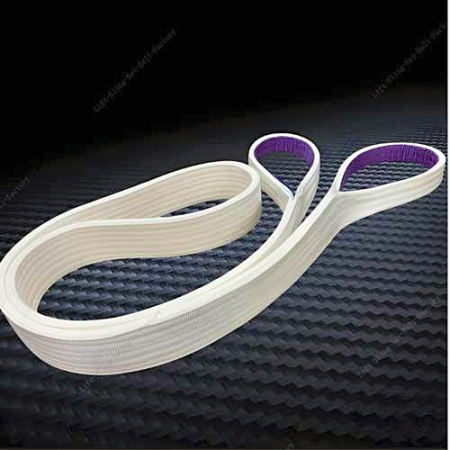
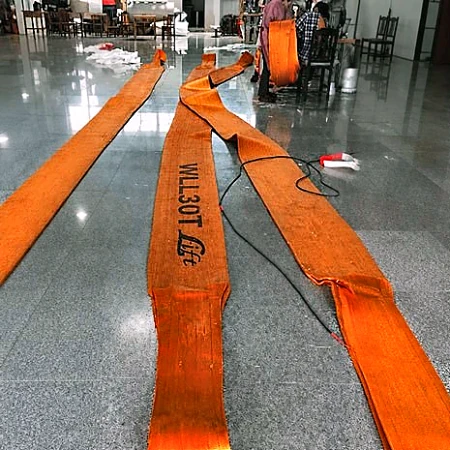
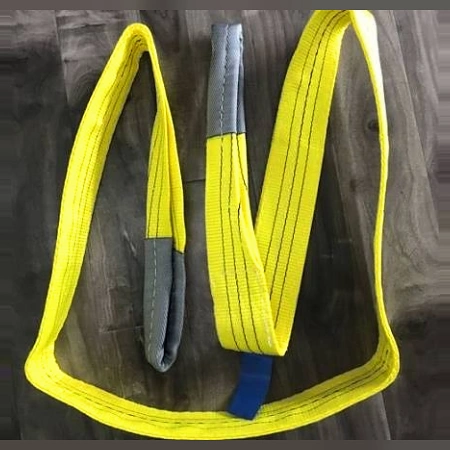
א 4 ply webbing sling is four woven polyester bands laid one on another and sewn into a single flat body: four warp-and-weft layers, each about 7.5 מם דיק, closed along both edges and folded into eyes at each end to give a composite band of roughly 30 mm. The point of the fourth ply is not ornament. Four plies put twice the fibre behind the same width as a two-ply band, which is how a 150 mm sling reaches 20 t and still sits inside a shackle, wraps a tight arbor and enters a hook bowl without being forced.
The four-ply build is the heavy end of the flat family, and this page is about the work that needs it: precast panels, machined plant, steel bundles that have to travel without a scratch, hire fleets where one band must cover several duties. דערציילן אונדז די מאַסע, the figure you need per hitch and the width you can fit, and we will confirm the ply count, the eye style, די שוץ און די מאַרקינג איידער די באַנדע איז וואָווען.
What four plies actually are
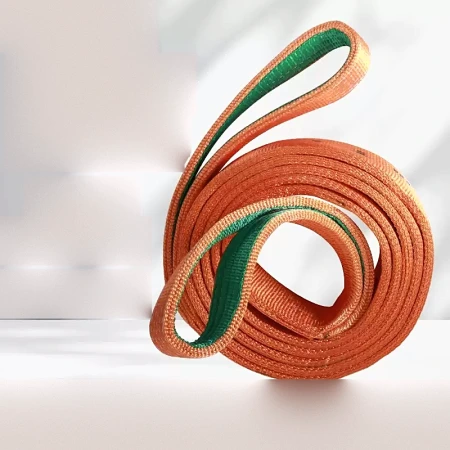
A ply is one woven band on its own — warp yarns running the length, weft across, both selvedges woven so the band cannot unravel. Four-ply means four of these, stacked and joined by stitching that runs the length of the body and through the eyes. It is not one thick band woven in a single pass, and that distinction explains most of what follows.
- Capacity adds up; flexibility does not. Each ply carries its share, so at equal width four plies carry four times a single-ply band and twice a two-ply band. But a 30 mm stack resists bending as a stack: it will not lie round a small radius the way a 7.5 mm band will, and it holds a set once it has been folded.
- The eye is the joint that matters. At each end all four plies are folded back and the eye is closed with through-stitching; the load passes from the eye into the body across that seam. A four-ply eye is a longer, thicker seam than a two-ply one and it is the first place to look at inspection.
- The edge is woven, not coated. Each ply has its own selvedge and the four are bound together along the edge. A cut or frayed edge is not cosmetic: it is a severed load path in at least one ply, and it is a retirement criterion.
Why buy four plies instead of a wider two-ply band
The comparison that decides the purchase is always the same: at the capacity you need, is it cheaper in width or in plies? The table below holds the width constant and changes the ply count.
| גוף ברייט | 2-ply WLL | 4-ply WLL | 2-ply weight | 4-ply weight |
|---|---|---|---|---|
| 120 mm | 8 ה | 16 ה | ≈ 2.0 קג/מ | ≈ 3.6 קג/מ |
| 150 mm | 10 ה | 20 ה | ≈ 2.6 קג/מ | ≈ 4.5 קג/מ |
| 240 mm | 16 ה | 32 ה | ≈ 4.1 קג/מ | ≈ 7.2 קג/מ |
אין 120 mm a four-ply band carries 16 t where the two-ply band of the same width carries 8 ה. To reach 16 t in two-ply the body has to grow to 240 mm — 240 mm of band to bend round the load, 240 mm of eye to feed into a hook, and about 4.1 kg per metre against 3.6 kg for the four-ply band it replaced. The four-ply answer is the same capacity in half the width. It enters a smaller shackle, it wraps a tighter arbor, it sits flatter under a load that has to be set down into a jig, and on a multi-leg lift it keeps the sling legs from splaying wider than the load.
Where width is free — a spreader beam with wide hooks, a soft load with room around it — the wider two-ply band is usually the cheaper route to the same figure, and there is no reason to pay for plies. The four-ply band is bought when width is the constraint: small lifting eyes, close double wraps, restricted headroom, or a hook bowl that will not take a 300 מם באַנד. That is the whole commercial argument, and it is worth being honest that it is a narrow one rather than a general rule.
Standard four-ply build
| WLL ווערטיקאַל | גוף ברייט | גוף גרעב | בעערעך. וואָג | קאָליר קאָד | מין. לענג |
|---|---|---|---|---|---|
| 8 ה | 60 mm | 30 mm | 1.8 קג/מ | בלוי | 1.5 עם |
| 12 ה | 90 mm | 30 mm | 2.7 קג/מ | — | 1.5 עם |
| 16 ה | 120 mm | 30 mm | 3.6 קג/מ | — | 2 עם |
| 20 ה | 150 mm | 30 mm | 4.5 קג/מ | — | 2 עם |
| 24 ה | 180 mm | 30 mm | 5.4 קג/מ | — | 2 עם |
| 32 ה | 240 mm | 30 mm | 7.2 קג/מ | — | 3 עם |
| 40 ה | 300 mm | 30 mm | 9.0 קג/מ | — | 3 עם |
Figures are the standard build and are quoted for the vertical hitch. The working load limit that applies to the sling in your hand is the one printed on its label, per hitch mode — not the tonnage of the body, and not the colour of the band.
The same band carries differently in each hitch
A four-ply sling does not have one capacity; it has a capacity per arrangement, און די פירמע זאגט יעדער פון זיי. The factors below are the standard mode factors for flat woven slings, applied to a 20 t four-ply band so the effect is visible.
| אָרדענונג | מאָדע פאַקטאָר | 20 t four-ply band | What changes on the floor |
|---|---|---|---|
| ווערטיקאַל | 1.0 | 20 ה | איין פוס, גלייך אַרויף; the band simply hangs and carries. |
| דערשטיקט | 0.8 | 16 ה | The band is loaded against itself and grips the load; the choke point needs protection. |
| קאָרב, 0–45° | 2.0 | 40 ה | Both ends on the hook, two parts of the band under the load. |
| קאָרב, 45–60° | 1.4 | 28 ה | Spread legs; the geometry, נישט די פיברע, costs the capacity. |
| צוויי פיס, 0–45° | 1.4 | 28 ה | צוויי באַנדס צו איין קרוק, load shared between them. |
| צוויי פיס, 45–60° | 1.0 | 20 ה | The same pair spread — back to the single-leg figure. |
| דריי און פיר פיס, 0–45° | 2.1 | 42 ה | Not three or four times the figure: the load rarely shares evenly. |
| דריי און פיר פיס, 45–60° | 1.5 | 30 ה | שייַעך-טשעק אלא ווי יבערנעמען; a spreader restores the angle. |
צוויי קאַנסאַקווענסאַז זענען ווערט סטייטינג קלאָר. A choked four-ply band is weaker than the same band used vertically, so a load that must be choked needs a bigger sling rather than a longer one. און ווי די לעגס פאַרשפּרייטן די קאַפּאַציטעט פאלס, which is a geometric fact rather than a material one: עס ווערט געענטפערט פון א פארשפרייטער, by a wider angle-free arrangement, אָדער דורך אַ גרעסערע וואַרפלקע, און דורך גאָרנישט אַנדערש.
Where a four-ply band is the wrong answer
Four plies are bought for capacity in a narrow width, and every advantage is paid for somewhere. It is worth saying where the same money is better spent elsewhere.
- When the hook is small. א 30 mm body folds into an eye roughly 60 mm across; the hook bowl, the shackle jaw and any lifting eye on the load must accept that. On a machine with 30 מם אויגן, א קייַלעכיק וואַרפלקע or a two-ply band on a wider body often fits where a four-ply band will not.
- When the band has to conform. A four-ply stack holds a set and bridges a radius instead of wrapping it. On irregular castings, bundled tube and anything that has to be hugged, the conforming sling is the correct tool.
- When it has to be carried by hand. אין 300 mm the band weighs about 9 קג פּער מעטער; א 6 m sling is a two-person article, and on a site where slings are carried up ladders that matters more than the capacity margin.
- When the lift is light and frequent. ונטער וועגן 4 t there is no reason to carry four plies; זען די 2 ply webbing sling און 3 ply webbing sling pages for the lighter builds.
- When the edge is the real problem. More plies resist abrasion better than fewer, but no ply count survives a burr. That is a sleeve decision, not a ply decision.
Where four-ply slings are used
| די מאַסע | Why the four-ply flat band suits it | What to state on the enquiry |
|---|---|---|
| Precast concrete panels and stairs | High figure in a band narrow enough for cast-in lifting eyes, with a soft face that does not spall the arris. | טאַפליע מאַסע, lifting insert type and centres, ברעג צושטאַנד, whether the face is exposed. |
| מאַשינד שאַפץ, rolls and rotors | Wide soft contact on a finished surface, and a choked or double-wrap arrangement in tight space. | Diameter and mass, ענדיקן, whether a witness mark is a rejection, wrap arrangement. |
| שטאָל טעלער און אָפּטיילונג באַנדאַלז | Capacity to match the bundle, with sleeves taking the cut rather than the band. | פּעקל מאַסע, ברעג צושטאַנד, sleeve type, whether the bundle is banded or loose. |
| Wind and tower sections | Heavy figures at widths that fit the lifting lug spacing, and long lengths made to order. | Section mass, lug geometry, לענג קאַנווענשאַן, coating and edge protection. |
| Boat hulls, keels and ballast | ווייך, wide and non-marking on gelcoat and antifoul, with capacity for a boatyard hoist. | Hull mass, sling positions, keel shape, whether the lift is in a frame or under the hull. |
| Hire and rental fleets | One band covers several duties and several capacities, which simplifies a fleet that travels. | Capacity bands required, marking and serial convention, inspection interval, label language. |
אויגן: three ways the end is made
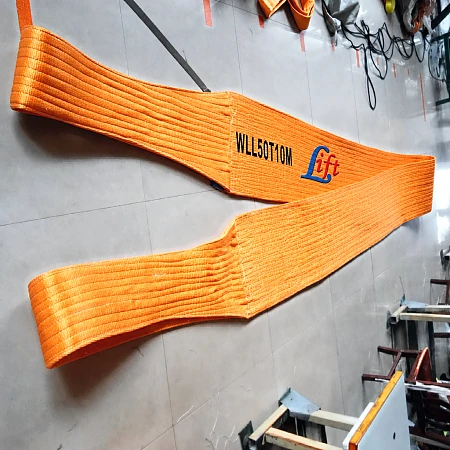
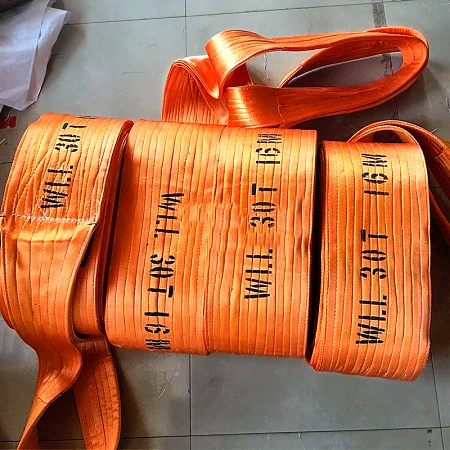
The eye decides how the band sits on a hook and whether the sling can be choked. Three standard forms are made in the four-ply build, and each can be reinforced with a buffer sleeve at the eye.
- פלאַך אויג (טיפּ 3). The plies are folded back and stitched flat. The most compact eye, the easiest to pass through a shackle, and the least bulky in a hook bowl.
- Reversed eye (טיפּ 4). The eye is turned so the seam sits away from the bearing surface. Chosen where the eye works against a shackle pin for long periods.
- Folded eye (טיפּ 5). A deeper fold giving a longer, stronger eye and more room in the hook. Common on heavy four-ply bodies, where the extra depth is worth the bulk.
Because all four plies pass through the eye, a four-ply eye is a substantial article: specify the eye width you need, or send the hook and shackle and we will match the eye to them rather than guessing.
עדזשאַז, sleeves and heat
A flat band cut by an edge starts as a notch and ends as a failure, and on a four-ply sling a notch severs at least one of the four load paths. Edge protection is therefore a specification line rather than an accessory:
- PU anti-cut sleeve — a movable sleeve over the contact area, for plate, section and machined corners.
- Cordura abrasion jacket — for repeated contact with rough concrete and cast surfaces.
- Aramid heat shield — for weld spatter, hot billet and adjacent flame work; the polyester body underneath still has a working limit near 100 °C.
A sleeve ordered with the sling is part of the sling and is recorded on the label. A sleeve added afterwards protects the band but cannot be recorded the same way, which is why it is worth deciding at the enquiry rather than on site.
Marking and traceability
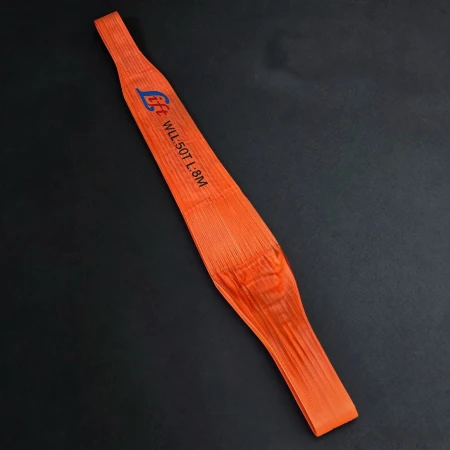
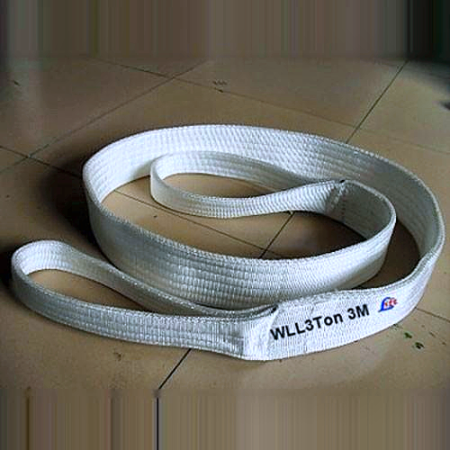
Every four-ply sling leaves with a label carrying the working load limit per hitch mode, the length and the length convention, the manufacturing standard, די זיכערקייַט פאַקטאָר, דער פאַבריקאַנט, the date and an individual serial number. Colour identifies capacity only inside the coded range — 1 ה פיאַלקע, 2 ה גרין, 3 ה געל, 4 ה גרוי, 5 ה רויט, 6 ה ברוין, 8 ה בלוי, 10 t orange — and above 10 t there is no colour to read at all, which is precisely why the label has to remain legible for the life of the sling.
Batch test certificates, declarations of conformity and, where a fleet is tracked electronically, an RFID tag can all be supplied. Tell us the standard the receiving site works to — EN 1492-1, ASME B30.9 or AS 1353 — because the safety factor and therefore the marking follow from it.
Inspection before every lift
דורכקוקן איידער יעדער נוצן, און פאָרמאַלי אין די מעהאַלעך די פּלאַץ כּללים שטעלן. On a four-ply sling the check is specific rather than a matter of judgement, and any one of the following retires the article:
- a cut, snag, puncture or tear that reaches any ply, including a notch in a selvedge;
- צעבראכן, וואָרן, pulled or missing stitching — particularly the rows through the eye;
- separation between plies, or a ply that has migrated inside the body;
- מעלטינג, charring, glazing or heat discolouration;
- זויער אָדער אַלקאַלי ברענט, or stiffness and staining after chemical contact;
- distortion of the eye, or a fitting that has been bent or worn;
- a label that can no longer be read, or a serial number that cannot be traced.
Store the sling clean and dry, אַוועק די שטאָק, out of direct sunlight, away from heat sources and chemicals, and keep the inspection record with the article. A sling that has been shock-loaded, dragged under load or exposed to an unknown chemical should be withdrawn pending a decision, not returned to the rack because it still looks whole.
אָפט געפרעגט
איז א 4 ply sling stronger than a 2 ply sling of the same width?
Yes — about twice the working load limit at the same width, because four plies share the load instead of two. It is not freely interchangeable: די 30 mm body and the thicker eye must fit the hook, the shackle and the load’s own lifting point.
וואָס טוט 4 ply mean, exactly?
Four separate woven polyester bands, each about 7.5 מם דיק, laid together and stitched into one flat body of roughly 30 mm. They are not one thick band woven in a single pass, and the stitching that joins them carries the load, which is why the seam is inspected first.
Can it be used in a choker hitch?
יא, בייַ 0.8 פון די ווערטיקאַל פיגור. Check that the eye will pass round the load and back through the hook, and protect the band where the load edge bites at the choke point.
How thick is the eye, and will it fit my hook?
The body is about 30 mm and the folded eye roughly 60 mm across. Send the hook bowl or shackle jaw dimension with the enquiry and the eye is matched to it rather than assumed.
וואָס קאָליר איז אַ 20 ה וועבינג וואַרפלקע?
There is no colour code above 10 ה. Colour identifies capacity only between 1 ה און 10 ה; א 12 ה, 16 ה, 20 t or heavier sling is identified by its label and serial number.
Can four-ply slings be made in nylon or aramid?
Polyester is the standard build. Polyamide is used where shock loading or abrasion dominates, aramid where heat or flame exposure must be survived, and both are made to order against the working conditions.
How long can a four-ply sling be made?
From about 1.5 m upwards, measured between the bearing points of the two eyes unless you state another convention. Long heavy slings keep the same ply count and stitch pattern and are quoted individually.
וואו צו גיין ווייַטער
וועבבינג וואַרפלקע — the whole flat range, פון 1 ה צו 40 ה
2 פּלאַ, 3 פּלאַ, 4 פּלאַ, 6 ply and 8 ply slings — how the family is built
3 ply webbing sling — the middle build for 6 ה צו 24 ה
2 ply webbing sling — light duty and general handling
Flat webbing sling factory — single and double ply, 1 ה צו 24 ה
Synthetic fibre lifting belt slings — the wider belt family
קייַלעכיק וואַרפלקע — where the band must conform instead of bridge
סאָף ליפטינג וואַרפלקע — the closed loop with no ends
דראָט שטריק וואַרפלקע — where abrasion and heat rule the band out
איין וועג וואַרפלקע — the single-trip option for export packing
ליפטינג ספּרעדער שטראַל — to keep four-ply legs vertical
ליפטינג דעוויסעס — clamps, hooks and shackles for the lift
שיקן די מאַסע, not the catalogue number
זאג אונז וואס מען האט אויפגעהויבן, the figure you need in the hitch you will actually use, the width the hook and the load will accept, and the environment the band works in. We will come back with the ply count, די ברייט, the eye style, the protection and the marking — and a price against the standard you work to.
Lift Sling Rigging Co., לטד
טעלעפאָן און WeChat: 18066002268
E- פּאָסט: lift98@jslift.com
ליפוטע ינדוסטריאַל פּאַרק, טאַזשאָו סיטי, דזשיאַנגסו פּראַווינס, טשיינאַ · הס קאָד 630790