פּראָדוקטן קאַטעגאָריעס

פּאַליעסטער ליפטינג האָיסטינג נעץ

קורץ באַשרייַבונג:

Lift sling rigging company produce Polyester Lifting Hoisting Net,Polyester Cargo Net,זיכערקייַט ליפטינג נעץ רימען,Bungee Cargo Net,Polyester Cargo Lifting Net,Lifting Sling Net,Rope Lifting Net,פּאַלאַט לאַסט נעץ,Garden Climbing Net.

פּאַליעסטער ליפטינג האָיסטינג נעץ

A polyester lifting hoisting net is a soft bag woven from high-tenacity polyester webbing, built to move bagged goods and bulk material in a single crane lift. The load is tipped into the bag, or the bag is laid flat and drawn up around a stack, and four corner loops carry the whole consignment to the hook. There is no pallet to return, no strapping to cut, and nothing to re-handle at the far end.

Because we weave the webbing in our own mill in Taizhou, דזשיאַנגסו, די מעש עפן, bag footprint, depth, bottom construction and working load limit are all set to the cargo rather than to a fixed catalogue. Standard nets cover 0.5 ה צו 20 ה און 0.6 m³ to over 10 m³, every net is proof-load tested before packing, and each shipment travels with a material test report. Nets are CE and GS certified, with webbing rated to the EN 1492-1 יקער.

  • Fully custom build – מעש, bag size, depth, colour and safety factor (5:1, 6:1 אָדער 7:1) set to your specification.
  • High-tenacity polyester webbing – 25 מם צו 100 מם באַנדס, איין, דופּלעקס אָדער טריפּלעקס, ווו סטייבאַלייזד און פוילן-דערווייַז.
  • Wear and heat resistant – working range -40 °C צו +100 °C, with a reinforced bottom for abrasive loads.
  • ווייך, flexible and light – the flat band contacts the load over a wide area, so bags, cartons and finished surfaces are neither crushed nor marked.
  • סע און גס סערטאַפייד – טעסטעד אויף אונדזער אייגן 1000 ה מאַשין, with an ISO 9001 quality system and a CNAS-accredited laboratory behind it.
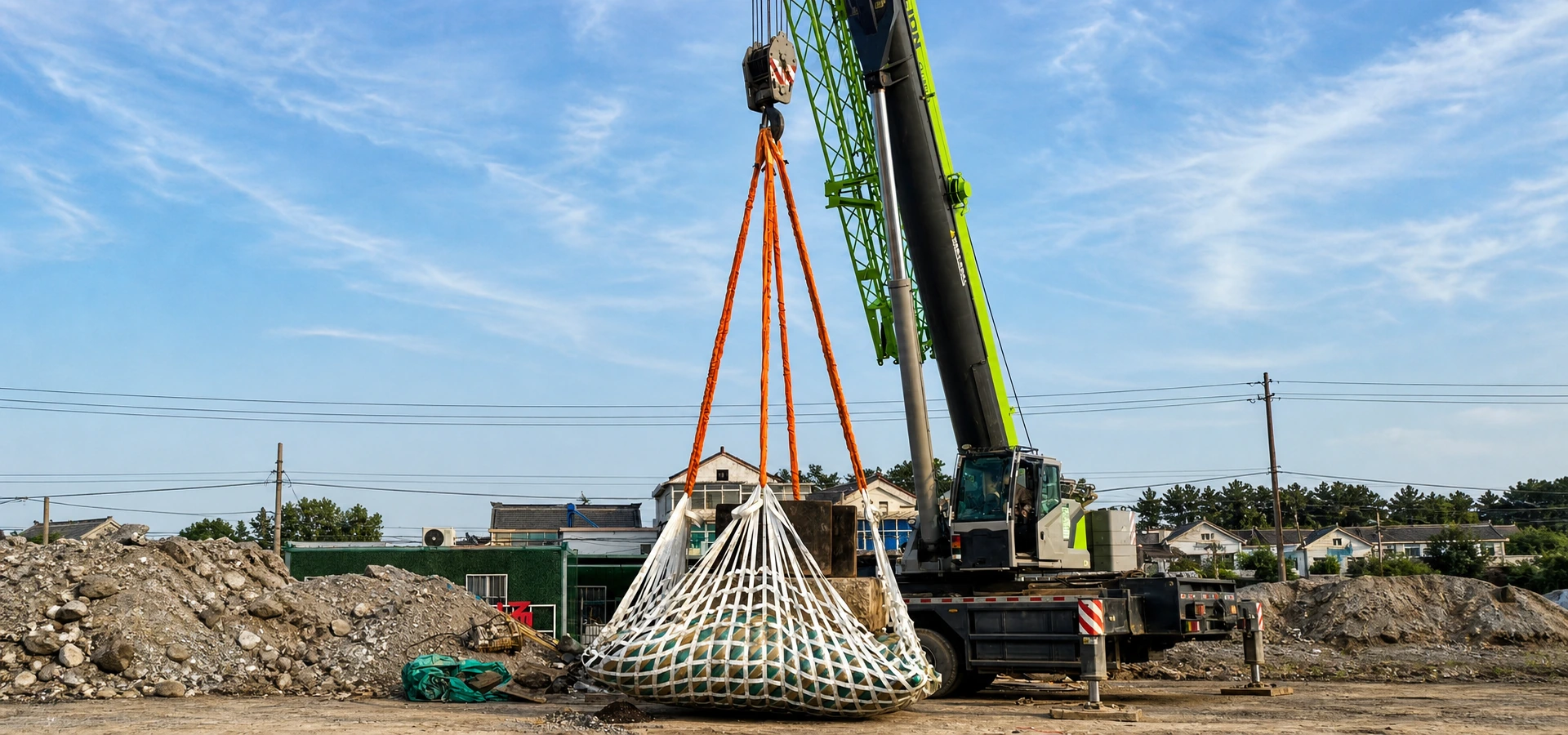
Polyester lifting hoisting net under a mobile crane carrying broken stone
A polyester lifting hoisting net in bulk service – the bag is filled with broken stone and lifted from its four loops by a mobile crane.

Why a webbing net bag, and not a rope net or a big bag

Three products are sold for the same job and they behave very differently once the load is in the air. A rope net concentrates the load on a few contact points. A big bag carries one free-flowing product and is itself the package. A webbing net bag spreads the pressure across flat bands, holds a stacked or mixed load together, and goes back to the store empty.

טיש 1 – How the four common ways of lifting loose cargo compare.

אָפּציע קאַנסטראַקשאַן קאָנטאַקט מיט די מאַסע Best cargo Limitation
Polyester webbing net bag Flat woven bands, 25-100 mm, 25-300 מם ייגל Wide flat bands, low pressure per cm² באַגד, סטאַקט, mixed and bulk cargo Needs a crane or hook; not a sealed package for powder
ניילאָן שטריק נעץ Knotted or braided rope, 8-24 mm Line contact at every rope Irregular and heavy single items Ropes mark soft cargo; a tight mesh adds weight
FIBC / big bag Woven PP fabric with a liner Full surface, sealed One free-flowing product per bag Single product only; the bag is the packaging
Pallet and strapping Timber or plastic pallet plus bands Rigid base Unitised cartons Pallet returned or lost; bands cut and discarded; no drainage
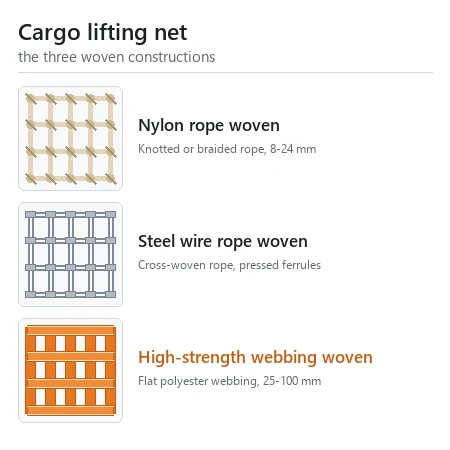
Diagram comparing nylon rope, steel wire rope and polyester webbing net constructions
Three woven constructions for cargo nets: ניילאָן שטריק, steel wire rope and high-strength polyester webbing.

Five decisions that set the specification

A polyester lifting hoisting net is quoted from five numbers. Get them right and the net arrives right; get the mesh wrong and no amount of extra tonnage will fix it later.

טיש 2 – What we need to know, and why each answer changes the net.

באַשלוס וואָס עס פיקסיז What to tell us
1. Cargo form Whether the net is a bag or a flat sheet, and how the bottom is built How the cargo arrives: זעק, big bags, bales, or loose material
2. Weight per lift Band width and layer count, and therefore the rated capacity The gross weight you intend to lift, not the weight of the net
3. Filled volume Footprint and depth of the bag Bulk density (t/m³) for loose material, or the height of the stack for bagged goods
4. מעש עפן The largest gap the cargo can pass through The smallest unit in the load: א 25 kg bag, קערל, aggregate or scrap
5. Discharge method Closed, laced, chute or lined bottom Whether the bag is tipped, untied over a hopper, or emptied by hand

Weight and volume are two separate limits, and for light bulk the volume arrives first. Grain at about 0.7 t/m³ and wood chips at about 0.3 t/m³ both fill a 3.6 m³ bag, but one lift weighs about 2.5 t and the other about 1 ה. Send the bulk density with the tonnage and we will size the bag so that a full bag is also a legal bag.
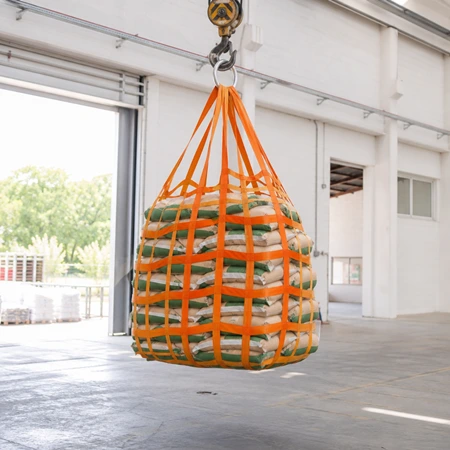
Polyester net bag lifting stacked 25 kg sacks in one crane lift
Bagged cargo in a polyester net bag – a stack of 25 kg sacks is closed in by the mesh and lifted as a single load.

טעכניש פּאַראַמעטערס

The figures below cover the standard bagged and bulk range. מעש, footprint, depth, bottom, loops and capacity are made to order, so treat this as the starting point for a quotation rather than a fixed catalogue.

טיש 3 – Polyester lifting hoisting net: טעכניש פּאַראַמעטערס.

פּאַראַמעטער באַשרייַבונג
פּראָדוקט נאָמען Polyester lifting hoisting net (polyester webbing net bag)
קאָנפיגוראַטיאָנס Closed bag, release-bottom bag, or flat lifting net
וועבבינג מאַטעריאַל 100 % הויך-עקשניטקייט פּאַליעסטער (ליבלינג); הויך-טענאַסיטי ניילאָן אויף בעטן
באַנד ברייט 25 / 38 / 50 / 75 / 100 mm (50 מם נאָרמאַל)
באַנד קאַנסטראַקשאַן איין שיכטע, דופּלעקס אָדער טריפּלעקס; וואָווען סעלעדגע, ניט אַ שנייַדן ברעג
באַנד גרעב 1.8 mm – 4.5 מם דיפּענדינג אויף ברייט און שיכטע ציילן
מעש עפן 100 × 100 מם נאָרמאַל; 25 – 300 מם געמאכט צו סדר
נעץ גרייס געמאכט צו די מאַסע שפּור, truck bed or receiving hopper; see Table 4
זעקל טיפעניש 0.8 עם – 2.5 עם, or to drawing
Filled volume וועגן 0.6 m³ to over 10 m³, set by footprint and depth
גרענעץ פאָולדיד און טאָפּל-סטיטשט, reinforced at every lifting point
ליפטינג פונקטן Four corner loops standard; אַכט פֿאַר אַ ספּרעדער שטראַל; loops top and bottom on request
רייטאַד קאַפּאַציטעט (WLL) 0.5 ה – 20 ה, באַשטימט דורך באַנד, layer count and lifting arrangement
זיכערקייַט פאַקטאָר 5:1 / 6:1 / 7:1
די העכסטן ווערט פון WLL 7 % אָדער ווייניקער
קאָליר קאָליר קאָד דורך ארבעטן מאַסע שיעור, אָדער אַ מנהג הויז קאָליר
ארבעטן טעמפּעראַטור -40 °C צו +100 °C
Weather and chemical ווו סטייבאַלייזד, rot-proof, unaffected by rain, sea water and wash-down
מאַרקינג WLL, mesh and batch printed on the belt, פּלוס אַ סעוון קאַפּאַציטעט פירמע
נאָרמאַל יקער Webbing rated to EN 1492-1
Certification סע, GS, יסאָ 9001, JIS on request; CNAS לאַבאָראַטאָריע; DNV
קוסטאָמיזאַטיאָן אָעם / ODM גרייס, קאָליר, געדרוקט לאָגאָ, פירמע און פּאַקינג
HS קאָד 6307.90 – נעצן און נעץ פון טעקסטיל מאַטעריאַלס

נאָרמאַל סיזעס, volumes and working load limits

These six lines cover the great majority of bagged and bulk work. Filled volume is calculated from the footprint and the depth with an allowance for the rounded shape a loaded bag takes, so a material that settles well will carry slightly more and one that bridges will carry less.

טיש 4 – Standard net sizes at four corner loops gathered on one hook.

נעץ גרייס (ל × וו) Depth Filled volume מעש באַנד WLL טיפּיש לאַסט
1.0 × 1.0 עם 1.0 עם 0.6 m³ 50-100 mm 50 mm single 0.5-1.5 ה 25 kg bags, small sacks, bales
1.5 × 1.5 עם 1.2 עם 1.6 m³ 50-100 mm 50 מם דופּלעקס 1-2.5 ה Bagged grain, fertilizer, פּראָדוצירן
2.0 × 2.0 עם 1.5 עם 3.6 m³ 50-100 mm 50 מם דופּלעקס 2-4 ה Bulk grain, sand, crushed stone
2.5 × 2.5 עם 1.8 עם 6.8 m³ 50-150 mm 75 מם דופּלעקס 3-6 ה Bulk fertilizer, coal, ברעקל, fish
3.0 × 3.0 עם 2.0 עם 10.8 m³ 100-150 mm 75 מם דופּלעקס 4-8 ה Large bulk loads, קיי און האַלטן אַרבעט
To drawing 0.8-2.5 עם צו סדר 25-300 mm 25-100 mm 0.5-20 ה קיין שפּור, depth and cargo

The working load limits above assume a four-loop lift. A two-loop basket de-rates the net – ask for the derated figure rather than reading across from this table.

מעש עפן, chosen from the cargo

Mesh is the one dimension that cannot be adjusted after the net is sewn, so it is sized from the smallest unit in the load rather than from the total weight.

טיש 5 – Mesh opening by cargo.

לאַסט רעקאַמענדיד ייגל סיבה
50 kg sacks, big bags, bales 100 mm The sacks are far larger than the opening; the mesh only has to keep the stack together
25 kg bags, small sacks 50-75 mm Small bags can squeeze through 100 mm once the load settles in the air
Grain, זוימען, dried produce 25-50 mm, or a closed liner Fine material must not sift out on the hook or in transit
Fertilizer, prills, powders 25-50 mm, or a closed liner Fine and moisture-sensitive: a liner keeps the product in and the weather out
Sand, gravel, crushed stone 50-100 mm Fine enough to hold the bulk, open enough for rainwater to drain
Coal, coke 100-150 mm Large lumps; a wider mesh keeps the net light and drains well
ברעקל מעטאַל, אָפּקאַץ 100-150 mm Open mesh with a reinforced bottom and wear pads at the contact points
Fish, shellfish, wet produce 25-50 mm Holds the catch, drains freely, keeps the weight honest
לאָגס, ברענהאָלץ, large offcuts 150-300 mm Indivisible pieces: a wide mesh saves weight without losing the load
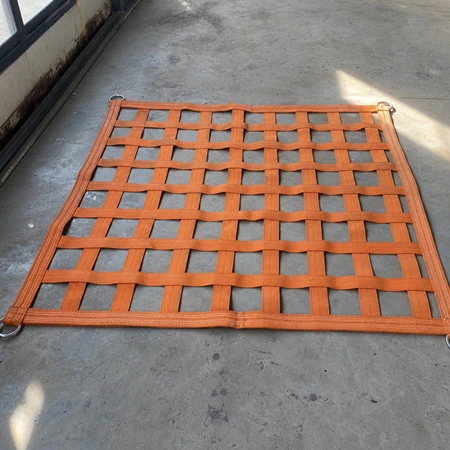
Orange polyester webbing lifting net laid flat with steel corner rings
A square polyester webbing net laid out flat: 100 מם ייגל, 50 מם באַנדס, reinforced border and a steel ring at each corner.

Bottom construction and discharge

How the load comes out is a design decision in its own right. For bagged cargo the answer is usually a person with a knife; for bulk it is usually gravity.

טיש 6 – Bottom options and how each one is emptied.

דנאָ ווי עס אַרבעט Chosen when
Closed, fully sewn The bag holds the cargo permanently and is emptied by tipping or by hand באַגד לאַסט, and bulk tipped over a hopper or onto a pile
Release bottom, laced A laced seam across the bottom is untied at the discharge point and the load falls out Free-flowing bulk – sand, קערל, aggregate – discharged without tipping the bag
Chute bottom The bag narrows to a chute opened over the receiving hopper Controlled discharge into a hopper, a barge or a conveyor
Closed with a liner A fabric liner sits inside the net Dusty or moisture-sensitive bulk: קערל, fertilizer, powders
Reinforced bottom panel An extra layer of webbing is stitched across the base Abrasive and heavy bulk: aggregate, ore, ברעקל
Loops top and bottom Loops at both ends, so the bag can be lifted either way up Loading at height, and emptying by inverting the bag on the hook

Lifting arrangements and fittings

How the bag is hung decides how much of the load it really carries, and bulk is unforgiving because the load keeps moving inside the bag while it is in the air.

  • פיר לופּס אויף די קרוק – the standard for bagged and bulk work; the loops gather on the hook or a master ring and the bag closes around the cargo as the crane takes up the slack.
  • אַכט לופּס אויף אַ ספּרעדער שטראַל – the bag stays square, the load stays level, and each loop carries a predictable share; the right arrangement for large bags and high tonnage, זען אונדזער ליפטינג ספּרעדער שטראַל קייט.
  • Two-loop basket – faster to rig, but it de-rates the net; ask for the derated capacity instead of reading across from the four-loop figure.
  • Loops top and bottom – lets the bag be lifted either way up, which is how a closed bag is emptied by inverting it over a hopper.

פיטינגז סאַפּלייד אָדער פיטאַד אויף בעטן: סעוון וועבינג שלייף, master ring or master link, מיינונג 80 שאַקאַלז, laced release bottoms, chutes and discharge sleeves, inner liners, wear pads and protection sleeves for scrap and aggregate, and repair kits for fleets that maintain their own equipment.

מאַטעריאַל, stitching and finish

The belt is the product. We weave it on needle looms from high-tenacity polyester yarn, with a woven selvedge rather than a cut edge, so the band does not fray from the outside in.

  • 100 % הויך-עקשניטקייט פּאַליעסטער, נידעריק ילאָנגגיישאַן (7 % אָדער ווייניקער ביי WLL), ווו סטייבאַלייזד, rot-proof and unaffected by moisture.
  • Locked stitching in high-tenacity polyester thread, run in multiple rows along the border and box-X at every loop – on a cheap net it is the stitch line, not the belt, that fails first.
  • Folded and double-stitched border, so the edge of the mesh cannot unravel under load.
  • Galvanised or stainless steel rings and master links on request.
  • Polyester holds its strength from -40 °C צו +100 °C; above that, or in chemical exposure, tell us and we will quote nylon or another construction.
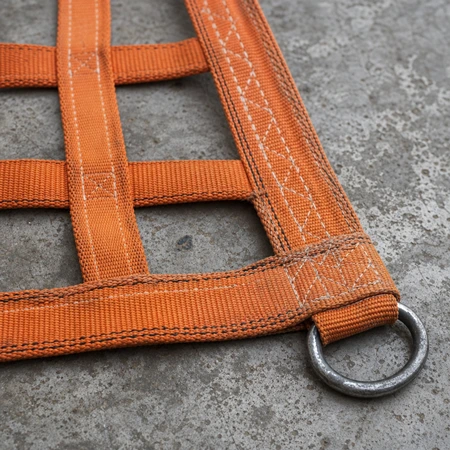
Close-up of webbing net border stitching and a galvanised D-ring
Border stitching and a galvanised D-ring at the corner – the two places a webbing net bag is most often overloaded.

טעסטינג, סערטאַפאַקיישאַן און טרייסאַביליטי

  • פערציק יאָר פון ליפטינג ויסריכט מאַנופאַקטורינג – געגרינדעט אין 1985 אין טייזשאָו, דזשיאַנגסו, מיט מער ווי 200 employees and one of China’s largest lifting sling and net production bases.
  • יעדער נעץ איז פּראָווען-מאַסע טעסטעד אויף אונדזער אייגן 1000 ה האָריזאָנטאַל פּרובירן מאַשין – טעסטעד, not sampled.
  • A material test report travels with each shipment, quoting the belt batch and the test load.
  • סע דעקלאַראַציע פון ​​קאַנפאָרמאַטי און גס סערטאַפאַקיישאַן, מיט JIS סערטאַפאַקיישאַן אויף אַרויספירן אָרדערס.
  • יסאָ 9001 קוואַליטעט פאַרוואַלטונג סיסטעם, אַ CNAS-אַקרעדיטיד לאַבאָראַטאָריע און DNV סערטאַפאַקיישאַן הינטער די פאַבריק.
  • Every net is marked with its working load limit, מעש, rated volume and batch number before packing, so the bag and its paperwork always agree.

Certificates and test reports are available as PDFs for your tender or customs file – זען די פול סערטאַפאַקיישאַן שטעלן.

Where these nets work

A polyester lifting hoisting net is used wherever loose cargo has to travel between a stack and a hook – quay, מיל, quarry, yard or hold. The sectors below are the ones where the bagged and bulk version earns its place.

טיש 7 – אַפּפּליקאַטיאָנס דורך סעקטאָר.

סעקטאָר What the net handles Why a polyester net suits it
פּאָרץ, quays and terminals באַגד לאַסט, קערל, fertilizer and bulk between quay, barge and hold One bag per lift, קיין פּאַלאַט, and the load drains as it travels
Agriculture and feed mills Seed, קערל, קאָרמען, fertilizer and bagged product A tight mesh or a liner keeps the product in and the weather out
Building materials Sand, gravel, crushed stone and bagged cement Fine enough to hold the bulk, open enough for rainwater to drain
Mining and quarrying Aggregate, ore and mineral bulk A reinforced bottom takes the abrasion that wears a net out
Fisheries and food processing Wet fish, shellfish and produce Open mesh drains freely, which keeps the weight honest
Recycling and waste Loose plastics, glass, metal and mixed material Contains loose material that would otherwise blow or fall
Biomass and power Wood chips, bark, pellets and fuel bulk A large bag for a modest tonnage, matched to the volume limit
Construction sites and relief work Bagged materials raised to upper floors, field cargo No pallet, no banding, and it can be emptied straight onto the ground
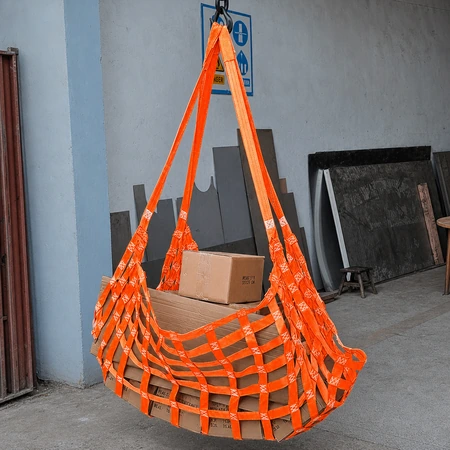
Orange webbing net bag lifting a carton with soft wide bands
Mixed cargo on site: a net bag takes a carton as readily as a stack of sacks, and the flat webbing spreads the load rather than cutting into it.

Customisation and branding

A net that moves between quays, holds and yards has to be identifiable from a distance and has to keep its marking. קאָליר, געדרוקט לאָגאָ, working load limit and cargo type are all applied in our own plant, so the marking cannot be washed off or pulled away with a label.

  • קאָליר קאָד דורך ארבעטן מאַסע שיעור, or a custom house colour to separate your fleet from a competitor’s.
  • Logo, brand name, ווארענונג טעקסט אָדער באַווייַזן נומער געדרוקט אויף די גאַרטל, or woven in on larger orders.
  • Cargo type printed on the bag, which stops a fine-mesh grain net being sent out for scrap.
  • Sewn capacity label in addition to the print, so the net and its paperwork agree at every inspection.
  • Packing folded into a bag or a crate – a set of ten net bags takes the space of one pallet.
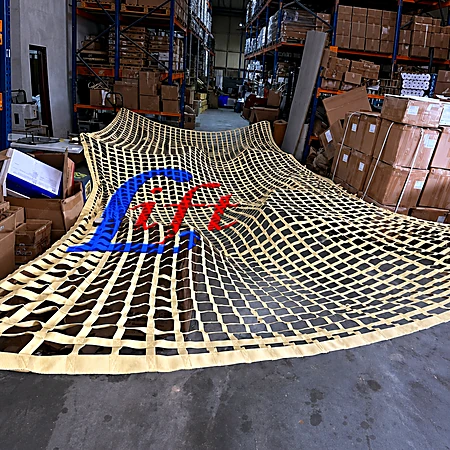
Polyester webbing cargo net printed with a customer logo in a warehouse
Buyer branding applied at the mill: the customer mark is printed directly on the webbing bands, not on a tag.
Beige polyester webbing net with printed logo laid out for inspection
Final inspection before packing – קאָליר, געדרוקט לאָגאָ, mesh and working load limit are checked on the finished net.

קער, דורכקוק און ריטייערמאַנט

  • Inspect the loops and their stitching first, then the border, then the bottom closure – on a bulk net the bottom and the corners wear before the mesh does.
  • Empty the bag completely before storage; material left inside holds moisture, adds weight and hides damage.
  • קוקן פֿאַר קאַץ, אַברייזשאַן, צעבראכן סטיטשינג, כעמישער סטיינינג, היץ גלייזינג און די קאָליר אָדער גלאָס טוישן וואָס סיגנאַלז ווו דערנידעריקונג.
  • Weigh a wet bag before lifting it. רעגן, sea water and wet bulk can add far more than the cargo was rated at, and a net does not know the difference.
  • קיינמאָל יקסיד די רייטאַד קאַפּאַציטעט, קיינמאָל הייבן אויף ווייניקערע ווי די פול שטעלן פון לופּס, and never drag a loaded bag sideways with the crane.
  • קראָם ריין און טרוקן, אַוועק די ערד און אויס פון דירעקט זון; קיינמאָל פאַרריכטן וועבינג דורך קנאָטינג, וועלדינג אָדער באַהיצונג עס.

אָפט געשטעלטע פֿראגן

What is the difference between a polyester lifting hoisting net and a cargo net?

A lifting net is rated, marked and tested to carry a load on a crane hook. A cargo net is a restraint: it holds a load down in transit and is not designed to be lifted. If the net is going onto a hook, it must be the rated version – זען אונדזער לאַסט סיקיורינג נעץ for the tie-down case.

How do I choose the mesh opening?

From the smallest unit in the load, נישט פון די טאנץ. א 25 kg bag needs 50-75 mm; grain or fertilizer needs 25-50 mm or a closed liner; scrap and coal can take 100-150 mm. Once the net is sewn the mesh cannot be changed, so this is the one number worth checking twice.

Why does the volume matter as much as the weight?

Because light bulk fills the bag before it reaches the rated weight. A bag that is full at half its rating doubles the number of lifts and the crane time. Give us the bulk density with the tonnage and we will size the bag so a full bag is also a legal bag.

Can the bag be emptied without tipping it?

יא. A laced release bottom or a chute bottom lets a free-flowing load be discharged straight into a hopper, a barge or a conveyor. Bagged cargo is normally emptied by hand or with a forklift at the far end.

Will the net hold wet cargo?

The net itself is unaffected – polyester does not absorb water and does not rot, אזוי רעגן, sea water and wash-down do no harm. צוויי וואָרענען: wet cargo is heavier, and fine wet material can clog the mesh, which adds weight and stops it draining.

How is the working load limit proved?

די וועבינג איז רייטאַד צו די EN 1492-1 יקער און נעצן זענען סאַפּלייד בייַ 5:1, 6:1 אָדער 7:1 ווי ספּעסיפיעד. יעדער נעץ איז פּראָווען-מאַסע טעסטעד אויף אונדזער אייגן 1000 ה מאַשין, a material test report travels with the order, and the products carry CE and GS certification.

Do you make a flat version for palletised cargo?

יא – the flat lifting net is the קראַנע פּאַלאַט לאַסט נעץ, and the material-led range is covered by the פּאַליעסטער וועבינג נעץ פֿאַר ליפטינג. The rope constructions sit alongside as the ניילאָן לאַסט ליפטינג נעץ און די שווער פליכט ניילאָן לאַסט נעץ וואַרפלקע.

What else do you make from the same webbing?

The same belt goes into our וועבינג סלינגז און סאָף קייַלעכיק סלינגס, and the wider cargo range is listed under לאַסט ליפטינג נעצן – including the וועבינג לאַסט ליפטינג נעץ for flat work.

בעטן אַ ציטאַט

Send the cargo and whether it is bagged or bulk, the bulk density if you know it, the weight you want per lift, די מעש עפן, the discharge method and the environment the net will work in – or a sketch of the bag you have in mind. Our engineers will confirm the net size, depth, bottom construction, band and packing and quote it in one reply. צו רעדן עס דורך ערשטער, קאָנטאַקט אונדזער ענדזשאַנירז.

הייבן סלינג ריגינג פֿירמע – ליפוטע ינדוסטריאַל פּאַרק, טאַזשאָו סיטי, דזשיאַנגסו פּראַווינס, כינע
טעל: +86 523 8693 5818 | ווהאַצאַפּפּ: +86 180 6600 2268 | E- פּאָסט: lift98@jslift.com

פּראָדוקט דעטאַל

Lift sling rigging company produce Polyester Lifting Hoisting Net,Polyester Cargo Net,זיכערקייַט ליפטינג נעץ רימען,Bungee Cargo Net,Polyester Cargo Lifting Net,Lifting Sling Net,Rope Lifting Net,פּאַלאַט לאַסט נעץ,Garden Climbing Net.

פּאַליעסטער ליפטינג האָיסטינג נעץ

A polyester lifting hoisting net is a soft bag woven from high-tenacity polyester webbing, built to move bagged goods and bulk material in a single crane lift. The load is tipped into the bag, or the bag is laid flat and drawn up around a stack, and four corner loops carry the whole consignment to the hook. There is no pallet to return, no strapping to cut, and nothing to re-handle at the far end.

Because we weave the webbing in our own mill in Taizhou, דזשיאַנגסו, די מעש עפן, bag footprint, depth, bottom construction and working load limit are all set to the cargo rather than to a fixed catalogue. Standard nets cover 0.5 ה צו 20 ה און 0.6 m³ to over 10 m³, every net is proof-load tested before packing, and each shipment travels with a material test report. Nets are CE and GS certified, with webbing rated to the EN 1492-1 יקער.

  • Fully custom build – מעש, bag size, depth, colour and safety factor (5:1, 6:1 אָדער 7:1) set to your specification.
  • High-tenacity polyester webbing – 25 מם צו 100 מם באַנדס, איין, דופּלעקס אָדער טריפּלעקס, ווו סטייבאַלייזד און פוילן-דערווייַז.
  • Wear and heat resistant – working range -40 °C צו +100 °C, with a reinforced bottom for abrasive loads.
  • ווייך, flexible and light – the flat band contacts the load over a wide area, so bags, cartons and finished surfaces are neither crushed nor marked.
  • סע און גס סערטאַפייד – טעסטעד אויף אונדזער אייגן 1000 ה מאַשין, with an ISO 9001 quality system and a CNAS-accredited laboratory behind it.
Polyester lifting hoisting net under a mobile crane carrying broken stone
A polyester lifting hoisting net in bulk service – the bag is filled with broken stone and lifted from its four loops by a mobile crane.

Why a webbing net bag, and not a rope net or a big bag

Three products are sold for the same job and they behave very differently once the load is in the air. A rope net concentrates the load on a few contact points. A big bag carries one free-flowing product and is itself the package. A webbing net bag spreads the pressure across flat bands, holds a stacked or mixed load together, and goes back to the store empty.

טיש 1 – How the four common ways of lifting loose cargo compare.

אָפּציע קאַנסטראַקשאַן קאָנטאַקט מיט די מאַסע Best cargo Limitation
Polyester webbing net bag Flat woven bands, 25-100 mm, 25-300 מם ייגל Wide flat bands, low pressure per cm² באַגד, סטאַקט, mixed and bulk cargo Needs a crane or hook; not a sealed package for powder
ניילאָן שטריק נעץ Knotted or braided rope, 8-24 mm Line contact at every rope Irregular and heavy single items Ropes mark soft cargo; a tight mesh adds weight
FIBC / big bag Woven PP fabric with a liner Full surface, sealed One free-flowing product per bag Single product only; the bag is the packaging
Pallet and strapping Timber or plastic pallet plus bands Rigid base Unitised cartons Pallet returned or lost; bands cut and discarded; no drainage
Diagram comparing nylon rope, steel wire rope and polyester webbing net constructions
Three woven constructions for cargo nets: ניילאָן שטריק, steel wire rope and high-strength polyester webbing.

Five decisions that set the specification

A polyester lifting hoisting net is quoted from five numbers. Get them right and the net arrives right; get the mesh wrong and no amount of extra tonnage will fix it later.

טיש 2 – What we need to know, and why each answer changes the net.

באַשלוס וואָס עס פיקסיז What to tell us
1. Cargo form Whether the net is a bag or a flat sheet, and how the bottom is built How the cargo arrives: זעק, big bags, bales, or loose material
2. Weight per lift Band width and layer count, and therefore the rated capacity The gross weight you intend to lift, not the weight of the net
3. Filled volume Footprint and depth of the bag Bulk density (t/m³) for loose material, or the height of the stack for bagged goods
4. מעש עפן The largest gap the cargo can pass through The smallest unit in the load: א 25 kg bag, קערל, aggregate or scrap
5. Discharge method Closed, laced, chute or lined bottom Whether the bag is tipped, untied over a hopper, or emptied by hand

Weight and volume are two separate limits, and for light bulk the volume arrives first. Grain at about 0.7 t/m³ and wood chips at about 0.3 t/m³ both fill a 3.6 m³ bag, but one lift weighs about 2.5 t and the other about 1 ה. Send the bulk density with the tonnage and we will size the bag so that a full bag is also a legal bag.

Polyester net bag lifting stacked 25 kg sacks in one crane lift
Bagged cargo in a polyester net bag – a stack of 25 kg sacks is closed in by the mesh and lifted as a single load.

טעכניש פּאַראַמעטערס

The figures below cover the standard bagged and bulk range. מעש, footprint, depth, bottom, loops and capacity are made to order, so treat this as the starting point for a quotation rather than a fixed catalogue.

טיש 3 – Polyester lifting hoisting net: טעכניש פּאַראַמעטערס.

פּאַראַמעטער באַשרייַבונג
פּראָדוקט נאָמען Polyester lifting hoisting net (polyester webbing net bag)
קאָנפיגוראַטיאָנס Closed bag, release-bottom bag, or flat lifting net
וועבבינג מאַטעריאַל 100 % הויך-עקשניטקייט פּאַליעסטער (ליבלינג); הויך-טענאַסיטי ניילאָן אויף בעטן
באַנד ברייט 25 / 38 / 50 / 75 / 100 mm (50 מם נאָרמאַל)
באַנד קאַנסטראַקשאַן איין שיכטע, דופּלעקס אָדער טריפּלעקס; וואָווען סעלעדגע, ניט אַ שנייַדן ברעג
באַנד גרעב 1.8 mm – 4.5 מם דיפּענדינג אויף ברייט און שיכטע ציילן
מעש עפן 100 × 100 מם נאָרמאַל; 25 – 300 מם געמאכט צו סדר
נעץ גרייס געמאכט צו די מאַסע שפּור, truck bed or receiving hopper; see Table 4
זעקל טיפעניש 0.8 עם – 2.5 עם, or to drawing
Filled volume וועגן 0.6 m³ to over 10 m³, set by footprint and depth
גרענעץ פאָולדיד און טאָפּל-סטיטשט, reinforced at every lifting point
ליפטינג פונקטן Four corner loops standard; אַכט פֿאַר אַ ספּרעדער שטראַל; loops top and bottom on request
רייטאַד קאַפּאַציטעט (WLL) 0.5 ה – 20 ה, באַשטימט דורך באַנד, layer count and lifting arrangement
זיכערקייַט פאַקטאָר 5:1 / 6:1 / 7:1
די העכסטן ווערט פון WLL 7 % אָדער ווייניקער
קאָליר קאָליר קאָד דורך ארבעטן מאַסע שיעור, אָדער אַ מנהג הויז קאָליר
ארבעטן טעמפּעראַטור -40 °C צו +100 °C
Weather and chemical ווו סטייבאַלייזד, rot-proof, unaffected by rain, sea water and wash-down
מאַרקינג WLL, mesh and batch printed on the belt, פּלוס אַ סעוון קאַפּאַציטעט פירמע
נאָרמאַל יקער Webbing rated to EN 1492-1
Certification סע, GS, יסאָ 9001, JIS on request; CNAS לאַבאָראַטאָריע; DNV
קוסטאָמיזאַטיאָן אָעם / ODM גרייס, קאָליר, געדרוקט לאָגאָ, פירמע און פּאַקינג
HS קאָד 6307.90 – נעצן און נעץ פון טעקסטיל מאַטעריאַלס

נאָרמאַל סיזעס, volumes and working load limits

These six lines cover the great majority of bagged and bulk work. Filled volume is calculated from the footprint and the depth with an allowance for the rounded shape a loaded bag takes, so a material that settles well will carry slightly more and one that bridges will carry less.

טיש 4 – Standard net sizes at four corner loops gathered on one hook.

נעץ גרייס (ל × וו) Depth Filled volume מעש באַנד WLL טיפּיש לאַסט
1.0 × 1.0 עם 1.0 עם 0.6 m³ 50-100 mm 50 mm single 0.5-1.5 ה 25 kg bags, small sacks, bales
1.5 × 1.5 עם 1.2 עם 1.6 m³ 50-100 mm 50 מם דופּלעקס 1-2.5 ה Bagged grain, fertilizer, פּראָדוצירן
2.0 × 2.0 עם 1.5 עם 3.6 m³ 50-100 mm 50 מם דופּלעקס 2-4 ה Bulk grain, sand, crushed stone
2.5 × 2.5 עם 1.8 עם 6.8 m³ 50-150 mm 75 מם דופּלעקס 3-6 ה Bulk fertilizer, coal, ברעקל, fish
3.0 × 3.0 עם 2.0 עם 10.8 m³ 100-150 mm 75 מם דופּלעקס 4-8 ה Large bulk loads, קיי און האַלטן אַרבעט
To drawing 0.8-2.5 עם צו סדר 25-300 mm 25-100 mm 0.5-20 ה קיין שפּור, depth and cargo

The working load limits above assume a four-loop lift. A two-loop basket de-rates the net – ask for the derated figure rather than reading across from this table.

מעש עפן, chosen from the cargo

Mesh is the one dimension that cannot be adjusted after the net is sewn, so it is sized from the smallest unit in the load rather than from the total weight.

טיש 5 – Mesh opening by cargo.

לאַסט רעקאַמענדיד ייגל סיבה
50 kg sacks, big bags, bales 100 mm The sacks are far larger than the opening; the mesh only has to keep the stack together
25 kg bags, small sacks 50-75 mm Small bags can squeeze through 100 mm once the load settles in the air
Grain, זוימען, dried produce 25-50 mm, or a closed liner Fine material must not sift out on the hook or in transit
Fertilizer, prills, powders 25-50 mm, or a closed liner Fine and moisture-sensitive: a liner keeps the product in and the weather out
Sand, gravel, crushed stone 50-100 mm Fine enough to hold the bulk, open enough for rainwater to drain
Coal, coke 100-150 mm Large lumps; a wider mesh keeps the net light and drains well
ברעקל מעטאַל, אָפּקאַץ 100-150 mm Open mesh with a reinforced bottom and wear pads at the contact points
Fish, shellfish, wet produce 25-50 mm Holds the catch, drains freely, keeps the weight honest
לאָגס, ברענהאָלץ, large offcuts 150-300 mm Indivisible pieces: a wide mesh saves weight without losing the load
Orange polyester webbing lifting net laid flat with steel corner rings
A square polyester webbing net laid out flat: 100 מם ייגל, 50 מם באַנדס, reinforced border and a steel ring at each corner.

Bottom construction and discharge

How the load comes out is a design decision in its own right. For bagged cargo the answer is usually a person with a knife; for bulk it is usually gravity.

טיש 6 – Bottom options and how each one is emptied.

דנאָ ווי עס אַרבעט Chosen when
Closed, fully sewn The bag holds the cargo permanently and is emptied by tipping or by hand באַגד לאַסט, and bulk tipped over a hopper or onto a pile
Release bottom, laced A laced seam across the bottom is untied at the discharge point and the load falls out Free-flowing bulk – sand, קערל, aggregate – discharged without tipping the bag
Chute bottom The bag narrows to a chute opened over the receiving hopper Controlled discharge into a hopper, a barge or a conveyor
Closed with a liner A fabric liner sits inside the net Dusty or moisture-sensitive bulk: קערל, fertilizer, powders
Reinforced bottom panel An extra layer of webbing is stitched across the base Abrasive and heavy bulk: aggregate, ore, ברעקל
Loops top and bottom Loops at both ends, so the bag can be lifted either way up Loading at height, and emptying by inverting the bag on the hook

Lifting arrangements and fittings

How the bag is hung decides how much of the load it really carries, and bulk is unforgiving because the load keeps moving inside the bag while it is in the air.

  • פיר לופּס אויף די קרוק – the standard for bagged and bulk work; the loops gather on the hook or a master ring and the bag closes around the cargo as the crane takes up the slack.
  • אַכט לופּס אויף אַ ספּרעדער שטראַל – the bag stays square, the load stays level, and each loop carries a predictable share; the right arrangement for large bags and high tonnage, זען אונדזער ליפטינג ספּרעדער שטראַל קייט.
  • Two-loop basket – faster to rig, but it de-rates the net; ask for the derated capacity instead of reading across from the four-loop figure.
  • Loops top and bottom – lets the bag be lifted either way up, which is how a closed bag is emptied by inverting it over a hopper.

פיטינגז סאַפּלייד אָדער פיטאַד אויף בעטן: סעוון וועבינג שלייף, master ring or master link, מיינונג 80 שאַקאַלז, laced release bottoms, chutes and discharge sleeves, inner liners, wear pads and protection sleeves for scrap and aggregate, and repair kits for fleets that maintain their own equipment.

מאַטעריאַל, stitching and finish

The belt is the product. We weave it on needle looms from high-tenacity polyester yarn, with a woven selvedge rather than a cut edge, so the band does not fray from the outside in.

  • 100 % הויך-עקשניטקייט פּאַליעסטער, נידעריק ילאָנגגיישאַן (7 % אָדער ווייניקער ביי WLL), ווו סטייבאַלייזד, rot-proof and unaffected by moisture.
  • Locked stitching in high-tenacity polyester thread, run in multiple rows along the border and box-X at every loop – on a cheap net it is the stitch line, not the belt, that fails first.
  • Folded and double-stitched border, so the edge of the mesh cannot unravel under load.
  • Galvanised or stainless steel rings and master links on request.
  • Polyester holds its strength from -40 °C צו +100 °C; above that, or in chemical exposure, tell us and we will quote nylon or another construction.
Close-up of webbing net border stitching and a galvanised D-ring
Border stitching and a galvanised D-ring at the corner – the two places a webbing net bag is most often overloaded.

טעסטינג, סערטאַפאַקיישאַן און טרייסאַביליטי

  • פערציק יאָר פון ליפטינג ויסריכט מאַנופאַקטורינג – געגרינדעט אין 1985 אין טייזשאָו, דזשיאַנגסו, מיט מער ווי 200 employees and one of China’s largest lifting sling and net production bases.
  • יעדער נעץ איז פּראָווען-מאַסע טעסטעד אויף אונדזער אייגן 1000 ה האָריזאָנטאַל פּרובירן מאַשין – טעסטעד, not sampled.
  • A material test report travels with each shipment, quoting the belt batch and the test load.
  • סע דעקלאַראַציע פון ​​קאַנפאָרמאַטי און גס סערטאַפאַקיישאַן, מיט JIS סערטאַפאַקיישאַן אויף אַרויספירן אָרדערס.
  • יסאָ 9001 קוואַליטעט פאַרוואַלטונג סיסטעם, אַ CNAS-אַקרעדיטיד לאַבאָראַטאָריע און DNV סערטאַפאַקיישאַן הינטער די פאַבריק.
  • Every net is marked with its working load limit, מעש, rated volume and batch number before packing, so the bag and its paperwork always agree.

Certificates and test reports are available as PDFs for your tender or customs file – זען די פול סערטאַפאַקיישאַן שטעלן.

Where these nets work

A polyester lifting hoisting net is used wherever loose cargo has to travel between a stack and a hook – quay, מיל, quarry, yard or hold. The sectors below are the ones where the bagged and bulk version earns its place.

טיש 7 – אַפּפּליקאַטיאָנס דורך סעקטאָר.

סעקטאָר What the net handles Why a polyester net suits it
פּאָרץ, quays and terminals באַגד לאַסט, קערל, fertilizer and bulk between quay, barge and hold One bag per lift, קיין פּאַלאַט, and the load drains as it travels
Agriculture and feed mills Seed, קערל, קאָרמען, fertilizer and bagged product A tight mesh or a liner keeps the product in and the weather out
Building materials Sand, gravel, crushed stone and bagged cement Fine enough to hold the bulk, open enough for rainwater to drain
Mining and quarrying Aggregate, ore and mineral bulk A reinforced bottom takes the abrasion that wears a net out
Fisheries and food processing Wet fish, shellfish and produce Open mesh drains freely, which keeps the weight honest
Recycling and waste Loose plastics, glass, metal and mixed material Contains loose material that would otherwise blow or fall
Biomass and power Wood chips, bark, pellets and fuel bulk A large bag for a modest tonnage, matched to the volume limit
Construction sites and relief work Bagged materials raised to upper floors, field cargo No pallet, no banding, and it can be emptied straight onto the ground
Orange webbing net bag lifting a carton with soft wide bands
Mixed cargo on site: a net bag takes a carton as readily as a stack of sacks, and the flat webbing spreads the load rather than cutting into it.

Customisation and branding

A net that moves between quays, holds and yards has to be identifiable from a distance and has to keep its marking. קאָליר, געדרוקט לאָגאָ, working load limit and cargo type are all applied in our own plant, so the marking cannot be washed off or pulled away with a label.

  • קאָליר קאָד דורך ארבעטן מאַסע שיעור, or a custom house colour to separate your fleet from a competitor’s.
  • Logo, brand name, ווארענונג טעקסט אָדער באַווייַזן נומער געדרוקט אויף די גאַרטל, or woven in on larger orders.
  • Cargo type printed on the bag, which stops a fine-mesh grain net being sent out for scrap.
  • Sewn capacity label in addition to the print, so the net and its paperwork agree at every inspection.
  • Packing folded into a bag or a crate – a set of ten net bags takes the space of one pallet.
Polyester webbing cargo net printed with a customer logo in a warehouse
Buyer branding applied at the mill: the customer mark is printed directly on the webbing bands, not on a tag.
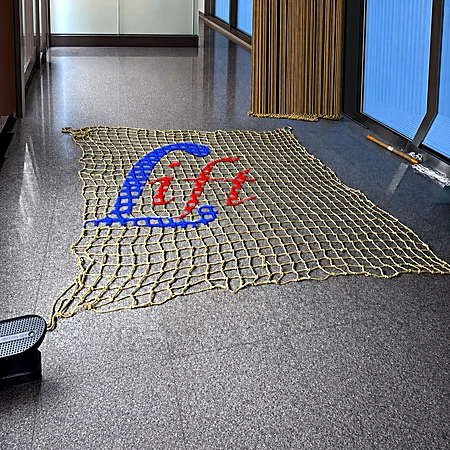
Beige polyester webbing net with printed logo laid out for inspection
Final inspection before packing – קאָליר, געדרוקט לאָגאָ, mesh and working load limit are checked on the finished net.

קער, דורכקוק און ריטייערמאַנט

  • Inspect the loops and their stitching first, then the border, then the bottom closure – on a bulk net the bottom and the corners wear before the mesh does.
  • Empty the bag completely before storage; material left inside holds moisture, adds weight and hides damage.
  • קוקן פֿאַר קאַץ, אַברייזשאַן, צעבראכן סטיטשינג, כעמישער סטיינינג, היץ גלייזינג און די קאָליר אָדער גלאָס טוישן וואָס סיגנאַלז ווו דערנידעריקונג.
  • Weigh a wet bag before lifting it. רעגן, sea water and wet bulk can add far more than the cargo was rated at, and a net does not know the difference.
  • קיינמאָל יקסיד די רייטאַד קאַפּאַציטעט, קיינמאָל הייבן אויף ווייניקערע ווי די פול שטעלן פון לופּס, and never drag a loaded bag sideways with the crane.
  • קראָם ריין און טרוקן, אַוועק די ערד און אויס פון דירעקט זון; קיינמאָל פאַרריכטן וועבינג דורך קנאָטינג, וועלדינג אָדער באַהיצונג עס.

אָפט געשטעלטע פֿראגן

What is the difference between a polyester lifting hoisting net and a cargo net?

A lifting net is rated, marked and tested to carry a load on a crane hook. A cargo net is a restraint: it holds a load down in transit and is not designed to be lifted. If the net is going onto a hook, it must be the rated version – זען אונדזער לאַסט סיקיורינג נעץ for the tie-down case.

How do I choose the mesh opening?

From the smallest unit in the load, נישט פון די טאנץ. א 25 kg bag needs 50-75 mm; grain or fertilizer needs 25-50 mm or a closed liner; scrap and coal can take 100-150 mm. Once the net is sewn the mesh cannot be changed, so this is the one number worth checking twice.

Why does the volume matter as much as the weight?

Because light bulk fills the bag before it reaches the rated weight. A bag that is full at half its rating doubles the number of lifts and the crane time. Give us the bulk density with the tonnage and we will size the bag so a full bag is also a legal bag.

Can the bag be emptied without tipping it?

יא. A laced release bottom or a chute bottom lets a free-flowing load be discharged straight into a hopper, a barge or a conveyor. Bagged cargo is normally emptied by hand or with a forklift at the far end.

Will the net hold wet cargo?

The net itself is unaffected – polyester does not absorb water and does not rot, אזוי רעגן, sea water and wash-down do no harm. צוויי וואָרענען: wet cargo is heavier, and fine wet material can clog the mesh, which adds weight and stops it draining.

How is the working load limit proved?

די וועבינג איז רייטאַד צו די EN 1492-1 יקער און נעצן זענען סאַפּלייד בייַ 5:1, 6:1 אָדער 7:1 ווי ספּעסיפיעד. יעדער נעץ איז פּראָווען-מאַסע טעסטעד אויף אונדזער אייגן 1000 ה מאַשין, a material test report travels with the order, and the products carry CE and GS certification.

Do you make a flat version for palletised cargo?

יא – the flat lifting net is the קראַנע פּאַלאַט לאַסט נעץ, and the material-led range is covered by the פּאַליעסטער וועבינג נעץ פֿאַר ליפטינג. The rope constructions sit alongside as the ניילאָן לאַסט ליפטינג נעץ און די שווער פליכט ניילאָן לאַסט נעץ וואַרפלקע.

What else do you make from the same webbing?

The same belt goes into our וועבינג סלינגז און סאָף קייַלעכיק סלינגס, and the wider cargo range is listed under לאַסט ליפטינג נעצן – including the וועבינג לאַסט ליפטינג נעץ for flat work.

בעטן אַ ציטאַט

Send the cargo and whether it is bagged or bulk, the bulk density if you know it, the weight you want per lift, די מעש עפן, the discharge method and the environment the net will work in – or a sketch of the bag you have in mind. Our engineers will confirm the net size, depth, bottom construction, band and packing and quote it in one reply. צו רעדן עס דורך ערשטער, קאָנטאַקט אונדזער ענדזשאַנירז.

הייבן סלינג ריגינג פֿירמע – ליפוטע ינדוסטריאַל פּאַרק, טאַזשאָו סיטי, דזשיאַנגסו פּראַווינס, כינע
טעל: +86 523 8693 5818 | ווהאַצאַפּפּ: +86 180 6600 2268 | E- פּאָסט: lift98@jslift.com

לאָזן דיין אָנזאָג

מעגילע צו Top