

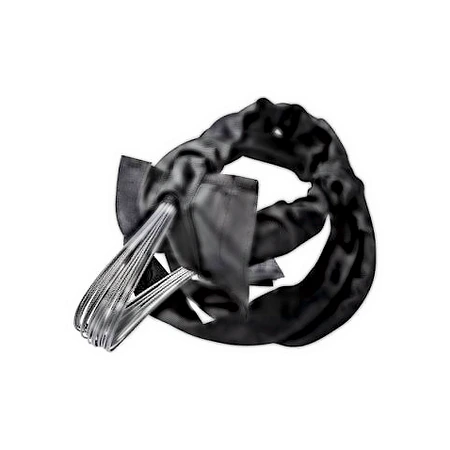
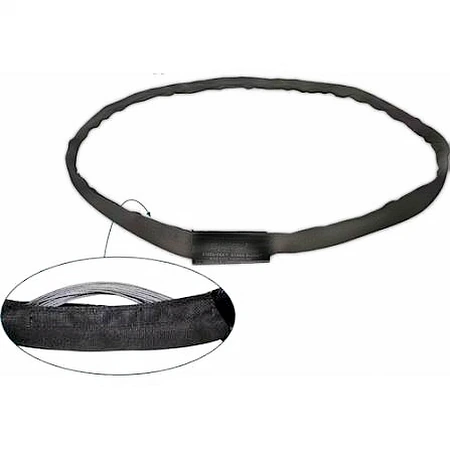
Lift sling rigging company manufacture Theatrical Stage Round Lifting Sling,Stage Round Sling,Theatrical Lifting Sling,Black Round Lifting Sling,Black Endless Stage Sling,Black Round Sling,High heat resistant round sling,Black Round Lifting Sling,2.0T Wire Core Theatre Stage Sling.
Theatrical Stage Round Lifting Sling
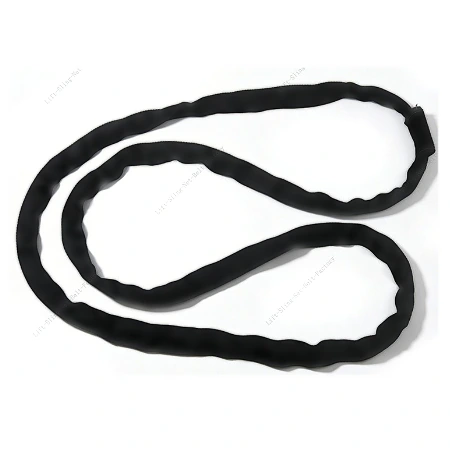
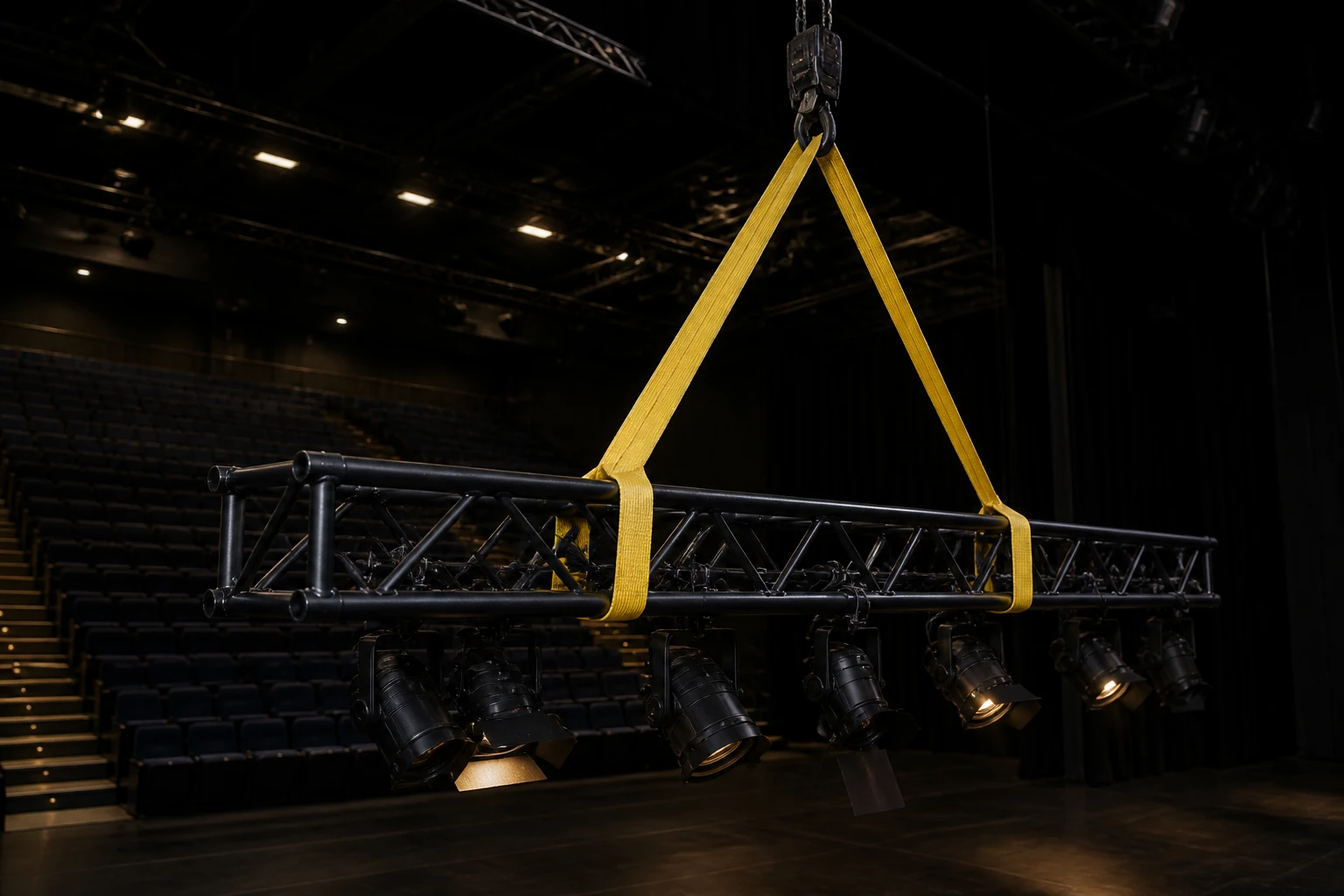
Stage rigging asks more of a sling than a workshop lift does. The truss hangs above people, the trim height has to be repeatable, the fixture housings run hot, the sling has to be carried up a ladder and handled in the dark — and once the audience is in, nothing on that rig should catch the eye. A round sling is the usual answer: a soft endless loop with no metal, that settles around a truss tube and can be turned between lifts to spread its own wear.
This page is the black, soft-core theatrical round sling we build for that work — trusses, lighting bars, speaker arrays, scenery and fly systems, from 1 t to 100 t, sized by circumference to the trim height your rig needs. Where a fixture has to sit at an exact dead-hung height and stretch has to be near zero, the 2 T wire core theatre stage sling is the version of this sling with an aircraft steel cable inside.
Why black, and why a round sling
- Black does not bounce light. Above a lit stage a coloured sling shows against the masking and the truss, and it reads on camera. A black sleeve disappears into the rig.
- Nothing on it is metal. No fitting to rattle against a truss, scratch a painted tube or bruise a finished flat. The whole article is soft.
- It conforms to a tube. A round sleeve settles into the curve of a truss chord or a barrel, so the bearing is spread around the contact instead of concentrated along one line the way a flat band does.
- Turn it to spread the wear. The loop rotates, so the bearing point moves between lifts and the sling wears evenly. On a touring rig this is the single biggest reason a sling lasts.
- Capacity without bulk. A high working load is carried in a slim tube that passes through a truss aperture or around a chord where a wide flat sling is awkward — and it weighs a fraction of the chain or wire rope it replaces.
The core and the sleeve
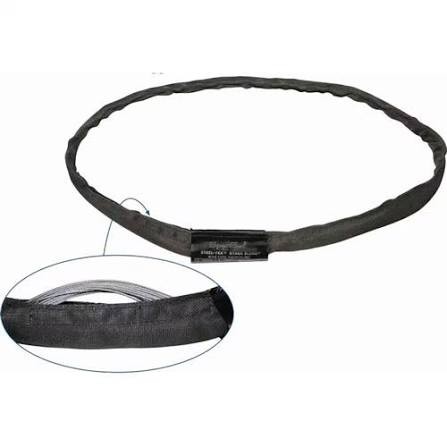
A round sling is two articles in one, and it is worth knowing which one is doing what. ది core is the continuous parallel fibre that carries the whole load. ది sleeve takes the abrasion, holds off the daylight and carries the marking the person making the lift reads. A cut sleeve with the core showing is a sling to be retired even if the core looks sound — without the sleeve the sling can no longer be judged.
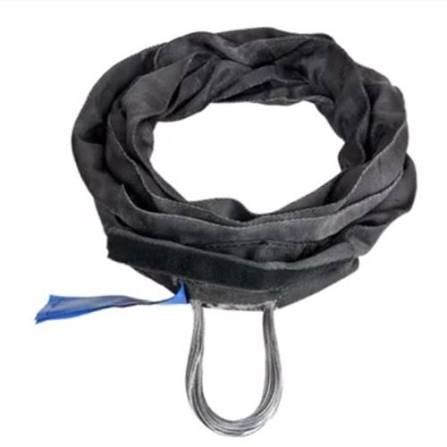
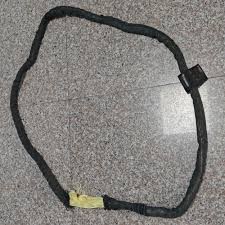
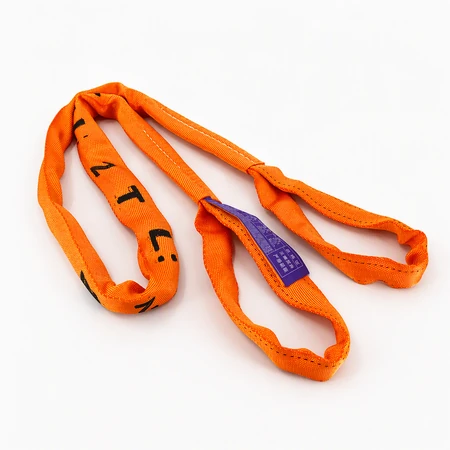
On a black sling, read the label. To EN 1492-2 the cover colour is what indicates the working load limit — violet 1 t, green 2 t, yellow 3 t, grey 4 t, red 5 t, brown 6 t, blue 8 t, orange 10 t. A black theatrical sling deliberately departs from that code, so the capacity, the core fibre and the length have to be read from the sewn label. Ask for the figure printed on the sleeve as well if your site works that way.
Heat, stretch, and the two things stage work really asks
- Heat. Fixture housings run hot, and a polyester sleeve works from about −40 °C to +100 °C, so it must not be left resting against a hot housing. Where the rig runs hot — profiles, follow spots, hot metalwork — specify an aramid round sling core: aramid has no melting point and chars near 500 °C, the sleeve also reduces heat transfer to the truss, and the same fibre holds its length under a load that stays on for hours. See also the high temperature round sling.
- Stretch. A dead-hung fixture has to sit at the same trim height every night. An aramid core stretches least of the soft fibres; where it has to be closer still, the wire-core version puts an aircraft steel cable inside the sleeve and removes almost all of it.
- Weight. Where the sling is carried up to a grid, or the rig is flown by hand, a Dyneema round sling core is the lightest of the common fibres — but note that a UHMWPE core creeps under a standing load (its melting point is also the lowest, about 145 °C).
Technical parameters
Form, fibre and arrangement figures are our standard round sling specification. Capacity and circumference are made to order and confirmed on the approved drawing before production.
| పరామితి | స్పెసిఫికేషన్ |
|---|---|
| Model reference | XLF-TSR (assigned per sling) |
| Form | Endless round sling — one continuous woven sleeve over a parallel fibre core: no ends, no stitching, no joint, no metal |
| Core fibre | Polyester standard; aramid (Kevlar-class) for hot fixtures; UHMWPE (Dyneema-class) for the lowest weight; nylon on request |
| Sleeve | Woven polyester sleeve; black for stage, studio and touring work |
| పని లోడ్ పరిమితి | 1 t – 100 t per sling; higher built to order |
| భద్రతా కారకం | 7:1 to EN 1492-2 |
| Colour | Black standard for theatrical work; to the EN 1492 code on request (violet 1 t · green 2 t · yellow 3 t · grey 4 t · red 5 t · brown 6 t · blue 8 t · orange 10 t) |
| చుట్టుకొలత | 1 m - 12 m standard; longer to order |
| Effective working length | Approx. half the circumference (C ÷ 2), because the loop is doubled when it hangs |
| Arrangement factors | Vertical 1.0 × · basket up to 2.0 × at a narrow angle · choker 0.8 × · double wrap ≈ 2 × the choked figure |
| మార్కింగ్ | WLL, core fibre, length and identification on the sewn label; printed sleeve marking on request |
| పని ఉష్ణోగ్రత | Sleeve −40 °C to +100 °C; an aramid core has no melting point and chars near 500 °C |
| Wear management | Rotate the loop between lifts so the bearing point moves and wear is spread |
| Testing | Proof loaded before dispatch on our own 1,000 t horizontal test machine; certificate with each sling |
| సర్టిఫికేషన్ | CE / ISO 9001; test report with each order |
| Stage context | Sling to EN 1492-2; stage machinery is inspected under EN 17206, which has replaced DIN 56950-1, and under BGV C1 in Germany |
| Near-zero stretch option | Wire-core version with an aircraft steel cable inside the sleeve — see 2 T Wire Core Theatre Stage Sling |
Rigging the loop — what each arrangement gives you
One loop does all of these, and which one you use decides how much of the labelled capacity is actually available. Rig it, then check the angle before the load leaves the ground.
- Vertical / straight — both legs gathered onto the hook so the loop hangs as a U. This is the arrangement the label figure is based on, and it gives the most capacity: 1.0 ×.
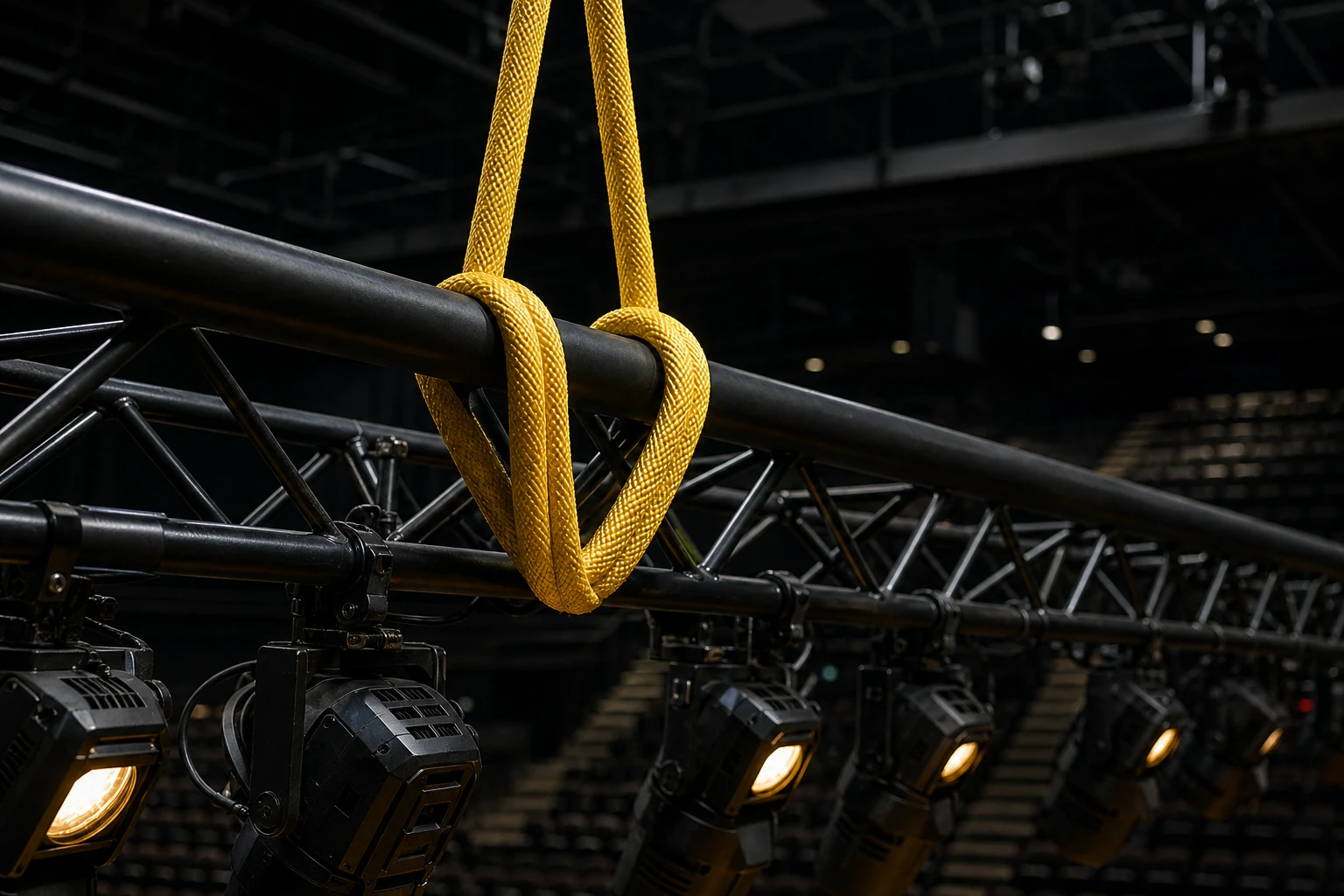
- Choke — the loop is passed around the truss chord and back through itself, gripping as it takes the weight. This is the usual arrangement on a truss tube, and it reduces the figure to 0.8 ×.
- Basket — the loop runs under the load with both legs up. At a narrow angle the load is shared and the figure rises to 2.0 ×, but as the legs open out that advantage falls away.
- Double wrap — the loop is wrapped twice and passed through itself. Treated as two chokes, which roughly doubles the choked figure and grips a smooth or polished tube where a single wrap would slip.
Length: you order the circumference, you rig the working length
An endless sling has no ends to measure between, so it is sized by its చుట్టుకొలత — the length of the fibre if the whole loop were laid out straight. Because the loop is doubled when it hangs, the height you can actually use is about half of that. Most people know the distance from the hook to the load; give us that figure with the arrangement you intend to rig, and we will convert it and confirm the circumference before production.
Where the sling is used
- Trusses and lighting bars — choked or basketed around a chord, either as the primary attachment or to steady a bar being flown.
- Speaker arrays and delay towers — soft contact where a cabinet’s finish has to arrive intact.
- Scenery, flats and set pieces — soft, non-marking contact on painted and finished surfaces.
- Fly systems and counterweight rigging — endless form, so the loop can be turned between shows.
- Touring and fit-up — light enough to carry up to the grid and to pack flat between venues.
Inspection and care
- Inspect before each use, and nearly all of it is on the outside: the sleeve for cuts, abrasion, chemical staining and heat glazing, the loop ends where the core turns, and the label.
- Retire the sling if the sleeve is cut through so the core is visible, however sound the core looks.
- Keep it off sharp edges and out of contact with hot fixture housings; protect edges where the rig cannot avoid them.
- Store it dry and off the floor, and never drag a loaded sling sideways across a stage deck.
- Turn the loop between lifts so the bearing point moves rather than wearing out in one place.
- A sling that has met a chemical or a heat source comes out of service pending a decision — not pressed back into use because it still looks intact.
What to send us for a quotation
- The capacity you need per sling, and the arrangement it will work in
- The working height — the distance from the hook to the load — and the rig you intend
- What it goes around: truss chord, barrel, eye, trunnion or a soft sling, and the diameter
- How close the sling works to hot fixtures, and whether the load stays on for hours
- Whether the trim height has to repeat exactly night after night
- Colour and marking: the sleeve colour you want, and the capacity and identification your venue needs to read
Send the rig details or a photograph of the truss through our contact page and we will confirm the capacity, the circumference, the core fibre and the sleeve before the sling is made. For the wider range see రౌండ్ స్లింగ్స్; for the jointless closed form see the endless round sling.
Frequently asked questions
Why a round sling rather than a flat webbing sling for stage rigging?
A round sling is a soft tube, so it settles around a truss chord or a barrel and spreads the bearing around the curve instead of touching along one line. It has no metal on it, so it cannot rattle, scratch a painted truss or mark a flat, and the loop can be turned between lifts so the bearing point moves. A flat band gives a wider face and fits a narrow aperture; it also carries the load path on its own surface, where a round sling hides it inside a replaceable sleeve.
Why are theatrical round slings black?
A black sleeve does not bounce light. Above a lit stage a coloured sling shows against the masking and the truss, and it reads on camera. One caveat worth knowing: EN 1492-2 uses the cover colour to indicate the working load limit, so on a black sling the capacity, fibre and length have to be read from the sewn label — ask for the figure printed on the sleeve as well if your site works that way.
Can it work close to hot stage lighting fixtures?
The sleeve is polyester, working from about −40 °C to +100 °C, so it must not rest against a hot housing. Where the rig runs hot, specify an aramid core: no melting point, chars near 500 °C, and the sleeve also reduces heat transfer to the truss. Tell us on the enquiry how close the sling works to the fixtures.
How do I order the right length?
An endless round sling is sized by circumference, and the usable height is about half that. Give us the hook-to-load distance and the arrangement you will rig, and we will work out the circumference and confirm it before production. We build 1 m నుండి 12 m as standard and longer on request.
సంబంధిత ఉత్పత్తులు
- 2 T Wire Core Theatre Stage Sling — the same sling with an aircraft steel cable core, for near-zero stretch.
- Aramid Round Sling — Kevlar-class core for hot fixtures and standing loads.
- High Temperature Round Sling — for hot metalwork and foundry positions.
- Dyneema Round Sling — the lightest core for carried and flown rigs.
- Endless Round Sling — the jointless closed form in the full capacity range.
- Eye-Eye Round Sling and round sling with eyes — where a defined eye end is wanted.
- లిఫ్టింగ్ స్ప్రెడర్ బీమ్ — to keep the legs vertical on a long bar or truss.
- Polyester Webbing Slings — where a flat band suits the aperture better.
Request a quotation for your theatrical stage round lifting sling — tell us the rig, the capacity and the trim height and we will size the loop to it.