

Lift sling rigging company manuafacture High Heat Resistance Mooring Rope,High-Temperature Rope,Fire Resistant Rope,Aramid strongest fireproof cord,Heat Resistant Rope,High Temperature Aramid Fibre Braided Ropes 400 °C.
High Heat Resistance Mooring Rope
A para-aramid core inside a protective braided cover — for berths, yards and plant where the line has to survive radiant heat, sun, salt and chafe
A high heat resistance mooring rope is bought for a duty that ordinary mooring line cannot survive. A conventional mooring rope fails in two ways: it wears through where it works over a bollard, a fairlead or a panama chock, and where heat is present it softens, glazes and eventually fails. This rope answers both. A para-aramid core carries the load and takes the heat — it has no melting point and keeps working above 150 °C — while a braided cover takes the weather, the salt and the abrasion so the load-bearing core is never touched. It is the line specified for hot cargo berths, tanker manifolds, steelworks and foundry yards, and for any berth where a hot pipeline, steam line or radiant source sits within reach of the rope. Where a berth also produces heavy surge, the load can be held by this line with a nylon rope tail taking the shock.
- Heat resistant core — no melting point; continuous service above 150 °C and strength approaching zero only at about 455 °C
- Protected against the weather — the braided cover takes UV, salt and abrasion so the aramid core is not degraded by sunlight
- Low stretch — the line holds a load instead of letting it creep along the quay
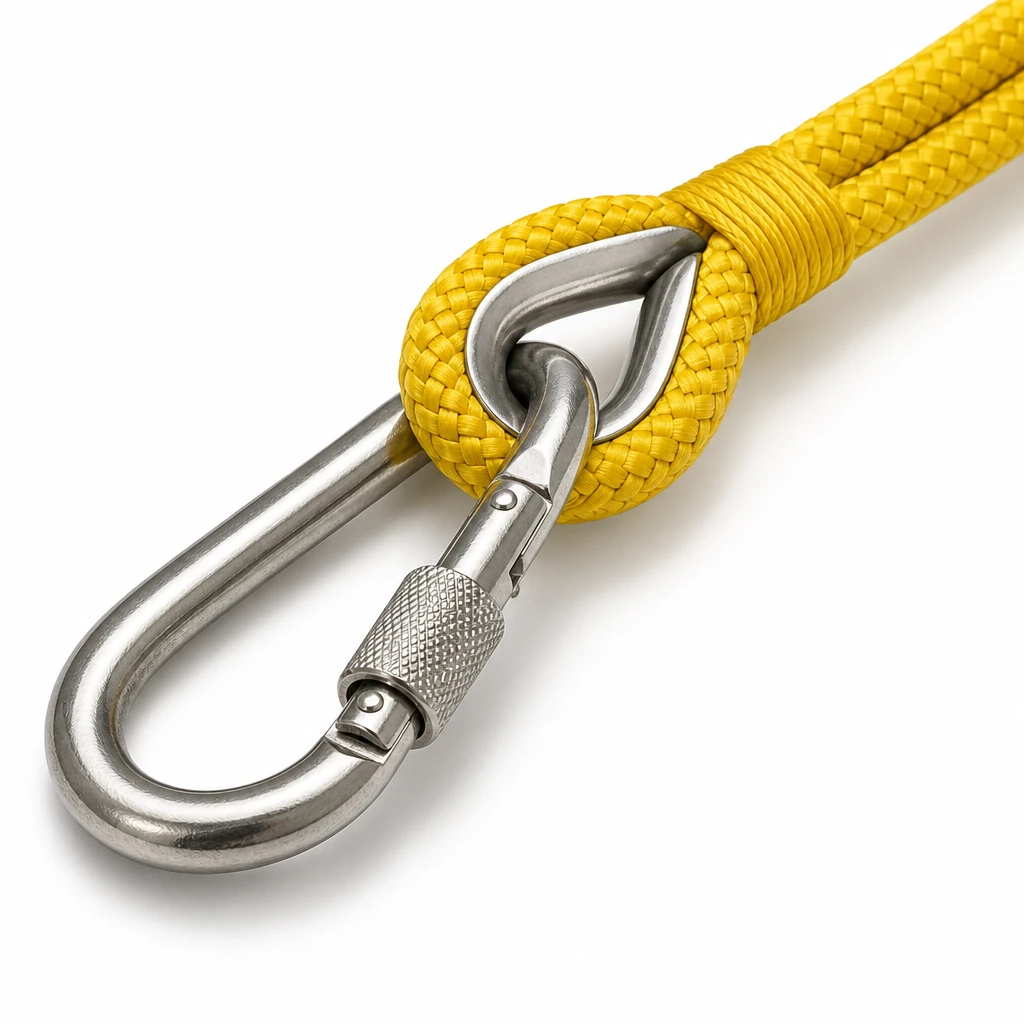
- Finished for the berth — spliced thimble eye with a stainless thimble, hard eye and shackle, or a plain spliced eye
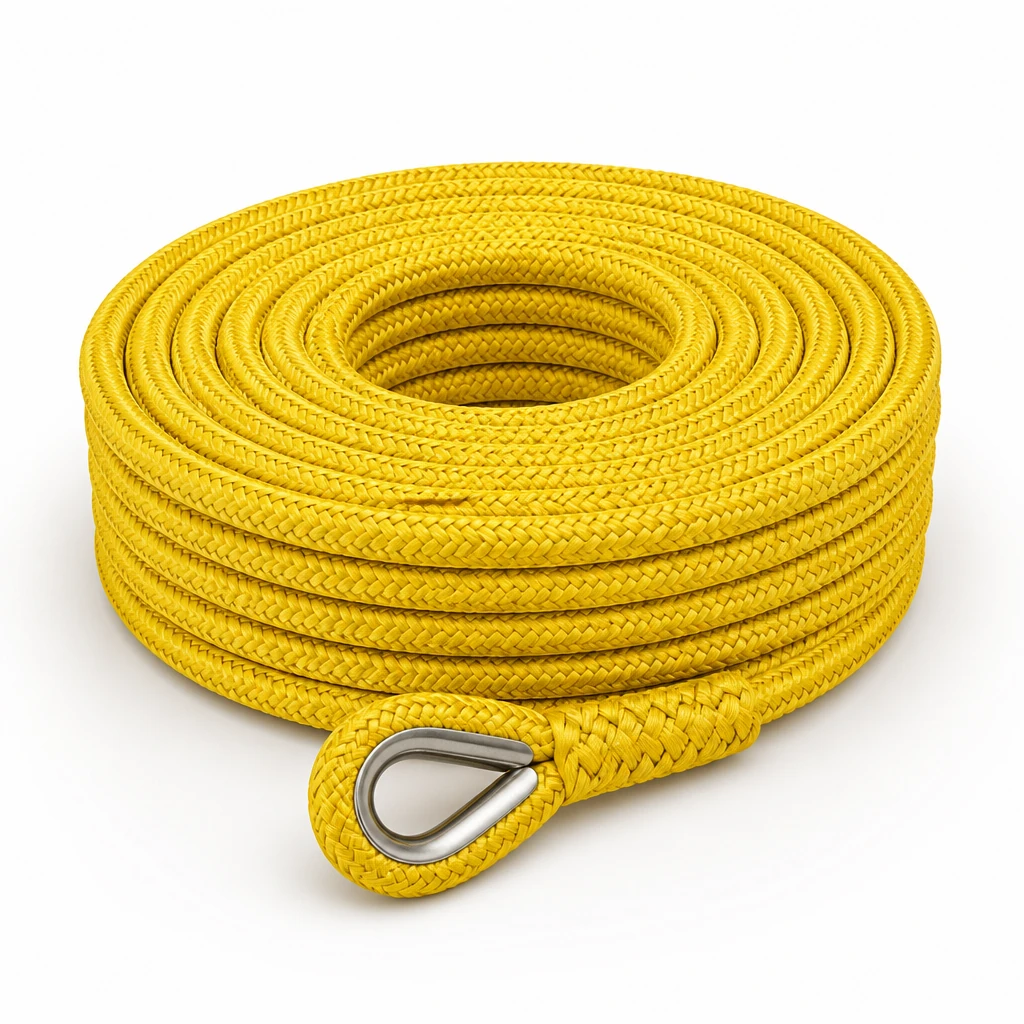
Key Features of Our High Heat Resistance Mooring Rope
A Line That Lives Where Heat Is Present
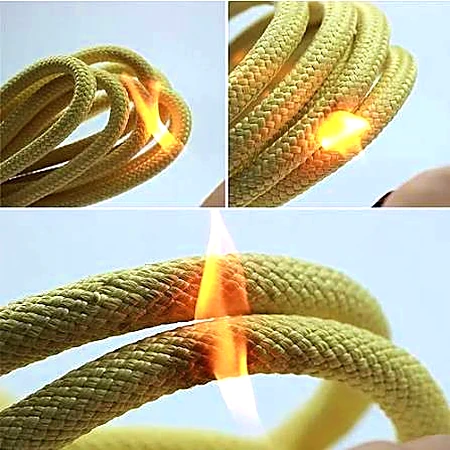
Para-aramid does not melt and does not drip. It holds about 75 % of its tenacity after 100 hours at 200 °C, and its strength only reaches zero at roughly 455 °C. That is what separates it from polypropylene, nylon and polyester mooring line, all of which soften at temperatures a hot berth reaches easily. It is the same fibre principle used in our fire rescue rope and fire escape rope.
A Core That Carries the Load, a Cover That Takes the Weather
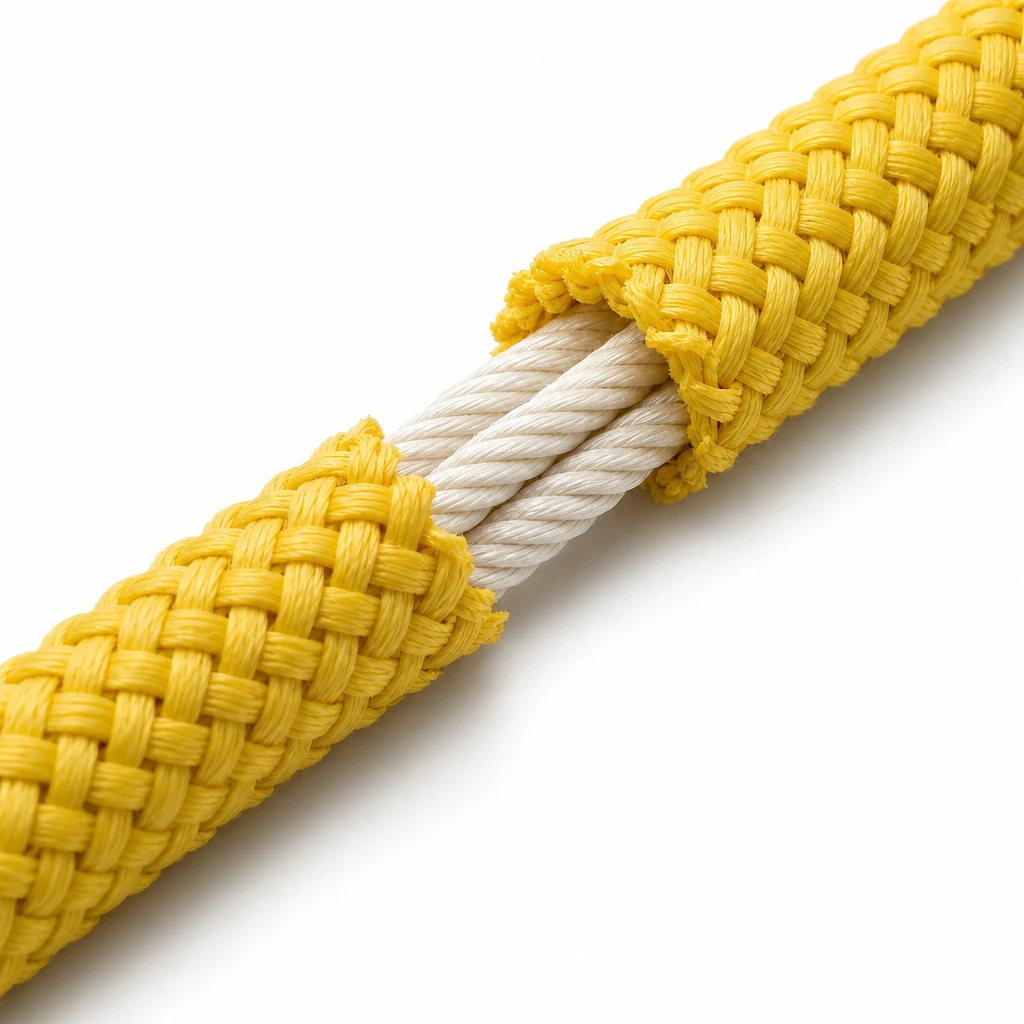
A bare aramid line is strong but not weather-proof, so a mooring rope is built the other way round: a braided cover protects the core from sunlight, salt spray and the constant rubbing of a fairlead, while the core does the load-bearing. The cover is the sacrificial part — it wears, it can be inspected, and it can be replaced before the core is affected.
Low Stretch, With a Place for a Tail
An aramid line does not creep: set it and the load stays where it was set. The trade-off is that a low-stretch line transmits surge rather than absorbing it, so on a berth with heavy surge the arrangement is a low-stretch main line with a nylon tail taking the shock load. Tell us the berth and the vessel and we will advise which way round the assembly should be built.
Fitted for the Berth, Not for a Catalogue
Mooring line is usually destroyed by wear long before it reaches its breaking load, so the ends matter as much as the diameter. Lines leave us with spliced thimble eyes that sit properly in a bollard or a panama chock, with the splice and the whipping finished so the line can be worked hard without unravelling.
Technical Specifications
| Item | Specification range |
|---|---|
| Product name | High heat resistance mooring rope / high temperature mooring rope / aramid mooring rope / fire resistant mooring rope |
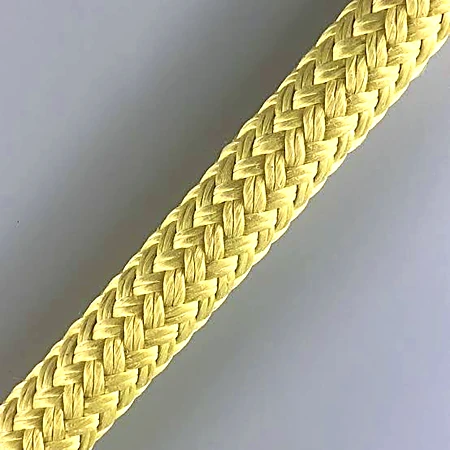
| Core | Para-aramid (aromatic polyamide) multifilament, 12-strand braid or twisted — carries the load and takes the heat |
| Cover (optional) | Braided jacket for UV, salt and chafe protection; specify a heat-resistant cover where radiant heat reaches the rope itself |
| Standard diameters | 12 · 16 · 20 · 24 · 28 · 32 · 36 · 40 · 48 mm (custom range 8–64 mm) |
| Standard lengths | 50 m · 100 m · 200 m coils; any cut length to order, with both ends finished |
| Colour | Natural yellow · black · custom colours for identification by berth or line number |
| Heat performance (core) | Continuous service above 150 °C; strength approaches zero at about 455 °C; no melting point |
| Low-temperature behaviour | Para-aramid is rated for use down to about −196 °C |
| Elongation | Low — an aramid line holds a load instead of letting it creep |
| UV, salt and chafe | Protected by the cover; uncovered aramid braid is not recommended for permanent outdoor mooring |
| End finishing | Spliced eye · spliced thimble eye with stainless thimble · hard eye and shackle; whipped ends |
| Marking | Line length, diameter, breaking load, batch number and berth identification on the label or in the braid |
| Packing | Coil with label or wooden reel; custom label and barcode available |
| MOQ & OEM | Low MOQ for trial orders; full OEM — diameter, cover colour, length, splicing, thimble type, printed logo |
Standard specification range — other diameters, cover constructions and lengths are produced to order.
Diameter and Breaking Strength
Diameter follows from the load, from the winch or capstan that handles the line, and from the bollard or fairlead it will sit in. Owners of small craft and plant usually work upwards from a size that can still be handled by hand; larger berths work downwards from the load to be held.
| Diameter | Approx. weight (g/m) | Typical breaking strength | Reference working load at 5:1 |
|---|---|---|---|
| 12 mm | ≈ 97 | ≈ 135 kN (13.8 t) | ≈ 27.0 kN (2.7 t) |
| 16 mm | ≈ 173 | ≈ 240 kN (24.5 t) | ≈ 48.0 kN (4.9 t) |
| 20 mm | ≈ 270 | ≈ 377 kN (38.4 t) | ≈ 75.4 kN (7.7 t) |
| 24 mm | ≈ 389 | ≈ 543 kN (55.4 t) | ≈ 108.6 kN (11.1 t) |
| 28 mm | ≈ 529 | ≈ 738 kN (75.2 t) | ≈ 147.6 kN (15.0 t) |
| 32 mm | ≈ 691 | ≈ 965 kN (98.4 t) | ≈ 193.0 kN (19.7 t) |
| 36 mm | ≈ 875 | ≈ 1,220 kN (124.4 t) | ≈ 244.0 kN (24.9 t) |
| 40 mm | ≈ 1,080 | ≈ 1,510 kN (154.0 t) | ≈ 302.0 kN (30.8 t) |
| 48 mm | ≈ 1,555 | ≈ 2,170 kN (221.3 t) | ≈ 434.0 kN (44.3 t) |
Typical reference values for a para-aramid core in a standard braided cover. Breaking strength and working load are confirmed by the test certificate issued for your batch; the safety factor for a mooring application is set by your port, class society or operator.
Heat Performance of the Core
| Property | Typical value |
|---|---|
| Continuous service temperature (core) | Above 150 °C |
| Strength retention | About 75 % after 100 hours at 200 °C |
| Zero-strength temperature | About 455 °C |
| Melting point | None — the fibre decomposes rather than melting (from about 500 °C) |
| Specific strength | 5 – 6 × that of steel wire, at roughly one fifth of the weight |
| Limiting oxygen index | 25 – 29 (flame retardant, self-extinguishing) |
Typical published values for para-aramid filament; confirm against the yarn datasheet used for your order.
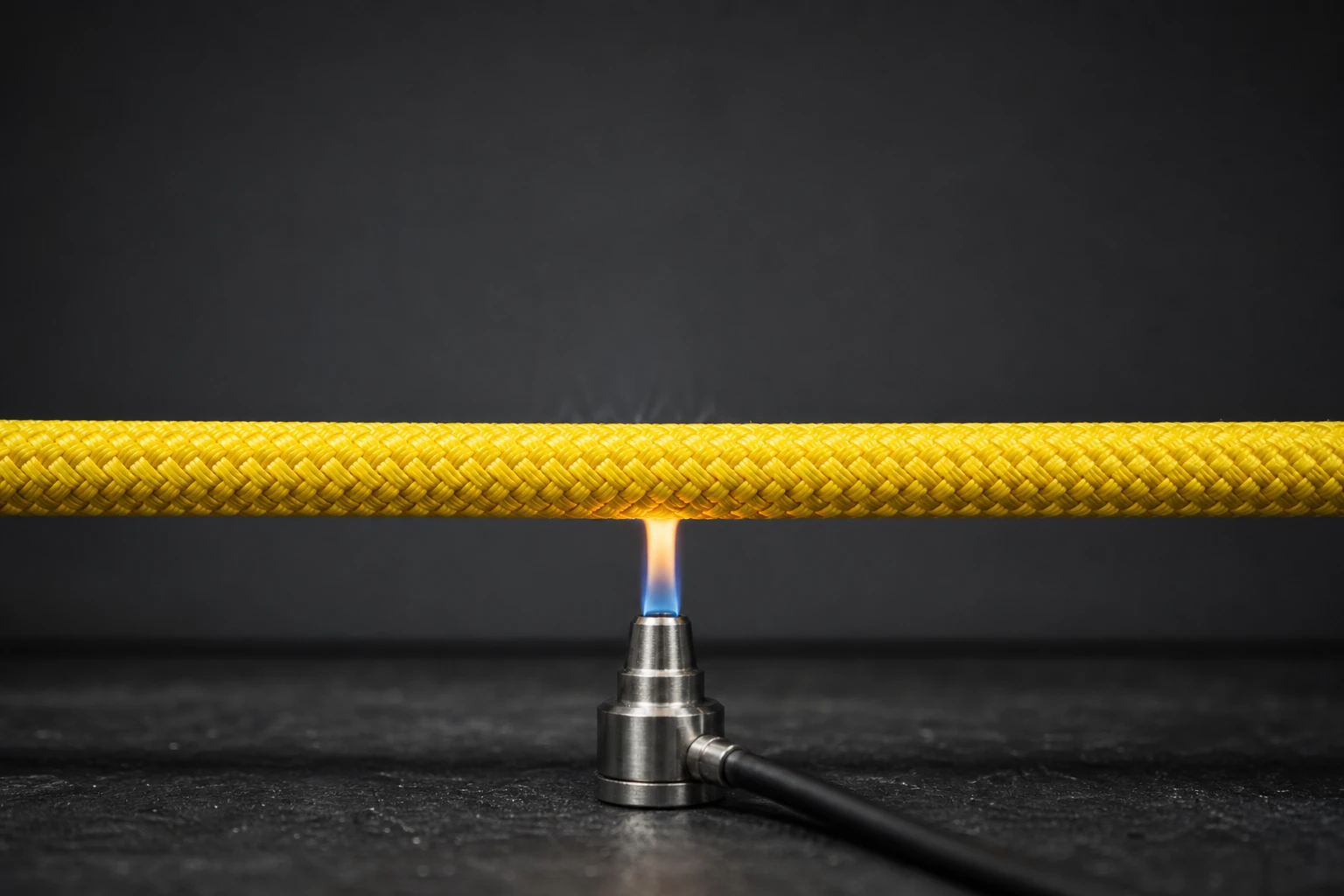
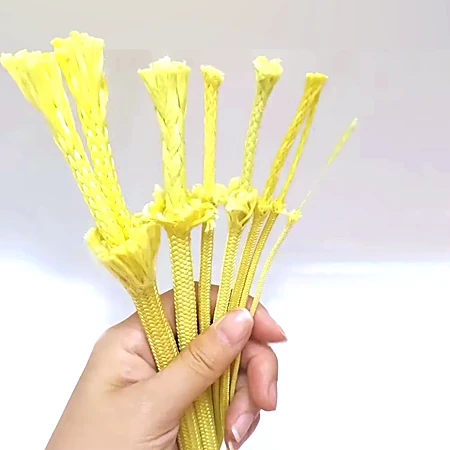
Construction: Core and Cover
The cover can be built in a weather-resistant fibre where the heat is carried by the core, or in a heat-resistant fibre where radiant heat actually reaches the rope’s surface. Tell us which of the two situations you have — heat around the rope, or heat on the rope — because it changes the cover specification and not the core. For general rope forms and fibre choices, see our aramid braided rope page.
Ends and Fittings for Mooring Duty
A spliced eye keeps far more of the rope’s strength than a knot, and on a mooring line it is the only finish to specify. We supply spliced eyes on their own, spliced eyes with a stainless steel thimble where the line meets a shackle or a pin, hard eyes with a shackle fitted, and whipped free ends. Because a finished end shortens the usable length, allow for it in the length you order — or tell us the finished length and we will cut for it.
Where a High Heat Resistance Mooring Rope Is Used
- Tanker, barge and terminal berths where hot cargo or hot lines are alongside
- Steelworks, foundry and smelting yards where radiant heat is normal
- Temporary securing and tug work in hot or molten-metal areas
- Plant and refinery berths where steam lines run close to the mooring points
- Any outdoor berth where sunlight and salt would destroy a bare aramid line
- Related duty: pulling rope, utility winch line and safety lifeline rope
Customisation and OEM Service
- Diameter — 12–48 mm standard, 8–64 mm on request
- Core — para-aramid braid or twisted construction, to suit the load and the handling
- Cover — weather-resistant or heat-resistant braid; colour coding for berth or line number
- Ends — spliced eye, thimble eye, hard eye with shackle, whipped ends
- Length — any cut length with both ends finished; 50 m, 100 m and 200 m coils
- Marking — length, diameter, breaking load, batch and berth identification
How the Batch Is Checked
Because a mooring line is judged on wear, the finished article is measured rather than assumed: diameter, core construction, cover braid, splice tightness and end finish are checked on every batch, and length is cut against the figure on the order. On request the yarn certificate and the batch test report travel with the line, and a short sample can be sent ahead so the splice and the cover can be handled before the full length is made.
Frequently Asked Questions
Why not use a normal mooring rope in a hot berth?
Because polypropylene, nylon and polyester soften at temperatures a hot berth reaches without difficulty, and a softened line loses strength and takes a permanent set. A rope with a heat-resistant core does not melt and keeps its working temperature above 150 °C, so the failure you are guarding against moves back to wear, where it can be inspected.
Does heat reach the rope, or only the surroundings?
It matters, and it is the first question we ask. If heat only affects the surroundings, the cover can be a standard weather-resistant braid and the aramid core does the rest. If radiant heat reaches the rope surface, the cover itself has to be built in a heat-resistant fibre. Send the temperature and the distance to the heat source and we will confirm the construction.
Can an aramid mooring line absorb surge?
It holds rather than stretches, so where surge is significant the usual arrangement is a low-stretch main line with a nylon tail to absorb the shock. Tell us the vessel, the berth and how the line is led, and we will advise which part of the assembly should absorb and which should hold.
What length and diameter should I order?
Give us the load to be held, how the line is led and what it works over, plus the figure your port, operator or class society requires. We will come back with a diameter, a construction and a finished length that includes the allowance for the spliced ends.
Request a Quote for High Heat Resistance Mooring Rope
Send us the load to be held, the berth, the working temperature and how the line is led, together with any marking or certification your port, operator or class society requires. You will get back a diameter, a construction, a finished length and a price from the factory, with a sample line to examine if you want one.
Kontaktoni: Lift Sling Rigging Co., Ltd — telephone and WeChat 18066002268, e-mail 702461526@qq.com, Lifute Industrial Park, Taizhou City, Jiangsu Province, China. HS code 630790.