

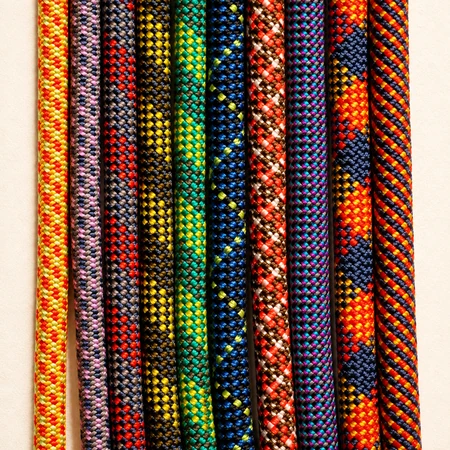
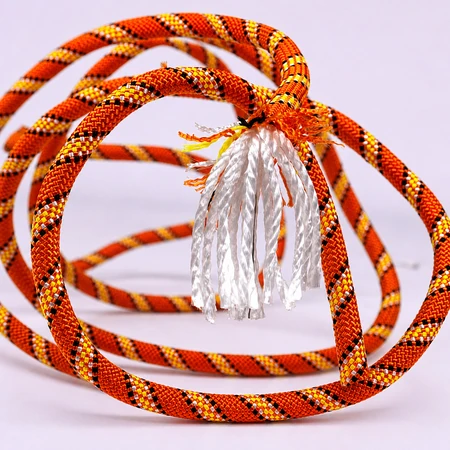
Lift sling rigging company produce Climbing Rope,Rock Climbing Rope,Dynamic Climbing Rope,Rescue Assault Rope,Fly Climbing Rope,Static Climbing Rope,Tower Line Climbing Rope.
Climbing Rope
Dynamic & Semi-Static Kernmantle Climbing Rope — 8.5 mm تائين 11 ايم ايم, 32–48 Strand Sheath
اسان جي climbing rope is a kernmantle rope built on the same principle as every serious climbing line: a braided nylon sheath takes the abrasion, while a twisted multifilament core absorbs the energy of a fall. We braid the sheath from 32 to 48 strands over a parallel or twisted nylon core, then tune the core volume to set the rope’s impact force and elongation for its intended duty — dynamic for lead climbing, semi-static for top-rope, work at height and fixed installations. Diameters run from 8.5 mm تائين 11 ايم ايم, in any cut length, with middle markers, bi-pattern sheaths, dry treatment and whipped or sewn end terminations.
- Controlled impact force — core volume tuned to keep fall forces within the rope’s rated limit
- Abrasion-resistant sheath — 32–48 strand braid protects the load-bearing core
- Low sheath slippage — held tight over the core so handling stays consistent rope-long
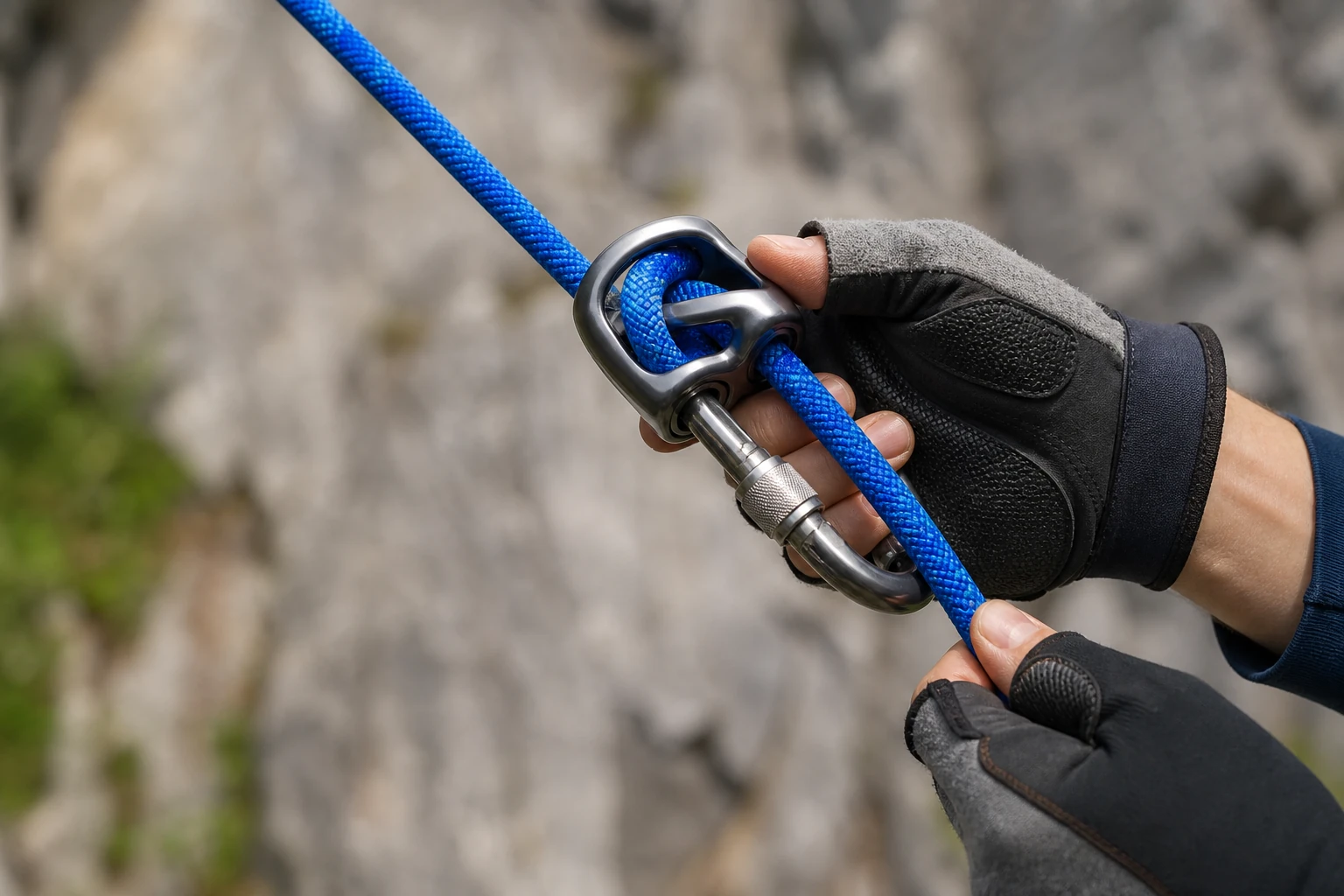
- Single, half and twin options — matched to your climbing style and belay practice
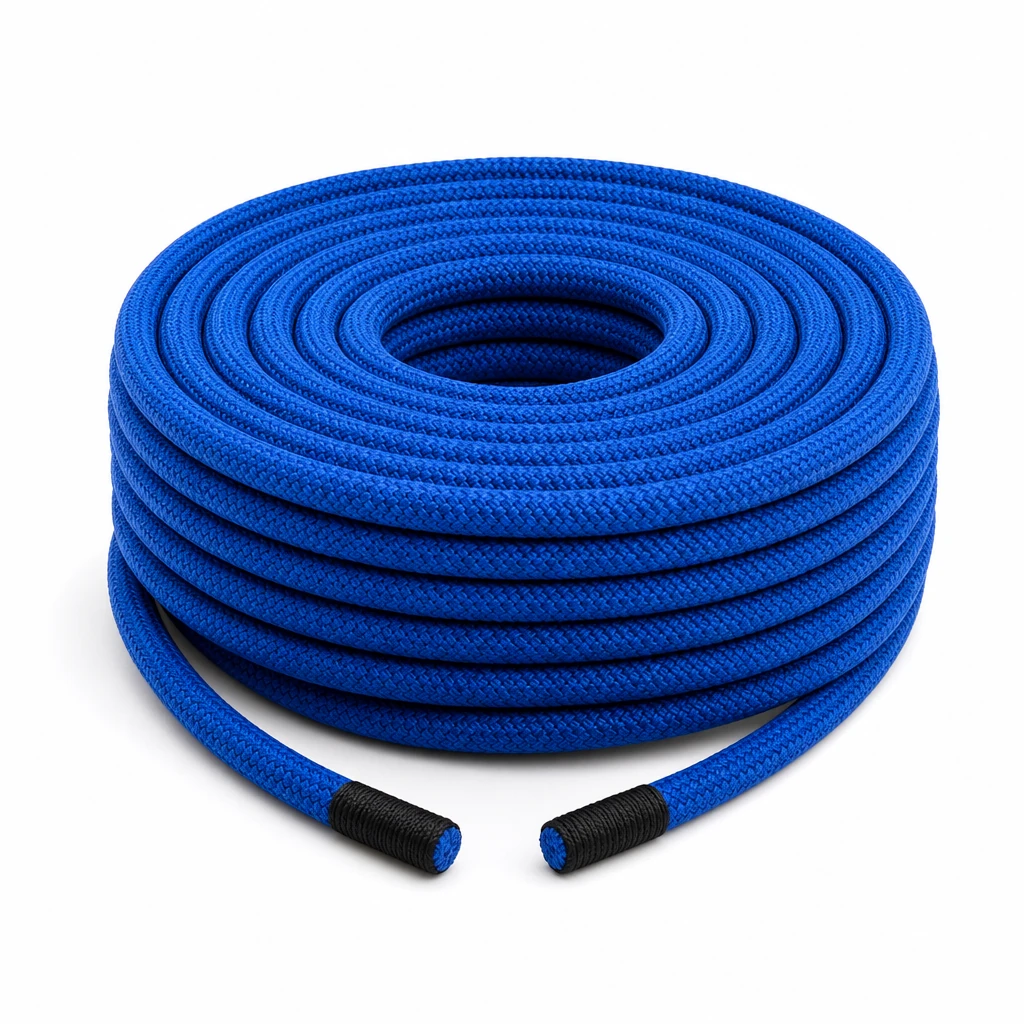
Key Features of Our Climbing Rope
Tuned Impact Force
The core carries a defined volume of twisted nylon filaments, so the rope stretches and absorbs energy at a controlled rate instead of passing the full fall force to the climber and the anchor.
Hard-Wearing Sheath
A dense 32–48 strand braid spreads abrasion across many yarns, which is what keeps a climbing rope usable against rock edges, carabiners and belay devices.
Low Sheath Slippage
The sheath is braided tight over the core so it does not bunch or migrate — the rope keeps its handling, diameter and feel over its whole length.
Single, Half or Twin
Single ropes for everyday lead climbing, half and twin ropes for alpine and multi-pitch work where two strands share the load and give redundancy.
Dry Treatment Option
Sheath and core can be treated to resist water uptake, so the rope stays light and keeps its handling in rain, snow, ice and wet gym conditions.
Markers and End Finishing
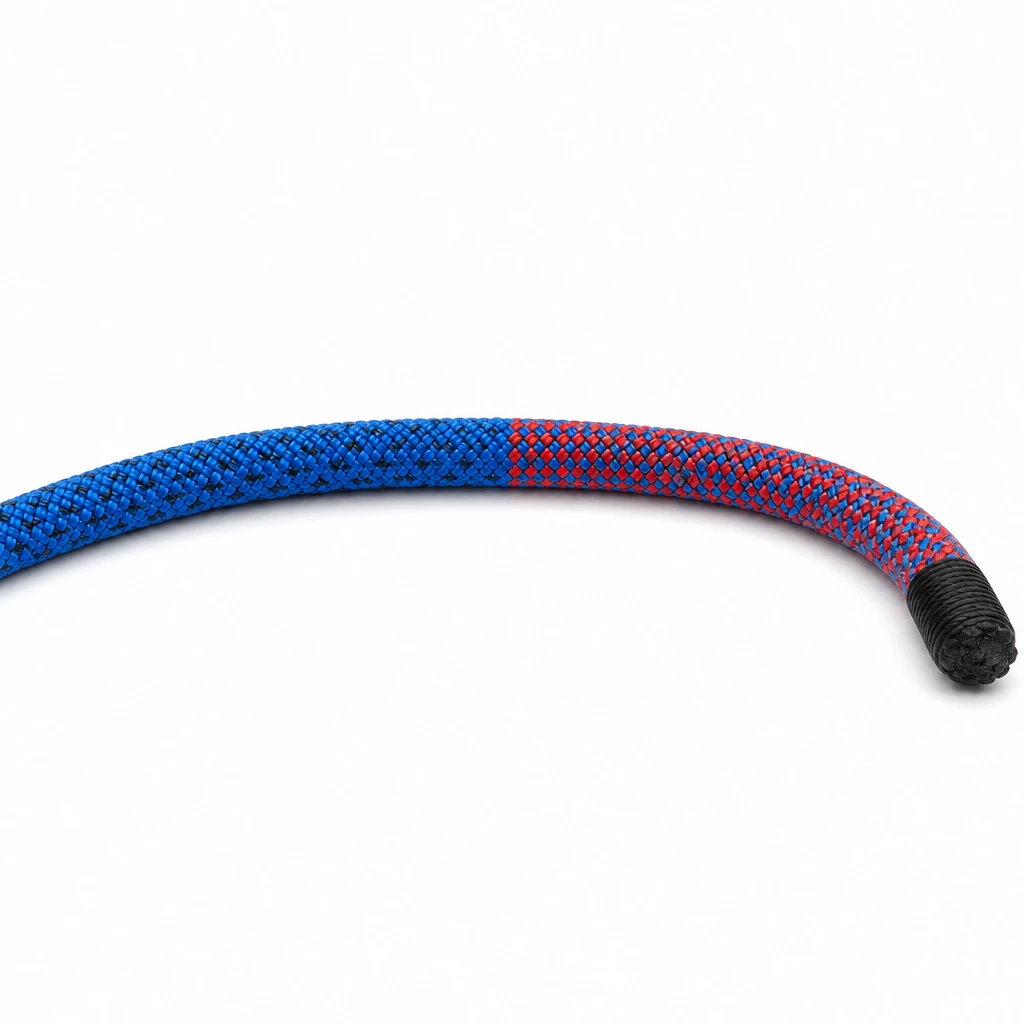
Bi-pattern sheaths, mid-rope marks, whip-finished or sewn ends, and optional end tags or length marking braided into the rope.
Types of Climbing Rope
| Single rope | One strand used on its own. The everyday choice for sport climbing, indoor climbing and single-pitch routes. Thicker and more abrasion-tolerant than half ropes. |
|---|---|
| Half rope (double rope) | Two thinner strands clipped alternately into the protection, so each carries part of the fall load. Used on wandering multi-pitch routes and in alpine terrain. |
| Twin rope | Two strands clipped together into every piece of protection. Lighter than a single rope of equal length and useful on long alpine routes where weight matters. |
| Dynamic rope | Built to stretch under load so it can absorb repeated fall energy. This is the correct choice for any climbing where a fall is possible. |
| Semi-static rope | Low-stretch construction for top-rope setups, fixed lines, work at height, lifting and access — where a fall should be avoided rather than absorbed. |
ٽيڪنيڪل وضاحتون
| پيداوار جو نالو | Climbing rope / dynamic climbing rope / semi-static climbing rope / kernmantle climbing rope |
|---|---|
| اڏاوت | Kernmantle — braided sheath over a twisted or parallel multifilament nylon core |
| ڇت جو مواد | High-tenacity polyamide (nylon 6 / nylon 6.6), 32 · 40 · 48 strand braid |
| بنيادي مواد | Twisted multifilament nylon (polyamide); core volume tuned per rope type |
| معياري قطر | 8.5 مليم · 9.2 مليم · 9.5 مليم · 9.8 مليم · 10.0 مليم · 10.2 مليم · 10.5 مليم · 11.0 ايم ايم (custom range 6–14 mm) |
| Standard lengths | 30 م · 40 م · 50 م · 60 م · 70 م · 80 م · 100 م (custom cut lengths and 200 m spools on request) |
| Sheath proportion | Typically 35–40 % of the rope’s mass; a higher proportion increases abrasion resistance |
| ڇاتيءَ جو ڦاٽڻ | Low — measured on the finished rope and reported per batch |
| Impact force | Set by core construction and diameter; rated against the rope type’s limit (see the performance table below) |
| ڊگھائي | Dynamic elongation on the first fall and static elongation at 80 kg are reported per diameter (see below) |
| Water repellency | Standard finish or treated “dry” version for the sheath and core |
| Middle marker | Optional bi-pattern sheath or a single mid-rope mark |
| رنگ | Blue · red · orange · green · black · white · bi-pattern combinations · custom colours |
| ختم ڪرڻ ختم ڪرڻ | Tightly whipped end · sewn and welded end · optional end tag, batch or length marking |
| حوالو معيار | Manufactured with reference to EN 892 (dynamic mountaineering ropes) and UIAA 101 test requirements; certificate and test report issued per order on request |
| پيڪنگ | Coil, rope bag or rope tarp; ڪسٽم ليبل ۽ بارڪوڊ دستياب |
| MOQ & OEM | آزمائشي آرڊر لاء گھٽ MOQ; full OEM — custom diameter, ڊگھائي, رنگ, middle marker, پرنٽ ٿيل لوگو ۽ پيڪنگنگ |
Diameter and Performance
Diameter is a trade-off between three things: weight and handling on one side, durability and fall capacity on the other. A thicker rope lasts longer against rock, holds better in a belay device and survives more falls; a thinner rope runs faster, weighs less on a long pitch, and asks more of the belayer’s technique.
| قطر | Type | Weight (g/m) | Impact force | UIAA falls | Dynamic elongation | Static elongation (80 kg) |
|---|---|---|---|---|---|---|
| 8.5 ايم ايم | Half | ≈ 48 | ≤ 8.0 kN | 12+ | ≤ 35 % | ≤ 10 % |
| 9.2 ايم ايم | Single | ≈ 56 | ≤ 9.5 kN | 5 | ≤ 35 % | ≤ 9 % |
| 9.5 ايم ايم | Single | ≈ 60 | ≤ 9.2 kN | 6 | ≤ 34 % | ≤ 8.5 % |
| 9.8 ايم ايم | Single | ≈ 65 | ≤ 8.9 kN | 7 | ≤ 33 % | ≤ 8 % |
| 10.0 ايم ايم | Single | ≈ 68 | ≤ 8.7 kN | 8 | ≤ 32 % | ≤ 7.8 % |
| 10.2 ايم ايم | Single | ≈ 70 | ≤ 8.5 kN | 9 | ≤ 31 % | ≤ 7.5 % |
| 10.5 ايم ايم | Single | ≈ 73 | ≤ 8.2 kN | 10 | ≤ 30 % | ≤ 7 % |
| 11.0 ايم ايم | Single | ≈ 78 | ≤ 8.0 kN | 12 | ≤ 29 % | ≤ 6.5 % |
رسي جي تعمير: ڇت ۽ ڪور
Every climbing rope is a compromise between two jobs. The rope has to stretch enough to absorb the energy of a fall, and it has to survive the rock, the carabiners and the belay device. The core does the first job — a defined volume of twisted nylon filaments that elongates under load and converts kinetic energy into heat. The sheath does the second — a dense braid that carries almost all the abrasion while holding the core firmly in place so it cannot shift or bunch inside.
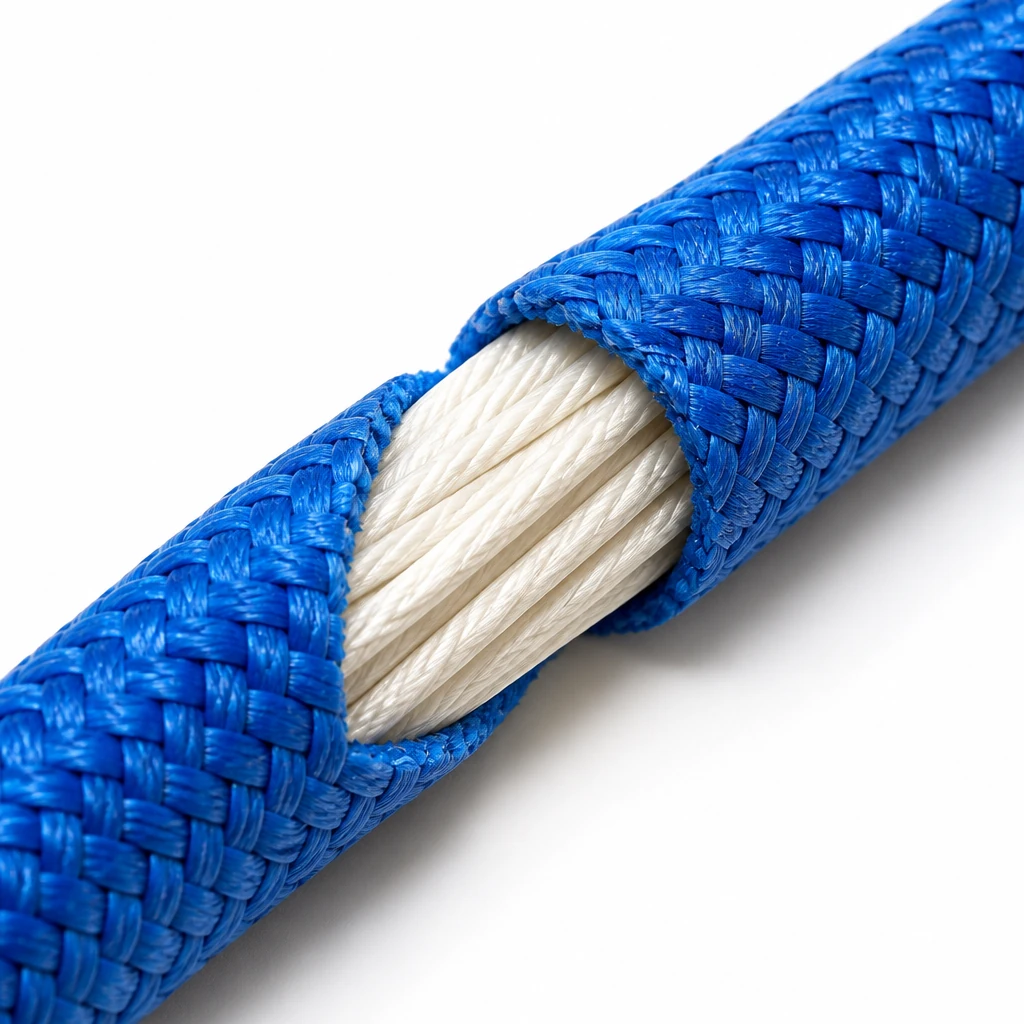
What the sheath percentage tells you
- Higher sheath proportion (around 40 %) — more yarn on the outside, so better abrasion resistance and a longer life on rough rock and in high-traffic gyms.
- Lower sheath proportion (around 35 %) — more core, which usually means lighter weight, softer handling and a slightly higher fall capacity.
- More sheath strands (40–48) — a finer, tighter braid that spreads wear over more yarns and gives a smoother surface through a belay device.
Care, Inspection and Retirement
A climbing rope is a consumable safety item, not a permanent fixture. Its working life depends on how often it is used, what it is used over, and what it has been subjected to — not on a fixed calendar period.
- Inspect before every use — run the rope through your hands and look for flat spots, glazing, sheath damage, soft or stiff sections, and core protrusion.
- Retire after any severe fall — after a high fall factor or a shock load, or if the rope has been damaged by heat, chemicals or sharp edges.
- Keep it clean and dry — wash with lukewarm water and a mild soap when needed, dry in the shade, and store loosely coiled away from sunlight, گرمي, chemicals and sharp objects.
- Record its history — a simple log of purchase date, use and any falls or impacts is the most reliable retirement guide.
درخواستون
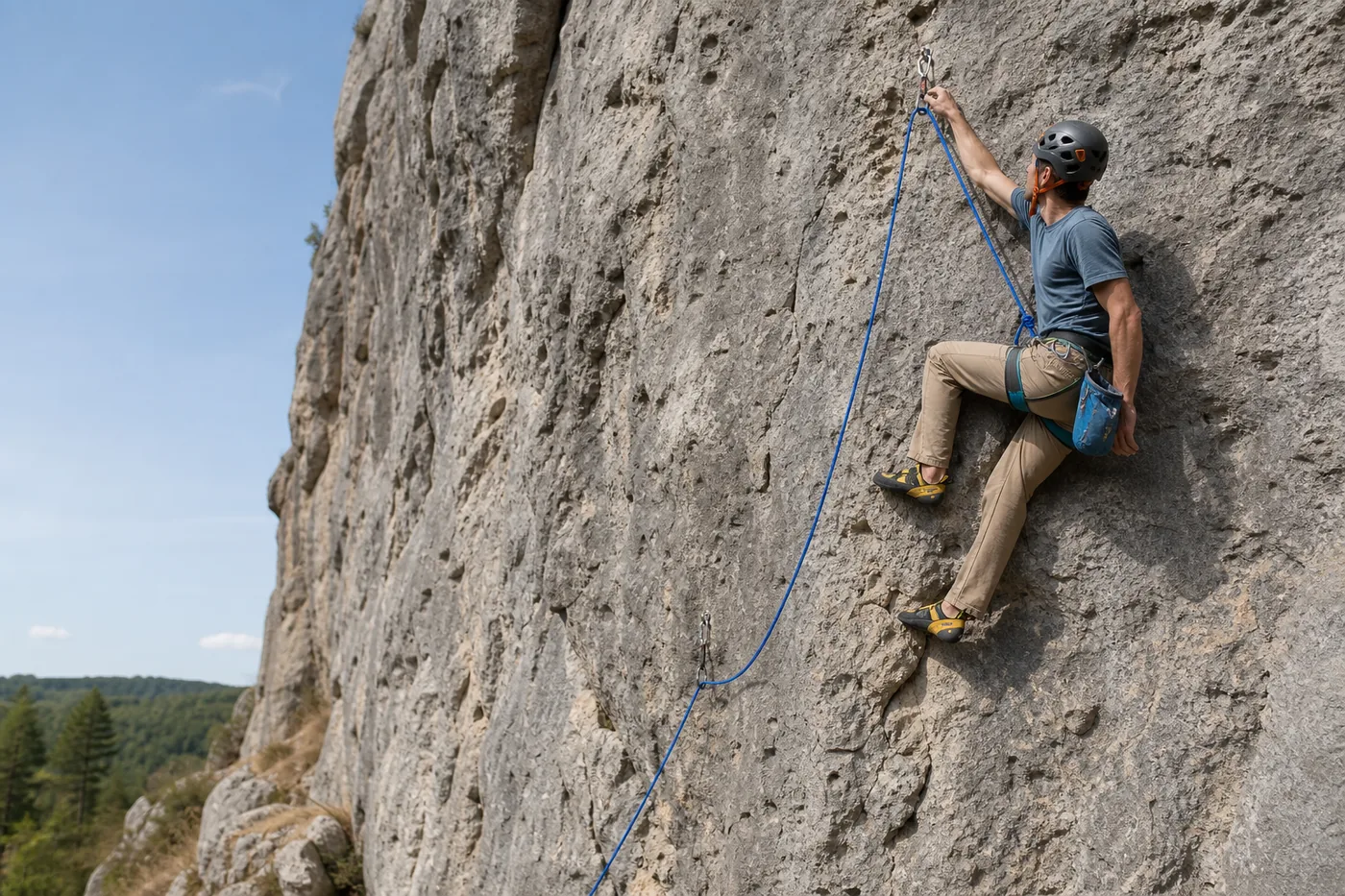
- Sport lead climbing and single-pitch routes
- Indoor climbing walls and bouldering gyms
- Top-rope setups and fixed top-rope lines
- Multi-pitch and alpine climbing (half or twin ropes)
- Mountaineering, glacier travel and via ferrata
- Work at height, rope access and industrial top-rope systems
- Outdoor education, adventure parks and obstacle courses
- Playground and fitness climbing structures
ڪسٽمائيزيشن ۽ OEM خدمت
As a rope manufacturer we build to specification rather than to a fixed catalogue. Tell us the climbing style, the environment (rock, gym, ice, industrial), the diameter you prefer and the hardware you already use, and we will recommend the right construction. عام ڪسٽمائيزيشن شامل آهن:
- Diameter and type — 8.5–11 mm, single, half or twin, dynamic or semi-static
- Sheath construction — 32, 40 or 48 strand braid, with sheath percentage tuned to your abrasion requirement
- Length — any cut length, 200 m spools for gym and school supply, with or without end tags
- Markers and colour — bi-pattern middle marker, mid-rope marks, standard or custom colours
- Finishing — whipped ends, sewn ends, rope bags, rope tarps and retail packaging with your own label
- Companion products — safety harnesses, chalk bags and rope bags supplied as a matched set
معيار ڪنٽرول
Each production batch is checked on diameter, لڪير جي کثافت, sheath proportion, braid tightness, sheath slippage and end finish, and sampled for impact force, fall rating and elongation. We have manufactured rope and webbing products for industrial, safety and sports customers for close to three decades, ۽ اسان عمل کي نظر ۾ رکون ٿا: on request we supply the yarn certificate, the batch test report, and a sample length for you to handle and test before volume production begins.
اڪثر پڇيا ويا سوال
What diameter climbing rope should I choose?
For general sport and indoor climbing, 9.8–10.2 mm is the usual middle ground: good durability, comfortable handling and a sensible fall capacity. Choose 9.2–9.5 mm for lighter, faster ropes on redpoint attempts where you accept more sheath wear, and 10.5–11 mm for gyms, schools and beginner use where abrasion resistance and longevity matter most.
What is the difference between a single, half and twin rope?
A single rope is used on its own. Half ropes are used as a pair, clipped alternately into the protection so each strand shares the load. Twin ropes are also used as a pair, but both strands are clipped into every piece of protection. Half and twin ropes are thinner and lighter, which is why they suit long multi-pitch and alpine routes.
Dynamic or semi-static — which do I need?
Use dynamic if a fall can occur: it stretches to absorb energy and limit the force on the climber, the anchor and the rope. Use semi-static for top-rope lines, fixed installations, work at height, lifting and access, where the system is set up to avoid a fall. Never use a semi-static rope for lead climbing.
What is the sheath percentage and why does it matter?
It is the share of the rope’s mass that sits in the outer braid. A higher proportion — around 40 % — puts more yarn on the outside, which increases abrasion resistance and rope life. A lower proportion — around 35 % — leaves more material in the core, which usually gives a lighter rope with a higher fall capacity.
When should a climbing rope be retired?
Retire a rope after a severe fall or shock load, after any contact with heat, chemicals or a sharp edge, or when inspection shows flat spots, glazing, sheath damage, a stiff or soft section, or core protrusion. There is no fixed calendar life — a rope used daily in a gym ages far faster than one used a few times a season. Keep a use log and let condition, not the calendar, decide.
Do you supply certificates, custom lengths and OEM branding?
ها. Batch test reports covering impact force, fall rating and elongation are supplied on request, ۽ اسان مڪمل OEM خدمت پيش ڪندا آهيون - ڪسٽم قطر, sheath construction, رنگ, middle marker, end finishing, پرنٽ ٿيل لوگو ۽ پرچون پيڪنگنگ. Tell us the marking or certification your market requires and we will confirm what can be provided before the order.
Request a Quote for Climbing Rope
Send us the climbing style, the diameter and length you need, the environment and any marking or certification your market requires. اسان جي ٽيم هڪ وضاحت سان واپس ايندي, a sample length and a factory-direct price.