

Empresa de aparelhamento de eslinga produz rede de elevação de poliéster,Rede de carga de poliéster,Correia de rede de elevação de segurança,Rede de carga elástica,Rede de elevação de carga de poliéster,Rede de estilingue de elevação,Rede de levantamento de corda,Rede de carga de paletes,Rede de escalada de jardim.
Rede de elevação de poliéster
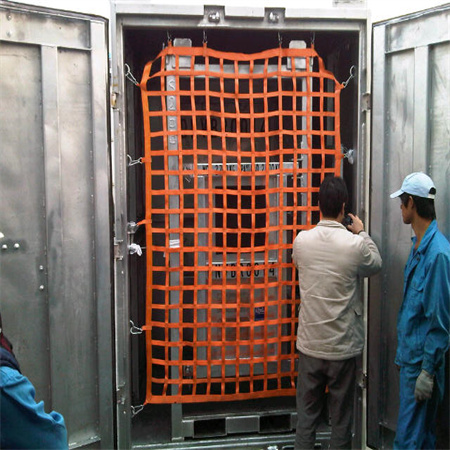
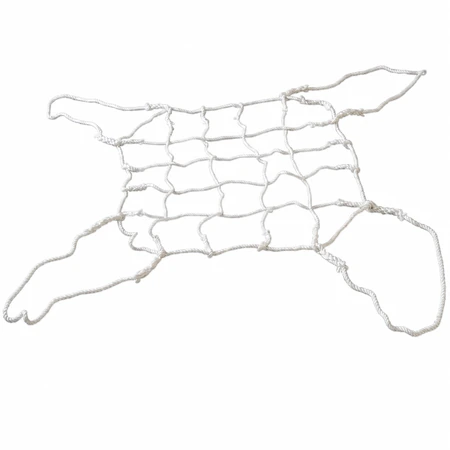
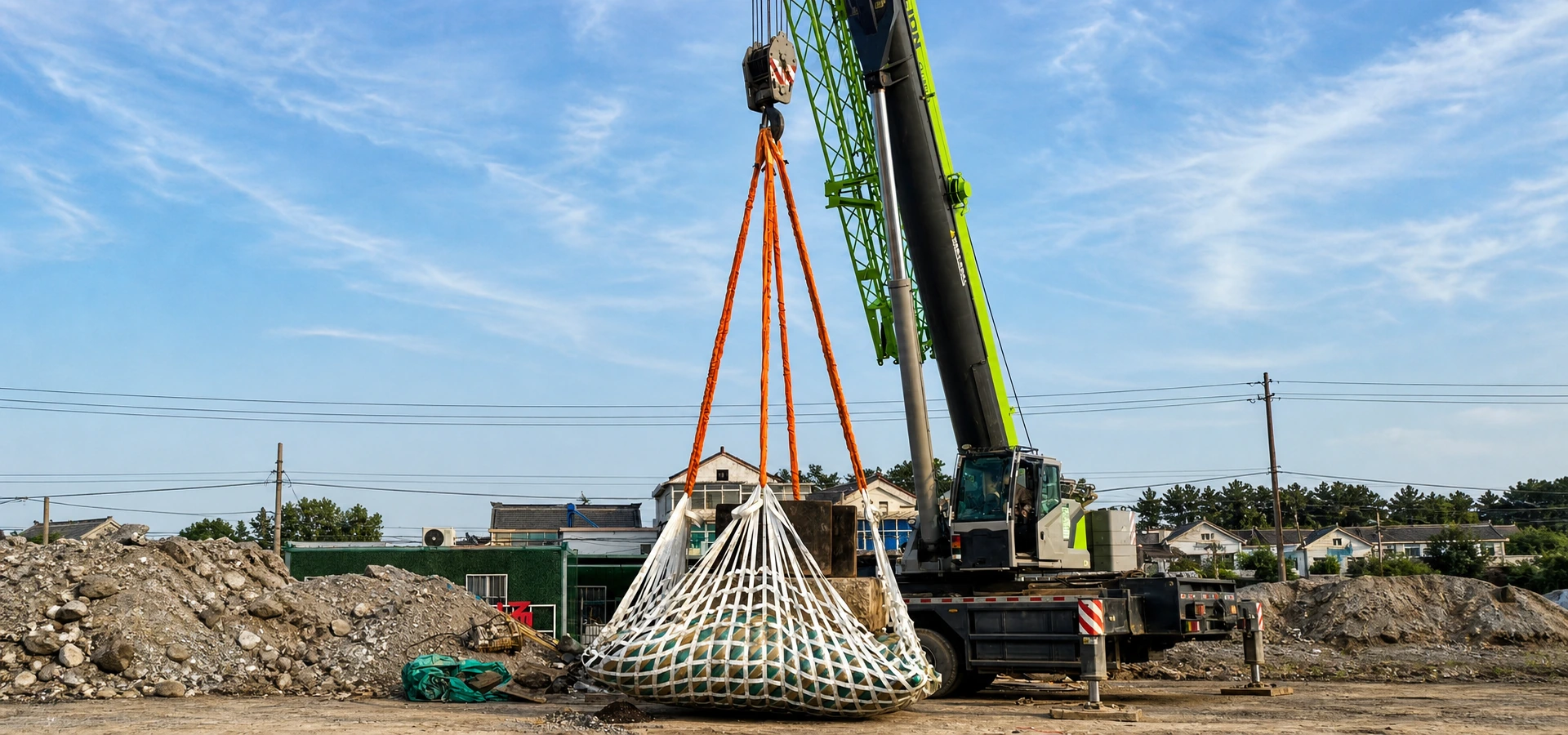
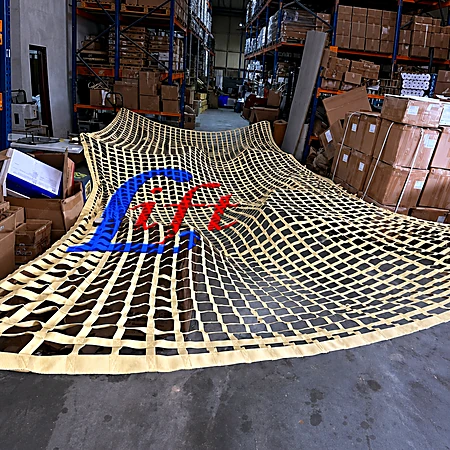
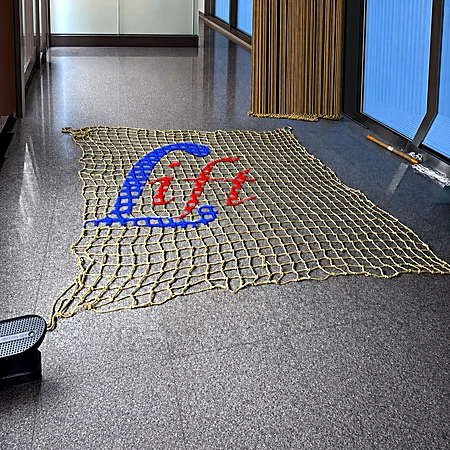
A polyester lifting hoisting net is a soft bag woven from high-tenacity polyester webbing, built to move bagged goods and bulk material in a single crane lift. The load is tipped into the bag, or the bag is laid flat and drawn up around a stack, and four corner loops carry the whole consignment to the hook. There is no pallet to return, no strapping to cut, and nothing to re-handle at the far end.
Because we weave the webbing in our own mill in Taizhou, Jiangsu, a abertura da malha, bag footprint, profundidade, bottom construction and working load limit are all set to the cargo rather than to a fixed catalogue. Standard nets cover 0.5 para 20 t e 0.6 m³ a mais 10 m³, every net is proof-load tested before packing, and each shipment travels with a material test report. Nets are CE and GS certified, with webbing rated to the EN 1492-1 base.
- Fully custom build – malha, tamanho da bolsa, profundidade, colour and safety factor (5:1, 6:1 ou 7:1) set to your specification.
- High-tenacity polyester webbing – 25 mm para 100 bandas mm, solteiro, duplex or triplex, UV stabilised and rot-proof.
- Wear and heat resistant – working range -40 °C a +100 °C, with a reinforced bottom for abrasive loads.
- Macio, flexible and light – the flat band contacts the load over a wide area, so bags, cartons and finished surfaces are neither crushed nor marked.
- Certificado CE e GS – testado por conta própria 1000 máquina, with an ISO 9001 quality system and a CNAS-accredited laboratory behind it.
Why a webbing net bag, and not a rope net or a big bag
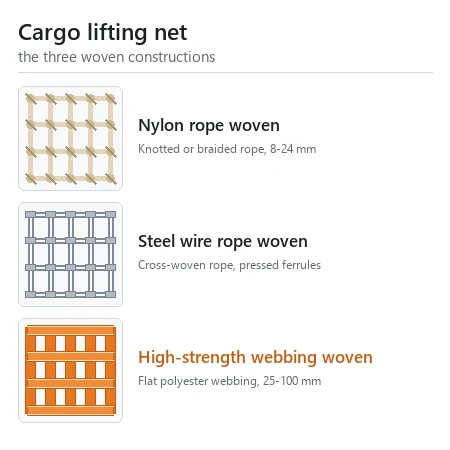
Three products are sold for the same job and they behave very differently once the load is in the air. A rope net concentrates the load on a few contact points. A big bag carries one free-flowing product and is itself the package. A webbing net bag spreads the pressure across flat bands, holds a stacked or mixed load together, and goes back to the store empty.
Mesa 1 – How the four common ways of lifting loose cargo compare.
| Opção | Construção | Contato com a carga | Best cargo | Limitation |
|---|---|---|---|---|
| Polyester webbing net bag | Flat woven bands, 25-100 milímetros, 25-300 malha mm | Wide flat bands, low pressure per cm² | Ensacado, empilhado, mixed and bulk cargo | Needs a crane or hook; not a sealed package for powder |
| Rede de corda de nylon | Knotted or braided rope, 8-24 milímetros | Line contact at every rope | Irregular and heavy single items | Ropes mark soft cargo; a tight mesh adds weight |
| FIBC / big bag | Woven PP fabric with a liner | Full surface, sealed | One free-flowing product per bag | Single product only; the bag is the packaging |
| Pallet and strapping | Timber or plastic pallet plus bands | Rigid base | Unitised cartons | Pallet returned or lost; bands cut and discarded; no drainage |
Five decisions that set the specification
A polyester lifting hoisting net is quoted from five numbers. Get them right and the net arrives right; get the mesh wrong and no amount of extra tonnage will fix it later.
Mesa 2 – What we need to know, and why each answer changes the net.
| Decisão | O que isso corrige | What to tell us |
|---|---|---|
| 1. Cargo form | Whether the net is a bag or a flat sheet, and how the bottom is built | How the cargo arrives: sacks, sacos grandes, fardos, or loose material |
| 2. Weight per lift | Band width and layer count, and therefore the rated capacity | O peso bruto que você pretende levantar, not the weight of the net |
| 3. Volume preenchido | Footprint and depth of the bag | Densidade aparente (t/m³) for loose material, or the height of the stack for bagged goods |
| 4. Abertura de malha | The largest gap the cargo can pass through | The smallest unit in the load: um 25 kg bag, grão, aggregate or scrap |
| 5. Método de descarga | Fechado, atado, rampa ou fundo forrado | Whether the bag is tipped, untied over a hopper, or emptied by hand |
Weight and volume are two separate limits, and for light bulk the volume arrives first. Grãos por volta 0.7 t/m³ e cavacos de madeira em cerca de 0.3 t/m³ ambos preenchem um 3.6 m³ bag, but one lift weighs about 2.5 t and the other about 1 t. Send the bulk density with the tonnage and we will size the bag so that a full bag is also a legal bag.
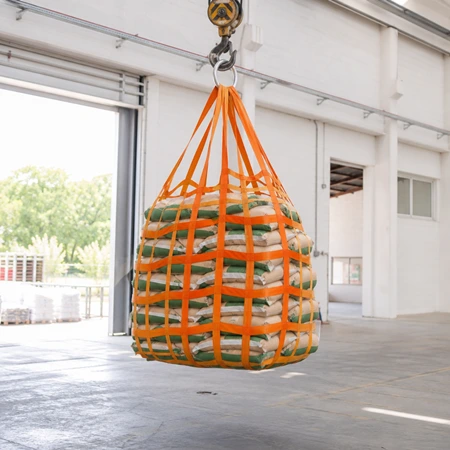
Parâmetros técnicos
As figuras abaixo cobrem a faixa padrão ensacada e a granel. Malha, footprint, profundidade, bottom, loops and capacity are made to order, so treat this as the starting point for a quotation rather than a fixed catalogue.
Mesa 3 – Polyester lifting hoisting net: parâmetros técnicos.
| Parâmetro | Especificação |
|---|---|
| Nome do produto | Polyester lifting hoisting net (saco de rede de poliéster) |
| Configurações | Closed bag, release-bottom bag, or flat lifting net |
| Material de correia | 100 % poliéster de alta tenacidade (BICHO DE ESTIMAÇÃO); nylon de alta tenacidade a pedido |
| Largura de banda | 25 / 38 / 50 / 75 / 100 milímetros (50 mm padrão) |
| Band construction | Camada única, duplex or triplex; woven selvedge, not a cut edge |
| Espessura da banda | 1.8 milímetros – 4.5 mm dependendo da largura e contagem de camadas |
| Abertura de malha | 100 × 100 mm padrão; 25 – 300 mm made to order |
| Tamanho líquido | Feito de acordo com a pegada de carga, truck bed or receiving hopper; see Table 4 |
| Profundidade do saco | 0.8 eu – 2.5 eu, ou para desenhar |
| Volume preenchido | Sobre 0.6 m³ a mais 10 m³, set by footprint and depth |
| Fronteira | Dobrado e com costura dupla, reinforced at every lifting point |
| Pontos de elevação | Quatro loops de canto padrão; oito para um feixe espalhador; laços superior e inferior a pedido |
| Capacidade nominal (VAI) | 0.5 t – 20 t, definido por banda, contagem de camadas e arranjo de levantamento |
| Fator de segurança | 5:1 / 6:1 / 7:1 |
| Alongamento em WLL | 7 % ou menos |
| Cor | Código de cores por limite de carga de trabalho, ou uma cor personalizada da casa |
| Temperatura de trabalho | -40 °C a +100 °C |
| Weather and chemical | Estabilizado contra UV, rot-proof, unaffected by rain, sea water and wash-down |
| Marcação | VAI, mesh and batch printed on the belt, plus a sewn capacity label |
| Base padrão | Correias classificadas como EN 1492-1 |
| Certificação | CE, GS, ISO 9001, JIS on request; Laboratório CNAS; DNV |
| Personalização | OEM / Tamanho do ODM, cor, logotipo impresso, etiqueta e embalagem |
| Código SH | 6307.90 – nets and netting of textile materials |
Tamanhos padrão, volumes and working load limits
These six lines cover the great majority of bagged and bulk work. Filled volume is calculated from the footprint and the depth with an allowance for the rounded shape a loaded bag takes, so a material that settles well will carry slightly more and one that bridges will carry less.
Mesa 4 – Standard net sizes at four corner loops gathered on one hook.
| Tamanho líquido (C × L) | Depth | Volume preenchido | Malha | Banda | VAI | Carga típica |
|---|---|---|---|---|---|---|
| 1.0 × 1.0 eu | 1.0 eu | 0.6 m³ | 50-100 milímetros | 50 mm único | 0.5-1.5 t | 25 sacos de kg, pequenos sacos, fardos |
| 1.5 × 1.5 eu | 1.2 eu | 1.6 m³ | 50-100 milímetros | 50 mm duplex | 1-2.5 t | Grãos ensacados, fertilizante, produzir |
| 2.0 × 2.0 eu | 1.5 eu | 3.6 m³ | 50-100 milímetros | 50 mm duplex | 2-4 t | Grãos a granel, areia, pedra britada |
| 2.5 × 2.5 eu | 1.8 eu | 6.8 m³ | 50-150 milímetros | 75 mm duplex | 3-6 t | Fertilizante a granel, carvão, sucata, peixe |
| 3.0 × 3.0 eu | 2.0 eu | 10.8 m³ | 100-150 milímetros | 75 mm duplex | 4-8 t | Grandes cargas a granel, cais e espera de trabalho |
| To drawing | 0.8-2.5 eu | Para pedir | 25-300 milímetros | 25-100 milímetros | 0.5-20 t | Qualquer pegada, profundidade e carga |
The working load limits above assume a four-loop lift. A two-loop basket de-rates the net – ask for the derated figure rather than reading across from this table.
Abertura de malha, chosen from the cargo
Mesh is the one dimension that cannot be adjusted after the net is sewn, so it is sized from the smallest unit in the load rather than from the total weight.
Mesa 5 – Mesh opening by cargo.
| Carga | Malha recomendada | Razão |
|---|---|---|
| 50 sacos de kg, sacos grandes, fardos | 100 milímetros | The sacks are far larger than the opening; the mesh only has to keep the stack together |
| 25 sacos de kg, pequenos sacos | 50-75 milímetros | Small bags can squeeze through 100 mm once the load settles in the air |
| Grão, semente, produto seco | 25-50 milímetros, ou um forro fechado | Fine material must not sift out on the hook or in transit |
| Fertilizante, prismas, pós | 25-50 milímetros, ou um forro fechado | Fine and moisture-sensitive: a liner keeps the product in and the weather out |
| Areia, cascalho, pedra britada | 50-100 milímetros | Bom o suficiente para segurar o volume, open enough for rainwater to drain |
| Carvão, coque | 100-150 milímetros | Large lumps; uma malha mais larga mantém a rede leve e drena bem |
| Sucata, sobras | 100-150 milímetros | Open mesh with a reinforced bottom and wear pads at the contact points |
| Peixe, marisco, produto molhado | 25-50 milímetros | Holds the catch, drains freely, keeps the weight honest |
| Registros, lenha, grandes sobras | 150-300 milímetros | Indivisible pieces: a wide mesh saves weight without losing the load |
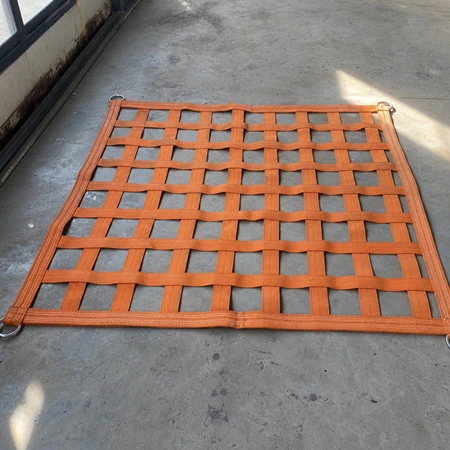
Bottom construction and discharge
How the load comes out is a design decision in its own right. For bagged cargo the answer is usually a person with a knife; for bulk it is usually gravity.
Mesa 6 – Bottom options and how each one is emptied.
| Fundo | Como funciona | Chosen when |
|---|---|---|
| Fechado, totalmente costurado | The bag holds the cargo permanently and is emptied by tipping or by hand | Carga ensacada, and bulk tipped over a hopper or onto a pile |
| Release bottom, atado | Uma costura rendada na parte inferior é desatada no ponto de descarga e a carga cai | Free-flowing bulk – areia, grão, agregar – discharged without tipping the bag |
| Fundo da calha | The bag narrows to a chute opened over the receiving hopper | Controlled discharge into a hopper, uma barcaça ou um transportador |
| Closed with a liner | Um forro de tecido fica dentro da rede | Dusty or moisture-sensitive bulk: grão, fertilizante, pós |
| Painel inferior reforçado | An extra layer of webbing is stitched across the base | Abrasive and heavy bulk: agregar, minério, sucata |
| Loops top and bottom | Loops at both ends, so the bag can be lifted either way up | Loading at height, e esvaziar invertendo o saco no gancho |
Lifting arrangements and fittings
A forma como a bolsa é pendurada decide quanta carga ela realmente carrega, e o volume é implacável porque a carga continua se movendo dentro do saco enquanto ele está no ar.
- Four loops on the hook – the standard for bagged and bulk work; the loops gather on the hook or a master ring and the bag closes around the cargo as the crane takes up the slack.
- Eight loops on a spreader beam – the bag stays square, a carga permanece nivelada, e cada loop carrega uma parcela previsível; the right arrangement for large bags and high tonnage, veja nosso feixe espalhador de elevação faixa.
- Two-loop basket – faster to rig, mas isso desvaloriza a rede; ask for the derated capacity instead of reading across from the four-loop figure.
- Loops top and bottom – lets the bag be lifted either way up, que é como um saco fechado é esvaziado invertendo-o sobre uma tremonha.
Fittings supplied or fitted on request: sewn webbing loops, master ring or master link, nota 80 algemas, laced release bottoms, chutes and discharge sleeves, inner liners, wear pads and protection sleeves for scrap and aggregate, and repair kits for fleets that maintain their own equipment.
Material, stitching and finish
The belt is the product. We weave it on needle looms from high-tenacity polyester yarn, with a woven selvedge rather than a cut edge, so the band does not fray from the outside in.
- 100 % poliéster de alta tenacidade, baixo alongamento (7 % ou menos na WLL), Estabilizado contra UV, rot-proof and unaffected by moisture.
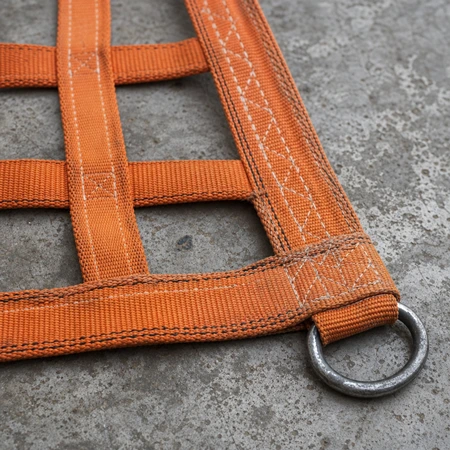
- Locked stitching in high-tenacity polyester thread, run in multiple rows along the border and box-X at every loop – on a cheap net it is the stitch line, não o cinto, that fails first.
- Borda dobrada e com costura dupla, so the edge of the mesh cannot unravel under load.
- Galvanised or stainless steel rings and master links on request.
- Polyester holds its strength from -40 °C a +100 °C; above that, or in chemical exposure, tell us and we will quote nylon or another construction.
Teste, certification and traceability
- Forty years of lifting equipment manufacturing – fundada em 1985 em Taizhou, Jiangsu, com mais de 200 employees and one of China’s largest lifting sling and net production bases.
- Every net is proof-load tested on our own 1000 máquina de teste horizontal – testado, not sampled.
- A material test report travels with each shipment, quoting the belt batch and the test load.
- CE declaration of conformity and GS certification, com certificação JIS em pedidos de exportação.
- ISO 9001 quality management system, a CNAS-accredited laboratory and DNV certification behind the plant.
- Every net is marked with its working load limit, malha, rated volume and batch number before packing, então a bolsa e sua papelada sempre concordam.
Certificates and test reports are available as PDFs for your tender or customs file – see the full certificação definir.
Where these nets work
A polyester lifting hoisting net is used wherever loose cargo has to travel between a stack and a hook – quay, moinho, quarry, yard or hold. The sectors below are the ones where the bagged and bulk version earns its place.
Mesa 7 – Candidaturas por setor.
| Setor | O que a rede trata | Por que uma rede de poliéster combina com você |
|---|---|---|
| Portas, cais e terminais | Carga ensacada, grão, fertilizer and bulk between quay, barge and hold | Uma bolsa por elevador, sem palete, e a carga drena à medida que se desloca |
| Agricultura e fábricas de rações | Semente, grão, alimentar, fertilizante e produto ensacado | Uma malha apertada ou um forro mantém o produto dentro e longe das intempéries |
| Materiais de construção | Areia, cascalho, brita e cimento ensacado | Bom o suficiente para segurar o volume, open enough for rainwater to drain |
| Mineração e pedreiras | Agregar, minério e granel mineral | Um fundo reforçado elimina a abrasão que desgasta a rede |
| Pesca e processamento de alimentos | Peixe molhado, marisco e produtos | Malha aberta drena livremente, which keeps the weight honest |
| Reciclagem e resíduos | Plásticos soltos, vidro, metal e material misto | Contains loose material that would otherwise blow or fall |
| Biomass and power | Lascas de madeira, latido, pellets e granel de combustível | Uma bolsa grande para uma tonelagem modesta, compatível com o limite de volume |
| Construction sites and relief work | Bagged materials raised to upper floors, field cargo | No pallet, sem faixas, e pode ser esvaziado diretamente no chão |
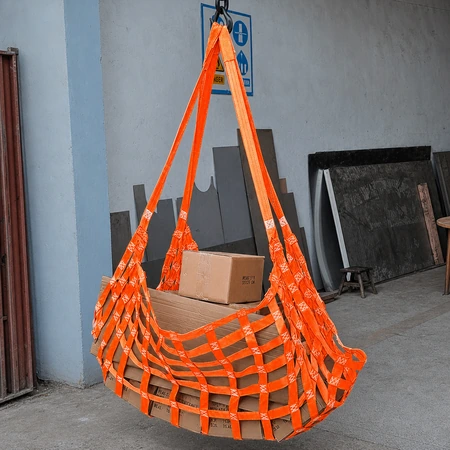
Customisation and branding
A net that moves between quays, holds and yards has to be identifiable from a distance and has to keep its marking. Cor, logotipo impresso, working load limit and cargo type are all applied in our own plant, so the marking cannot be washed off or pulled away with a label.
- Código de cores por limite de carga de trabalho, or a custom house colour to separate your fleet from a competitor’s.
- Logo, brand name, warning text or certificate number printed on the belt, or woven in on larger orders.
- Cargo type printed on the bag, which stops a fine-mesh grain net being sent out for scrap.
- Sewn capacity label in addition to the print, so the net and its paperwork agree at every inspection.
- Packing folded into a bag or a crate – a set of ten net bags takes the space of one pallet.
Cuidado, inspeção e aposentadoria
- Inspect the loops and their stitching first, então a fronteira, then the bottom closure – on a bulk net the bottom and the corners wear before the mesh does.
- Esvazie o saco completamente antes de armazenar; material left inside holds moisture, adiciona peso e esconde danos.
- Procure por cortes, abrasão, costura quebrada, coloração química, vidros térmicos e a mudança de cor ou brilho que sinaliza a degradação UV.
- Weigh a wet bag before lifting it. Chuva, sea water and wet bulk can add far more than the cargo was rated at, e uma rede não sabe a diferença.
- Nunca exceda a capacidade nominal, nunca levante menos do que o conjunto completo de loops, e nunca arraste uma sacola carregada lateralmente com o guindaste.
- Armazene limpo e seco, fora do chão e longe do sol direto; never repair webbing by knotting, soldá-lo ou aquecê-lo.
Perguntas frequentes
What is the difference between a polyester lifting hoisting net and a cargo net?
A lifting net is rated, marked and tested to carry a load on a crane hook. A cargo net is a restraint: it holds a load down in transit and is not designed to be lifted. If the net is going onto a hook, it must be the rated version – veja nosso rede de proteção de carga for the tie-down case.
How do I choose the mesh opening?
From the smallest unit in the load, não da tonelagem. UM 25 kg bag needs 50-75 milímetros; grain or fertilizer needs 25-50 mm or a closed liner; scrap and coal can take 100-150 milímetros. Once the net is sewn the mesh cannot be changed, so this is the one number worth checking twice.
Why does the volume matter as much as the weight?
Porque o volume leve enche o saco antes de atingir o peso nominal. A bag that is full at half its rating doubles the number of lifts and the crane time. Give us the bulk density with the tonnage and we will size the bag so a full bag is also a legal bag.
O saco pode ser esvaziado sem derrubá-lo?
Sim. A laced release bottom or a chute bottom lets a free-flowing load be discharged straight into a hopper, uma barcaça ou um transportador. Bagged cargo is normally emptied by hand or with a forklift at the far end.
A rede conterá carga molhada?
The net itself is unaffected – polyester does not absorb water and does not rot, so rain, sea water and wash-down do no harm. Dois cuidados: wet cargo is heavier, and fine wet material can clog the mesh, o que adiciona peso e impede a drenagem.
How is the working load limit proved?
A correia é classificada de acordo com EN 1492-1 base e as redes são fornecidas em 5:1, 6:1 ou 7:1 conforme especificado. Every net is proof-load tested on our own 1000 máquina, a material test report travels with the order, e os produtos possuem certificação CE e GS.
Do you make a flat version for palletised cargo?
Sim – the flat lifting net is the rede de carga de paletes de guindaste, and the material-led range is covered by the rede de poliéster para levantamento. The rope constructions sit alongside as the rede de elevação de carga de náilon e o estilingue de rede de carga de náilon resistente.
What else do you make from the same webbing?
The same belt goes into our eslingas de tecido e fundas redondas sem fim, and the wider cargo range is listed under redes de elevação de carga – including the rede de levantamento de carga de correias for flat work.
Solicite uma cotação
Send the cargo and whether it is bagged or bulk, a densidade aparente, se você souber disso, o peso que você deseja por levantamento, a abertura da malha, the discharge method and the environment the net will work in – or a sketch of the bag you have in mind. Nossos engenheiros confirmarão o tamanho líquido, profundidade, construção inferior, band and packing and quote it in one reply. Para conversar sobre isso primeiro, entre em contato com nossos engenheiros.
Empresa de aparelhamento de eslinga de elevação – Parque Industrial Lifute, Cidade de Taizhou, Província de Jiangsu, China
Telefone: +86 523 8693 5818 | WhatsApp: +86 180 6600 2268 | E-mail: lift98@jslift.com