

Lift sling rigging company produce Heavy Eye Webbing Sling,Heavy Duty Eye-eye Webbing Lifting Sling,Heavy Duty Eye & Eye Lifting Sling,heavy duty eye and eye webbing lifting sling · heavy duty eye & eye lifting sling · reinforced eye webbing sling · heavy duty flat webbing sling · eye root stitching · wear pad · hook bowl · flat eye · twisted eye · duplex · triplex · EN 1492-1
Heavy Eye Webbing Sling
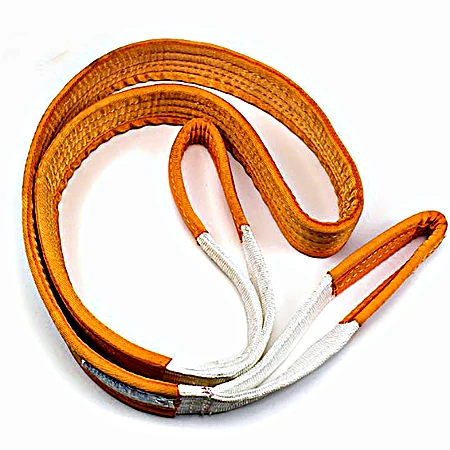
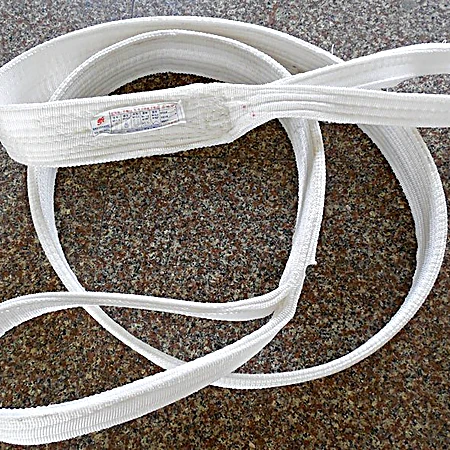
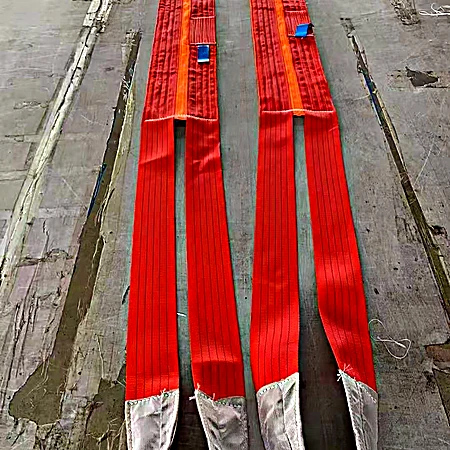
A heavy eye webbing sling is a flat webbing sling with a sewn eye at each end in which the eye itself — not the body of the band — is built heavy. The eye is the part of a webbing sling that concentrates the load, takes the hook, wears first and gets rejected first. On this article the eye carries extra material and extra stitching at the eye root, which is what makes it hold up where the sling is repeatedly hooked, or where the hook bowl is rough.
We build heavy eye webbing slings from 25 mm to 200 mm wide, in single ply, duplex and triplex webs, from 1 t to 30 t in the EN 1492-1 steps and higher to order, with a 7:1 safety factor as standard. This page is about the eye: what makes it heavy, how it is built, and how to match it to the hook it has to sit in.
Why the Eye Is the Critical Part
The body of a webbing sling is forgiving: it carries the load across its whole width, so the fibres share the work and a small notch costs very little of the figure. The eye is not forgiving, for four reasons.
- The whole load passes through the eye. Both eyes carry the entire lift, and they do it through a fold rather than through a straight run of band.
- The stitch line is part of the load path. In a sewn eye, the thread transfers the load from the band into the fold. Where the load concentrates — the eye root — is where the stitching carries the most.
- The eye meets the hardware. It is the only part of the sling that touches the hook, the shackle or the beam, so it takes the point loading, the abrasion, and whatever the hook bowl has become.
- In a choke the eye root works hardest of all. A choked sling passes around the load and back through its own eye, so the eye is loaded against itself as well as against the load.
That is the whole case for the heavy eye. It exists because on a real site the eye fails long before the band does.
What Makes an Eye Heavy
“Heavy eye” is not a different sling with a bigger number on it. It is the same band with the eye built up, and it is worth being precise about what is added, because the two changes do different jobs.
| At the eye | Standard sewn eye | Heavy (reinforced) eye |
|---|---|---|
| Material in the eye | One thickness of the band, folded and closed | Extra material laid into the eye before it is closed, so there is more webbing at the bearing point |
| Stitching at the root | The standard stitch pattern | Extra stitching through the eye root, where the load concentrates |
| Wear surface in the eye | The band itself against the hook | Optional wear pad — a fabric pad inside or over the eye |
| Protection at the eye | None | Optional protective sleeve over the eye, and an anti-cut sleeve where the edge is genuinely sharp |
| Typical duty | General lifting, occasional use, smooth hook | Repeated lifts, heavy duty, choke hitches, rough or worn hook bowls |
The extra material protects the bearing point; the extra stitching protects the join. Ordering one without the other is possible, and on a light sling with a severe edge problem it is sometimes the right answer — but on a heavy sling that is hooked a hundred times a shift, both belong in the specification.
One line that matters more than anything else on this page: a heavy eye does not raise the working load limit. The reinforcement is there to survive the way the sling is used, not to carry more. The figure comes from the webbing width, the ply and the mode of lift, and it is the label — not the thickness of the eye — that states it.
Matching the Eye to the Hook
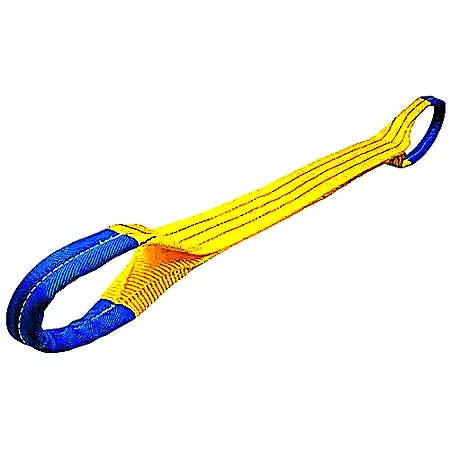
The eye has to seat in the hook bowl, not on the point of the hook. An eye that is too thick for the bowl sits on the tip, the load goes through the hook point instead of the bowl, and both the hook and the eye are loaded in a way neither was designed for. This is the failure that a heavy eye invites if the eye is specified without regard to the hook — more material at the eye makes the fit question more important, not less.
- State the hook, the shackle or the beam. The bearing width of the eye is set by the webbing width and the way the eye is folded, so give us the hardware the sling will sit on and the eye is sized to it.
- Eye length: 100 mm to 1000 mm as standard, or to order. The eye has to clear the hook, the shackle body or the beam, and the bigger the tonnage the bigger the hardware underneath it.
- Check the hook, not just the sling. At heavy tonnage the hook is a component with its own capacity, and the sling is not the only thing in the rig with a limit.
- Flat eye or twisted eye. A flat eye lies in the plane of the band and is the general-purpose choice; a twisted eye turns 90° so it presents square to a choke and to loads that must not rotate. Both are available heavy, or one of each on the same sling.
Technical Parameters — Heavy Eye Webbing Slings
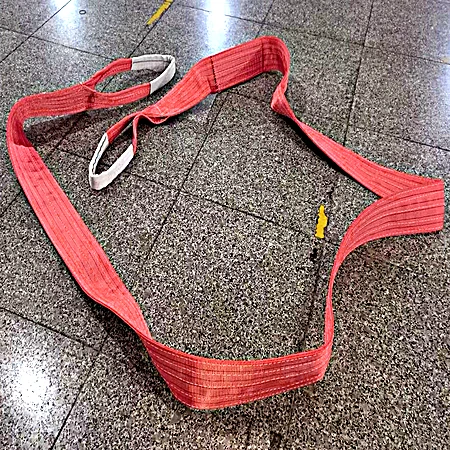
The series below is our standard flat webbing sling, eye-and-eye, with the eye built heavy. Widths, plies and working load limits are our published figures. The working load limit quoted is for a single leg in the vertical mode; every other arrangement is derived from it by the mode factor.
| Webbing width | Single ply (1-ply) | Duplex (2-ply) | Triplex (3-ply) | Typical duty |
|---|---|---|---|---|
| 25 mm | 1 t | 2 t | 3 t | Light loads, tools, small components |
| 50 mm | 2 t | 4 t | 6 t | General lifting, machine parts, drums |
| 75 mm | 3 t | 6 t | 9 t | General lifting, palletised and bundled cargo |
| 100 mm | 4 t | 8 t | 12 t | Heavy lifting, steel and concrete units |
| 150 mm | 6 t | 12 t | 18 t | Heavy and long loads, towing and pulling duty |
| 200 mm | 8 t | 16 t | 24 t | The heaviest standard range, large fabricated loads |
| Item | Specification |
|---|---|
| Product names | Heavy eye webbing sling · heavy duty eye and eye webbing lifting sling · heavy duty eye & eye lifting sling · reinforced eye webbing sling · heavy duty flat webbing sling |
| Type | Flat woven webbing sling with a sewn eye at each end, eye built heavy (reinforced) |
| Webbing material | 100 % high-tenacity polyester (PET) as standard; nylon and polypropylene on request; aramid and UHMWPE for the specialised duties |
| Webbing width | 25 · 30 · 35 · 50 · 60 · 75 · 100 · 150 · 200 mm; wider to order |
| Ply | Single (1-ply), duplex (2-ply) or triplex (3-ply) |
| Webbing thickness | 1.8 mm – 6.0 mm depending on width and ply |
| Eye build | Extra material laid into the eye and extra stitching through the eye root |
| Eye type | Flat eye or twisted eye, at either end or one of each |
| Eye length | 100 mm – 1000 mm, or to order |
| Eye protection | Wear pad inside or over the eye; protective sleeve over the eye; anti-cut sleeve where the edge is genuinely sharp |
| Working load limit | 1 t to 24 t in the width and ply ladder above; 1 t to 30 t across the range in the EN 1492-1 steps; higher capacities produced to order |
| Safety factor | 7:1 to EN 1492-1 as standard; 5:1 to ASME B30.9 and 8:1 to AS 1353 on request |
| Elongation | 7 % or less at the working load limit |
| Length | 0.5 m to 100 m overall, made to order |
| Marking | Sewn label with the working load limit per mode, length, fibre, safety factor, manufacturer and traceability code; EN 1492-1 capacity colour and stripes |
| Testing & documents | Proof tested in our own laboratory; test certificate per batch on request |
| Packing & OEM | Coiled and bagged in a labelled carton or custom export packing; full OEM on width, ply, length, colour, eye build, label layout and packing |
When the Heavy Eye Is Worth Specifying
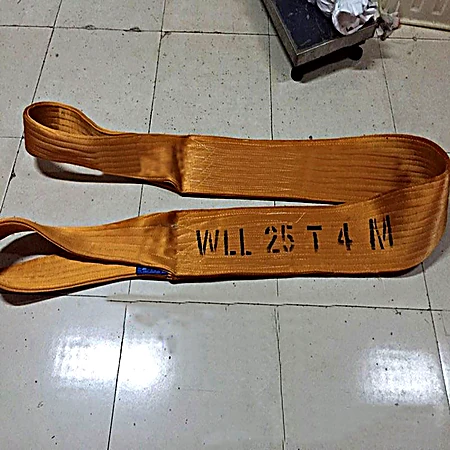
Upgrading the eye costs a little and buys service life, not capacity. It earns its place in four situations.
- The sling is hooked and unhooked many times a shift. Handling wear lands on the same few centimetres of eye every time.
- The hook bowl is rough, worn or pitted. The bowl is the hardest thing most eyes ever touch.
- The hitch is a choke. The eye root carries the load against itself, which is the heaviest duty the eye ever sees.
- The sling is slung over a shackle pin or a beam rather than a hook. A narrow pin concentrates the load into a line across the eye.
A standard sewn eye remains perfectly correct for occasional lifting on a smooth hook in vertical or basket mode. And where the real problem is sharp edges and abrasion rather than the hook, the honest answer may not be a heavier eye at all but a different article — a sleeved endless round sling, whose core is protected inside a sacrificial sleeve.
Inspection — Where to Look on a Heavy Eye
Inspect before every use, and formally at the interval the site rules set. On a heavy eye sling, four places decide whether the sling stays in service.
- The eye root stitching. This is the load path. Broken, worn, pulled or loose stitching, or thread that has gone shiny, retires the sling.
- The inside of the eye, where the hook bears. Look for cuts, snags, abrasion, glazing and local thinning — and for the mark left by a hook point, which says the eye was sitting on the tip instead of in the bowl.
- The eye fold and the sleeve or pad. Check both sides of the fold and the stitching that holds the protection on. A sleeve the eye has worn through is a sleeve that stopped protecting a while ago.
- The label. If the working load limit can no longer be read, the sling is out of service whatever its condition.
The familiar retirement conditions apply without exception: acid or caustic burns, melting or charring, snags, punctures, tears or cuts, broken or worn stitching, distorted fittings or eyes, and an illegible label. Store clean and dry, out of sunlight, and keep the record with the sling.
Frequently Asked Questions
What is a heavy eye webbing sling?
A flat webbing sling with a sewn eye at each end in which the eye carries extra material and extra stitching at the root, so it survives repeated hooking, a rough hook bowl and choke duty. It is the same band as a standard eye and eye sling with the eye built up, not a different article.
Does a heavy eye increase the working load limit?
No, and it is worth being firm about this. The eye is reinforced to survive how the sling is used; the working load limit is set by the webbing width, the ply and the mode of lift, and it is stated on the label. A heavy eye never upgrades the figure, and a quotation that offers it as one should be questioned.
How long should the eye be?
As long as it needs to be to clear the hardware and no longer. Eye length runs from 100 mm to 1000 mm as standard, or to order. Give us the hook, shackle or beam the eye will sit on and the length follows — and remember that at heavy tonnage the hardware is bigger, so the eye usually needs to be longer as well as heavier.
Flat eye or twisted eye?
A flat eye lies in the plane of the band and is the general-purpose choice for vertical and basket lifts. A twisted eye turns 90° so it presents square to a choke hitch and to loads that must not rotate. Both are available on a heavy eye build, and one of each on the same sling is a common arrangement. The comparison is set out in full on our eye and eye webbing slings page.
Can a heavy eye sling be used in a choke?
Yes — a choked sling keeps 0.8 of its straight-lift figure, so a load that must be choked is normally a size or two up on the band. The choke is also the arrangement that loads the eye root hardest, which is one of the four good reasons to specify the heavy eye in the first place.
What safety factor do you build to?
7:1 to EN 1492-1 is standard. 5:1 to ASME B30.9 and 8:1 to AS 1353 are built on request. The same-looking sling can carry three different figures depending on which standard it was built to, so tell us the standard the site works to before the band is woven.
Related Products
- Eye and eye webbing slings (flat eye or twisted eye) — the full comparison of eye types, mode factors and eye measurement
- Endless type webbing sling — the same band with the ends closed instead of sewn
- Heavy-duty endless loop strap slings — heavy duty in the closed-loop form
- Wide body lifting webbing sling — width rather than ply, for soft and coated loads
- Steel pipe lifting strap — wide bands and reinforced eyes for coated pipe
- Dyneema webbing sling — UHMWPE webbing, around half the weight for the same figure
- Aramid webbing sling — for the hot duties where polyester is out of its depth
- Single use endless webbing sling — one-trip straps for export packing
- Webbing sling — the full flat woven webbing sling range
Request a Quote for Heavy Eye Webbing Slings
Send us the load and its weight per lift, the mode you will rig — vertical, basket or choked — the hook, shackle or beam the eye has to sit on, the eye length and type you need, and the working environment. If the hook bowl is worn or the sling will be choked, say so: those are the two cases where the heavy eye pays for itself. We will confirm the width, the ply, the eye build, the marking and the standard before the band is woven.
Lift Sling Rigging Company — Lifute Industrial Park, Taizhou City, Jiangsu Province, China. Telefone: +86 523 8693 5818 | WhatsApp: +86 180 6600 2268 | E-mail: 702461526@qq.com | HS code 630790