

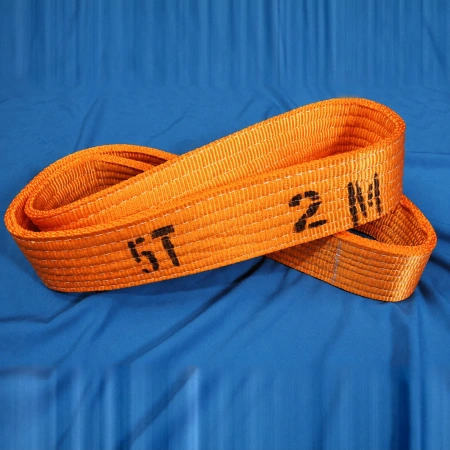
Zogulitsa zamakampani opanga sling sling 2 Ply Webbing Sling,2-ply web sling,2-Ply Web Lifting Sling,2-ply Flat Web Sling with a Twisted Eye,Double Ply Polyester Web Sling,2-Ply Lifting Sling Strap,2-Ply Nylon Eye & Eye Web Sling,2-Ply Web Lifting Sling,Double ply webbing sling.
2 Ply Webbing Sling
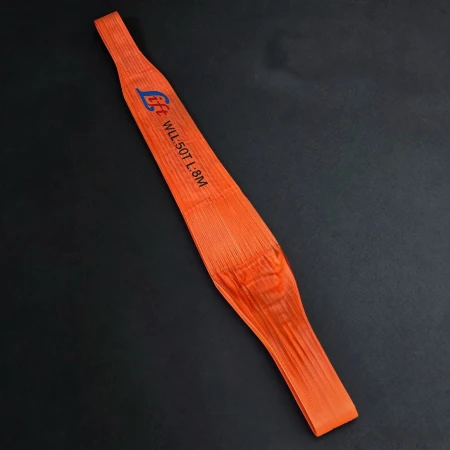
Two layers in the one band, an eye at each end. The same width as a single ply sling with twice the section — more capacity where the width is capped, and a softer face on finished work.
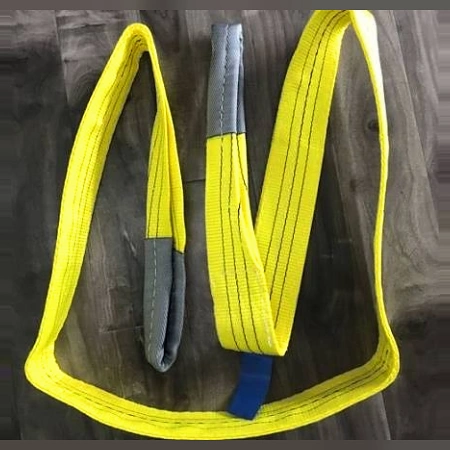
The number in front of the word ply answers one question only: how many layers of webbing are in the band the sling is made from. It does not mean two slings, and it does not mean a band doubled over on the hook. Everything else follows from it — the thickness, kulemera, the capacity a given width can be marked at, how softly the band beds onto the load, and how much material an edge has to work through.
What the second layer buys on an eye-and-eye sling
Pa gulaye ndi maso, the band does two jobs: it carries the load between the eyes, and it presents a face to the load. The second layer changes both, and a third thing besides:
- Capacity at a fixed width. A wide band is not always available — the hook is small, the gap is tight, the load is narrow. Ply is what is left to raise the figure without widening the band.
- A softer bearing face. Two layers make a thicker, more compliant stack between the load and the load-bearing core, so contact pressure spreads and a machined or coated surface is less likely to be marked.
- Abrasion reserve. Where the band works over a rough but not sharp edge, there is a second layer behind the first: wear has further to travel before the load path is affected.
- A stiffer band. It lies down across a plate or a machined face instead of curling at the edges, which keeps the contact full width — and it also means the eye sits flatter on the hook.
Kuti 2 ply sits in the family
The same construction is made in one, awiri, atatu, four and more layers. The table is qualitative on purpose: the builds are sold as builds, and the figure that applies to a particular sling is the one proof tested and printed on it, not a number copied off a web page.
| Pepala limodzi | 2 ply | 3 ply | 4 ply | |
|---|---|---|---|---|
| Layers in the band | Mmodzi | Awiri | Atatu | Zinayi |
| Gawo | Thinnest | Roughly twice the single-ply section | Thicker again | Thickest build |
| Capacity at the same width | Zoyambira | Zapamwamba | Higher again | Wapamwamba kwambiri |
| Kubereka nkhope | Olimba, lonse | Zofewa, thicker stack | Softer again | Most forgiving |
| Kugwira | Folds small, tight radius | Wolimba, sits flat on the hook | Stiffer again | Least supple |
| Usual duty | General yard work, light to medium | High figure in a capped width, finished surfaces | Ntchito yolemetsa, precast and machined work | Heaviest duty, maximum cushioning |
Two of those neighbours have their own pages: ndi 3 ply webbing sling ndi 4 ply webbing sling, with the whole 2/3/4/6/8 ply family collected in one place.
Mathero: diso lathyathyathya, diso lopinda, twisted eye
On an eye-and-eye sling the ends are a specification line, osati mwatsatanetsatane. They decide how the band sits on a hook, whether the sling can be used in a choker at all, and how the last of the fibres at the end are protected — and the end is where a band wears out first.
| TSIRIZA | How it sits | Ndi chiyani |
|---|---|---|
| Flat loop | The band turns back on itself and is closed flat; the loop hangs in the plane of the band | Ntchito yopepuka, soft loads, the cheapest end and the easiest to inspect |
| Folded eye | The end is folded and closed so the eye presents a thicker, rounder bearing on the hook | Where the hook is small and the band must not crease at the eye |
| Diso lolimbikitsidwa | Extra material and stitching at the eye | Heavy duty and repeated choker work — the eye is the wear point |
| Twisted eye | The eye is turned through ninety degrees to the band | Kutsamwitsidwa: the band lies in the plane of the hook, so the wrap beds down instead of standing off |
If the sling will be choked, say so at the enquiry. A twisted eye costs very little on the order and cannot be added afterwards, and a choked figure is 0.8 of the vertical one either way — so the eye decides whether the choke works, not what it is rated at.
Gulu limodzi, ziwerengero zingapo: the hitch decides the rating
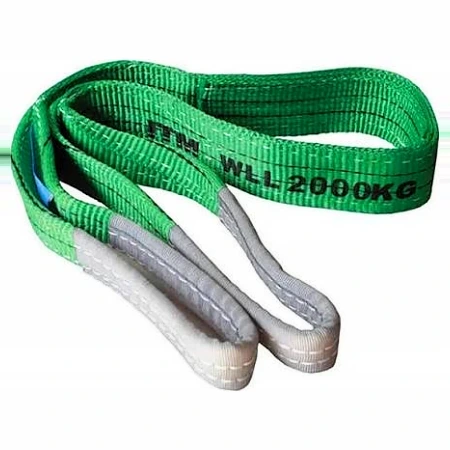
Silingi yolerera ilibe mphamvu imodzi. It has one in vertical, wina m’mtanga, ndi wina wapansi anatsamwitsidwa, ndipo chizindikirocho chimanena aliyense wa iwo. Buying on “the tonnage” alone is the most common error in this category. The factors below are the standard ones this site publishes; the angle is the leg angle to the vertical, and the label on the article overrides the table.
| Kukonzekera | Mode factor | Zomwe zikutanthauza pansi |
|---|---|---|
| Oima | 1.0 | Mwendo umodzi, molunjika mmwamba. Gululo limapachika ndikunyamula. |
| Kutsamwitsidwa | 0.8 | Band round the load and back through its own eye; zomangira zomangira ndi gululo zimadzitengera yokha. |
| Basket, 0-45 ° | 2.0 | Banda pansi pa katundu, maso onse pa mbedza, miyendo pafupi ofukula. |
| Basket, 45-60 ° | 1.4 | The same basket with the legs spread; kufalikira kwa mtengo. |
| Miyendo iwiri, 0-45 ° | 1.4 | Zoponya ziwiri ku mbedza imodzi, katundu adagawana. |
| Miyendo iwiri, 45-60 ° | 1.0 | The same pair, spread. |
| Miyendo itatu ndi inayi, 0-45 ° | 2.1 | Not three or four times the figure — the load rarely shares evenly. |
| Miyendo itatu ndi inayi, 45-60 ° | 1.5 | Makonzedwe omwewo anafalikira. Yang'ananinso m'malo mongoganiza. |
Zotsatira ziwiri ndizofunikira kuzifotokoza momveka bwino. A choked sling is weaker than the same sling used vertically, chotero katundu amene ayenera kutsamwitsidwa amafunikira bande lalikulu osati lalitali. And as the legs spread the capacity falls — a geometric fact, answered by a different arrangement, a spreader or a bigger sling, ndipo palibe china chilichonse.
Colour tells you the figure; the label is the answer
Flat webbing slings are colour-coded by working load limit under the convention most of the market uses, and this site follows it:
| Mtundu | Malire olemetsa ogwira ntchito | Where it helps |
|---|---|---|
| Violet | 1 t | Separating the light bands in a mixed pile |
| Green | 2 t | The most common general-purpose band in a yard |
| Yellow | 3 t | Fast identification on a busy site |
| Imvi | 4 t | Mid-range duty |
| Chofiira | 5 t | The step where handling starts to need two hands |
| Brown | 6 t | Heavy general duty |
| Buluu | 8 t | Structural and plant work |
| lalanje | 10 t | Top of the coded range |
It is a fast check and nothing more. Chomwe mtunduwo sungathe kuchita ndikulowetsa chizindikirocho, because the figure that applies is the one printed and affixed to that individual sling — and beyond the top of the coded range there is no colour to read at all. Where the two disagree, or the label cannot be read, the sling is out of service.
Width is the other half of the specification
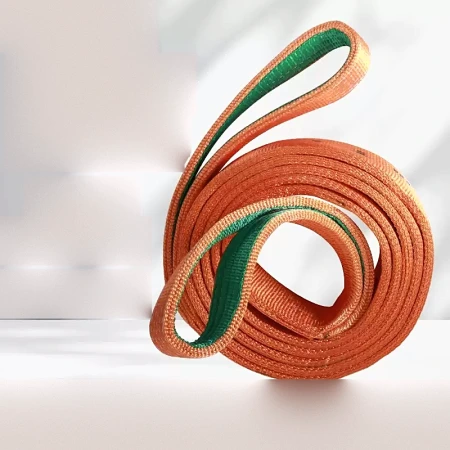
Width sets the pressure on the load and the figure the band can be marked at, and it sets what the band can be folded into. A narrow band concentrates the load and is right on a light, nkhani yolimba; a wide band spreads it and is right on anything soft, zokutira kapena kumaliza. The practical rule is the narrowest width that carries the figure without crushing the load — or the widest the load’s geometry will accept.
The range runs 25 mm kuti 300 mm ndi zambiri, finished slings 0.5 m kuti 100 m, ku 7:1 as standard with 5:1, 6:1 ndi 8:1 kuyitanitsa. The final width, ply and weight of a given sling are confirmed on the order acknowledgement, with the proof-test certificate behind them.
Against a wire rope, and against an endless loop
Two comparisons decide most enquiries. The first is the swap from steel, which is never about strength but about contact and handling; the second is the choice between an eye sling and a closed loop.
| Condition | 2 ply webbing sling | Waya chingwe gulaye |
|---|---|---|
| Kumaliza kapena utoto pamwamba | Wide soft contact, no marking — the reason to choose it | Marks and scuffs; amafunikira padding kuti apikisane |
| Kulemera koyenera kugwiridwa | Kachigawo kakang'ono ka chingwe cha chithunzi chomwecho | Zolemera, stiff and awkward above a certain size |
| Mphepete zakuthwa ndi ma burrs | Needs an edge protector or a sleeve, popanda kupatula | Kulimbana ndi zina zambiri |
| Hot surfaces | Kuzungulira 100 °C malire ogwira ntchito; fails by melting | Wololera kwambiri, ngakhale alibe malire |
| Abrasion and grit | Amavala mwachangu; the doubled band buys time, osati chitetezo | The better answer where the environment is the attack |
| Reach along the load | The eyes fix where the band meets the load; a long load needs a long sling or two | Same constraint |
Against the endless form the difference is the eyes. An eye-and-eye sling presents two defined bearing points, which is what you want when the pick positions are fixed by lugs or a spreader; a closed loop can be wrapped anywhere along its length, which is what you want on a round section with no natural pick point. The double ply endless lifting sling is the same two layers in the other form — same band, different way of meeting the load.
Edges and sleeves: part of the specification
Gulu lodulidwa m'mphepete limayamba ngati notch yaying'ono ndipo imatha ngati kulephera, kotero chitetezo cha m'mphepete ndi mzere wokhazikika osati chigamulo chowonjezera. Kumene katundu ali ndi ngodya yakuthwa, milomo yopangidwa ndi makina, ndi burr, weld spatter or a rough casting skin, mwina gulu ndi manja ndi manja ndi mbali ya nkhaniyo, kapena ngodya imatetezedwa ndi padi yomwe imayenda ndi gulaye. Ask at the enquiry stage: thumba silingalowetsedwenso ku bandi yolukidwa kale.
Kuyendera, and what ends a sling’s life
Yang'anani musanagwiritse ntchito, ndipo mwamwambo pakapita nthawi malamulo a malo akhazikitsidwa. The conditions that remove a webbing sling from service are specific:
- acid kapena kuyaka caustic, kusungunuka kapena kutentha;
- snags, zotupa, tears or cuts — on a 2 ply band, look for a cut that has gone through the outer layer;
- kusokera kosweka kapena kutha, particularly at the eyes and the joins;
- distortion of the eyes or of the band’s lay;
- a label that can no longer be read.
A sling with any of those is out of service because the damage is in the load path, osati chifukwa chowoneka chosawoneka bwino. Sungani zoyera ndi zowuma, kunja kwa kuwala kwa dzuwa, ndipo sungani cholembedwacho pamodzi ndi nkhaniyo.
Amafunsidwa pafupipafupi
Chimachita chiyani 2 ply mean on a webbing sling?
Two layers of webbing woven into the one band the sling is made from — not two slings and not a band doubled over on the hook. It gives a thicker section, more capacity at a given width and a softer bearing face than the single-ply build.
Amatero 2 ply double the capacity of a single ply sling?
Not literally. Two layers add substantial capacity at the same width, but the figure that applies is the one the sling is proof tested and marked at — it is not a multiplication of another sling’s number. Read the label on the article, per hitch.
Ndiyenera kutchula diso liti?
Twisted eyes if the sling will be choked, because the band then lies in the plane of the hook and the wrap beds down. Folded or reinforced eyes where the eye takes the wear, and flat loops for light duty where the cheapest inspectable end is enough.
Can I use it in a choker if it has flat eyes?
It can be done, but a flat eye stands off the load and the wrap beds unevenly, which is why the choked figure is 0.8 of vertical either way. On repeated choke work, specify the twisted eye and size to the choked figure rather than the vertical one.
Polyester or nylon for a 2 ply sling?
Polyester is the default: it stretches little, tolerates sunlight and keeps the hook height predictable. Nylon takes shock and abrasion better and is the right choice where the load lands rather than rises. The synthetic fibre comparison covers the rest of the range, including the temperature limits.
How is the sling marked?
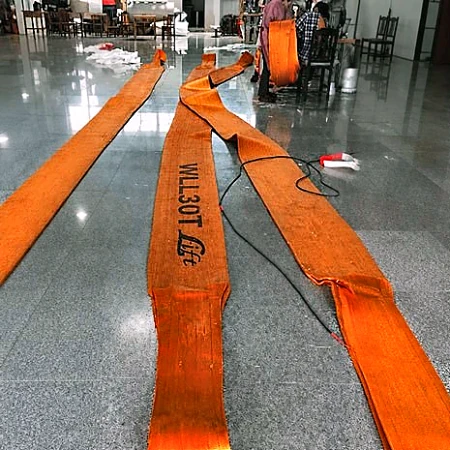
Capacity colour in the weave, the working load limit and length printed on the band where the order calls for it, and a sewn label with the figure, zakuthupi, standard and traceability code. Own-brand labels and packing are available; HS kodi 630790.
Pemphani mawu anu
Five lines and the sling is settled
The load — what it is, its surface, and where the eyes have to sit;
The figure per hitch — vertical, dengu kapena kutsamwitsidwa, with the leg angle;
The width the hook and the load will accept;
Kutalika, diso ndi diso, and the eye type (lathyathyathya, opindidwa, kulimbikitsidwa, twisted);
The environment — edges, kutentha, chemicals — and the marking you need printed.
Komwe mungapiteko
- Masamba a webbing - gulu lonse, from the band to the end configuration;
- The 2/3/4/6/8 ply family, ndi 3 ply webbing sling ndi 4 ply webbing sling;
- Synthetic fibre lifting belt slings - polyester, nayiloni, polypropylene, aramid and UHMWPE compared;
- Double ply endless lifting sling for the closed-loop form of the same band;
- Chingwe chonyamulira chitoliro za ntchito ya chitoliro, zingwe zoponya waya where the environment wins, ndi flat webbing gulaye fakitale tsamba;
- Contact with the load, the figure and the hitch.