

Kampani yopanga gulaye zonyamula katundu imapanga Cargo Securing Net,Load Securing Net,Ukonde waung'ono wotetezera katundu,Kontena yotetezera net,Cargo security webbing net.
Cargo Securing Net
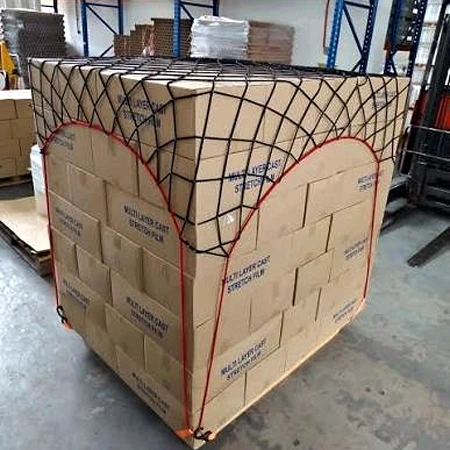
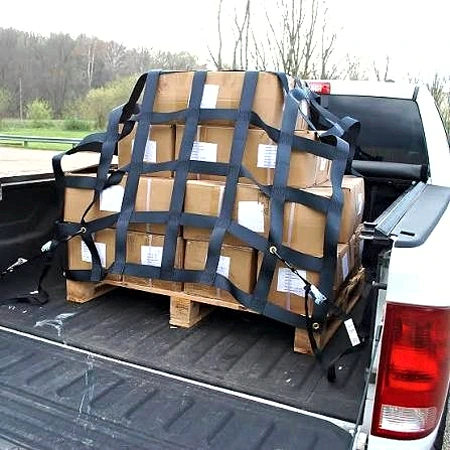
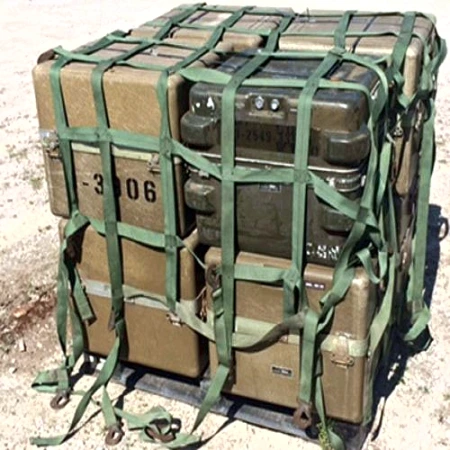
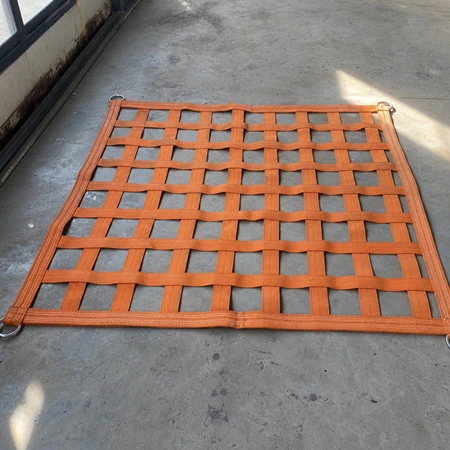
A cargo securing net is a flat-belt restraint net laid over a load and tensioned down to the deck, so that the cargo cannot slide, rock or topple on the way. The belts are woven from high-tenacity polyester into an open lattice, the border is folded and double-stitched, and the edge carries rated attachment points that are pulled down with ratchet tensioners until the load is pressed onto the vehicle or container floor.
The distinction that matters on this product is duty, not appearance. A cargo securing net restrains; it does not lift. Its label carries a lashing capacity (LC) and a standard tension force (Mtengo wa STF) mu daN, the arrangement is calculated to EN 12195-1 and the belts are type-tested to EN 12195-2 – not to a lifting working load limit. We weave the belts in our own mill in Taizhou, so net size, mauna, belt width, fittings and markings are set to your load, your vehicle and your anchor points.
- Restraint rating, osati kukweza mlingo – LC and STF marked in daN, calculated to EN 12195-1, belts type-tested to EN 12195-2.
- Flat high-tenacity polyester belts – 25 mm kuti 100 mm, single or duplex, UV stabilised and rot-proof.
- Sized to the load or the aperture – cover nets, container doorway nets, partition nets and bag form, all made to order.
- Rated fittings and tensioners – ratchets, mbedza, D-rings and lashing points, with anti-slip mats where the deck friction is low.
- CE ndi GS satifiketi – nsalu, wosokedwa, marked and tested in one plant, ndi ISO 9001, CNAS and DNV behind it.
Restraint is not lifting – and the label says which one you have
The two products look alike, are made from the same belt and are often bought by the same fleet. They are not interchangeable, and the difference is not a formality: one is sized so a load cannot move, the other is sized so a load cannot fall. Using a restraint net on a crane hook, or a lifting net as a tensioned tie-down, is a safety failure rather than a paperwork problem.
Table 1 – Why a securing rating and a lifting rating are not interchangeable.
| Mfundo yofananira | Ukonde wotetezera katundu (tsamba ili) | Ukonde wokwezera |
|---|---|---|
| Zomwe zimachita | Amaletsa katundu amene amakhala pa galimoto | Imanyamula kulemera konse kwa katundu mumlengalenga |
| Molamulidwa ndi | MU 12195-1 (kuwerengera mphamvu zotetezera) ndi EN 12195-2 (masamba a masamba) | Kukweza miyezo, with webbing rated on the EN 1492-1 maziko |
| Adavoteledwa | Lashing luso (LC) ndi standard tension force (Mtengo wa STF), mu daN | Malire olemetsa ogwira ntchito (WLL), mu matani |
| How it is sized | Sized to resist the acceleration and friction case for the journey | Kukula ndi a 5:1, 6:1 kapena 7:1 factor ndi umboni woyesedwa pa gulaye |
| How it is tested | Belt and tensioner type-tested to EN 12195-2 | Every sling break-tested on our own 1000 t makina |
| Zimalephera bwanji | The load moves – a road accident | The sling breaks – a dropped load |
If the requirement is to lift – a pallet onto a roof, a bag into a hold – the right product is a lifting net: ndi crane pallet cargo net, ndi polyester kukweza hoisting ukonde kapena gulayeni yolemetsa ya nayiloni yonyamula katundu. If the requirement is to keep a load still from the loading bay to the delivery point, this page is the right one.
The forces the net has to answer for
A load on a moving vehicle is pushed in three directions, and each one is a design case rather than an accident. The accelerations below are the ones EN 12195-1 uses for road transport; other modes and national rules differ, which is why we ask where the load is travelling before we size the net.
Table 2 – Design accelerations for road transport and what resists each one.
| Direction | Design acceleration | What resists it |
|---|---|---|
| Forward (braking) | 0.8 g | Blocking or a headboard first, then direct lashings to the front; friction contributes |
| Rearward (acceleration) | 0.5 g | Rear lashings and a tailboard; the net’s rear edge lines |
| Sideways (cornering) | 0.5 g | Side lashings, containment by the lattice, and friction from the pre-tension |
| Oima | Not a road design case | Held down by pre-tension and containment; a net reduces bounce but is not a substitute for blocking |
The practical consequence is that a net alone rarely carries the whole case. Blocking against a headboard does more for the braking case than any strap, and a net laid over the top does the rest. A good securing arrangement is a combination, and we will say so when a net is the wrong answer for your load.
Momwe ukonde wa lamba wosalala umatengera katundu
Khoka loteteza limagwira ntchito m'njira zitatu nthawi imodzi. Which one dominates depends on how the net is fitted, and that is decided at the vehicle rather than at the factory.
Table 3 – The three mechanisms a securing net uses.
| Njira | Momwe zimagwirira ntchito | What it depends on |
|---|---|---|
| Kukangana (kumangirira-pansi) | Ukonde wokhazikika umakankhira katunduyo pamtunda, ndipo kukangana pakati pa katundu ndi sitimayo kumakana kutsetsereka. This is the main effect of a cover net | A woyera, dry deck or anti-slip mats. Popanda kukangana ukonde womwewo umachepetsa kwambiri |
| Kusunga | The latisi mwathupi kuyimitsa katundu kufalikira, rocking, or throwing individual items out | A mesh fine enough for the smallest item, and a net fitted tight rather than draped |
| Direct lashing | Where the edge belts run down to rated points on the vehicle, lamba wokha amanyamula mphamvu yoletsa | Certified anchor points on the vehicle – never a random protrusion or a load’s own packaging |
Two numbers decide whether the arrangement works, and both are usually ignored. The first is the angle: a tie-down belt is most effective between 75 ndi 90 madigiri ku sitima, and its effective capacity follows LC_eff = LC × sin α. Pa 30 degrees you keep roughly half the belt’s rating, so a net pulled down almost flat looks tidy and holds very little. The second is friction: the coefficient between a steel load and a steel deck is about 0.1 ku 0.2, steel on timber about 0.2 ku 0.3, timber on timber about 0.3 ku 0.4, and a good anti-slip mat takes a pallet on a deck to about 0.5 ku 0.6. Yonyowa, oily or icy surfaces take all of these figures down, which is why the same net restrains very different loads on two different days.
Zosintha zaukadaulo
Ziwerengero zomwe zili m'munsizi zikuphatikiza mndandanda wachitetezo chokhazikika. Lamba, mauna, kukula konse, zomangira m'mphepete ndi tensioners zonse amapangidwa kuyitanitsa, chifukwa chake ganizirani tebulo ili ngati poyambira mawu mawu osati kalozera wokhazikika.
Table 4 – Ukonde wotetezera katundu: magawo luso.
| Parameter | Kufotokozera |
|---|---|
| Mtundu wa mankhwala | Ukonde wotetezera katundu (ukonde woletsa katundu) – cover net, partition net, container doorway net or bag form. Osati chipangizo chonyamulira |
| Belt material | 100 % polyester yapamwamba kwambiri (PET); nayiloni yokhazikika kwambiri mukapempha |
| Lamba m'lifupi | 25 / 35 / 50 / 75 / 100 mm |
| Belt construction | Single layer kapena duplex, woven selvedge, not a cut edge |
| Belt thickness | 1.8 mm – 4.0 mm kutengera m'lifupi ndi wosanjikiza chiwerengero |
| Kutsegula kwa mauna | 100 × 100 mm muyezo; 50 mm – 300 mm made to order |
| Net size | Zapangidwa ku katundu footprint, bedi lagalimoto, kapena chidebe kapena pobowo la khomo |
| Lashing luso (LC) | Za 750 daN on a 25 mm belt to about 5,000 daN on a 100 mm duplex belt, marked per net |
| Pre-tension (Mtengo wa STF) | 250 – 500 daN depending on the tensioner supplied; cholembedwa pa chizindikiro |
| Maziko okhazikika | MU 12195-1 for the securing calculation; MU 12195-2 for the webbing lashing |
| Border | Kupindika ndi kusokedwa pawiri; kulimbikitsidwa pamalo aliwonse omangika |
| Zosakaniza | Ratchet tensioners, mbedza, D-mphete, cam buckles and lashing points, kalasi 80 steel where steel is used |
| Mtundu | Orange for high visibility as standard; buluu, wobiriwira, black or a custom colour |
| Chithandizo | UV yokhazikika, anti-kukalamba, kugonjetsedwa ndi abrasion ndi misozi, rot-proof |
| Kutentha kwa ntchito | -40 °C ku +100 °C |
| Chitsimikizo | CE, GS, ISO 9001, JIS on request; Laborator ya CNAS; Mtengo wa DNV |
| Kusintha mwamakonda | OEM / Mtengo wa ODM, mtundu, printed belt, chizindikiro, logo and packing |
| HS kodi | 6307.90 – nets and netting of textile materials |
Miyeso yokhazikika, mesh and lashing capacity
A securing net is sized to the load it covers or the aperture it closes, never to a tonnage. The load has to be fully covered, and the border has to land on the deck or on the anchor points instead of hanging in mid-air, because an unsupported edge is an edge that can be pulled sideways.
Table 5 – Standard securing net sizes, with the belt and capacity that normally go with them.
| Net size (L ndi W) | Mesh | Lamba | LC per edge line | Kugwiritsa ntchito mwachizolowezi |
|---|---|---|---|---|
| 1.2 × 1.2 m (4 × 4 Ft) | 100 mm | 35 – 50 mm | 1,000 – 2,000 Ndipo | Single pallet in a van or light truck |
| 2.5 × 1.2 m (8 × 4 Ft) | 100 mm | 50 mm | 2,000 Ndipo | Two pallets abreast in a van or curtain-sider |
| 2.5 × 2.5 m | 100 mm | 50 mm | 2,000 Ndipo | Katundu wa flatbed, makina, mixed cargo |
| 5.0 × 2.5 m | 100 – 150 mm | 50 – 75 mm | 2,000 – 3,500 Ndipo | Kutalika kwathunthu kwa flatbed ndi ngolo zonyamula |
| 2.4 × 2.6 m (chotengera) | 100 mm | 75 mm | 3,500 Ndipo | Container doorway net, load held back from the doors |
| 1.5 × 1.5 m bag form | 50 – 100 mm | 50 mm | 2,000 Ndipo | Loose or bagged goods that would spread on the deck |
| Zapangidwa kuti zijambule | 50 – 300 mm | 25 – 100 mm | To calculation | Mapazi aliwonse, aperture or vehicle bed |
The capacity column is the restraint available per edge line, not a lifting limit. The number of edge lines, their angle and the friction under the load decide what the arrangement actually restrains.
Four forms of securing net
The same lattice is supplied in four arrangements, and choosing the right one is most of the job. Zosakaniza zimasiyana pakati pawo; lamulo loletsa silitero.
Table 6 – Chophimba, partition, container and bag forms.
| Fomu | Momwe imayikidwa | Ntchito pamene |
|---|---|---|
| Kuphimba ukonde | Spread over the load and tensioned down to the deck or to the vehicle’s rated points | Pabedi, curtain-sider and container loads that must not move in any direction – the most common arrangement |
| Partition net | Fixed upright across the vehicle body and tensioned against its own frame | Separating two loads in one vehicle, or holding cargo away from a bulkhead |
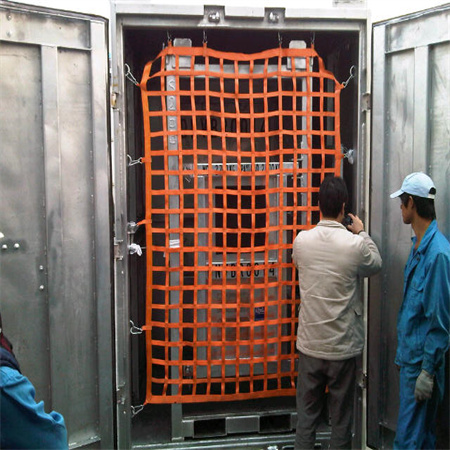
| Container doorway net | Fitted across the door aperture and hooked to the container’s own rings | Stopping cargo migrating to the doors during the journey, so the container is safe to open |
| Chikwama fomu | Closed at the bottom, with the cargo sitting inside the lattice | Loose or bagged goods that would otherwise spread across the deck |
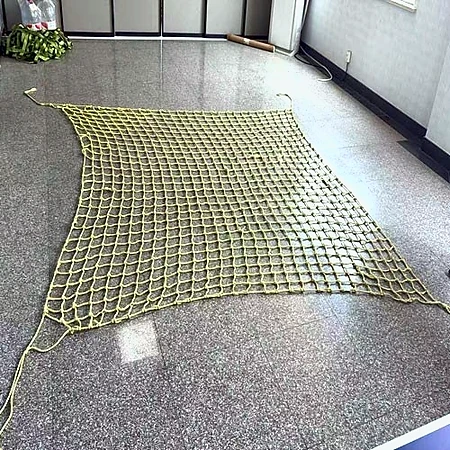
Zosakaniza, tensioners and anti-slip
A securing net is only as good as the tensioner that pre-tensions it and the anchor point it pulls against. These are the parts that get specified last and fail first.
Table 7 – Fittings ndi tensioners.
| Zokwanira | Zogwiritsidwa ntchito ndi | Zindikirani |
|---|---|---|
| Mavuto a Ratchet | Kuphimba ukonde, fomu ya thumba | Amakhazikitsa pre-tension (Mtengo wa STF). A ratchet that cannot reach the marked STF makes the net ineffective, whatever its LC |
| Cam buckle | Ntchito yopepuka | Faster than a ratchet but reaches a much lower pre-tension – for light loads only |
| Hooks ndi D-rings | Kukonzekera kulikonse | The link between net and anchor point; kalasi 80 chitsulo komwe kumagwiritsidwa ntchito chitsulo |
| Mfundo zokopa | Kuphimba ukonde | Rated anchor points in the vehicle structure – the restraint force has to go somewhere rated |
| Anti-slip mat | Kuletsa kwapang'onopang'ono | Raises the friction coefficient under the load; usually the single most effective addition on a smooth deck |
| Mtundu wa chitetezo | Katundu wakuthwa | Fits over the belt at the contact point; njira yotsika mtengo kwambiri yowonjezera moyo waukonde |
| Konzani zida | Fleet maintenance | Matching belt, kusoka ulusi ndi tensioner yopuma |
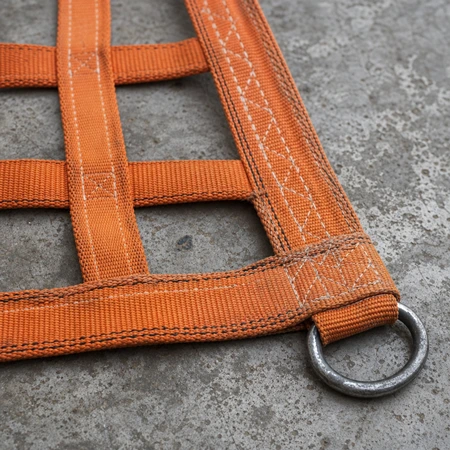
Kuyika chizindikiro, colour and identification
A securing net is checked by the driver before every trip and by an inspector at the roadside, so the marking has to be readable at a distance and has to survive being dragged over a deck.
- Lashing capacity and standard tension force printed along the belt in daN – the units load securing is actually calculated in.
- Net size and date of manufacture printed as well, so the net can be matched to the vehicle and its age judged on the spot.
- A sewn capacity label in addition to the print, kotero ukonde ndi zolemba zake zimagwirizana nthawi zonse.
- Orange as the standard high-visibility colour, with blue, wobiriwira, black or a house colour for fleet identification.
- OEM orders can carry your brand, warning text or certificate number printed on the belt.
- Nets ship folded into a bag or a crate – a fleet order takes a fraction of the space of the same number of loose straps.
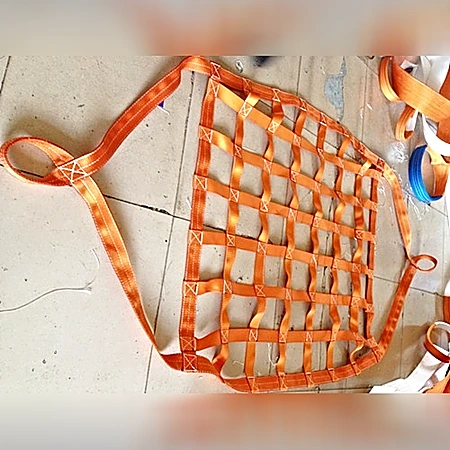
Kuyesa, certification and traceability
- Forty years of lifting equipment manufacturing – anakhazikitsidwa mu 1985 ku Taizhou, Jiangsu, ndi zambiri kuposa 200 antchito.
- Belts woven in our own mill, kotero wide, layer count and colour are under our control rather than bought in.
- Webbing strength-tested on our own 1000 t horizontal machine before it is cut into nets.
- Belts supplied to the EN 12195-2 material requirements for securing duty, with the securing calculation following EN 12195-1.
- CE declaration of conformity and GS certification, with JIS on export orders; ISO 9001, CNAS laboratory accreditation and DNV certification behind the plant.
- Ukonde uliwonse umakhala ndi mphamvu yomangira, kusamvana kusanachitike, kukula ndi mauna asananyamuke, and supplied with a material test report on request.
Certificates and test reports are available as PDFs for a tender file or a customs check – see the full certification set.
Komwe amagwiritsidwa ntchito maukonde otchingira katundu
The same net covers a road trailer, a container, a rail wagon and a barge. What changes is the number of anchor points, the mesh and how the net is tensioned – not the product itself.
Table 8 – Applications by transport mode.
| Mode kapena gawo | Zomwe ukonde umaletsa | Chifukwa chiyani ukonde wa lamba wosalala umakwanira |
|---|---|---|
| Msewu – flatbed | Makina, zitsulo, matabwa, pallets, ng'oma ndi katundu wosakaniza | Imakwirira katundu wonse mu chinthu chimodzi ndikuphatikiza kukangana ndi kudziletsa |
| Msewu – nsalu yotchinga | Palletised and boxed goods that shift against a soft curtain | Muli ndi katundu amene nsalu yotchingayo siimatsekereza |
| Container Transport | Katundu kuseri kwa zitseko, and cargo that must not migrate in transit | A doorway net makes the container safe to open and stops the load moving forward |
| Katundu wa njanji | Palletised and loose cargo in wagons and on flat wagons | Maukonde aatali amaphimba bedi la ngolo ndipo amatha kumangika pafupipafupi |
| Nyanja ndi m'mphepete mwa nyanja | Deck katundu, ndi katundu mkati mwa ngalawa ndi zosungira | Zosavunda, UV stabilised and unaffected by salt water |
| Kunyamula katundu wambiri komanso katundu wa projekiti | Zosintha, katundu wa zomera ndi kunja kwa gauge | Kuphatikizidwa ndi kukwapula kwachindunji ndi kutsekereza kwa katundu wosagawanika |
| Zinyalala, zobwezeretsanso ndi ulimi | Mabala, kukana, kompositi ndi katundu wambiri pamagalimoto otseguka | Containment imayimitsa zinthu zotayirira ndikusiya galimoto ikudutsa |
| Military and relief transport | Palletised and loose cargo in trucks and aircraft | Ukonde umodzi pa katundu, yofulumira kugwiritsa ntchito komanso yogwiritsidwanso ntchito pamaulendo ambiri |
Chisamaliro, kuyendera ndi kupuma pantchito
- Check the net before every trip and record the check: the tensioner first, ndiye kusokera pamalo aliwonse omangika, ndiye malamba.
- Kanani lamba aliyense wokhala ndi mabala, kuwonongeka m'mphepete, kusokera wosweka, kudetsa mankhwala, kutentha glazing, or the colour and gloss change that signals UV degradation.
- Check the vehicle’s anchor points as carefully as the net. A perfect net on a corroded lashing point restrains nothing.
- Sungani sitimayo mwaukhondo ndi youma, and fit anti-slip mats wherever load-to-deck friction is low. That is a securing measure, osati kuyengedwa.
- Never use a securing net to lift, and never use a lifting net as a tensioned tie-down unless its label carries both ratings.
- Sungani zoyera ndi zowuma, kuchokera pansi ndi kunja kwa dzuwa; never repair a webbing belt by knotting, kuwotcherera kapena kuwotcha.
- Withdraw the net if a belt, chingwe chosokera kapena cholumikizira chawonongeka, ndi kuti maukonde awonedwe ndi munthu wodziwa nthawi yomwe zombo zanu zimafuna.
Mafunso omwe amafunsidwa pafupipafupi
Can a cargo securing net be used to lift a load?
Ayi. It is rated for restraint, osati kukweza, ndipo awiriwo amawerengedwa pa maziko osiyana kotheratu. If the load has to go onto a hook, use a lifting net with a working load limit and a per-sling proof test – the crane pallet cargo net or the polyester lifting hoisting net, both linked earlier on this page.
Kodi pali kusiyana kotani pakati pa LC ndi STF??
LC (luso lashing) ndi mphamvu yoletsa yomwe lambayo adavotera kuti anyamule. Mtengo wa STF (standard tension force) Ndizovuta bwanji kuti ratchet tensioner iyambe kukanikiza lamba. Both are marked in daN. LC ndiyofunikira kwambiri pakuwongolera mwachindunji, kumene lamba mwiniwake amanyamula katundu; STF ndiyofunikira kwambiri pakuchepetsa thupi, where the pre-tension creates the friction that does the holding.
Ukonde ukhale wothina bwanji?
Limbani mokwanira kuti mufikire kupsinjika komwe kwalembedwa pa lebulo, with the belts running as steeply to the deck as the load allows – 75 ku 90 degrees is where a tie-down belt works best. A belt laid almost flat keeps only about half its capacity, kotero ukonde womwe umawoneka wophimbidwa bwino ukhoza kugwira pang'ono.
Ndikufuna ma anti-slip mats??
If the restraint relies on friction – which is what a cover net does – then usually yes. On steel, aluminium or plastic surfaces the friction coefficient is low, and a mat often adds more restraint than an extra strap does. A woyera, dry deck is the other half of the same measure.
Ndikufuna zingwe zingati kapena nangula?
Zimatsatira kuchokera ku katundu, kukangana kwapansi, the vehicle and the journey rather than from a rule of thumb. Direct lashing normally needs at least four anchor lines, awiri kumbali ndi kuwoloka, with the vertical and plan-view angles between 30 ndi 60 madigiri. Titumizireni katundu ndi tsatanetsatane wagalimoto ndipo tidzakonza nanu.
Will a net stop cargo moving inside a container?
Khomo kapena ukonde wogawanitsa umayimitsa katundu kupita kuzitseko ndikupangitsa kuti chidebecho chitseguke bwino. For the journey itself the load still has to be restrained as a whole, kotero chidebe nthawi zambiri chimakhala chotetezedwa ndi ukonde wogawa kuphatikiza kutsekereza kapena dothi m'malo mokhala ndi ukonde wokha.
Ndi mafungulo ati omwe ndiyenera kusankha?
Fine enough that the smallest item in the load cannot pass through. 100 mm ndiye muyezo wathu ndipo umagwira pallets, makatoni, matumba ndi ng'oma; zinthu zomasuka kapena zazing'ono zimafuna mauna olimba, ndipo katundu wamkulu wosagawanitsa amatha kutenga wokulirapo.
Ndi chiyani chinanso chomwe mumapanga potengera katundu?
The same belts go into our matumba a ukonde ndi zopota zopanda malire, the wire rope range is under zingwe zoponya waya, the rope itself under zingwe za nayiloni, and RoRo and breakbulk work is covered by the ukonde wonyamulira galimoto. The lifting side of the net range starts at maukonde onyamulira katundu.
Pemphani mawu anu
Send the transport mode, the load weight and dimensions, kaya ikhoza kufalikira kapena kugwedezeka, the deck material, ukonde kapena kabowo kukula, the belt width and the anchor points you have – or a drawing of the load and the vehicle. Mainjiniya athu adzatsimikizira ukonde, zolumikizira, chiwerengero cha mizere yotupa ndi kulongedza, ndi kulitchula mu yankho limodzi. Kuti tikambirane kaye, kulumikizana ndi mainjiniya athu.
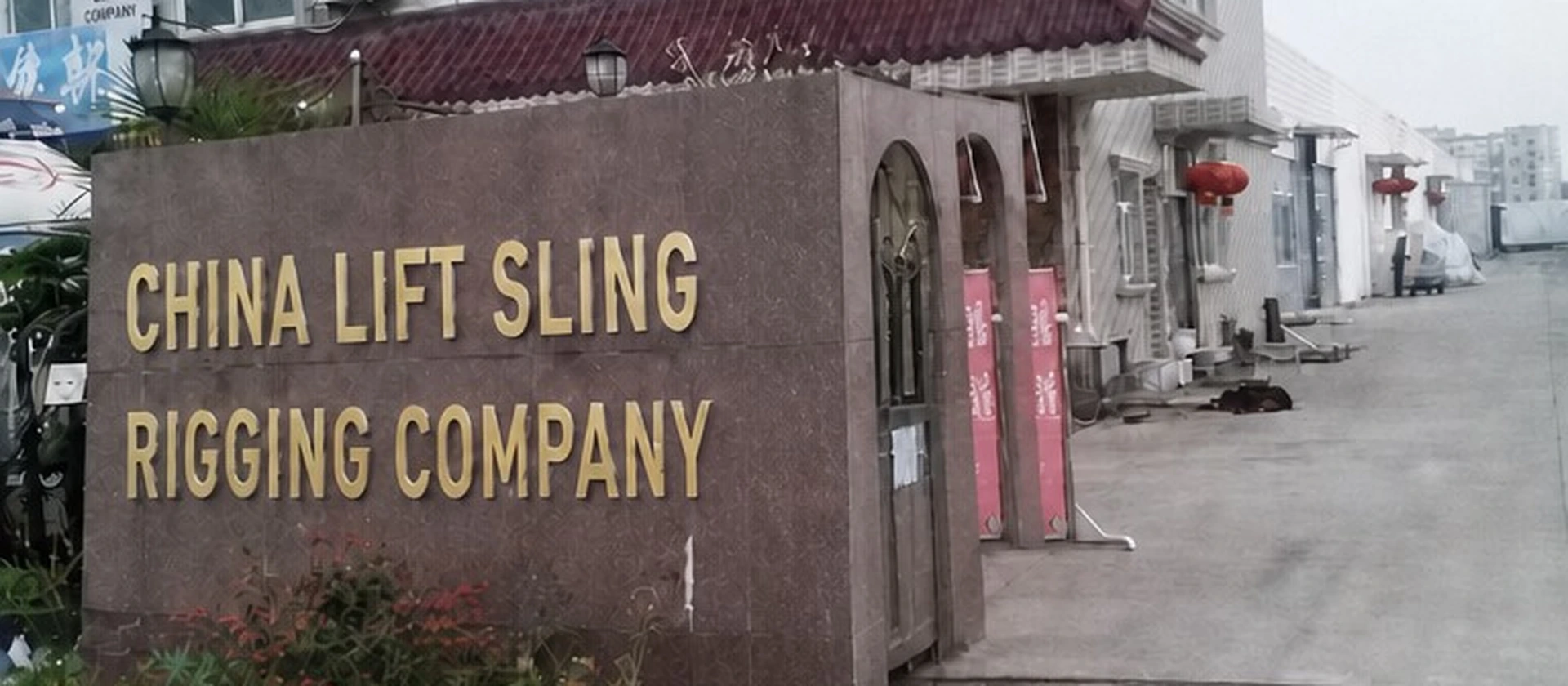
Kampani ya Lift Sling Rigging Company – Lifute Industrial Park, Mzinda wa Taizhou, Chigawo cha Jiangsu, China
Tel: +86 523 8693 5818 | WhatsApp: +86 180 6600 2268 | Imelo: lift98@jslift.com