

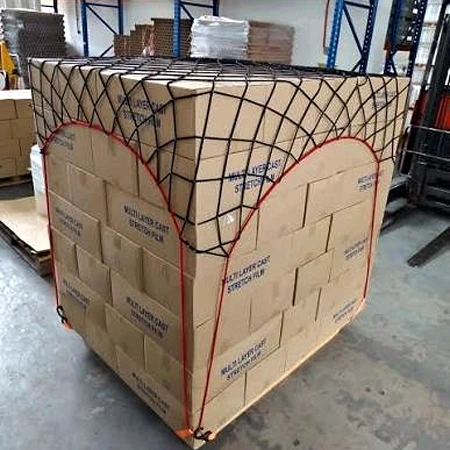
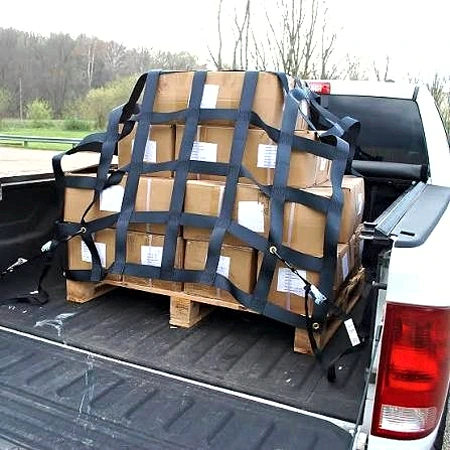
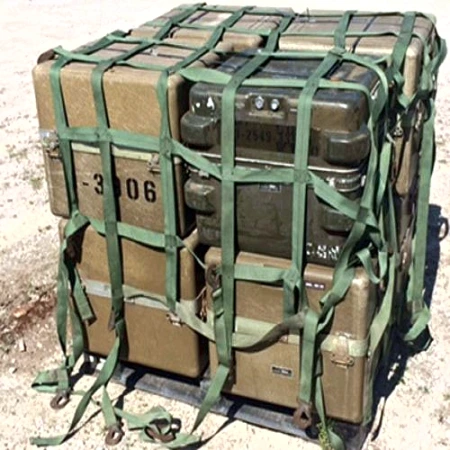
Lift sling rigging company produce Cargo Securing Net,Load Securing Net,Small mesh cargo securing net,Container securing net,Cargo secure webbing net.
ကုန်စည်လုံခြုံရေးပိုက်ကွန်
A cargo securing net is a flat-belt restraint net laid over a load and tensioned down to the deck, so that the cargo cannot slide, rock or topple on the way. The belts are woven from high-tenacity polyester into an open lattice, the border is folded and double-stitched, and the edge carries rated attachment points that are pulled down with ratchet tensioners until the load is pressed onto the vehicle or container floor.
The distinction that matters on this product is duty, not appearance. A cargo securing net restrains; it does not lift. Its label carries a lashing capacity (LC) and a standard tension force (STF) in daN, the arrangement is calculated to EN 12195-1 and the belts are type-tested to EN 12195-2 – not to a lifting working load limit. We weave the belts in our own mill in Taizhou, so net size, ကွက်, belt width, fittings and markings are set to your load, your vehicle and your anchor points.
- Restraint rating, ရုတ်သိမ်းခြင်းအဆင့်မဟုတ်ပါ။ – LC and STF marked in daN, calculated to EN 12195-1, belts type-tested to EN 12195-2.
- Flat high-tenacity polyester belts – 25 mm to 100 မီလီမီတာ, single or duplex, ခရမ်းလွန်ရောင်ခြည်ကို တည်ငြိမ်စေပြီး အပုပ်ဒဏ်ကို ခံနိုင်ရည်ရှိသည်။.
- Sized to the load or the aperture – cover nets, container doorway nets, partition nets and bag form, all made to order.
- Rated fittings and tensioners – ratchets, ချိတ်, D-rings and lashing points, with anti-slip mats where the deck friction is low.
- CE နှင့် GS ထောက်ခံချက် – ယက်, ချုပ်ထားသည်။, marked and tested in one plant, ISO နှင့် 9001, နောက်ကွယ်မှာ CNAS နဲ့ DNV.
Restraint is not lifting – and the label says which one you have
The two products look alike, are made from the same belt and are often bought by the same fleet. They are not interchangeable, and the difference is not a formality: one is sized so a load cannot move, the other is sized so a load cannot fall. Using a restraint net on a crane hook, or a lifting net as a tensioned tie-down, is a safety failure rather than a paperwork problem.
စားပွဲ 1 – Why a securing rating and a lifting rating are not interchangeable.
| Point of comparison | Cargo securing net (ဒီစာမျက်နှာ) | Lifting net |
|---|---|---|
| အဲဒါက ဘာလဲ။ | Restrains a load that stays on the vehicle | Carries the full weight of a load in the air |
| Governed by | IN 12195-1 (calculation of securing forces) နှင့် EN 12195-2 (webbing lashings) | Lifting standards, with webbing rated on the EN 1492-1 အခြေခံ |
| အဆင့်သတ်မှတ်ထားသည်။ | ကြိမ်ဒဏ်ပေးနိုင်စွမ်း (LC) and standard tension force (STF), in daN | အလုပ်ဝန်ကန့်သတ်ချက် (WLL), in tonnes |
| How it is sized | Sized to resist the acceleration and friction case for the journey | Sized with a 5:1, 6:1 သို့မဟုတ် 7:1 factor and proof-tested per sling |
| How it is tested | Belt and tensioner type-tested to EN 12195-2 | Every sling break-tested on our own 1000 t စက် |
| ဘယ်လိုပျက်လဲ။ | The load moves – a road accident | The sling breaks – a dropped load |
If the requirement is to lift – a pallet onto a roof, a bag into a hold – the right product is a lifting net: အဆိုပါ crane pallet ကုန်တင်ပိုက်, အဆိုပါ polyester lifting hoisting ပိုက် သို့မဟုတ် heavy duty nylon cargo net sling. If the requirement is to keep a load still from the loading bay to the delivery point, this page is the right one.
The forces the net has to answer for
A load on a moving vehicle is pushed in three directions, and each one is a design case rather than an accident. The accelerations below are the ones EN 12195-1 uses for road transport; other modes and national rules differ, which is why we ask where the load is travelling before we size the net.
စားပွဲ 2 – Design accelerations for road transport and what resists each one.
| Direction | Design acceleration | What resists it |
|---|---|---|
| Forward (braking) | 0.8 ဆ | Blocking or a headboard first, then direct lashings to the front; friction contributes |
| Rearward (acceleration) | 0.5 ဆ | Rear lashings and a tailboard; the net’s rear edge lines |
| ဘေးတိုက် (cornering) | 0.5 ဆ | Side lashings, containment by the lattice, and friction from the pre-tension |
| ဒေါင်လိုက် | Not a road design case | Held down by pre-tension and containment; a net reduces bounce but is not a substitute for blocking |
The practical consequence is that a net alone rarely carries the whole case. Blocking against a headboard does more for the braking case than any strap, and a net laid over the top does the rest. A good securing arrangement is a combination, and we will say so when a net is the wrong answer for your load.
How a flat-belt net holds a load
A securing net works through three mechanisms at once. Which one dominates depends on how the net is fitted, and that is decided at the vehicle rather than at the factory.
စားပွဲ 3 – The three mechanisms a securing net uses.
| Mechanism | ဘယ်လိုအလုပ်လုပ်လဲ။ | What it depends on |
|---|---|---|
| ပွတ်တိုက်မှု (tie-down) | The tensioned net presses the load onto the deck, and friction between load and deck resists sliding. This is the main effect of a cover net | A clean, dry deck or anti-slip mats. Without friction the same net restrains far less |
| ချုပ်နှောင်မှု | The lattice physically stops the load spreading, rocking, or throwing individual items out | A mesh fine enough for the smallest item, and a net fitted tight rather than draped |
| Direct lashing | Where the edge belts run down to rated points on the vehicle, the belt itself carries the restraint force | Certified anchor points on the vehicle – never a random protrusion or a load’s own packaging |
Two numbers decide whether the arrangement works, and both are usually ignored. The first is the angle: a tie-down belt is most effective between 75 နှင့် 90 ကုန်းပတ်ဆီသို့ ဒီဂရီ, and its effective capacity follows LC_eff = LC × sin α. မှာ 30 degrees you keep roughly half the belt’s rating, so a net pulled down almost flat looks tidy and holds very little. The second is friction: the coefficient between a steel load and a steel deck is about 0.1 ရန် 0.2, steel on timber about 0.2 ရန် 0.3, timber on timber about 0.3 ရန် 0.4, and a good anti-slip mat takes a pallet on a deck to about 0.5 ရန် 0.6. စို, oily or icy surfaces take all of these figures down, which is why the same net restrains very different loads on two different days.
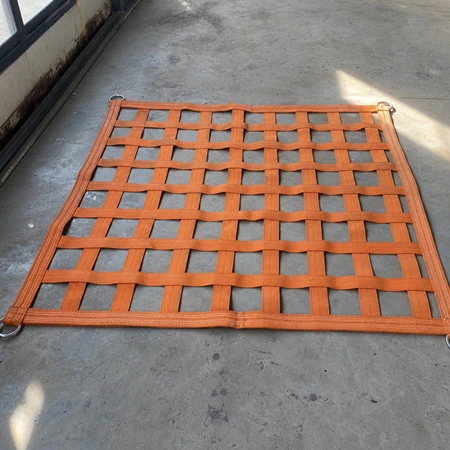
နည်းပညာဆိုင်ရာဘောင်များ
The figures below cover the standard securing range. ခါးပတ်, ကွက်, အသားတင်အရွယ်အစား, edge fittings and tensioners are all made to order, so treat this table as the starting point for a quotation rather than a fixed catalogue.
စားပွဲ 4 – Cargo securing net: နည်းပညာဆိုင်ရာဘောင်များ.
| ကန့်သတ်ချက် | သတ်မှတ်ချက် |
|---|---|
| ထုတ်ကုန်အမျိုးအစား | Cargo securing net (load restraint net) – cover net, partition net, container doorway net or bag form. Not a lifting device |
| Belt material | 100 % ခံနိုင်ရည်မြင့်မားသော polyester (PET); တောင်းဆိုမှုအရ ခံနိုင်ရည်မြင့်မားသော နိုင်လွန် |
| ခါးပတ်အကျယ် | 25 / 35 / 50 / 75 / 100 မီလီမီတာ |
| Belt construction | အလွှာတစ်ခုတည်း သို့မဟုတ် နှစ်ထပ်, ယက် slevedge, အစွန်းမဖြတ်ပါ။ |
| Belt thickness | 1.8 မီလီမီတာ – 4.0 mm အကျယ်နှင့် အလွှာအရေအတွက်ပေါ်မူတည်သည်။ |
| Mesh ဖွင့်လှစ်ခြင်း။ | 100 × 100 mm စံ; 50 မီလီမီတာ – 300 mm မှာပြီး |
| အသားတင်အရွယ်အစား | ခံနိုင်ဝန်ခြေရာကို ပြုလုပ်ခဲ့သည်။, the vehicle bed, or the container or doorway aperture |
| ကြိမ်ဒဏ်ပေးနိုင်စွမ်း (LC) | အကြောင်း 750 daN on a 25 mm belt to about 5,000 daN on a 100 mm duplex belt, marked per net |
| ကြိုတင်တင်းမာမှု (STF) | 250 – 500 daN depending on the tensioner supplied; တံဆိပ်ပေါ်တွင် အမှတ်အသားပြုထားသည်။ |
| စံအခြေခံ | IN 12195-1 for the securing calculation; IN 12195-2 for the webbing lashing |
| နယ်စပ် | ခေါက်ပြီး နှစ်ချက်ချုပ်ပါ။; reinforced at every attachment point |
| အသုံးအဆောင်များ | Ratchet tensioners, ချိတ်, ဃ-ကွင်း, cam buckles and lashing points, အတန်း 80 steel where steel is used |
| အရောင် | Orange for high visibility as standard; အပြာ, အစိမ်းရောင်, black or a custom colour |
| ကုသမှု | UV သည် တည်ငြိမ်သည်။, anti-aging, ပွန်းပဲ့ခြင်းနှင့် မျက်ရည်ဒါဏ်ခံနိုင်ရည်ရှိသည်။, ပုပ်-ဒဏ်ခံ |
| အလုပ်အပူချိန် | -40 °C မှ +100 °C |
| အောင်လက်မှတ် | အီး, GS, ISO 9001, တောင်းဆိုမှုအရ JIS; CNAS ဓာတ်ခွဲခန်း; DNV |
| စိတ်ကြိုက်လုပ်ပါ။ | OEM / ODM အရွယ်အစား, အရောင်, printed belt, တံဆိပ်, လိုဂိုနှင့်ထုပ်ပိုး |
| HS ကုဒ် | 6307.90 – ပိုက်ကွန်နှင့် အထည်အလိပ်ပစ္စည်းများ၏ ကျော့ကွင်း |
စံအရွယ်အစားများ, mesh and lashing capacity
A securing net is sized to the load it covers or the aperture it closes, never to a tonnage. The load has to be fully covered, and the border has to land on the deck or on the anchor points instead of hanging in mid-air, because an unsupported edge is an edge that can be pulled sideways.
စားပွဲ 5 – Standard securing net sizes, with the belt and capacity that normally go with them.
| အသားတင်အရွယ်အစား (L × W) | ကွက် | ခါးပတ် | LC per edge line | ရိုးရိုးသုံးတယ်။ |
|---|---|---|---|---|
| 1.2 × 1.2 ဍ (4 × 4 ပေ) | 100 မီလီမီတာ | 35 – 50 မီလီမီတာ | 1,000 – 2,000 နှင့် | Single pallet in a van or light truck |
| 2.5 × 1.2 ဍ (8 × 4 ပေ) | 100 မီလီမီတာ | 50 မီလီမီတာ | 2,000 နှင့် | Two pallets abreast in a van or curtain-sider |
| 2.5 × 2.5 ဍ | 100 မီလီမီတာ | 50 မီလီမီတာ | 2,000 နှင့် | Flatbed loads, စက်ယန္တရား, mixed cargo |
| 5.0 × 2.5 ဍ | 100 – 150 မီလီမီတာ | 50 – 75 မီလီမီတာ | 2,000 – 3,500 နှင့် | Full-length flatbed and trailer loads |
| 2.4 × 2.6 ဍ (ကွန်တိန်နာ) | 100 မီလီမီတာ | 75 မီလီမီတာ | 3,500 နှင့် | Container doorway net, load held back from the doors |
| 1.5 × 1.5 m bag form | 50 – 100 မီလီမီတာ | 50 မီလီမီတာ | 2,000 နှင့် | Loose or bagged goods that would spread on the deck |
| ပုံဆွဲဖို့လုပ်တယ်။ | 50 – 300 မီလီမီတာ | 25 – 100 မီလီမီတာ | To calculation | ခြေရာတစ်ခုခု, aperture or vehicle bed |
The capacity column is the restraint available per edge line, not a lifting limit. The number of edge lines, their angle and the friction under the load decide what the arrangement actually restrains.
Four forms of securing net
The same lattice is supplied in four arrangements, and choosing the right one is most of the job. The fittings differ between them; the restraint principle does not.
စားပွဲ 6 – ကာဗာ, partition, container and bag forms.
| ပုံစံ | How it is fitted | ဘယ်အချိန်မှာသုံးတယ်။ |
|---|---|---|
| Cover net | Spread over the load and tensioned down to the deck or to the vehicle’s rated points | Flatbed, curtain-sider and container loads that must not move in any direction – the most common arrangement |
| Partition net | Fixed upright across the vehicle body and tensioned against its own frame | Separating two loads in one vehicle, or holding cargo away from a bulkhead |
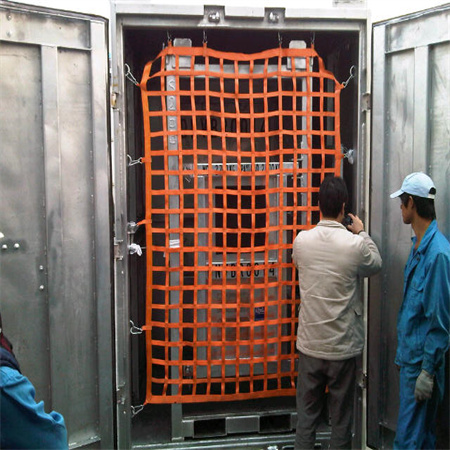
| Container doorway net | Fitted across the door aperture and hooked to the container’s own rings | Stopping cargo migrating to the doors during the journey, so the container is safe to open |
| အိတ်ပုံစံ | Closed at the bottom, with the cargo sitting inside the lattice | Loose or bagged goods that would otherwise spread across the deck |
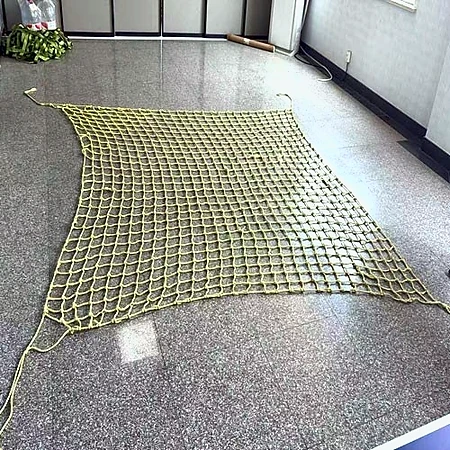
အသုံးအဆောင်များ, tensioners and anti-slip
A securing net is only as good as the tensioner that pre-tensions it and the anchor point it pulls against. These are the parts that get specified last and fail first.
စားပွဲ 7 – Fittings and tensioners.
| လျောက်ပတ်တယ်။ | ဖြင့်အသုံးပြုသည်။ | မှတ်ချက် |
|---|---|---|
| Ratchet တင်းမာမှု | Cover net, bag form | Sets the pre-tension (STF). A ratchet that cannot reach the marked STF makes the net ineffective, whatever its LC |
| Cam buckle | အပေါ့စား | Faster than a ratchet but reaches a much lower pre-tension – for light loads only |
| Hooks and D-rings | Any arrangement | The link between net and anchor point; အတန်း 80 steel where a steel fitting is used |
| Lashing points | Cover net | Rated anchor points in the vehicle structure – the restraint force has to go somewhere rated |
| Anti-slip ဖျာ | Frictional restraint | Raises the friction coefficient under the load; usually the single most effective addition on a smooth deck |
| အကာအကွယ်လက်စွပ် | Sharp-edged loads | Fits over the belt at the contact point; the cheapest way to extend net life |
| ပြုပြင်ရေးကိရိယာ | Fleet maintenance | Matching belt, stitching thread and a spare tensioner |
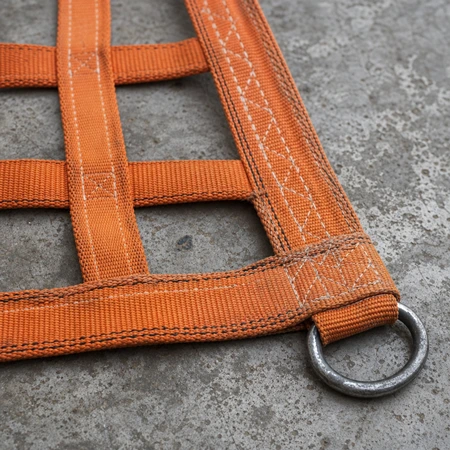
အမှတ်အသားပြုခြင်း။, colour and identification
A securing net is checked by the driver before every trip and by an inspector at the roadside, so the marking has to be readable at a distance and has to survive being dragged over a deck.
- Lashing capacity and standard tension force printed along the belt in daN – the units load securing is actually calculated in.
- Net size and date of manufacture printed as well, so the net can be matched to the vehicle and its age judged on the spot.
- ပုံနှိပ်ခြင်းအပြင် ချုပ်လုပ်နိုင်သည့်စွမ်းရည်တံဆိပ်, ထို့ကြောင့် ပိုက်ကွန်နှင့် ၎င်း၏စာရွက်စာတမ်းများကို အမြဲသဘောတူသည်။.
- Orange as the standard high-visibility colour, with blue, အစိမ်းရောင်, black or a house colour for fleet identification.
- OEM အော်ဒါများသည် သင့်အမှတ်တံဆိပ်ကို သယ်ဆောင်နိုင်သည်။, ခါးပတ်ပေါ်တွင် ရိုက်နှိပ်ထားသော သတိပေးစာသား သို့မဟုတ် လက်မှတ်နံပါတ်.
- ပိုက်ကွန်များကို အိတ် သို့မဟုတ် သေတ္တာထဲသို့ ခေါက်ထည့်သည်။ – a fleet order takes a fraction of the space of the same number of loose straps.
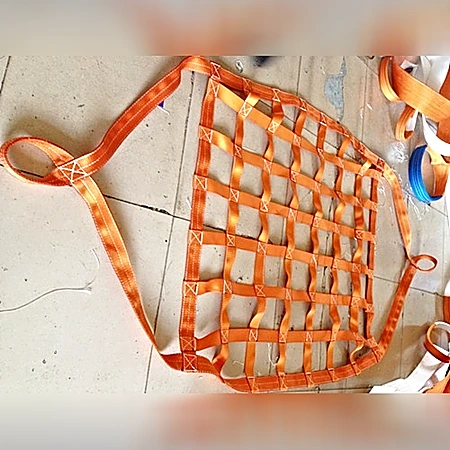
စမ်းသပ်ခြင်း။, ထောက်ခံချက်နှင့် ခြေရာခံနိုင်မှု
- အနှစ်လေးဆယ်ကြာ စက်ကိရိယာများ ထုတ်လုပ်ရောင်းချခဲ့သည်။ – တွင်တည်ထောင်ခဲ့သည်။ 1985 Taizhou တွင်, Jiangsu, ကျော်နှင့်အတူ 200 ဝန်ထမ်းများ.
- Belts woven in our own mill, အကျယ်, layer count and colour are under our control rather than bought in.
- Webbing strength-tested on our own 1000 t horizontal machine before it is cut into nets.
- Belts supplied to the EN 12195-2 material requirements for securing duty, with the securing calculation following EN 12195-1.
- ကိုက်ညီမှုရှိသော CE ကြေငြာချက် GS လက်မှတ်, with JIS on export orders; ISO 9001, CNAS laboratory accreditation and DNV certification behind the plant.
- Every net marked with its lashing capacity, pre-tension, ထုပ်ပိုးခြင်းမပြုမီအရွယ်အစားနှင့်ကွက်, and supplied with a material test report on request.
လက်မှတ်များနှင့် စမ်းသပ်မှုအစီရင်ခံစာများကို တင်ဒါဖိုင် သို့မဟုတ် အကောက်ခွန်စစ်ဆေးမှုအတွက် PDF များအဖြစ် ရနိုင်ပါသည်။ – အပြည့်အစုံကိုကြည့်ပါ။ အောင်လက်မှတ် သတ်မှတ်.
Where cargo securing nets are used
The same net covers a road trailer, a container, a rail wagon and a barge. What changes is the number of anchor points, the mesh and how the net is tensioned – not the product itself.
စားပွဲ 8 – Applications by transport mode.
| Mode or sector | What the net restrains | Why a flat-belt net suits it |
|---|---|---|
| Road – ပြားချပ်ချပ် | စက်ယန္တရား, သံမဏိ, ကျွန်းသစ်, pallets, drums and mixed cargo | Covers the whole load in one action and combines friction with containment |
| Road – curtain-sider | Palletised and boxed goods that shift against a soft curtain | Contains the load where the curtain itself carries no restraint |
| Container transport | Cargo behind the doors, and cargo that must not migrate in transit | A doorway net makes the container safe to open and stops the load moving forward |
| Rail freight | Palletised and loose cargo in wagons and on flat wagons | Long nets cover a wagon bed and can be tensioned at regular intervals |
| Sea and inland waterway | ကုန်းပတ်ကုန်တင်, and cargo inside barges and holds | အပုပ်ခံခြင်း။, UV stabilised and unaffected by salt water |
| Heavy haulage and project cargo | ထရန်စဖော်မာများ, plant and out-of-gauge loads | Combined with direct lashings and blocking for indivisible loads |
| Waste, recycling and agriculture | Bales, refuse, compost and bulk loads on open vehicles | Containment stops loose material leaving the vehicle in transit |
| Military and relief transport | Palletised and loose cargo in trucks and aircraft | One net per load, quick to apply and reusable over many trips |
ဂရုစိုက်ပါ။, စစ်ဆေးခြင်းနှင့် အငြိမ်းစားယူခြင်း။
- Check the net before every trip and record the check: the tensioner first, then the stitching at every attachment point, then the belts.
- Reject any belt with cuts, edge damage, ချုပ်ရိုးကျိုးခြင်း။, ဓာတုဆေးရောင်ခြယ်ခြင်း။, အပူ glazing, or the colour and gloss change that signals UV degradation.
- Check the vehicle’s anchor points as carefully as the net. A perfect net on a corroded lashing point restrains nothing.
- Keep the deck clean and dry, and fit anti-slip mats wherever load-to-deck friction is low. That is a securing measure, not a refinement.
- Never use a securing net to lift, and never use a lifting net as a tensioned tie-down unless its label carries both ratings.
- သန့်ရှင်းပြီး ခြောက်သွေ့အောင် သိမ်းဆည်းပါ။, မြေပြင်နှင့် နေရောင်ခြည် တိုက်ရိုက်မထိတွေ့ပါ။; never repair a webbing belt by knotting, ဂဟေဆော်ခြင်း သို့မဟုတ် အပူပေးခြင်း.
- Withdraw the net if a belt, a stitch line or a tensioner is damaged, and have nets inspected by a competent person at the interval your fleet requires.
မေးလေ့ရှိသောမေးခွန်းများ
Can a cargo securing net be used to lift a load?
မရှိ. It is rated for restraint, မရုတ်သိမ်း, and the two are calculated on completely different bases. If the load has to go onto a hook, use a lifting net with a working load limit and a per-sling proof test – the crane pallet cargo net or the polyester lifting hoisting net, both linked earlier on this page.
What is the difference between LC and STF?
LC (lashing စွမ်းရည်) is the restraint force the belt is rated to carry. STF (စံနှုန်းတင်းမာမှု) is how hard the ratchet tensioner can pre-tension the belt. Both are marked in daN. LC matters most in direct lashing, where the belt itself holds the load; STF matters most in tie-down lashing, where the pre-tension creates the friction that does the holding.
How tight should the net be?
Tight enough to reach the pre-tension marked on the label, with the belts running as steeply to the deck as the load allows – 75 ရန် 90 degrees is where a tie-down belt works best. A belt laid almost flat keeps only about half its capacity, so a net that looks neatly covered can be holding very little.
Do I need anti-slip mats?
If the restraint relies on friction – which is what a cover net does – then usually yes. On steel, aluminium or plastic surfaces the friction coefficient is low, and a mat often adds more restraint than an extra strap does. A clean, dry deck is the other half of the same measure.
How many lashings or anchor points do I need?
It follows from the load, the deck friction, the vehicle and the journey rather than from a rule of thumb. Direct lashing normally needs at least four anchor lines, two per side and crossed, with the vertical and plan-view angles between 30 နှင့် 60 ဒီဂရီ. Send us the load and vehicle details and we will work the arrangement through with you.
Will a net stop cargo moving inside a container?
A doorway or partition net stops the load migrating towards the doors and makes the container safe to open. For the journey itself the load still has to be restrained as a whole, so a container is usually secured with a partition net plus blocking or dunnage rather than with a net alone.
What mesh opening should I choose?
Fine enough that the smallest item in the load cannot pass through. 100 mm is our standard and holds pallets, ပုံးများ, bags and drums; loose or small items need a tighter mesh, and large indivisible loads can take a wider one.
What else do you make for load handling?
The same belts go into our ကြိုးသိုင်းကြိုးများ နှင့် အဆုံးမရှိသော လောက်လွှဲများ, the wire rope range is under ကြိုးကြိုးများ, the rope itself under နိုင်လွန်ကြိုးများ, and RoRo and breakbulk work is covered by the ယာဉ် lifting net. The lifting side of the net range starts at ကုန်တင်ပိုက်ကွန်.
ကိုးကားတောင်းဆိုပါ။
Send the transport mode, the load weight and dimensions, whether it can spread or topple, the deck material, the net or aperture size, the belt width and the anchor points you have – or a drawing of the load and the vehicle. Our engineers will confirm the net, the fittings, the number of lashing lines and the packing, ဖြေကြားချက်တစ်ခုတွင် ၎င်းကိုကိုးကားပါ။. အဲဒါကို အရင်ပြောပါ။, ကျွန်ုပ်တို့၏ အင်ဂျင်နီယာများကို ဆက်သွယ်ပါ။.
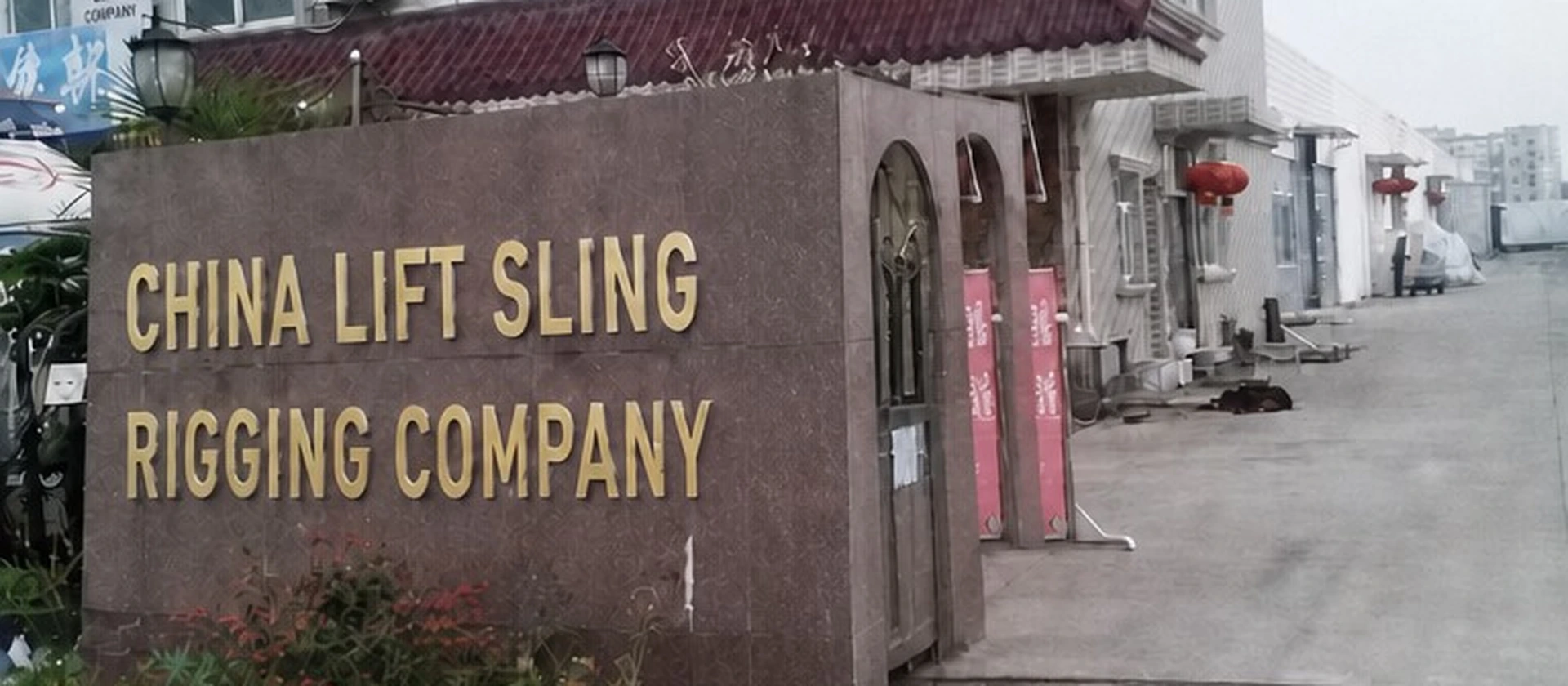
Lift Sling Rigging ကုမ္ပဏီ – Lifute စက်မှုပန်းခြံ, Taizhou မြို့, Jiangsu ပြည်နယ်, တရုတ်
Tel: +86 523 8693 5818 | WhatsApp: +86 180 6600 2268 | အီးမေး: lift98@jslift.com