

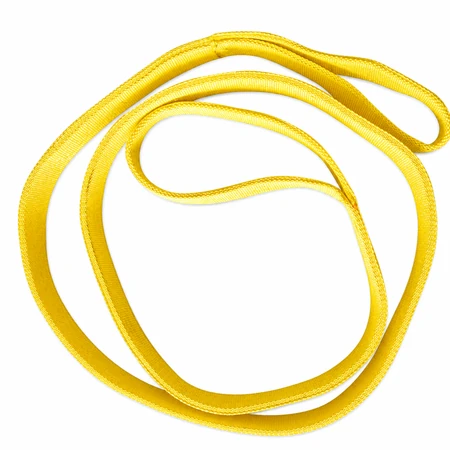
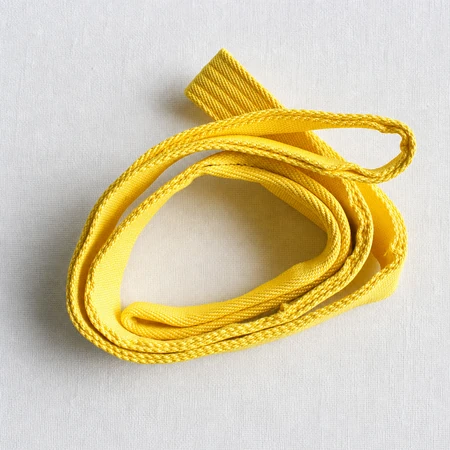
Lift sling rigging company produce High Temperature Webbing Sling,Прашка за кревање со висока температура,Прашка отпорна на топлина,High Temperature Resistant Lifting Sling.
High Temperature Webbing Sling
Aramid Flat Webbing Slings & Heat Resistant Protective Sleeves — For Loads Hotter Than Standard Webbing Can Take
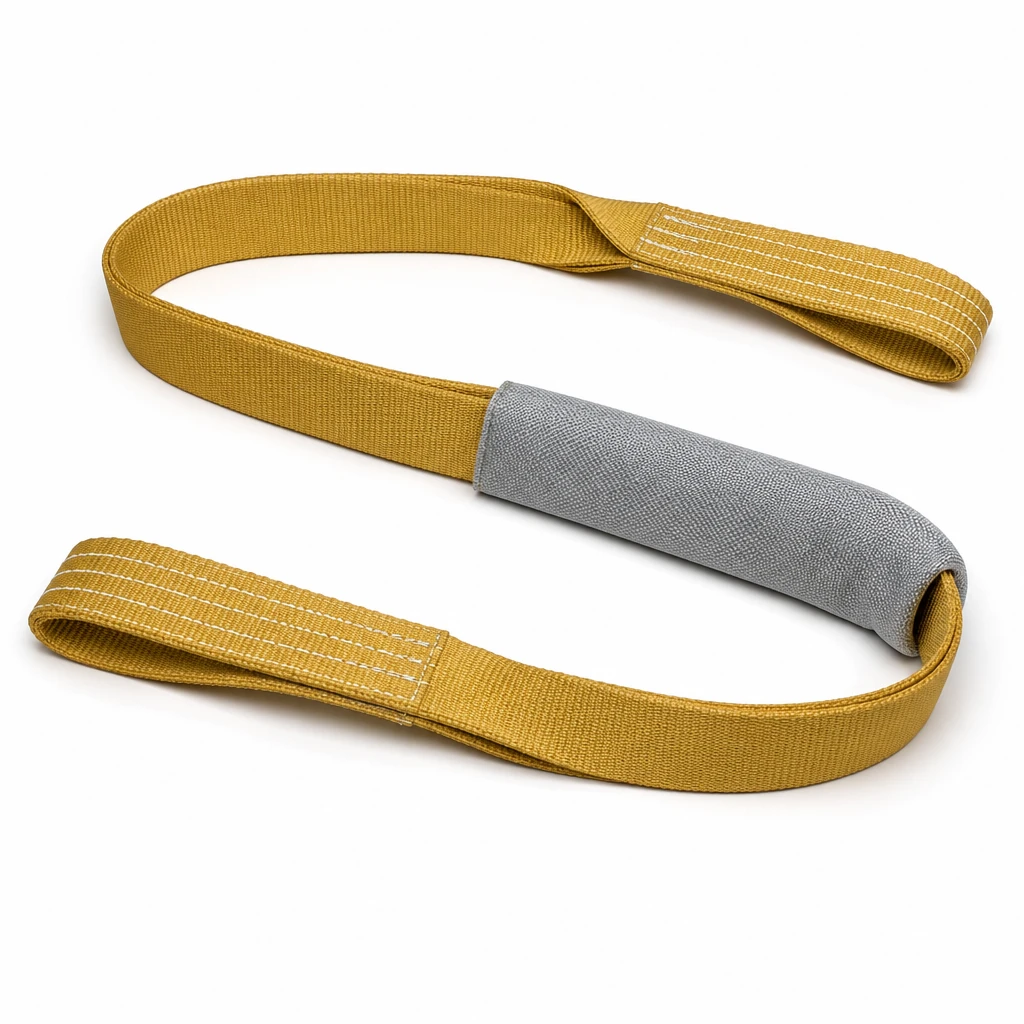
А решетка со висока температура exists because ordinary webbing does not tolerate heat. Полиестер, најлонските и полипропиленските ремени се отфрлени горе 90 °C — the fibre softens, glazes and loses strength, and the damage may not be visible from the outside. Our high-temperature range is built on арамид (Класа на кевлар) влакна, which has no melting point at all: it chars and decomposes around 500 °C instead of turning to liquid, so it survives a hot environment that would destroy a polyester sling outright. Where the contact is even hotter, a woven heat resistant protective sleeve takes the radiant and contact heat and the webbing stays cooler behind it.
- Aramid webbing - нема точка на топење, знаци во близина 500 °C instead of melting
- Heat resistant sleeves — a sacrificial layer where the sling nears the hot surface
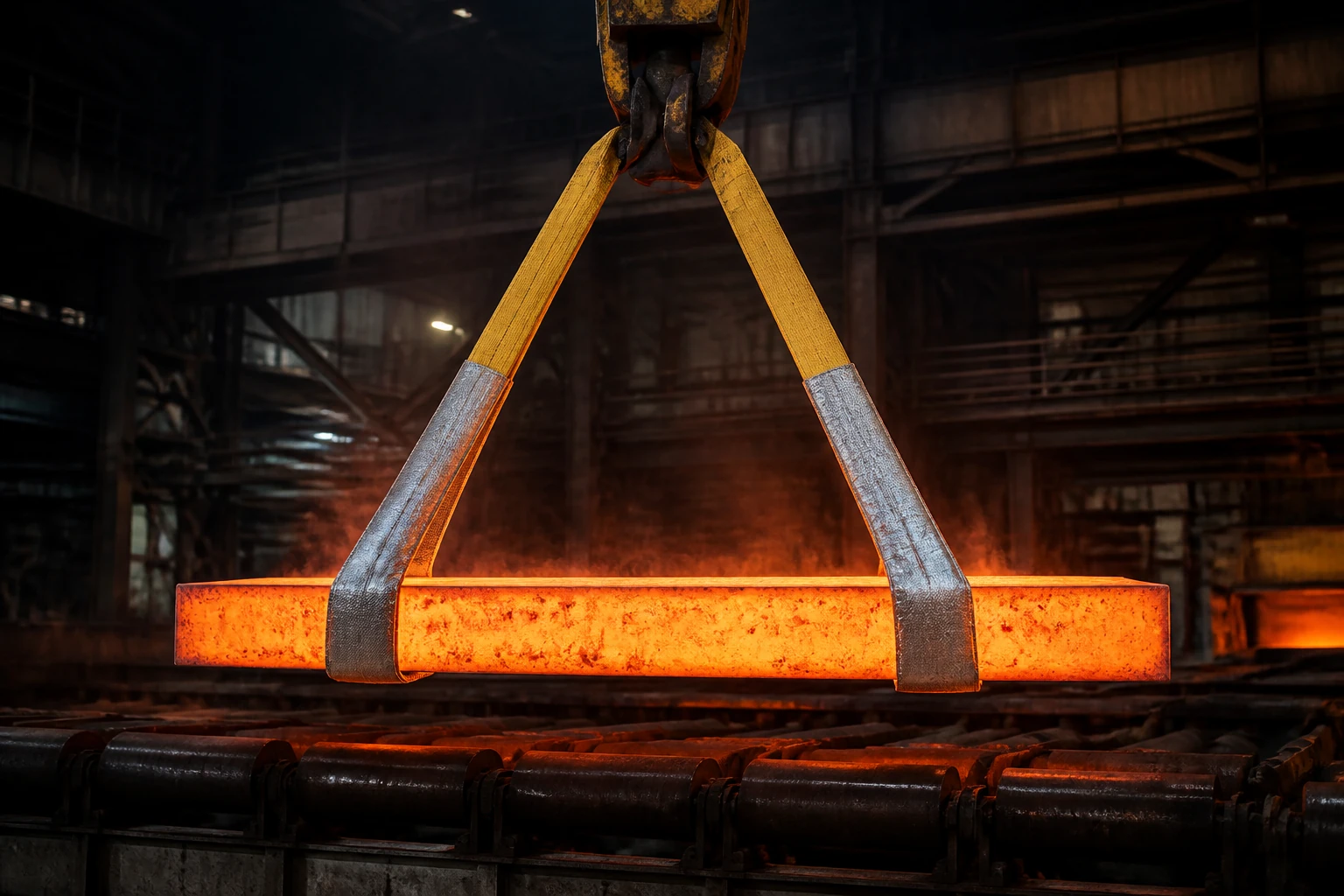
- Trusted in hot work — steel mills, леарници, кастинг, glass and welding shops
- Still soft on the load — a flat band that will not mark a machined or polished surface
Клучни карактеристики
Арамид, Not Polyester
Aramid fibre has no melting point. Heated far enough it chars and breaks down — but it does not liquefy the way polyester or nylon does, which is what makes it usable in hot work.
Sleeves Take the Heat
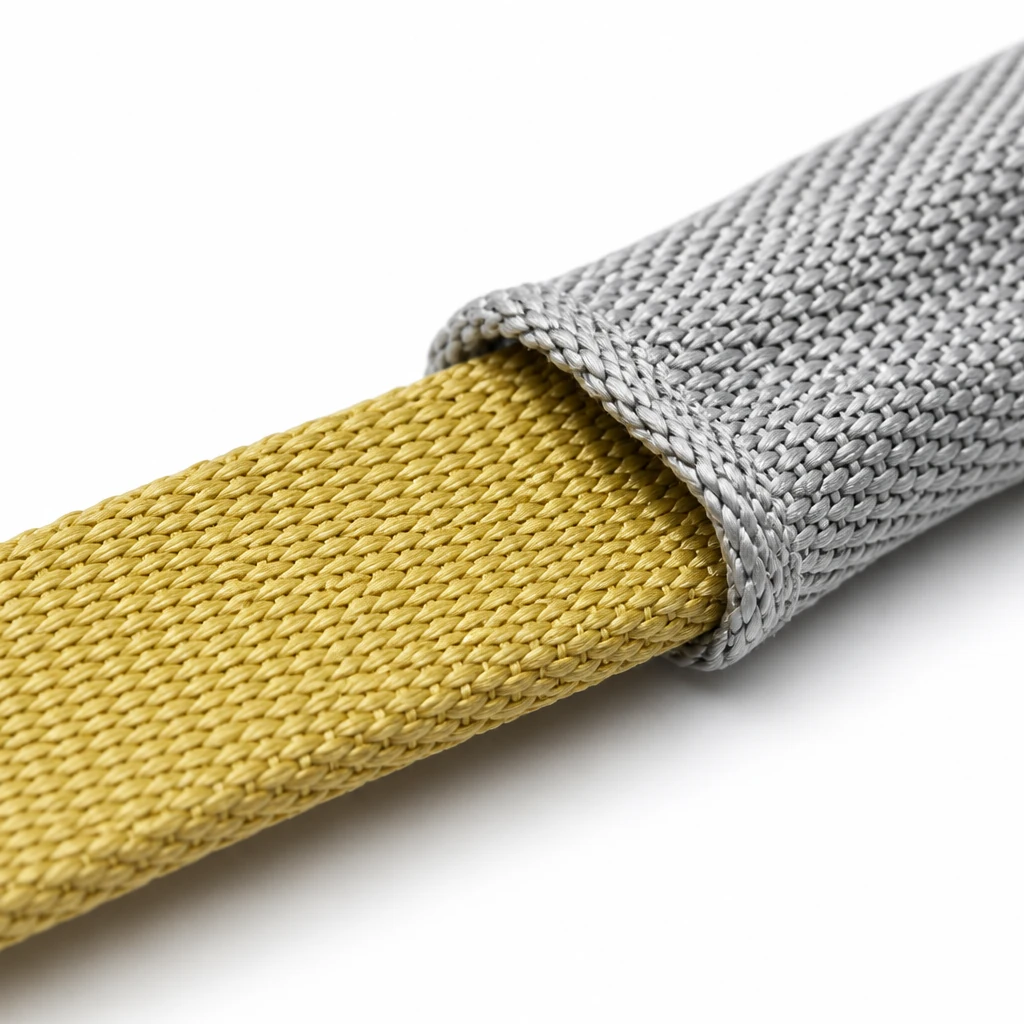
A woven heat resistant sleeve is a sacrificial layer over the load-bearing band. It is cheaper and quicker to replace than a sling, and it is where the heat should arrive.
Inherently Non-Melting
Because the fibre chars rather than melts, the failure mode in an overheat is a scorched patch you can see and feel — not a hidden softening of yarn throughout the band.
Flat Band, Soft on the Load
A flat webbing band spreads the bearing pressure and conforms to the surface, so hot workpieces are lifted without the bruising and marking that chain or wire rope causes.
Rotate to Spread the Burn
The same section of sling tends to meet the same hot corner. Rotating the sling or sliding the sleeve moves the wear and keeps one spot from taking all of it.
Free of Hard Metal
Без куки, напрстоци или окови во самата прашка. A conductive path or a spark struck off metal rigging is one less hazard beside a hot workpiece.
Why Standard Webbing Stops at 90 °C
Polyester and nylon are thermoplastics: heat them and they progressively soften, then melt. The melting point — around 255 °C for polyester and roughly 215–265 °C for nylon — is not the number that matters. What matters is what happens well below it. By about 90 °C the yarn has already begun to lose the molecular structure that gives it strength, and because the sling is still intact to look at, the loss is easy to miss.
That is why the industry rule is a working limit of roughly 90 °C for polyester and nylon webbing slings, rather than the fibres’ melting points. A hot workpiece sitting next to a webbing sling is not a small margin — it is the sling’s whole service envelope.
Aramid behaves differently. Нема точка на топење, so there is no softening phase and no liquid failure. It keeps its structure until it begins to char and decompose at around 500 °C. That single difference is what qualifies it for hot work — and it is also why an aramid sling damaged by heat shows as a scorched, brittle or discoloured patch rather than a melted one.
Temperature Ladder: Fibre by Fibre
Choosing a sling for a hot job starts with knowing what the fibre can take. The table below sets out the common options, in the order you should consider them.
| Влакна | Точка на топење | Типична работна лента | Behaviour when overheated |
|---|---|---|---|
| Полипропилен | Прибл. 165 °C | До ~90 °C | Melts — no useful residual structure |
| Полиамид (најлон) | Прибл. 215-265 °C | До ~90 °C | Омекнува, glazes, then melts |
| Полиестер | Прибл. 255 °C | Up to ~90–100 °C | Омекнува, glazes, then melts |
| Арамид (Класа на кевлар) | Никој - наместо тоа, знаци | ~200 °C continuous | Chars and decomposes near 500 °C; no liquid phase |
| Стаклени влакна | Softens approx. 840 °C | Up to ~600 °C | Softens and loses strength |
| Basalt fibre | Softens above 1 000 °C | ~600–700 °C | Омекнува; very high temperature work |
Which construction for which temperature band
| Load or ambient temperature | Изградба да се определи | Зошто |
|---|---|---|
| До 90 °C | Standard polyester or nylon webbing sling | Обичната прашка. No derating and no need to pay for aramid. |
| 90-150 °C | Standard webbing sling with a heat resistant sleeve | The sleeve takes the contact heat; the webbing behind it stays within its band. |
| 150-200 °C | Арамидна решетка на прашка | Aramid’s own working band. Size the band so the sling is not also the weak point. |
| 200–400 °C | Aramid webbing sling with an aramid sleeve, кратка изложеност | Workable, but exposure time and geometry decide the outcome. Describe the job to us. |
| Погоре 400 °C | Glass fibre or a specialist high-temperature construction | A different product from this one. Ask us — we make heat resistant rope down to this band too. |
Технички спецификации
| Име на производ | Високотемпературна решетка / heat resistant webbing sling / прашка со арамидна решетка / Прашка со млаз од кевлар |
|---|---|
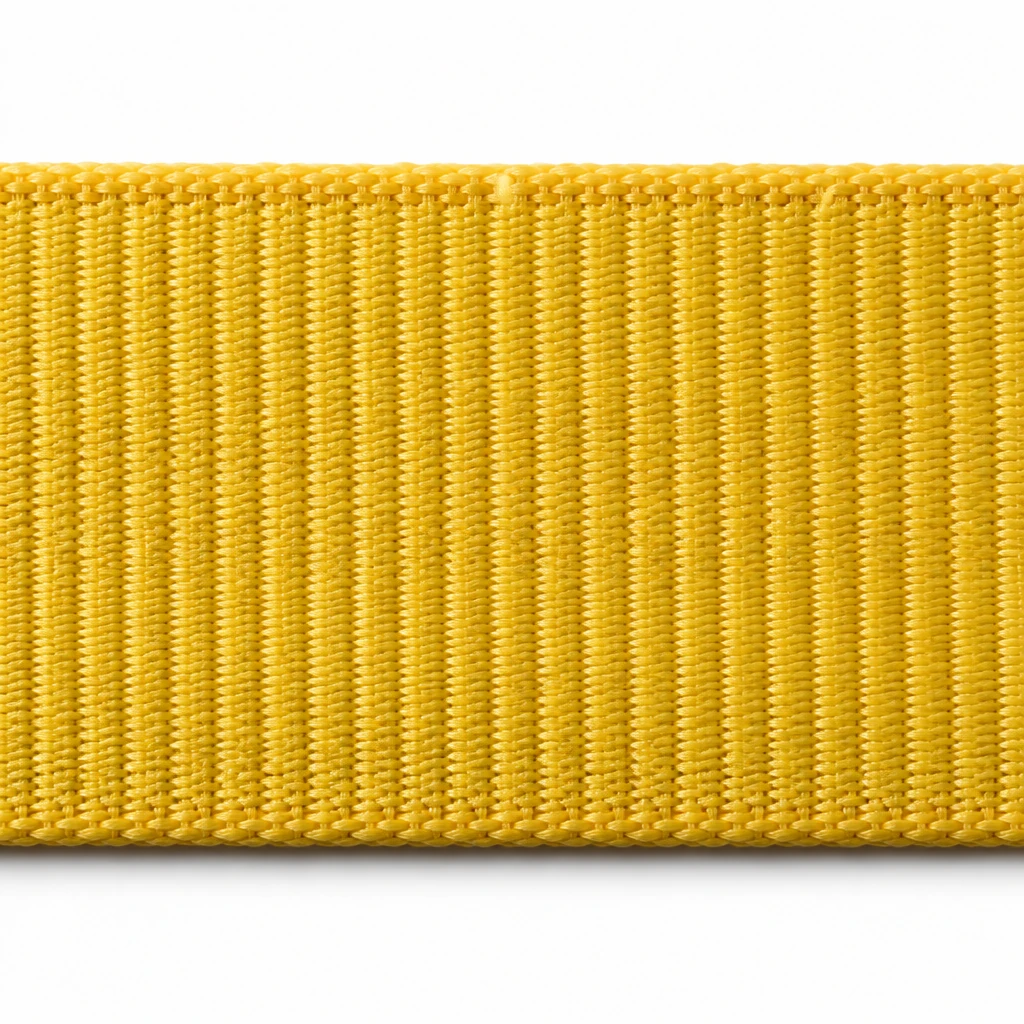
| Носечки материјал | Арамид (Класа на кевлар / Арамид 1414) влакна со висок модул, вткаена во рамна млазница; polyester version with sleeve available where the heat is modest |
| Градежништво | Рамни ткаени ремени во око и очи или бескрајна форма; еднослоен или повеќеслоен |
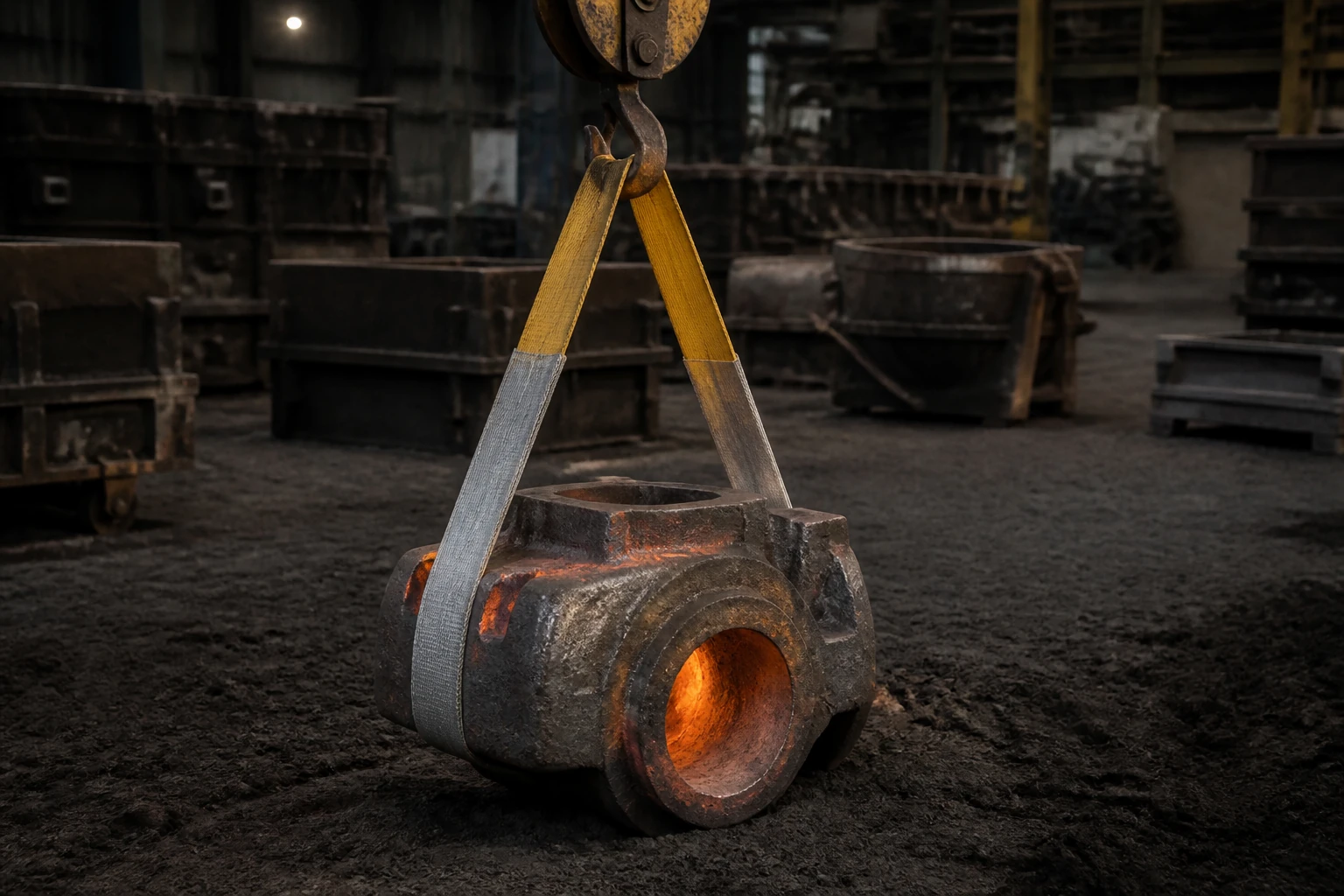
| Protective sleeve | Woven heat resistant sleeve, арамид, glass or coated sleeve depending on the band; sliding or fully sewn, fitted where the sling meets the load |
| Ширина на лента | 25 mm до 300 mm стандардно, усогласени со границата на работното оптоварување и конструкцијата на слојот |
| Ограничување на работен товар | 1 т да 100 т, во стандардните чекори 1 · 2 · 3 · 4 · 5 · 6 · 8 · 10 · 12 · 15 · 20 · 25 · 30 · 40 · 50 · 100 t — the aramid band carries the same ratings as polyester at the same width, at a lower weight |
| Безбедносен фактор | ВО 1492-1 пракса е 7:1 за општа намена рамни ткаени решетки; other factors produced to order |
| Ефективна работна должина | 0.5 m до 20 m стандардно; подолго за нарачка |
| Способност за температура | Aramid band with no melting point, charring near 500 °C; the usable working band depends on exposure time and on the sleeve — tell us the job and we will state the figure for your construction |
| Издолжување | Low stretch — aramid elongates far less than nylon under the same load |
| Обележување | Сошиена етикета со ограничување на работното оптоварување, должина и серија; sleeve identification marking available |
| Пакување | Намотка во поли торба или торба за носење, означен картон, прилагодено пакување за извоз |
| MOQ & OEM | Низок MOQ за пробни нарачки; полн OEM — капацитет, ширина, обвивка, sleeve length and position, боја, означување и пакување |
Ракување, Инспекција и ограничувања
An aramid sling is more tolerant of heat than a polyester one, but it is not immune, and the way it fails is deceptive. A scorched patch may look superficial while the yarn beneath has already lost its strength.
- Проверете после секое жешко подигање, не само на почетокот на смената — look for discolouration, scorching, a brittle or stiff feel, a hard or glazed patch, and any change in colour at the sleeve or the band.
- Feel it as well as look at it — a band that has stiffened, or that crackles when flexed, has been overheated even if the colour looks acceptable.
- Retire on any sign of charring — a charred or brittle section is a permanent loss of strength and cannot be assessed by eye. Take it out of service.
- Inspect the sleeve separately — the sleeve is designed to be damaged and it is expected to be replaced. When it is burnt through, worn through or stiffened, change it before the next lift.
- Do not use aramid where it will be cut or abraded on edges — aramid resists heat, but it is more sensitive to cutting and to flex-fatigue than polyester. Заштитете го од остри рабови.
- Keep it away from other chemicals and UV — aramid is affected by strong acids and degrades under prolonged sunlight. Чувајте го чисто, dry and out of the sun.
- Снимете го — log the number of hot lifts and the highest temperature seen. It is the most reliable retirement guide for this class of sling.
Апликации
- Hot steel slabs, billets and blooms still radiating heat from the furnace
- Foundry and die casting work — castings, dies and moulds handled while still hot
- Rolling mills and forge shops where the ambient temperature alone rules out standard webbing
- Glass industry handling and any operation near a furnace or a kiln
- Заварување, cutting and fabrication bays where spatter and hot offcuts are routine
- Stage and entertainment rigging above hot luminaires and pyrotechnic equipment
- Any lift where a polyester sling has been refused because of the environment, не товарот
Приспособување и OEM услуга
A high-temperature sling is specified around the job rather than picked from a shelf, бидејќи температурата, времето на експозиција и обликот на жешката површина се дел од одговорот. Tell us what the sling will touch and for how long, и ќе ја димензионираме лентата, the plies and the sleeve to suit.
- Капацитет - 1 т да 100 т, вклучувајќи ги и средните чекори помеѓу стандардните големини
- Влакна — aramid webbing as standard; polyester with a sleeve where the heat is modest and the budget matters
- Завршува - око-и-око или бескрајно, обични или засилени очи
- Sleeves — sliding or fully sewn, арамид, стакло или обложено, позициониран да го покрие точно делот што одговара на жешкото оптоварување
- Должина и означување — ефективна работна должина по нарачка; распоред на вашата етикета, јазик и конвенција за обележување
- Поврзани ставки — matching heat resistant round slings, stage slings and aramid rope for the same hot job
Контрола на квалитет
Секоја лента се проверува за ширина, дебелина, густината и бојата на ткаење пред да се затворат очите, the sleeve fit is checked against the section it has to protect, и секоја завршена прашка се проверува на нејзиниот шев, означување на неговото ограничување на работното оптоварување, неговата вкупна должина и неговата етикета пред пакувањето. Имаме произведено краци, ткаенини и јаже производи за индустриски, безбедност и извозни клиенти речиси три децении, и го одржуваме процесот видлив: на барање го доставуваме сертификатот за влакна, фигурите за сериски тестови и прашка за примероци што треба да ги ракувате и тестирате пред да започне обемното производство.
Најчесто поставувани прашања
Why can’t I just use a polyester webbing sling on a hot load?
Because polyester begins to lose strength long before it melts. Polyester and nylon webbing slings are restricted to roughly 90 °C — well under the fibre’s melting point of around 255 °C. By the time a polyester sling looks damaged it has usually already lost a substantial part of its strength, which makes the failure hard to catch by inspection.
What makes aramid suitable for high temperature lifting?
Aramid has no melting point. Instead of softening and liquefying, it keeps its structure until it begins to char and decompose at around 500 °C. There is no liquid failure phase and no hidden softening of the yarn across the whole band — heat damage shows as a scorched, brittle or discoloured patch where the heat actually arrived.
Do I need a heat resistant sleeve as well?
Usually, да, wherever the sling comes near the hot surface. The sleeve is a sacrificial layer: it takes the contact and radiant heat, it is far cheaper and quicker to replace than a sling, and it protects the band from abrasion on the hot workpiece at the same time. Where the whole environment is hot rather than one contact point, the aramid band does the work and the sleeve may not be needed at all.
Will an aramid sling hold a higher working load than a polyester sling?
Not at the same band width — the standard capacities are published on the same width ladder, and what you gain with aramid is heat tolerance and a lighter band, not a larger number. Sizing still follows the working load limit and the safety factor, exactly as for any other webbing sling.
Дали е стандардно сертифицирана прашка со висока температура?
The general-purpose flat webbing sling standards cover polyester, polyamide and polypropylene slings, со опсег што се наоѓа приближно на -40 °C до +90 појас на °C. A high-temperature aramid sling falls outside that scope, so its temperature rating is a manufacturer’s specification rather than a figure quoted from the standard. Ask us to state the rating for the exact construction you are buying.
How do I know when to retire a high temperature sling?
Retire it on any sign of charring, on a brittle or stiffened section, on a glazed or hardened patch, or where the sleeve has burnt through to the band. Heat damage in aramid is not always obvious from the colour alone, so feel the band as well as looking at it. Keep a log of the hot lifts and the temperatures seen — for this class of sling, that log is the most reliable retirement guide there is.
Request a Quote for High Temperature Webbing Slings
Испратете ни го ограничувањето на работното оптоварување, the temperature the sling will actually see, дали е зрачна или контактна топлина, колку долго трае секоја изложеност, и обликот на жешката површина. Ќе се вратиме со влакната, бенд, sleeve and rating for your job, плус примерок за тестирање.