

Лифт строп такелаж компаний ыштен луктеш Грузым пеҥгыдемдыме тор,Нагрузкым пеҥгыдемдыме тор,Изи тор грузым пеҥгыдемдыме тор,Контейнер пеҥгыдемдыме тор,Груз лӱдыкшыдымӧ шнур тор.
Грузым пеҥгыдемдыме тор
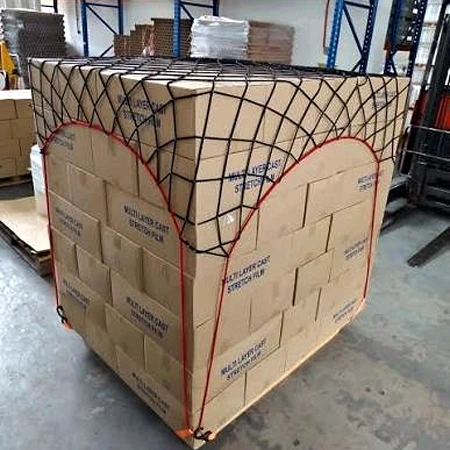
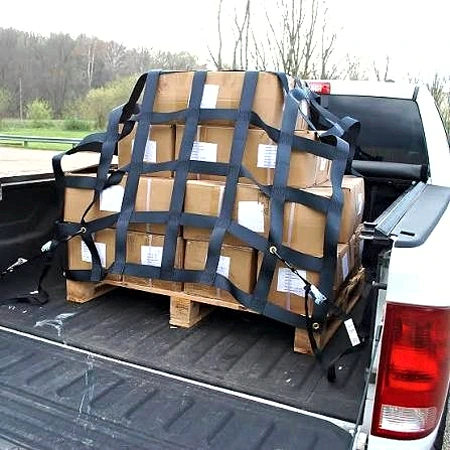
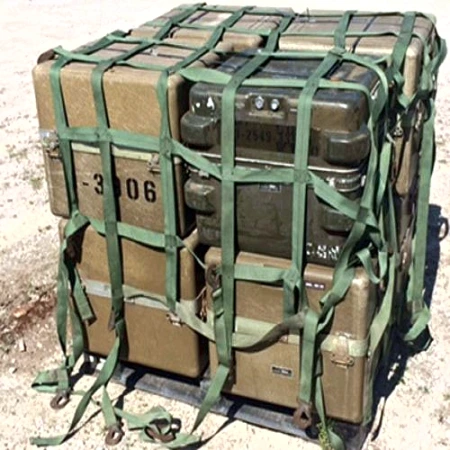
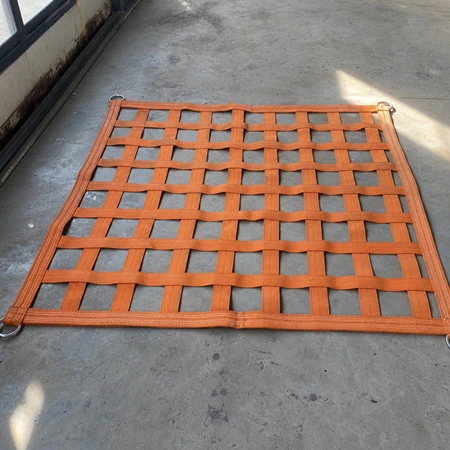
A cargo securing net is a flat-belt restraint net laid over a load and tensioned down to the deck, so that the cargo cannot slide, rock or topple on the way. The belts are woven from high-tenacity polyester into an open lattice, the border is folded and double-stitched, and the edge carries rated attachment points that are pulled down with ratchet tensioners until the load is pressed onto the vehicle or container floor.
The distinction that matters on this product is duty, not appearance. A cargo securing net restrains; it does not lift. Its label carries a lashing capacity (LC) and a standard tension force (STF) даН-ыште, the arrangement is calculated to EN 12195-1 and the belts are type-tested to EN 12195-2 – not to a lifting working load limit. We weave the belts in our own mill in Taizhou, so net size, тор, belt width, fittings and markings are set to your load, your vehicle and your anchor points.
- Restraint rating, нӧлталме рейтинг огыл – LC and STF marked in daN, calculated to EN 12195-1, belts type-tested to EN 12195-2.
- Flat high-tenacity polyester belts – 25 мм марте 100 мм, single or duplex, UV stabilised and rot-proof.
- Sized to the load or the aperture – cover nets, container doorway nets, partition nets and bag form, чыла заказ почеш ыштыме.
- Rated fittings and tensioners – ratchets, крючок-влак, D-rings and lashing points, with anti-slip mats where the deck friction is low.
- CE да GS сертификатым налын – ургымо, пидме, marked and tested in one plant, ISO дене 9001, CNAS and DNV behind it.
Restraint is not lifting – and the label says which one you have
The two products look alike, are made from the same belt and are often bought by the same fleet. They are not interchangeable, and the difference is not a formality: one is sized so a load cannot move, the other is sized so a load cannot fall. Using a restraint net on a crane hook, or a lifting net as a tensioned tie-down, is a safety failure rather than a paperwork problem.
Стол 1 – Why a securing rating and a lifting rating are not interchangeable.
| Таҥастарымаш точко | Грузым пеҥгыдемдыме тор (тиде лаштык) | Нӧлтышӧ тор |
|---|---|---|
| Тудо мом ышта | Автомобильыште кодшо нагрузкым куча | Воздухышто нагрузкын тичмаш нелытшым нумалеш |
| Вуйлатыше | ИЧИНДЕ 12195-1 (пеҥгыдемдыме вий-влакым шотлымаш) да EN 12195-2 (ӱштымӧ ӱзгар-влак) | Нӧлтымаш стандарт-влак, with webbing rated on the EN 1492-1 негыз |
| 2019 ийыште аклыме | Шӱшпык куатым (LC) да стандарт напряжений вий (STF), даН-ыште | Паша нагрузко чек (WLL), тонн дене |
| How it is sized | Sized to resist the acceleration and friction case for the journey | Кугытшо дене 5:1, 6:1 але 7:1 фактор да доказательстве-тергымаш кажне строп |
| How it is tested | Belt and tensioner type-tested to EN 12195-2 | Every sling break-tested on our own 1000 т машина |
| Кузе тудо локтылалтеш | The load moves – a road accident | The sling breaks – a dropped load |
If the requirement is to lift – a pallet onto a roof, a bag into a hold – the right product is a lifting net: Лийшаш кран поддон грузым тор, Лийшаш полиэфир нӧлталтше нӧлталтше тор але неле нейлон грузым тор строп. If the requirement is to keep a load still from the loading bay to the delivery point, this page is the right one.
The forces the net has to answer for
A load on a moving vehicle is pushed in three directions, and each one is a design case rather than an accident. The accelerations below are the ones EN 12195-1 uses for road transport; other modes and national rules differ, which is why we ask where the load is travelling before we size the net.
Стол 2 – Design accelerations for road transport and what resists each one.
| Direction | Design acceleration | What resists it |
|---|---|---|
| Forward (braking) | 0.8 g | Blocking or a headboard first, then direct lashings to the front; friction contributes |
| Rearward (acceleration) | 0.5 g | Rear lashings and a tailboard; the net’s rear edge lines |
| Sideways (cornering) | 0.5 g | Side lashings, containment by the lattice, and friction from the pre-tension |
| Вертикальысе | Not a road design case | Held down by pre-tension and containment; a net reduces bounce but is not a substitute for blocking |
The practical consequence is that a net alone rarely carries the whole case. Blocking against a headboard does more for the braking case than any strap, and a net laid over the top does the rest. A good securing arrangement is a combination, and we will say so when a net is the wrong answer for your load.
Кузе лапка тасма тор нелытым куча
Ӱшандарыше тор иканаште кум механизм гоч пашам ышта. Which one dominates depends on how the net is fitted, and that is decided at the vehicle rather than at the factory.
Стол 3 – The three mechanisms a securing net uses.
| Mechanism | Кузе тудо пашам ышта | What it depends on |
|---|---|---|
| Трение (tie-down) | The tensioned net presses the load onto the deck, and friction between load and deck resists sliding. This is the main effect of a cover net | A clean, dry deck or anti-slip mats. Without friction the same net restrains far less |
| Containment | The lattice physically stops the load spreading, rocking, or throwing individual items out | A mesh fine enough for the smallest item, and a net fitted tight rather than draped |
| Direct lashing | Where the edge belts run down to rated points on the vehicle, тасма шкеже кучен шогышо вийым нумалеш | Certified anchor points on the vehicle – never a random protrusion or a load’s own packaging |
Two numbers decide whether the arrangement works, and both are usually ignored. The first is the angle: a tie-down belt is most effective between 75 жана 90 градус марте палубыш, and its effective capacity follows LC_eff = LC × sin α. Саат 30 degrees you keep roughly half the belt’s rating, so a net pulled down almost flat looks tidy and holds very little. The second is friction: the coefficient between a steel load and a steel deck is about 0.1 чейин 0.2, steel on timber about 0.2 чейин 0.3, timber on timber about 0.3 чейин 0.4, and a good anti-slip mat takes a pallet on a deck to about 0.5 чейин 0.6. Ночко, oily or icy surfaces take all of these figures down, which is why the same net restrains very different loads on two different days.
Технический параметр-влак
Тӱҥалтыш рис-влак стандарт пеҥгыдемдыме диапазоным авалтат. Кӱзанӱшто, тор, тор кугыт, ӧрдыж ӱзгар-влак да натяжитель-влак чыланат заказ почеш ыштыме улыт, сандене тиде таблицым пеҥгыде каталог огыл, а цитате тӱҥалтыш семын ончалза.
Стол 4 – Грузым пеҥгыдемдыме тор: технический параметр-влак.
| Параметр | Спецификация |
|---|---|
| Продуктын типше | Грузым пеҥгыдемдыме тор (нагрузкым кучен шогышо тор) – cover net, partition net, container doorway net or bag form. Нӧлтышӧ ӱзгар огыл |
| Belt material | 100 % кӱкшӧ пеҥгыдылыкан полиэфир (ПИТЕР); кӱкшӧ пеҥгыдылыкше нейлон йодмаш дене |
| Пояс кумдык | 25 / 35 / 50 / 75 / 100 мм |
| Belt construction | Ик пачаш але дуплекс, woven selvedge, not a cut edge |
| Belt thickness | 1.8 мм – 4.0 мм кумдык да лончын чотшо деч шога |
| Сетка почмаш | 100 × 100 мм стандарт; 50 мм – 300 мм заказ почеш ыштыме |
| Таза кугыт | Нагрузко йымалне ыштыме, автомобиль кровать, але контейнер але омса омса |
| Шӱшпык куатым (LC) | Жөнүндө 750 daN on a 25 mm belt to about 5,000 daN on a 100 mm duplex belt, marked per net |
| Ончылгоч напряжений (STF) | 250 – 500 daN depending on the tensioner supplied; этикеткыште палемдыме |
| Стандарт негыз | ИЧИНДЕ 12195-1 for the securing calculation; ИЧИНДЕ 12195-2 for the webbing lashing |
| Чекым | Folded and double-stitched; кажне ушымо верыште пеҥгыдемдыме |
| Арматура | Трещотка натяжитель-влак, крючок-влак, D-йыҥгыр-влак, cam buckles and lashing points, класс 80 steel where steel is used |
| Пеледыш | Orange for high visibility as standard; көк, Ужар, black or a custom colour |
| Дарылоо | УФ-стабилизировать, анти-старение, истирание да рӱдаҥмаш чытыше, rot-proof |
| Паша температур | -40 °C гыч +100 °C |
| Сертификат | CE, GS, ISO 9001, JIS on request; CNAS лабораторий; DNV |
| Келыштарыме | OEM / ODM кугыт, Пеледыш, printed belt, этикетке, logo and packing |
| HS код | 6307.90 – nets and netting of textile materials |
Стандарт кугыт, mesh and lashing capacity
A securing net is sized to the load it covers or the aperture it closes, never to a tonnage. The load has to be fully covered, and the border has to land on the deck or on the anchor points instead of hanging in mid-air, because an unsupported edge is an edge that can be pulled sideways.
Стол 5 – Standard securing net sizes, with the belt and capacity that normally go with them.
| Таза кугыт (L × W) | Меш | Кӱзанӱшто | LC per edge line | Тыглай кучылтмаш |
|---|---|---|---|---|
| 1.2 × 1.2 м (4 × 4 фут) | 100 мм | 35 – 50 мм | 1,000 – 2,000 Жана | Single pallet in a van or light truck |
| 2.5 × 1.2 м (8 × 4 фут) | 100 мм | 50 мм | 2,000 Жана | Two pallets abreast in a van or curtain-sider |
| 2.5 × 2.5 м | 100 мм | 50 мм | 2,000 Жана | Планшетный нагрузко-влак, машина-влак, mixed cargo |
| 5.0 × 2.5 м | 100 – 150 мм | 50 – 75 мм | 2,000 – 3,500 Жана | Пӱтынь кужытан планшет да прицеп нагрузко |
| 2.4 × 2.6 м (контейнер) | 100 мм | 75 мм | 3,500 Жана | Container doorway net, load held back from the doors |
| 1.5 × 1.5 m bag form | 50 – 100 мм | 50 мм | 2,000 Жана | Loose or bagged goods that would spread on the deck |
| Сӱретлан ыштыме | 50 – 300 мм | 25 – 100 мм | To calculation | Кеч-могай йолгорно, aperture or vehicle bed |
The capacity column is the restraint available per edge line, not a lifting limit. The number of edge lines, their angle and the friction under the load decide what the arrangement actually restrains.
Four forms of securing net
The same lattice is supplied in four arrangements, and choosing the right one is most of the job. Арматура нунын коклаште ойыртемалтеш; тыгыдемдыме принцип ок.
Стол 6 – Комак, partition, container and bag forms.
| Формо | How it is fitted | Кучылтмо годым |
|---|---|---|
| Cover net | Spread over the load and tensioned down to the deck or to the vehicle’s rated points | Плоскостной, curtain-sider and container loads that must not move in any direction – the most common arrangement |
| Partition net | Fixed upright across the vehicle body and tensioned against its own frame | Separating two loads in one vehicle, or holding cargo away from a bulkhead |
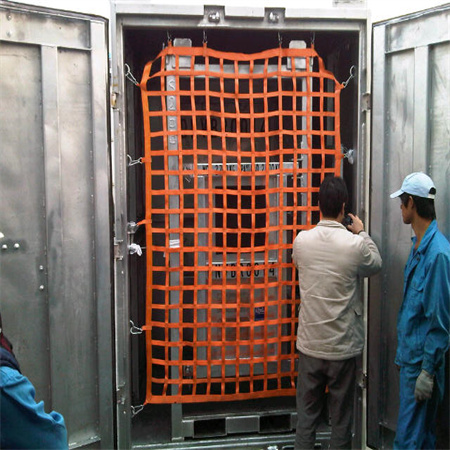
| Container doorway net | Fitted across the door aperture and hooked to the container’s own rings | Stopping cargo migrating to the doors during the journey, so the container is safe to open |
| Мешак формо | Closed at the bottom, with the cargo sitting inside the lattice | Loose or bagged goods that would otherwise spread across the deck |
Арматура, tensioners and anti-slip
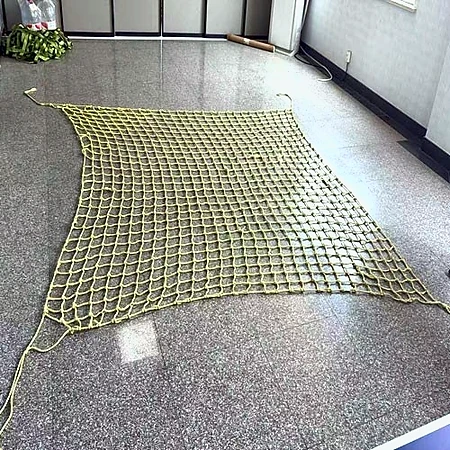
A securing net is only as good as the tensioner that pre-tensions it and the anchor point it pulls against. These are the parts that get specified last and fail first.
Стол 7 – Арматур ден натяжитель-влак.
| Келыштарыме | дене кучылталтеш | Записке |
|---|---|---|
| Трещотка напряжений | Cover net, сумка формо | Ончылгоч напряженийым шында (STF). A ratchet that cannot reach the marked STF makes the net ineffective, whatever its LC |
| Кулачковый пряжка | Йӱштӧ паша | Faster than a ratchet but reaches a much lower pre-tension – for light loads only |
| Крючок ден D-кольцо-влак | Кеч-могай келшымаш | The link between net and anchor point; класс 80 полат, кушто полат фитинг кучылталтеш |
| Лашинг точко-влак | Cover net | Rated anchor points in the vehicle structure – the restraint force has to go somewhere rated |
| Анти-скользящий мат | Фрикционный ограничитель | Raises the friction coefficient under the load; usually the single most effective addition on a smooth deck |
| Аралыме ӱмбал | Пӱсӧ ӱлыл нагрузко-влак | Контакт точкышто тасма ӱмбаке келшен толеш; нетто ӱмырым шуяш эн шулдо йӧн |
| Олмыктымо комплект | Fleet maintenance | Matching belt, пидме нить да запасной натяжитель |
Палемдымаш, colour and identification
A securing net is checked by the driver before every trip and by an inspector at the roadside, so the marking has to be readable at a distance and has to survive being dragged over a deck.
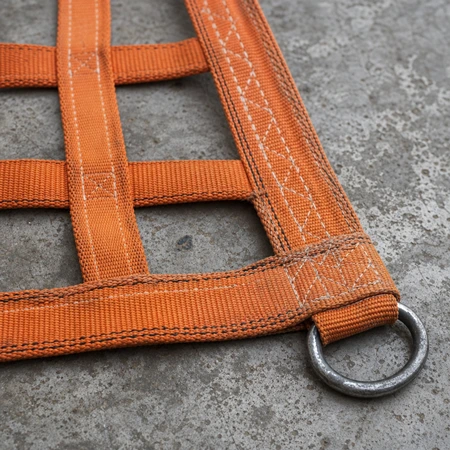
- Lashing capacity and standard tension force printed along the belt in daN – the units load securing is actually calculated in.
- Net size and date of manufacture printed as well, so the net can be matched to the vehicle and its age judged on the spot.
- A sewn capacity label in addition to the print, сандене тор да тудын кагазвиктышыже эре келша.
- Orange as the standard high-visibility colour, with blue, Ужар, black or a house colour for fleet identification.
- OEM orders can carry your brand, warning text or certificate number printed on the belt.
- Nets ship folded into a bag or a crate – a fleet order takes a fraction of the space of the same number of loose straps.
Тергымаш, certification and traceability
- Forty years of lifting equipment manufacturing – ийыште негызлалтын 1985 Тайчжоу олаште, Цзянсу, утла дене 200 служащий.
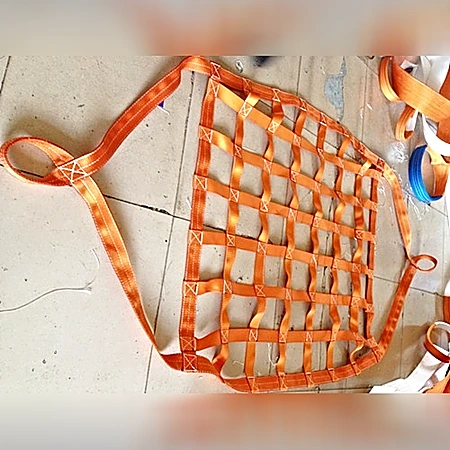
- Belts woven in our own mill, тыге кумдык, layer count and colour are under our control rather than bought in.
- Webbing strength-tested on our own 1000 t horizontal machine before it is cut into nets.
- Belts supplied to the EN 12195-2 material requirements for securing duty, with the securing calculation following EN 12195-1.
- CE declaration of conformity and GS certification, with JIS on export orders; ISO 9001, CNAS laboratory accreditation and DNV certification behind the plant.
- Кажне тор шке ӱштымӧ куатше дене палемдалтын, ончылгоч напряжений, кугыт да сетке деч ончыч упаковочный, and supplied with a material test report on request.
Certificates and test reports are available as PDFs for a tender file or a customs check – see the full сертификаций палемдымаш.
Кушто грузым пеҥгыдемдыме тор-влак кучылталтыт
The same net covers a road trailer, a container, a rail wagon and a barge. What changes is the number of anchor points, the mesh and how the net is tensioned – not the product itself.
Стол 8 – Applications by transport mode.
| Режим але сектор | Мом тор локтылеш | Молан тудлан лапка тасма тор келша |
|---|---|---|
| Корно – лапка | Машина, вурс, пушеҥге, поддон-влак, барабан да аралаш груз | Пӱтынь нагрузкым ик действийыште леведеш да трение дене контейнерым ушен шога |
| Корно – пӱрдыш | Palletised and boxed goods that shift against a soft curtain | Нагрузкым куча, кушто пӱрдыш шкеже нимогай ограниченийым ок нумал |
| Контейнер транспорт | Капка почеш груз, and cargo that must not migrate in transit | A doorway net makes the container safe to open and stops the load moving forward |
| Железнодорожный груз | Palletised and loose cargo in wagons and on flat wagons | Кужу тор-влак вагон койкым леведыт да нуным жапын-жапын тарваташ лиеш |
| Теҥыз да мланде кӧргысӧ вӱд корно | Палубный груз, да груз кӧргыштӧ баржа да трюм-влак | Гнилой деч аралыше, UV stabilised and unaffected by salt water |
| Неле шупшыктымо да проектный груз | Трансформатор-влак, завод да калибр деч ӧрдыжтӧ нагрузко | Тӱрыс ушымаш да шеледыме нагрузко-влаклан блокироватлымаш дене пырля |
| Тор, перерабатыватлымаш да ял озанлык | Бэйлс, баш тартуу, компост да почылтшо машина-влаклан оптовый нагрузко | Контейнер автомобильым кудалыштме годым эрыкан материалым чара |
| Military and relief transport | Palletised and loose cargo in trucks and aircraft | Ик нагрузколан ик тор, писын кучылташ да шуко путешествийыште угыч кучылташ лиеш |
Озаланымаш, тергымаш да пенсийыш лекмаш
- Check the net before every trip and record the check: the tensioner first, вара кажне пижыктыме верыште пидмаш, вара тасма-влак.
- Пӱчкыш дене кеч-могай тасмам кораҥдыза, ӧрдыж локтылалтмаш, пудыргышо пидмаш, химий окрашивание, heat glazing, or the colour and gloss change that signals UV degradation.
- Check the vehicle’s anchor points as carefully as the net. A perfect net on a corroded lashing point restrains nothing.
- Палубым ару да йӱштӧ кучыза, and fit anti-slip mats wherever load-to-deck friction is low. That is a securing measure, рашемдымаш огыл.
- Never use a securing net to lift, and never use a lifting net as a tensioned tie-down unless its label carries both ratings.
- Ару да йӱштӧ аралаш, мланде деч ӧрдыжтӧ да тура кече деч ӧрдыжтӧ; never repair a webbing belt by knotting, сваркым але тудым шокшо.
- Withdraw the net if a belt, шовын линийже але натяжитель локтылалтын, да тендан автопаркда кӱлеш жапыште компетентный еҥ дене тор-влакым терген налза.
Чӱчкыдын пуымо йодыш-влак
Can a cargo securing net be used to lift a load?
Жок. It is rated for restraint, нӧлталме огыл, да коктынат тӱрыснек тӱрлӧ негызеш шотлалтыт. If the load has to go onto a hook, use a lifting net with a working load limit and a per-sling proof test – the crane pallet cargo net or the polyester lifting hoisting net, both linked earlier on this page.
LC ден STF коклаште могай ойыртем уло?
LC (ӱштымӧ куатым) — тиде кучен шогышо вий, кудым тасма нумал кертеш. STF (стандарт напряжений вий) мыняр пеҥгыдын трещотка натяжитель тасмам ончылгоч напрягаться кертеш. Both are marked in daN. LC эн тӱҥжӧ тура ушымаште, кушто тасма шкеже нагрузкым куча; STF эн кӱлешанже тай-даун лаштыкыште, where the pre-tension creates the friction that does the holding.
Тор мыняр тыгыде лийшаш?
Этикеткыште палемдыме ончылгоч напряжений марте шуаш сита тыгыде, with the belts running as steeply to the deck as the load allows – 75 чейин 90 degrees is where a tie-down belt works best. A belt laid almost flat keeps only about half its capacity, сандене ару леведалтше тор пеш шагал кучен кертеш.
Мыланем анти-скользящий коврик-влак кӱлыт мо?
If the restraint relies on friction – which is what a cover net does – then usually yes. On steel, aluminium or plastic surfaces the friction coefficient is low, and a mat often adds more restraint than an extra strap does. A clean, dry deck is the other half of the same measure.
Мыняр ӱштымӧ але анкерный точко кӱлеш?
Тудо нагрузко гыч лектеш, палубный трения, the vehicle and the journey rather than from a rule of thumb. Direct lashing normally needs at least four anchor lines, кок могырышто да ӱчашен, with the vertical and plan-view angles between 30 жана 60 градус. Нагрузкым да автомобиль нерген уверым колтыза, ме тендан дене келшымашым ыштена.
Will a net stop cargo moving inside a container?
Капка але перегородка тор омса деке миграций нагрузкым чарен шогалта да контейнерым почаш лӱдыкшыдымӧ ышта. For the journey itself the load still has to be restrained as a whole, сандене контейнер мӧҥгешла, шкетын тор дене огыл, а блокироватлымаш але даннаж дене пеҥгыдемдалтын.
Могай тор почмашым ойырен налаш кӱлеш?
Fine enough that the smallest item in the load cannot pass through. 100 мм мемнан стандарт да поддон-влакым куча, картон-влак, сумка ден барабан-влак; эрыкан але изи арвер-влаклан тыгыде тор кӱлеш, да кугу шеледыме нагрузко-влак кумдаракым налын кертыт.
Эше мом ыштет нагрузкым обрабатыватлыше?
The same belts go into our строп-влак жана мучашдыме йыргешке строп-влак, the wire rope range is under проволочной строп-влак, the rope itself under капрон канат-влак, and RoRo and breakbulk work is covered by the автомобиль нӧлталтше тор. The lifting side of the net range starts at грузым нӧлталме тор-влак.
Котировкым йодса
Send the transport mode, the load weight and dimensions, шарлен але волен кертеш мо, the deck material, тор але диафрагмын кугытшо, the belt width and the anchor points you have – or a drawing of the load and the vehicle. Мемнан инженерна-влак торым пеҥгыдемдат, ӱзгар-влак, привязочный линий-влакын чотышт да упаковочный, да ик вашмутышто цитироватлаш. Ончыч тидын нерген мутланаш, мемнан инженер-влак дене кылдалтса.
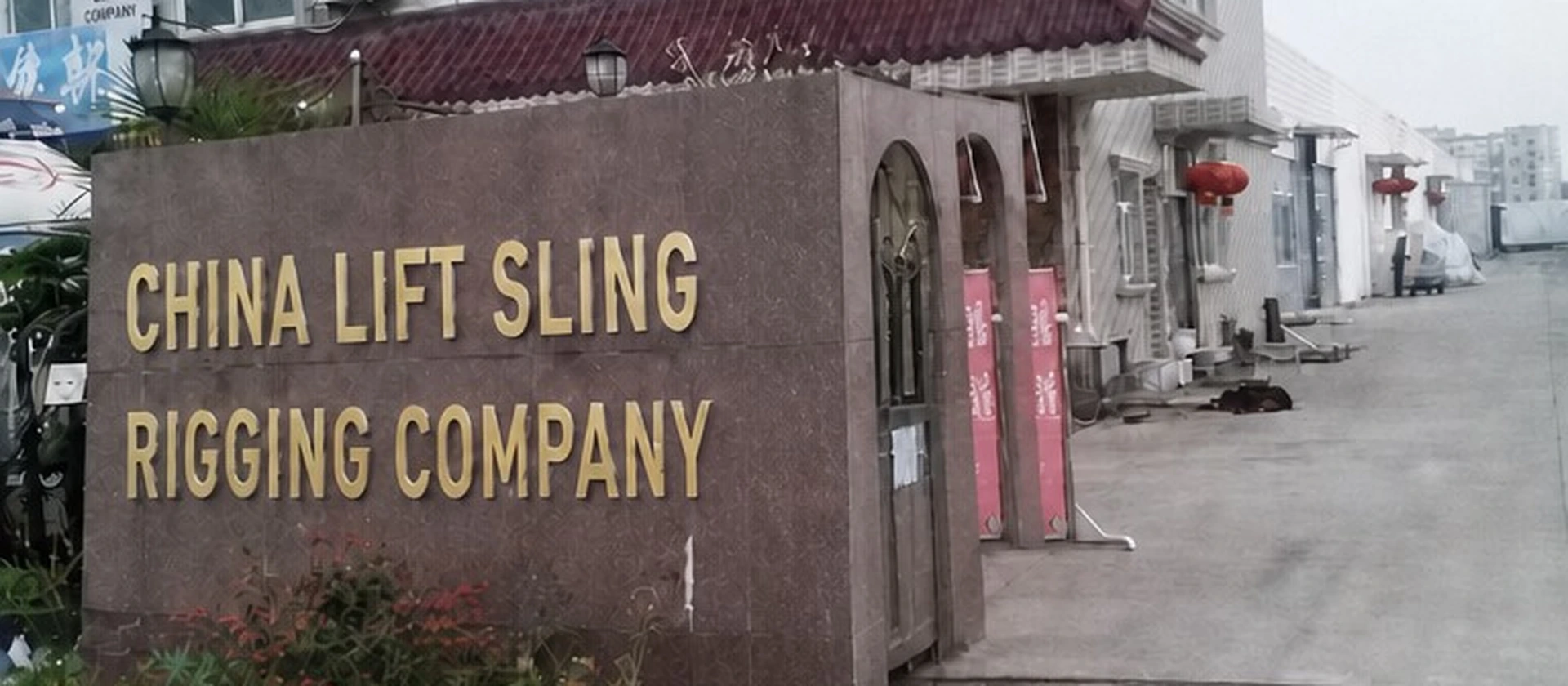
Лифт Слинг Риггинг Компаний – Лифут индустриальный парк, Тайчжоу ола, Цзянсу провинций, Китай
Тел: +86 523 8693 5818 | WhatsApp: +86 180 6600 2268 | Электрон почто: lift98@jslift.com