

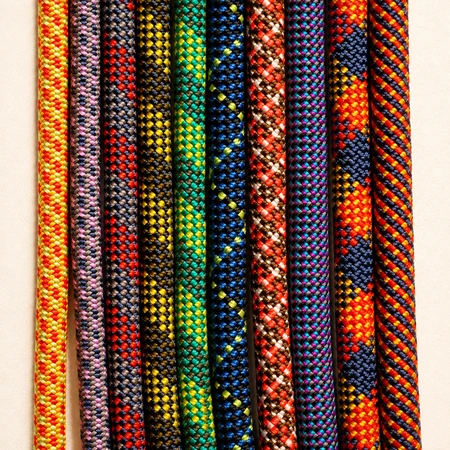
Lift sling rigging company produce Climbing Rope,Rock Climbing Rope,Dynamic Climbing Rope,Rescue Assault Rope,Fly Climbing Rope,Static Climbing Rope,Tower Line Climbing Rope.
Laipiojimo virvė
Dynamic & Semi-Static Kernmantle Climbing Rope — 8.5 mm iki 11 mm, 32–48 Strand Sheath
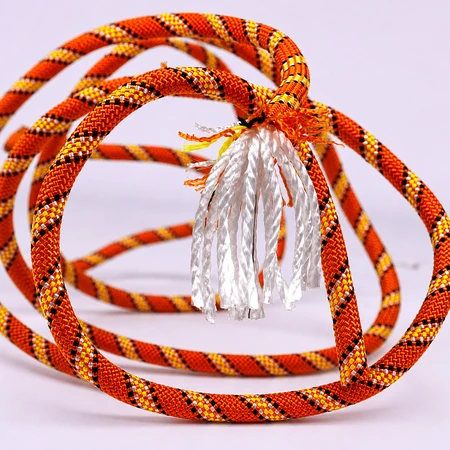
Mūsų laipiojimo virve is a kernmantle rope built on the same principle as every serious climbing line: a braided nylon sheath takes the abrasion, while a twisted multifilament core absorbs the energy of a fall. We braid the sheath from 32 į 48 strands over a parallel or twisted nylon core, then tune the core volume to set the rope’s impact force and elongation for its intended duty — dynamic for lead climbing, semi-static for top-rope, work at height and fixed installations. Diameters run from 8.5 mm iki 11 mm, in any cut length, with middle markers, bi-pattern sheaths, dry treatment and whipped or sewn end terminations.
- Controlled impact force — core volume tuned to keep fall forces within the rope’s rated limit
- Abrasion-resistant sheath — 32–48 strand braid protects the load-bearing core
- Low sheath slippage — held tight over the core so handling stays consistent rope-long
- Vienišas, half and twin options — matched to your climbing style and belay practice
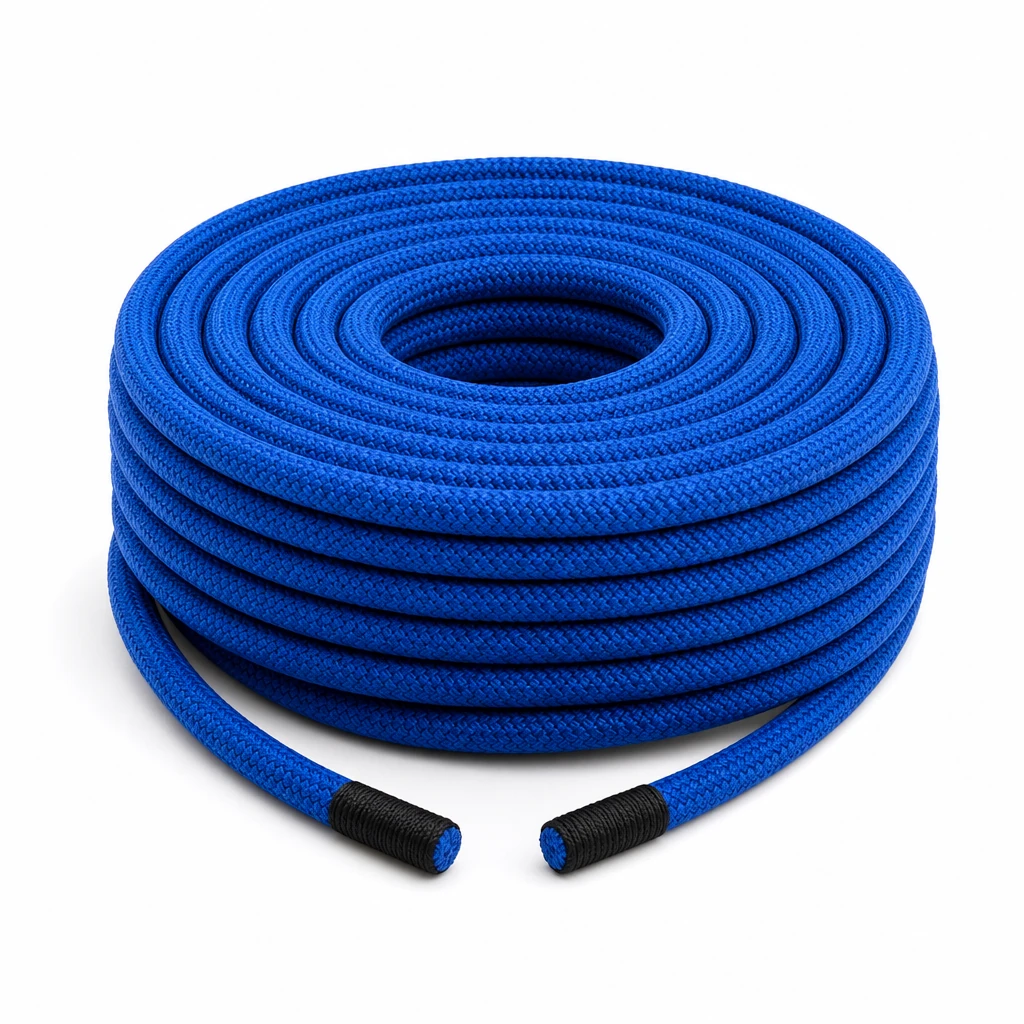
Key Features of Our Climbing Rope
Tuned Impact Force
The core carries a defined volume of twisted nylon filaments, so the rope stretches and absorbs energy at a controlled rate instead of passing the full fall force to the climber and the anchor.
Hard-Wearing Sheath
A dense 32–48 strand braid spreads abrasion across many yarns, which is what keeps a climbing rope usable against rock edges, carabiners and belay devices.
Low Sheath Slippage
The sheath is braided tight over the core so it does not bunch or migrate — the rope keeps its handling, diameter and feel over its whole length.
Vienišas, Half or Twin
Single ropes for everyday lead climbing, half and twin ropes for alpine and multi-pitch work where two strands share the load and give redundancy.
Dry Treatment Option
Sheath and core can be treated to resist water uptake, so the rope stays light and keeps its handling in rain, snow, ice and wet gym conditions.
Markers and End Finishing
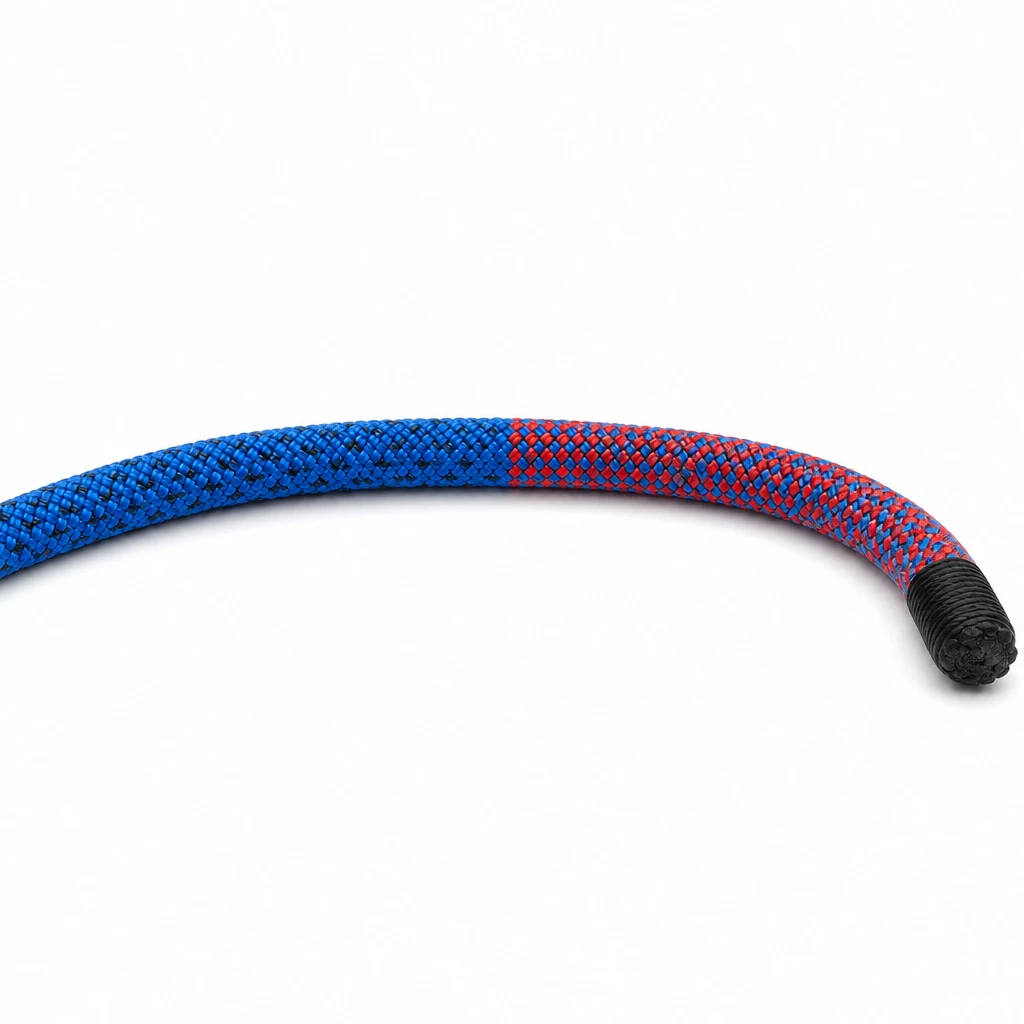
Bi-pattern sheaths, mid-rope marks, whip-finished or sewn ends, and optional end tags or length marking braided into the rope.
Types of Climbing Rope
| Viena virvė | One strand used on its own. The everyday choice for sport climbing, indoor climbing and single-pitch routes. Thicker and more abrasion-tolerant than half ropes. |
|---|---|
| Half rope (double rope) | Two thinner strands clipped alternately into the protection, so each carries part of the fall load. Used on wandering multi-pitch routes and in alpine terrain. |
| Twin rope | Two strands clipped together into every piece of protection. Lighter than a single rope of equal length and useful on long alpine routes where weight matters. |
| Dynamic rope | Built to stretch under load so it can absorb repeated fall energy. This is the correct choice for any climbing where a fall is possible. |
| Semi-static rope | Low-stretch construction for top-rope setups, fixed lines, work at height, lifting and access — where a fall should be avoided rather than absorbed. |
Techninės specifikacijos
| Produkto pavadinimas | Laipiojimo virvė / dynamic climbing rope / semi-static climbing rope / kernmantle climbing rope |
|---|---|
| Statyba | Kernmantle — braided sheath over a twisted or parallel multifilament nylon core |
| Apvalkalo medžiaga | High-tenacity polyamide (nailono 6 / nailono 6.6), 32 · 40 · 48 sruogų pynė |
| Pagrindinė medžiaga | Twisted multifilament nylon (poliamidas); core volume tuned per rope type |
| Standartiniai skersmenys | 8.5 mm · 9.2 mm · 9.5 mm · 9.8 mm · 10.0 mm · 10.2 mm · 10.5 mm · 11.0 mm (custom range 6–14 mm) |
| Standartiniai ilgiai | 30 m · 40 m · 50 m · 60 m · 70 m · 80 m · 100 m (custom cut lengths and 200 m spools on request) |
| Sheath proportion | Typically 35–40 % of the rope’s mass; a higher proportion increases abrasion resistance |
| Apvalkalo slydimas | Low — measured on the finished rope and reported per batch |
| Impact force | Set by core construction and diameter; rated against the rope type’s limit (see the performance table below) |
| Pailgėjimas | Dynamic elongation on the first fall and static elongation at 80 kg are reported per diameter (see below) |
| Water repellency | Standard finish or treated “sausas” version for the sheath and core |
| Middle marker | Optional bi-pattern sheath or a single mid-rope mark |
| Spalva | Blue · red · orange · green · black · white · bi-pattern combinations · custom colours |
| Pabaigos apdaila | Tightly whipped end · sewn and welded end · optional end tag, batch or length marking |
| Referenciniai standartai | Manufactured with reference to EN 892 (dynamic mountaineering ropes) and UIAA 101 test requirements; certificate and test report issued per order on request |
| Pakavimas | Ritė, rope bag or rope tarp; Galima pasirinkti pritaikytą etiketę ir brūkšninį kodą |
| MOQ & OĮG | Mažas MOQ bandomiesiems užsakymams; pilnas OEM - pasirinktinis skersmuo, ilgio, spalva, middle marker, spausdintas logotipas ir pakuotė |
Diameter and Performance
Diameter is a trade-off between three things: weight and handling on one side, durability and fall capacity on the other. A thicker rope lasts longer against rock, holds better in a belay device and survives more falls; a thinner rope runs faster, weighs less on a long pitch, and asks more of the belayer’s technique.
| Skersmuo | Tipas | Svoris (g/m) | Impact force | UIAA falls | Dynamic elongation | Static elongation (80 kg) |
|---|---|---|---|---|---|---|
| 8.5 mm | Half | ≈ 48 | ≤ 8.0 kN | 12+ | ≤ 35 % | ≤ 10 % |
| 9.2 mm | Vienišas | ≈ 56 | ≤ 9.5 kN | 5 | ≤ 35 % | ≤ 9 % |
| 9.5 mm | Vienišas | ≈ 60 | ≤ 9.2 kN | 6 | ≤ 34 % | ≤ 8.5 % |
| 9.8 mm | Vienišas | ≈ 65 | ≤ 8.9 kN | 7 | ≤ 33 % | ≤ 8 % |
| 10.0 mm | Vienišas | ≈ 68 | ≤ 8.7 kN | 8 | ≤ 32 % | ≤ 7.8 % |
| 10.2 mm | Vienišas | ≈ 70 | ≤ 8.5 kN | 9 | ≤ 31 % | ≤ 7.5 % |
| 10.5 mm | Vienišas | ≈ 73 | ≤ 8.2 kN | 10 | ≤ 30 % | ≤ 7 % |
| 11.0 mm | Vienišas | ≈ 78 | ≤ 8.0 kN | 12 | ≤ 29 % | ≤ 6.5 % |
Lynų konstrukcija: Apvalkalas ir šerdis
Every climbing rope is a compromise between two jobs. The rope has to ištempti enough to absorb the energy of a fall, and it has to survive the rock, the carabiners and the belay device. The core does the first job — a defined volume of twisted nylon filaments that elongates under load and converts kinetic energy into heat. The sheath does the second — a dense braid that carries almost all the abrasion while holding the core firmly in place so it cannot shift or bunch inside.
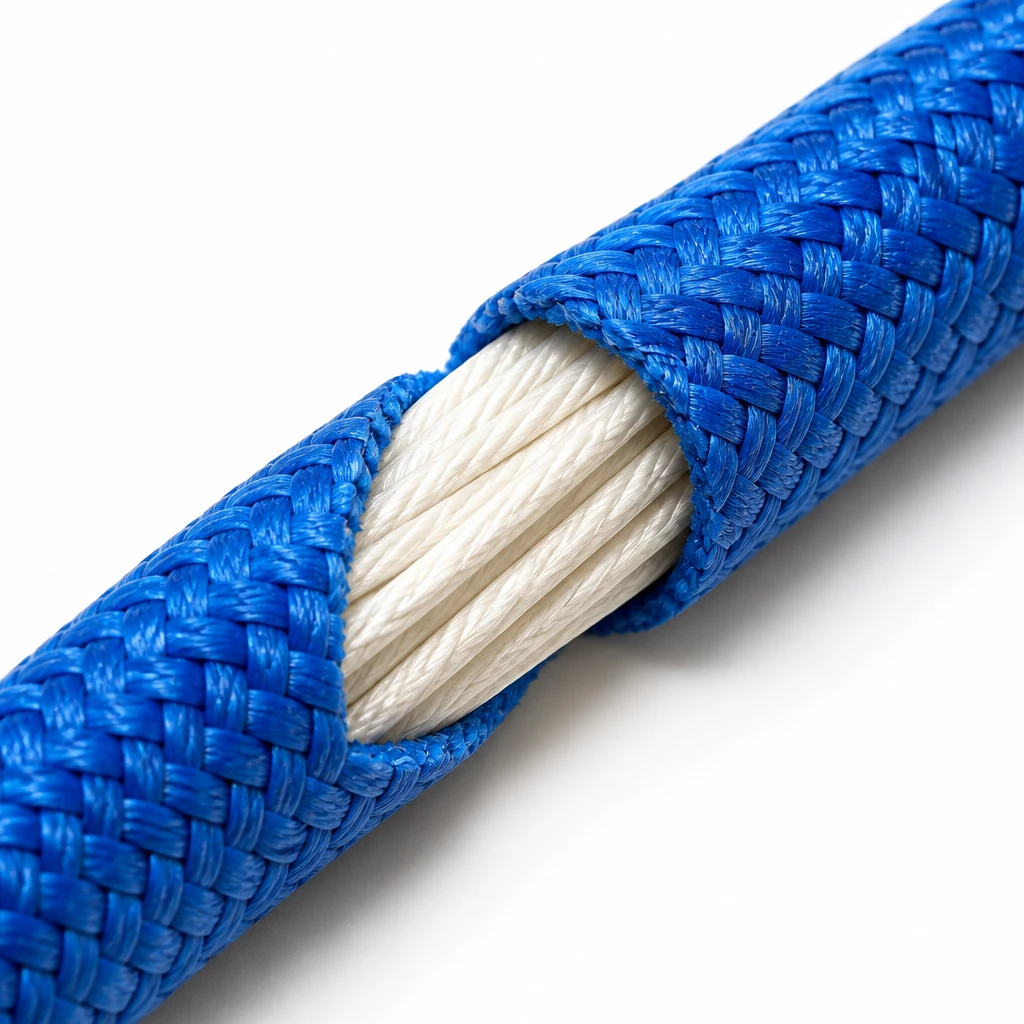
What the sheath percentage tells you
- Higher sheath proportion (around 40 %) — more yarn on the outside, so better abrasion resistance and a longer life on rough rock and in high-traffic gyms.
- Lower sheath proportion (around 35 %) — more core, which usually means lighter weight, softer handling and a slightly higher fall capacity.
- More sheath strands (40–48) — a finer, tighter braid that spreads wear over more yarns and gives a smoother surface through a belay device.
Priežiūra, Patikra ir išėjimas į pensiją
A climbing rope is a consumable safety item, not a permanent fixture. Its working life depends on how often it is used, what it is used over, and what it has been subjected to — not on a fixed calendar period.
- Prieš kiekvieną naudojimą patikrinkite — run the rope through your hands and look for flat spots, stiklinimas, sheath damage, soft or stiff sections, and core protrusion.
- Retire after any severe fall — after a high fall factor or a shock load, or if the rope has been damaged by heat, chemicals or sharp edges.
- Keep it clean and dry — wash with lukewarm water and a mild soap when needed, dry in the shade, and store loosely coiled away from sunlight, karštis, cheminių medžiagų ir aštrių daiktų.
- Record its history — a simple log of purchase date, use and any falls or impacts is the most reliable retirement guide.
Programos
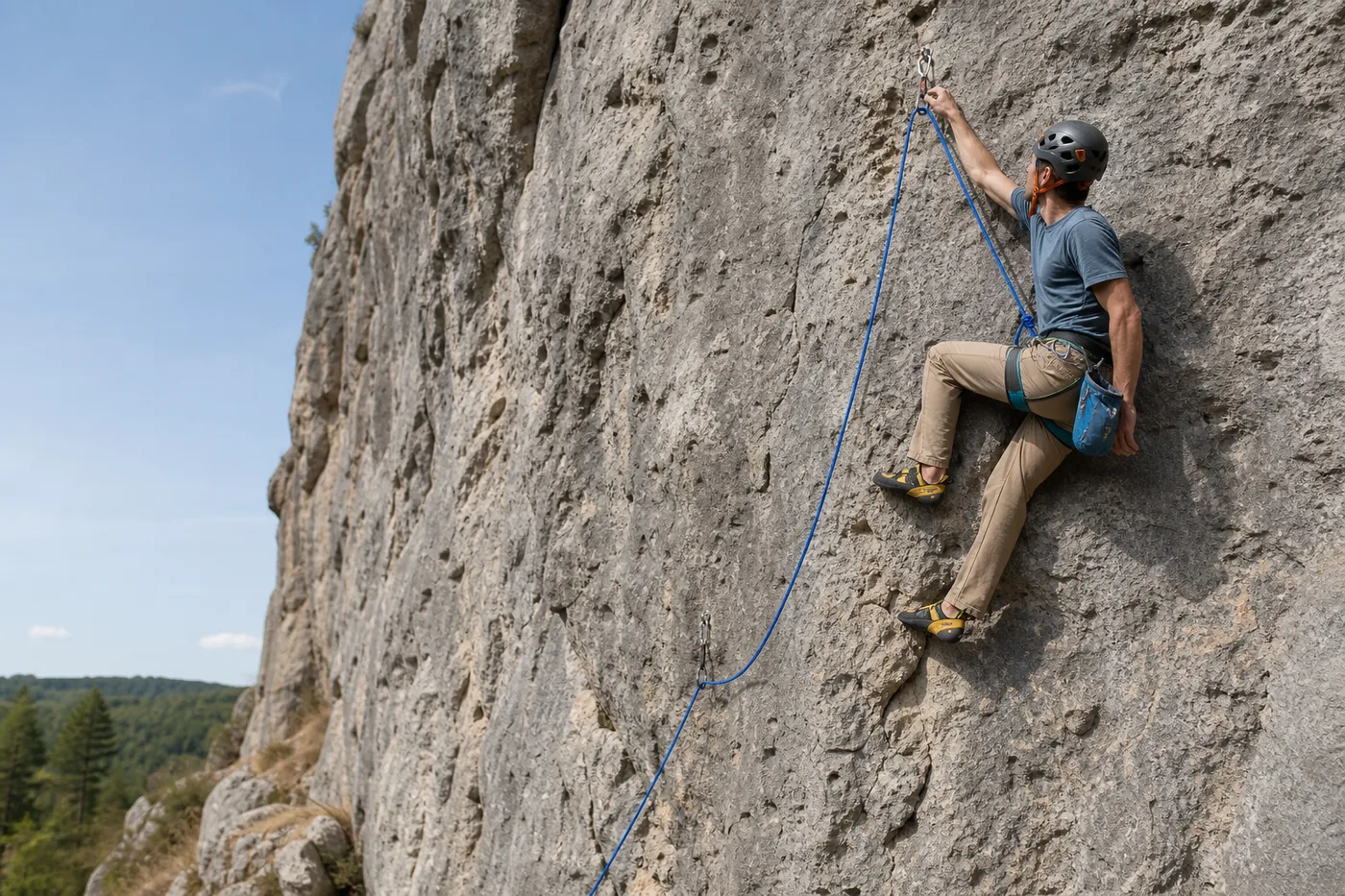
- Sport lead climbing and single-pitch routes
- Indoor climbing walls and bouldering gyms
- Top-rope setups and fixed top-rope lines
- Multi-pitch and alpine climbing (half or twin ropes)
- Mountaineering, glacier travel and via ferrata
- Work at height, rope access and industrial top-rope systems
- Outdoor education, adventure parks and obstacle courses
- Playground and fitness climbing structures
Tinkinimas ir OEM paslauga
As a rope manufacturer we build to specification rather than to a fixed catalogue. Tell us the climbing style, aplinką (rock, gym, ice, industrial), the diameter you prefer and the hardware you already use, and we will recommend the right construction. Įprasti pritaikymai apima:
- Diameter and type — 8.5–11 mm, vienišas, half or twin, dynamic or semi-static
- Sheath construction — 32, 40 arba 48 sruogų pynė, with sheath percentage tuned to your abrasion requirement
- Ilgis - bet kokio pjovimo ilgio, 200 m spools for gym and school supply, with or without end tags
- Markers and colour — bi-pattern middle marker, mid-rope marks, standard or custom colours
- Apdaila — whipped ends, sewn ends, rope bags, rope tarps and retail packaging with your own label
- Companion products — safety harnesses, chalk bags and rope bags supplied as a matched set
Kokybės kontrolė
Each production batch is checked on diameter, linijinis tankis, sheath proportion, pynimo sandarumas, sheath slippage and end finish, and sampled for impact force, fall rating and elongation. We have manufactured rope and webbing products for industrial, saugumo ir sporto klientams beveik tris dešimtmečius, ir mes matome procesą: on request we supply the yarn certificate, the batch test report, and a sample length for you to handle and test before volume production begins.
Dažnai užduodami klausimai
What diameter climbing rope should I choose?
For general sport and indoor climbing, 9.8–10.2 mm is the usual middle ground: good durability, comfortable handling and a sensible fall capacity. Choose 9.2–9.5 mm for lighter, faster ropes on redpoint attempts where you accept more sheath wear, and 10.5–11 mm for gyms, schools and beginner use where abrasion resistance and longevity matter most.
What is the difference between a single, half and twin rope?
A single rope is used on its own. Half ropes are used as a pair, clipped alternately into the protection so each strand shares the load. Twin ropes are also used as a pair, but both strands are clipped into every piece of protection. Half and twin ropes are thinner and lighter, which is why they suit long multi-pitch and alpine routes.
Dynamic or semi-static — which do I need?
Use dynamic if a fall can occur: it stretches to absorb energy and limit the force on the climber, the anchor and the rope. Use semi-static for top-rope lines, fixed installations, work at height, lifting and access, where the system is set up to avoid a fall. Never use a semi-static rope for lead climbing.
What is the sheath percentage and why does it matter?
It is the share of the rope’s mass that sits in the outer braid. A higher proportion — around 40 % — puts more yarn on the outside, which increases abrasion resistance and rope life. A lower proportion — around 35 % — leaves more material in the core, which usually gives a lighter rope with a higher fall capacity.
When should a climbing rope be retired?
Retire a rope after a severe fall or shock load, after any contact with heat, chemicals or a sharp edge, or when inspection shows flat spots, stiklinimas, sheath damage, a stiff or soft section, or core protrusion. There is no fixed calendar life — a rope used daily in a gym ages far faster than one used a few times a season. Keep a use log and let condition, ne kalendorius, decide.
Do you supply certificates, pasirinktiniai ilgiai ir OEM prekės ženklas?
Taip. Batch test reports covering impact force, fall rating and elongation are supplied on request, ir mes siūlome visą OEM paslaugą – pasirinktinį skersmenį, sheath construction, spalva, middle marker, end finishing, spausdintas logotipas ir mažmeninė pakuotė. Pasakykite mums, kokio žymėjimo ar sertifikato reikia jūsų rinkai, ir mes patvirtinsime, ką galime pateikti prieš užsakant.
Request a Quote for Climbing Rope
Send us the climbing style, reikiamo skersmens ir ilgio, the environment and any marking or certification your market requires. Mūsų komanda grįš su specifikacija, pavyzdžio ilgis ir tiesioginė gamyklos kaina.