 702461526@qq.com
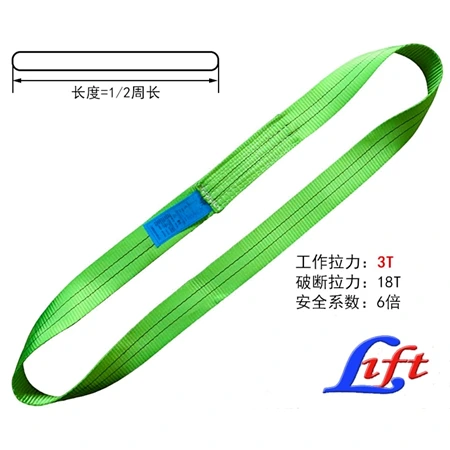
„Lift Sling“ takelažas gamina vieno sluoksnio begalinį plokščią stropą
Vieno sluoksnio begalinis plokščias diržas
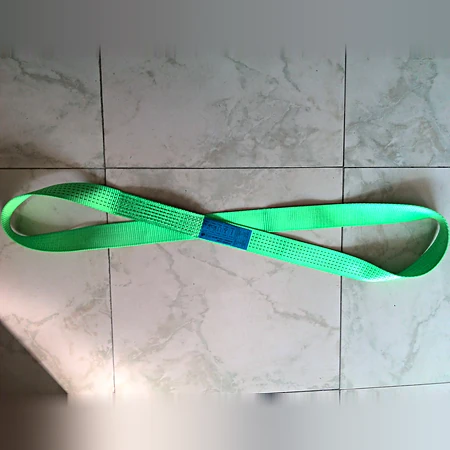
Vieno sluoksnio begalinis plokščias diržas yra ištisinė plokščio austo juostos kilpa – vieno sluoksnio, vienas gabalas, nėra prisiūtų akių ir galo. Kadangi kilpa neturi fiksuotų nusidėvėjimo taškų, stropą galima šiek tiek pasukti kiekvieno keltuvo metu, kad apkrovą paimtų kita juostos dalis, todėl jis yra ilgiausiai tarnaujantis stropas sandėlyje arba gamybos linijoje. Lift Sling takelažas įmonė (Pakelkite) Taidžou pagamino nesibaigiančius plokščius diržus, Jiangsu nuo 1985, iš 1 t į 12 t darbinės apkrovos riba, poliesteryje, nailono arba polipropileno juosta, su saugos koeficientu 5:1, 6:1 arba 7:1.
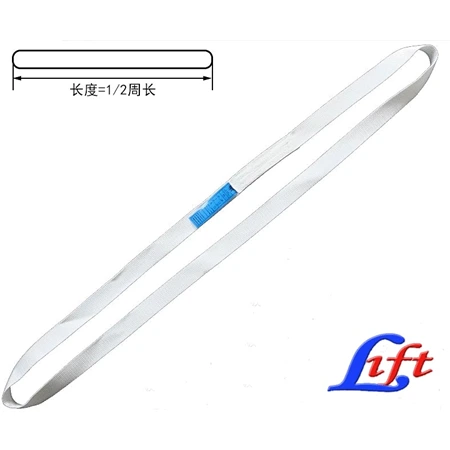
Kuo skiriasi nesibaigiantis stropas
Akių ir akių stropas turi dvi prisiūtas akis ir plokščią korpusą tarp jų, todėl juosta visada dėvisi tose pačiose vietose. Begalinis stropas yra uždara kilpa: nėra akies nusidėvėti, nėra susiuvimo krovinio kelyje, ir visas perimetras yra kaip atraminis paviršius. Praktiškai tai reiškia tris dalykus vietoje:
- Ilgesnis tarnavimo laikas — stropas gali būti pasukamas taip, kad kitą juostos dalis atsidurtų po kroviniu kitą kartą pakeliant.
- Galimi visi trys prikabinimai - vertikaliai, droselis ir krepšelis - su tuo pačiu stropu, esant tokiai pačiai darbinės apkrovos ribai.
- Minkštas, nežymus kontaktas — plokščia austa juosta paskirsto apkrovą ir nebraižo dažytos, padengtas, poliruotos arba milteliniu būdu padengtos dalys taip, kaip tai daro grandinė arba vielinis lynas.
Kaip statomas vieno sluoksnio begalinis plokščias stropas
Vieno sluoksnio konstrukcija
“Vieno sluoksnio” reiškia, kad vienas austos juostos sluoksnis sudaro visą kilpą. Jis yra lengviausias, lanksčiausia ir ekonomiškiausia konstrukcija, ir tai yra teisingas pasirinkimas, kai stropas turi būti įsriegtas per ankštas vietas arba apvyniotas aplink mažą skersmenį. Kur reikia didesnio krūvio tame pačiame plotyje, tas pats stropas tiekiamas kaip dvisluoksnis (dvipusis) stropas, arba apvalioje stropoje su apsaugine rankove.
Medžiaga
Juosta standartiškai austa iš itin atsparaus poliesterio, su nailonu ir polipropilenu, skirtu tam tikroms užduotims atlikti. Poliesteris turi mažą pailgėjimą veikiant apkrovai, gerai atsparus UV spinduliams ir drėgmei, ir toleruoja plačiausią įprastų pramoninių cheminių medžiagų asortimentą. Every batch of webbing is woven in our own mill and the finished sling is proof tested before it leaves the factory.
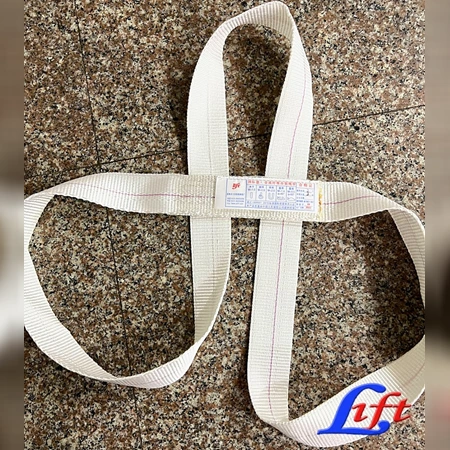
Standards and safety factor
Our endless flat slings are manufactured to ISO 4878, EN 1492-1 and JB/T 8521, and are supplied colour coded for quick identification in the store and in the air. The safety factor — the ratio between the minimum breaking load and the working load limit — is selected at order: 5:1, 6:1 arba 7:1. A 7:1 sling needs a wider webbing than a 5:1 sling for the same working load limit, which is why the width column in the table below has three values.
Technical parameters
The table below is our standard single ply endless flat sling range. Thickness, widths and weights are approximate values; minimum and maximum length are the limits we can manufacture as one continuous loop.
| Working load limit | Approx. thickness | Width at 5:1 | Width at 6:1 | Width at 7:1 | Min. length | Max. length | Weight at 5:1 | Weight at 6:1 | Weight at 7:1 |
|---|---|---|---|---|---|---|---|---|---|
| 1 000 kg (1 t) | 4 mm | 25 mm | 25 mm | 30 mm | 0.5 m | 100 m | 0.16 kg/m | 0.18 kg/m | 0.20 kg/m |
| 2 000 kg (2 t) | 4 mm | 50 mm | 50 mm | 60 mm | 1.0 m | 100 m | 0.35 kg/m | 0.39 kg/m | 0.60 kg/m |
| 3 000 kg (3 t) | 4 mm | 75 mm | 75 mm | 90 mm | 1.0 m | 100 m | 0.52 kg/m | 0.73 kg/m | 0.78 kg/m |
| 4 000 kg (4 t) | 4 mm | 100 mm | 100 mm | 120 mm | 1.5 m | 100 m | 0.80 kg/m | 0.84 kg/m | 0.90 kg/m |
| 5 000 kg (5 t) | 4 mm | 125 mm | 125 mm | 150 mm | 1.5 m | 100 m | 0.85 kg/m | 0.96 kg/m | 1.14 kg/m |
| 6 000 kg (6 t) | 4 mm | 150 mm | 150 mm | 180 mm | 1.5 m | 100 m | 0.96 kg/m | 1.12 kg/m | 1.33 kg/m |
| 8 000 kg (8 t) | 4 mm | 200 mm | 200 mm | 240 mm | 2.0 m | 100 m | 1.34 kg/m | 1.65 kg/m | 1.85 kg/m |
| 10 000 kg (10 t) | 4 mm | 250 mm | 250 mm | 300 mm | 2.0 m | 100 m | 1.64 kg/m | 1.84 kg/m | 2.05 kg/m |
| 12 000 kg (12 t) | 4 mm | 300 mm | 300 mm | 300 mm | 2.0 m | 100 m | 1.86 kg/m | 2.06 kg/m | 2.70 kg/m |
Lengths longer than 100 m, intermediate widths, extra-wide slings and special colours are made to order. Tell us the working load limit, the safety factor, the width and the length you need and we will confirm the weight and the delivery time.
| Working load limit | Width | 1 m | 3 m | 5 m | 10 m | 20 m |
|---|---|---|---|---|---|---|
| 1 000 kg (1 t) | 30 mm | 0.25 kg | 0.71 kg | 1.17 kg | 2.32 kg | 6.46 kg |
| 10 000 kg (10 t) | 300 mm | — | 7.00 kg | 11.60 kg | 23.10 kg | 46.10 kg |
Colour coding and marking
Endless flat slings are colour coded following BS EN 1492-1 so that a storekeeper or a rigger can pick the right sling at a glance, and each sling carries a blue label with the working load limit, length, safety factor and batch number. Special colours, printed logos and customer labels are available on OEM orders.
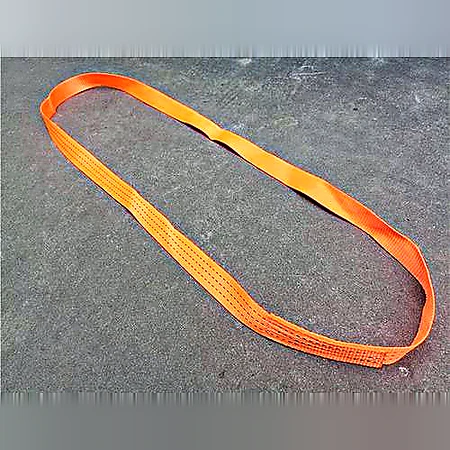
Hitches: how an endless flat sling is used
Vertical hitch
The loop hangs in a straight line and the load is carried on one side of the loop. This is the simplest and the most common way to use an endless sling, and the working load limit printed on the label applies directly.
Choke hitch
The loop is passed around the load and through itself. The webbing grips the load, which is ideal for pipes, poles and drums, but the choked part of the webbing is subject to extra friction — check the label and keep the sling’s own working load limit in mind.
Basket hitch
The loop is passed under the load so that both sides of the endless loop carry the load. Used with a hook or a shackle through the two ends of the loop, the basket hitch doubles the bearing surface and is the gentlest way to lift a finished or coated part without marking it.
Single ply endless, double ply endless or round sling?
| Construction | Best for | Pastabos |
|---|---|---|
| Single ply endless flat sling | 1-12 t, general lifting, tight spaces, small diameters | Lightest and most flexible; width carries the load |
| Double ply (dvipusis) endless flat sling | Heavier duties at the same width | Two layers of webbing stitched together |
| Extra-wide endless flat sling | Very heavy loads with a wide, soft bearing surface | Made to order in widths well above 300 mm |
| Endless round sling | Flexible, fabric-sleeved loops for awkward shapes | See our endless round sling |
| Single use endless sling | One-trip packing and one-way exports | See our single use lifting sling with endless loop |
Applications
- Steel, stainless and aluminium parts that must not be marked — sheet, plate, machined components, coils and bundles.
- Pipes, tubes and poles, using the choke hitch to stop the load slipping.
- Precast concrete panels, kerbs and blocks, lifted on a soft bearing surface.
- Painted and powder-coated fabrications, boat hulls and finished assemblies.
- Machine tools, moulds and dies where a chain would damage a ground or scraped surface.
- General factory and warehouse lifting, and as an economical replacement for worn eye-and-eye slings.
-

Single ply endless flat sling in green webbing with a blue working load limit label
Safe use and inspection
- Check the label is legible and that the sling’s working load limit covers the lift before every use.
- Inspect the webbing for cuts, snags, holes, abrasion, chemical staining, heat damage, broken stitches and any deformation of the loop; withdraw the sling from service if the webbing is damaged through more than a minor surface mark.
- Protect the sling from sharp edges, hot surfaces and welding spatter with an edge sleeve or a padded protector.
- Do not exceed the working load limit and do not use the sling at an angle wider than your lifting plan allows — the load in each leg rises as the included angle opens.
- Never shorten a sling with a knot or join two slings by knotting them, and never repair webbing by stitching, welding or heating.
- Store slings clean and dry, off the ground and away from sunlight, chemicals and heat.
Why buy endless flat slings from Lift
- 40 years of sling manufacturing — founded in 1985 in Taizhou, Jiangsu, now one of China’s leading rigging manufacturers, with more than 200 employees.
- Own testing laboratory and 1000 t test machine — every sling is proof tested and documented, and our facilities hold CNAS, CE and DNV certification.
- Weaving, stitching and testing under one roof — we weave our own webbing, so width, colour and safety factor are under our control rather than bought in.
- Full documentation — test certificate, blue working load limit label and packing list with each order.
- One supplier for the whole lifting range — endless flat webbing slings, flat lifting slings, round slings, endless type webbing slings, ratchet straps, wire rope slings and rigging hardware.
- OEM and ODM — own-brand labels, printed webbing, special colours and customer packing for distributors.
Frequently asked questions
- What is a single ply endless flat sling?
- It is a continuous loop of flat woven webbing made from a single layer of webbing — one ply, with no sewn eye and no end fitting. The whole loop is the load-bearing element, so a different part of the webbing can be rotated into position on each lift.
- What sizes are available?
- Working load limits from 1 t į 12 t as standard, in 4 mm thick webbing. Web width runs from 25 mm at 1 t į 300 mm at 12 t, depending on the safety factor, and finished loop lengths are made from 0.5 m to 100 m, with longer lengths to order.
- What safety factor should I choose — 5:1, 6:1 arba 7:1?
- 7:1 is the most common choice for industrial lifting and is the factor used with colour coded slings under BS EN 1492-1. A 7:1 sling is slightly wider and heavier than a 5:1 sling of the same working load limit. Tell us the standard your site works to and we will supply to it.
- Can the sling be used in a choke hitch?
- Yes. An endless sling works in vertical, choke and basket hitches. The choke hitch grips pipes and poles well, but friction and the reduced bearing area mean you should allow for the choke when you select the working load limit.
- Is single ply or double ply better?
- Single ply is lighter, more flexible and more economical, and is the right choice for most lifts up to 12 t. Choose double ply (dvipusis) when you need a higher working load limit at the same width, or when the load has to be lifted with a wider, stiffer bearing surface.
- Do the slings come with a certificate?
- Yes. Each order is supplied with a test certificate, and every sling carries a blue label with its working load limit, length, safety factor and batch number. Own-brand labels and customer packing are available on OEM orders.
Request a single ply endless flat sling quotation
Send us the working load limit, the safety factor (5:1, 6:1 arba 7:1), the webbing width and the loop length — or simply describe what you are lifting. Our engineers will confirm the width, the finished weight and the delivery time, and we can produce a sample sling for trial before a batch order.
Lift Sling Rigging Company — TaiZhou City, JiangSu Province, Kinija
Tel / WhatsApp: +86 180 6600 2268 | E-mail: 702461526@qq.com
Contact us for a quotation
Related pages: Endless lifting sling · Endless sling · Flat lifting sling · Endless web sling · Endless flat belt lifting slings · Endless flat webbing sling · Endless type webbing sling · Endless round sling