

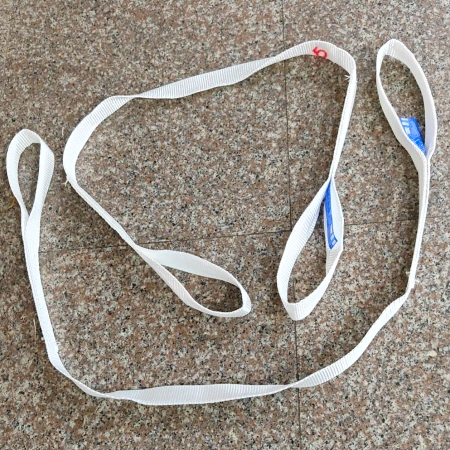
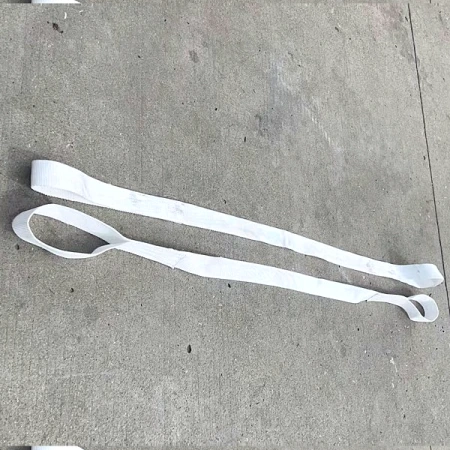
Lift sling rigging company produce Looped End Single Use Lifting Sling,Round Endless Webbing Lifting Slings,One way sling with loops,Endless Disposable Slings,Endless single use sling,Միանգամյա օգտագործման բարձրացնող պարսատիկներ Անվերջ հանգույց,Endless hoisting sling,Single Use Endless Lifting Slings.
Looped End Single Use Lifting Sling
Eye-and-eye polyester bands from 1 t դեպի 15 t — a loop at each end, մեկ ճանապարհորդություն, the cheapest way to hang a load from a hook
A looped end single use lifting sling is the two-eye form: a length of woven polyester webbing with a loop sewn at each end, hung on a hook at the top and hooked, shackled or choked at the bottom. It is the shape most loads are actually lifted with — a bundle of bar, a crate, a skid, a panel — and in a one-way build it is the cheapest article that can still be rated, proof tested and printed.
The eyes are what separate it from the circular form on the one way round slings էջ. There the band is joined into a closed loop and the load sits inside it; here the band is open, with two defined ends, so the sling can be dropped over a hook, pinned with a shackle, passed round a trunnion, or choked and pulled back through its own eye.
Both forms use the same webbing and, in this build, both are bought for a single journey. What differs is how the sling meets the load — and that is the only question worth asking when choosing between them.
Two ends, or no ends: the choice that matters
The industry uses several names for these two articles and they are not interchangeable. “Looped end”, “eye and eye” and “one way sling with loops” describe a band with two sewn eyes. “Endless”, “circular” and “round sling” describe a band closed into a loop with no ends at all. The table below is the shortest way to decide.
| Looped վերջ (այս էջը) | Անվերջ / շրջանաձև | |
|---|---|---|
| The band | Բաց, with an eye sewn at each end | Closed loop, one seam, ոչ վերջ |
| Meets the load at | Two defined eyes | Any point of the loop |
| Hooks and shackles | Eye fits over the bowl or on the pin | Loop hangs over the hook |
| Choking | Pass the band through its own eye | Pass the loop through itself |
| Length quoted | Eye to eye (bearing to bearing) | Laid flat = half the circumference |
| WLL and length beside each eye | WLL and length along the loop | |
| Լավագույնը համար | Բարձրացնող կետեր, կապանքներ, trunnions, chokes, matched supply | Bundles and stacks with no lifting points |
The same webbing, two different ways of meeting the load
If the product has lifting points — eyes, lugs, a frame with corners — the two-eye form is the direct answer: one eye on the hook, one on the point, and the geometry is decided for you. If the load is a bundle with nothing to attach to, either form works and the circular sling is marginally faster to throw on. Where both are used on the same consignment, keep the prints distinct so the receiving site is not choosing between them in the dark.
What one way changes, իսկ ինչ չի անում
It changes the logistics, not the rating. There is no return leg for a used sling, no register to keep, and no second issue — the print and the label are the whole record of what the article was. What stays the same is the weave, the seam, the proof test and the factor. A one-way sling is not a lighter build; it is the same build with a shorter life.
| Մեկանգամյա օգտագործման (այս էջը) | Returnable eye-and-eye sling | |
|---|---|---|
| Lifts | Մեկը, then destroyed | Multi-year, subject to inspection |
| Ստուգում | One check at issue | Periodic thorough examination and register |
| Return logistics | Ոչ մեկը | Հետադարձ բեռնափոխադրումներ, cleaning, storage |
| Traceability | Print and label on the band | Serial number, individual record |
| Cost per lift | Lowest where reuse is a handful of lifts | Lower only at high reuse counts |
The commercial difference, stated plainly
The band, the eyes and the print
The band is high-tenacity polyester in a plain weave — the same band used across the վանդակապատ պարսատիկ range — one ply at the light end and two or three at the heavy end, woven as a single band rather than laid up, so the plies cannot separate when the sling is dragged across a floor. Each end is folded back on itself to form the eye and closed with a multi-row lock stitch in high-tenacity thread, bar-tacked where the eye meets the band — the two places an inspector should look first.
Eye length is a specification, ոչ լռելյայն. A short eye will not seat on a large hook bowl; a long one lets the load hang lower than the drawing allows. Ստանդարտ շինությունները գործում են 250 mm clear at 1 t դեպի 600 մմ ժամը 10 տ, and a reinforced eye is used where the sling works against a shackle rather than a hook. A 45° twisted eye is available where the sling has to leave the hook in line with the band.
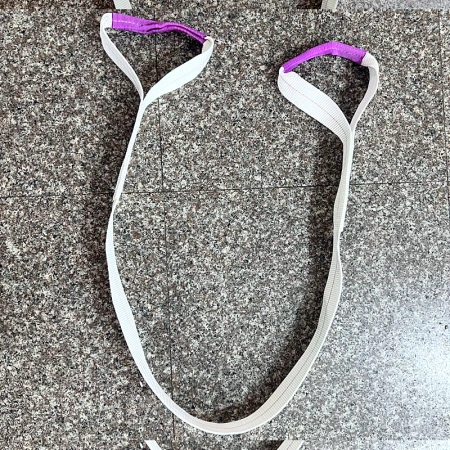
- Print: “WLL 3ton 3m” and the batch, applied along the band and legible when wet or dusty — the 3 t sling further down this page carries exactly that format.
- Պիտակ: sewn at the eye, carrying the same figures plus the fibre, the standard and the CE mark where required.
- No fittings: nothing metal to bruise a panel, scratch a pipe or be lost between shipments.
The range in figures
Standard single-use builds are listed below. The working load limit is the vertical, single-leg figure; the hitch table further down gives the rest. Length is the effective working length, measured eye to eye between the bearing points, and the eye clear length is the opening that has to take the hook or the pin.
| Մոդել | WLL | Գույն | Լայնությունը | Plies | Eye clear | EWL | Breaking 7:1 |
|---|---|---|---|---|---|---|---|
| LSE-1000 | 1 տ | Վիոլետ | 50 մմ | 1 | 250 մմ | 1–12 m | 7,000 կգ |
| LSE-2000 | 2 տ | Կանաչ | 50 մմ | 2 | 300 մմ | 1–12 m | 14,000 կգ |
| LSE-3000 | 3 տ | Դեղին | 75 մմ | 2 | 350 մմ | 1–12 m | 21,000 կգ |
| LSE-4000 | 4 տ | Մոխրագույն | 100 մմ | 2 | 400 մմ | 1–12 m | 28,000 կգ |
| LSE-5000 | 5 տ | Կարմիր | 125 մմ | 2 | 450 մմ | 1–12 m | 35,000 կգ |
| LSE-6000 | 6 տ | Շագանակագույն | 150 մմ | 2 | 500 մմ | 1–12 m | 42,000 կգ |
| LSE-8000 | 8 տ | Կապույտ | 200 մմ | 2 | 550 մմ | 1–12 m | 56,000 կգ |
| LSE-10000 | 10 տ | Նարնջագույն | 250 մմ | 2 | 600 մմ | 1–12 m | 70,000 կգ |
| LSE-15000 | 15 տ | Not coded | 300 մմ | 3 | 650 մմ | 2–12 m | 105,000 կգ |
Standard looped end one way slings — widths and eye lengths nominal with the band relaxed
Լայնություններ, ply counts and eye lengths are the standard builds and can be changed together: a narrower band in more plies does the same job where the hook is small, and a longer eye is normal where the sling works on a large shackle. Այն 2000KG single use lifting slings page shows the same arithmetic at one size, և single use white lifting slings page covers the undyed band where dye transfer is the concern.
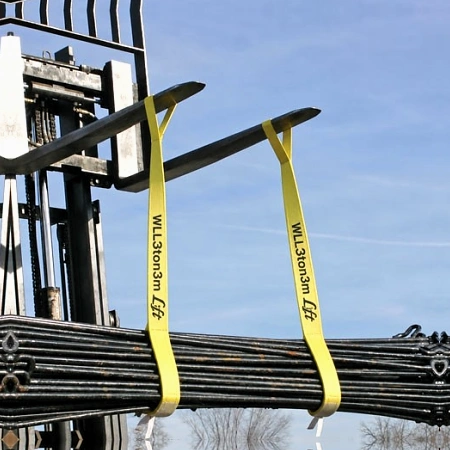
Fitting the eye to the hook
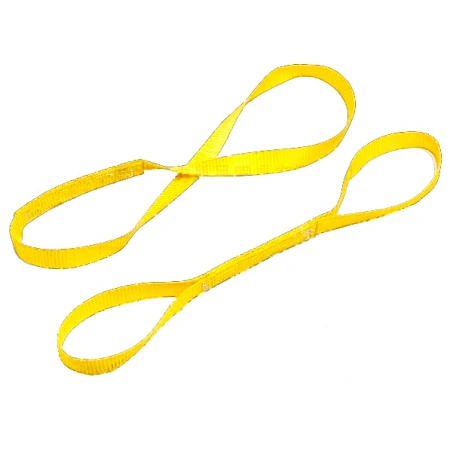
An eye that is too small will not seat; one that is too large puts the load on the tip of the hook. The clear length of the eye should be at least the bowl width of the hook plus a margin of about 10 մմ, so the band sits on the bearing surface and not on the point. On a shackle, the eye has to clear the pin diameter with the same margin, and the pin has to be large enough that the band is not bent around a knife edge.
Two eyes on one hook is a common shortcut and a poor one: the eyes crowd each other, the load shifts onto one of them, and neither sits on the bowl. A shackle or a ամբարձիչ տարածող ճառագայթ keeps the legs apart and the load where the drawing put it.
Where the eye meets a sharp corner, the eye is the part that fails first, because the stitch line concentrates the load. Edge protectors, or a reinforced eye, are cheaper than the next size up.
What the sling carries in each hitch
The figure on the band is the vertical, մեկ ոտքի վարկանիշ. Every other arrangement changes it, and the change is not a safety margin — it is the capacity. Figures below are for a 5 t պարսատիկ.
| Կտտացրեք | Angle to vertical | Գործոն | Capacity of a 5 t պարսատիկ |
|---|---|---|---|
| Ուղղահայաց, մեկ ոտք | 0° | 1.0 | 5,000 կգ |
| Խեղդված | 0° | 0.8 | 4,000 կգ |
| Զամբյուղ, two parts | 0-45° | 2.0 | 10,000 կգ |
| Զամբյուղ, two parts | 45-60° | 1.4 | 7,000 կգ |
| Two-leg assembly | 0-45° | 1.4 | 7,000 կգ |
| Two-leg assembly | 45-60° | 1.0 | 5,000 կգ |
| Երեք-չորս ոտք | 0-45° | 2.1 | 10,500 կգ |
| Երեք-չորս ոտք | 45-60° | 1.5 | 7,500 կգ |
Hitch and angle decide the capacity — the label figure is the vertical one
A worked example: ան 8 t machine on two legs at 30° to the vertical needs 8,000 ÷ 1.4 = 5,714 կգ մեկ պարսատիկով, ուրեմն ա 6 t կառուցել. On four legs at the same angle, 8,000 ÷ 2.1 = 3,810 կգ, ուրեմն ա 4 t build — but only if the load is shared evenly, which is rare enough that most riggers stay one size up.
Երկարություն, print and packing for a matched supply
The length on the order is the effective working length: the distance between the bearing points of the two eyes with the band laid flat and straight. It is not the cut length of webbing, and it is not the distance round the load. A ±2% tolerance is normal on a sewn article, and the figure is repeated on the band — “3 m” beside the WLL — so the receiving site can check what it has without a drawing.
For a matched supply the print is part of the specification: the WLL, երկարությունը, մանրաթելը, the batch and, where the customer wants it, the product or project reference. The bands are then packed with the goods — in the crate, in the accessory box, or banded to the frame — so nothing depends on the destination having a lifting supplier. Այն մեկանգամյա օգտագործման պարսատիկներ category page collects the forms this is done in, and where a whole consignment is wrapped as one body the բեռների բարձրացնող ցանց նույն գործն է անում.
One inspection, and what ends the sling
The check happens once, խնդրո առարկա, and it takes a minute per sling. Look at the eyes first — the stitch line, the bar-tack and the eye mouth — then run the band through both hands and read the print. A sling that fails is destroyed, not put back on the rack: an article that returns will be issued again carrying a marking nobody has checked.
- Eye damage: broken or pulled stitches, a lifted bar-tack, thread abraded at the fold, or a distorted eye mouth.
- Cuts and snags that have taken fibres out of the selvedge, or a band thin enough to show daylight through the weave.
- Chemical staining or softening — polyester is attacked by strong acids and some solvents, and the damage does not look like a cut.
- Heat glazing, hardening or a melted patch: the fibre has been above its working range.
- An illegible print or a missing label — on a one-trip sling this is the whole record.
- Knots, or a permanent kink at the eye from storage: a knotted sling cannot be rated.
Where the job rules out a soft band altogether — sustained heat, abrasive slurry, edges that cannot be protected — the մետաղալար պարսատիկ page sets out what changes, including the inspection points that replace these.
Why the cost per lift is the lowest
Cost per lift is the price plus everything that happens to the sling between lifts, divided by the number of lifts it gives. Here the numerator is a band, two seams, a print and a label, and the denominator is one. On a returnable article the numerator keeps growing — return freight, cleaning, a register, a periodic examination, storage — while the denominator only grows if the sling is used often enough and comes home every time.
| Cost driver | One way looped end sling | Returnable eye-and-eye sling |
|---|---|---|
| Making | Խումբ, two eyes, տպել, պիտակ | Խումբ, աչքերը, սերիալ, higher inspection grade |
| Purchase | Per consignment, matched to the product | Մի անգամ, to a higher specification |
| Return leg | Ոչ մեկը | Paid both ways on a heavy article |
| Ստուգում | One check at issue | Periodic thorough examination plus register |
| Storage at destination | None — cut and discarded | Rack space, cleaning, quarantine |
| Freight cube | Flat-packed, 50 to a bale | Բուլկեր, especially in long lengths |
| Administration | One line on the packing list | Asset register and serial tracking |
Where the cost per lift actually comes from
The crossover is worth stating honestly: an eye-and-eye sling used twenty times a year from the same store is cheaper as a returnable article, and we make those too. The one-way build wins where the reuse count is a handful and the return leg is long — machinery, export packing, project work — and it removes the temptation to re-issue a sling that still looks perfect.
Հաճախակի հարց
Is a looped end sling the same as an endless sling?
Ոչ. A looped end sling has two sewn eyes and an open band between them; an endless sling is a closed loop with no ends. The first suits lifting points and shackles, the second suits bundles with nothing to attach to.
Is this the cheapest form you make?
It is within a few percent of the circular sling, which uses one seam against two. Both are the cheapest rated slings in the range; the choice is made on the load, not on the price.
Is a single use sling weaker than a returnable one?
Ոչ. Same weave, նույնը 7:1 գործոն, same proof test. The word describes the journey, not the grade.
Can it be used a second time?
It is built and marked for one lift. A second use is an uninspected article doing a job nobody rated, which is the failure the one-way discipline exists to prevent.
Ինչ երկարությամբ եմ պատվիրում?
The effective working length, eye to eye between bearing points, with the band flat. A ±2% tolerance is normal, and the figure is printed on the band beside the WLL.
Which eye should I specify?
Flat eye for hooks, reinforced eye where the sling works on a shackle, 45° twisted eye where the band has to leave the hook in line. Eye clear length should exceed the hook bowl or pin diameter by about 10 մմ.
Արդյո՞ք գույնն ինձ ասում է կարողությունը?
Մինչև 10 տ, այո: մանուշակագույն 1 տ, կանաչ 2 տ, դեղին 3 տ, մոխրագույն 4 տ, կարմիր 5 տ, շագանակագույն 6 տ, կապույտ 8 տ, նարնջագույն 10 տ. Վերևում 10 տ, and on undyed bands, the print is the only statement.
Can you print our reference and pack the slings with the goods?
Այո՛. WLL, երկարությունը, batch and the customer reference are printed on the band, and the slings are packed in the crate, the accessory box or banded to the frame.
Որտեղ գնալ հաջորդ
Related categories and pages: Միակողմանի պարսատիկ, Միանգամյա օգտագործման բարձրացնող պարսատիկներ Անվերջ հանգույց, Միակողմանի կլոր պարսատիկներ, Ցանցային պարսատիկ, Մետաղական պարսատիկ պարսատիկ, 2000KG Մեկանգամյա օգտագործման բարձրացնող պարսատիկներ, Single use white lifting slings, Բեռների բարձրացման ցանց.
Կապ
Lift Sling Rigging Co., Ltd — հեռախոս և WeChat: +8618066002268, էլ :lift98@jslift.com, Lifute արդյունաբերական պարկ, Թայչժոու քաղաք, Ցզյանսու նահանգ, Չինաստան. HS կոդը 630790. Send the product, its mass, բարձրացման կետերը, the hook or shackle it will sit on and the length eye to eye, and we will confirm capacity, eye size and print before the slings are made.