

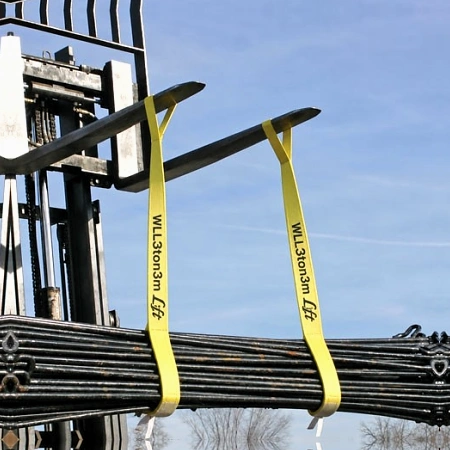
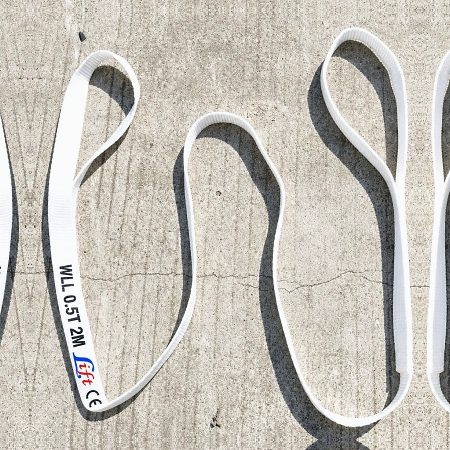
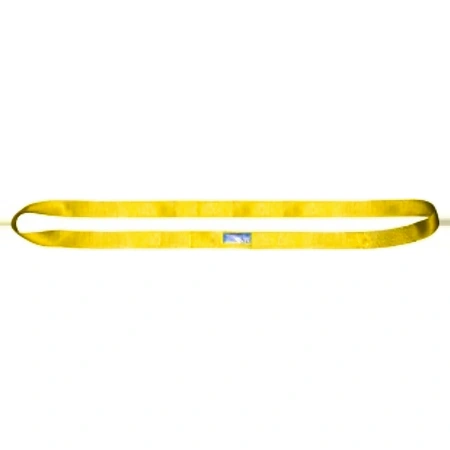
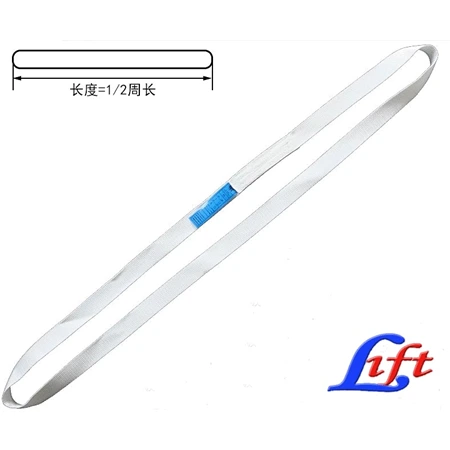
Lift sling rigging company produce Single use Slings,Single use Lifting Slings,Looped End Single Use Lifting Sling,Disposable One Way Slings,one way webbing sling,
Single Use Lifting Slings
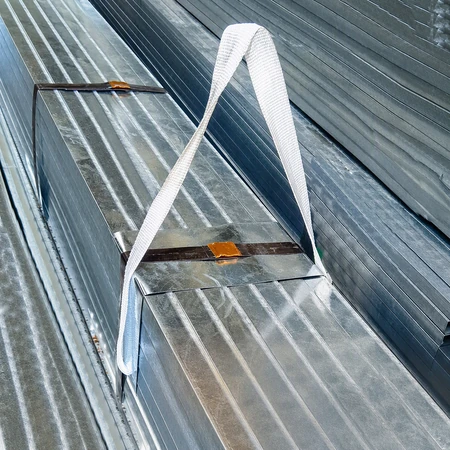
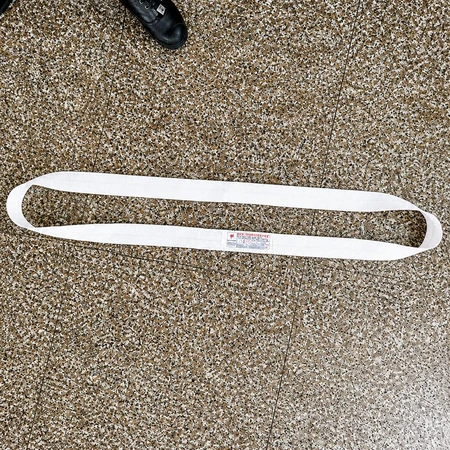
ए single use lifting sling is a rated flat woven band bought for one journey and supplied with the load rather than drawn from a sling store. It is made to the pick points and the pack it will travel with, marked to the reference of the consignment it belongs to, used once, and not recovered. Nothing in the engineering is reduced by the word: the band is woven, closed and marked to the same discipline as any webbing sling in this works, because the journey it is bought for is the only one it will ever do.
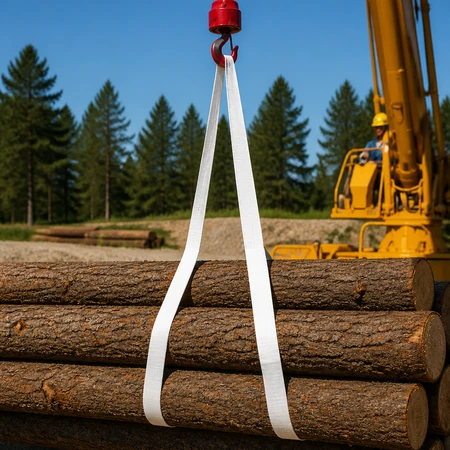
Where the article is actually found is not the lifting operation but the despatch around it. Finished goods leave a works as a pack, a stillage or a bundle; they are craned onto a vehicle, into a container or onto a deck; and they are re-slung at the far end by people who have never seen the works. The sling is part of the packing specification in the same way as the banding, the edge protectors and the wrapping, and it is bought in the same arithmetic: one band per pick point, per pack.
What single use fixes, and what it leaves alone
Four things are fixed by the word and one is not, and buyers who read the word as a specification rather than a purchase decision tend to buy the wrong article.
- Where the band comes from. It travels with the pack. It is not booked out of a store, not chased back from the last job and not counted twice.
- How many inspections it gets. One, at issue, when a fault can still be replaced by a band from the same consignment.
- What happens afterwards. Nothing. It goes with the load, is written off against the job and does not return to a rack.
- How it is counted. Once, on the packing list, in the same line as the banding and the wrapping.
The same article is sold as a one way lifting sling, ए single trip sling or a disposable sling, and none of those words changes what is printed on the band. They are names for one purchase decision, and the decision is the buyer’s: the band leaves with the load and is written off at the end of the journey.
What the word does not fix is the grade. The fibre, the weave, the width, the safety factor, the working load limit and the marking are specified exactly as they are for an article that will be used for years, and the band carries the same figures printed on it. A single-trip band is not a lighter article; it is a fully rated article whose commercial life has been decided in advance. Reading the word the other way – buying a narrower band, or a lower factor, because it is only going one way – is not a saving on the sling, it is an unrated margin taken out of the lift.
There is a documentation consequence too. On a reusable sling the inspection record is the evidence of condition. On a single-trip article there is no record after the lift, so the print on the band and the packing list carry the whole traceability of the article. That is why both are treated here as part of the specification rather than as paperwork that follows it.
Where the sling sits in a finished-goods despatch
A single use sling is bought for a sequence rather than for a lift, and the sequence has four handover points. Each asks something different of the band, and a specification written for one of them is usually wrong at another – which is how a consignment arrives with bands that are the right tonnage and the wrong length.
| The stage | What the band has to do | What decides it |
|---|---|---|
| Packing at the works | Lie against the load in the position it will be lifted from, without cutting at an edge or marking the finish | Pack geometry, edge condition, the finish, and whether the band stays on the pack during transport |
| Loading the vehicle or container | Take the load in the arrangement the loading gang will really use, not the one on the drawing | WLL for that hitch, headroom under the hook, and the fittings the crane or forklift already has |
| The journey | Stay with the consignment, legible and undamaged, with nothing loose to lose | How the band is marked, how the bands themselves are packed, and whether they ride on the load or in a carton |
| Re-slinging at the far end | Be usable by someone with no rigging plan, no store and no second choice | लंबाई, ends, marking, and whether the pick positions are marked on the load itself |
The forms supplied under this name
Single use lifting slings are supplied in four forms. They are bought the same way and rigged differently, and which one you want is a question about the ends, and about who does the re-slinging at the destination.
| The form | What it is | Where it is used |
|---|---|---|
| Looped end (eye and eye) – this page | A flat band with a formed eye at each end, the WLL and length printed on the band | The general-purpose form: packs, sheet, bundles, मशीनरी – anywhere there is a hook or a pin at each end |
| अंतहीन लूप | A band joined to itself into a closed ring, with no ends and no fittings of any kind | Wrapped loads, , coils, stone and round sections; wherever nothing must be threaded through a fitting |
| Ring and buckle | A band finished with a ring or a buckle at each end, so it can be closed around the load | Loads that have to be made up on themselves rather than hooked from above |
| Pipe and export | The version specified around a pipe or tube consignment, with the pick positions and the support dealt with together | Coated pipe and tube leaving a mill, a coating yard or a quay |
Looped end or endless loop: what the ends decide
The ends are the part of a single use sling that is decided last and matters first. A formed eye is the band folded back on itself and closed with rows of stitching, so it presents a soft flat loop to whatever it meets. Three consequences are worth writing into the order.
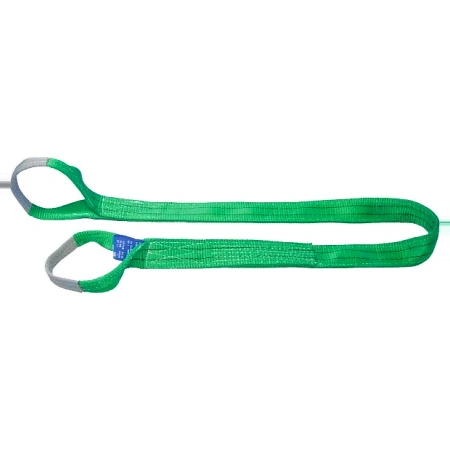
- The fitting has to pass through the eye. An eye is only as useful as the hook, shackle or pin that goes through it, and the sizes are not interchangeable: a large hook in a small eye bears on the stitching instead of on the band, and a small pin in a large eye lets the load shift as it takes up. State the fitting, not just the tonnage.
- The eye is where a band wears out. Abrasion, cutting and stitch damage concentrate at the eye because that is where hardware bears. Where the fitting is rough, worn, or a hook with a wide throat, a sleeved or reinforced eye is the cheap answer – and it has to be asked for before the bands are cut, not after.
- An endless loop removes the question. No eye, no fitting, nothing to thread: the band passes around the load and back through itself. It is the better choice where the re-slinging will be done by whoever is available, and the worse choice where the load must hang from a specific point.
The rule used in this works is short. If the band is attached to hardware at both ends, specify eyes. If it is wrapped around the load and choked, specify an endless loop. Where a consignment needs both – attached at the top, wrapped at the bottom – that is two articles, and it is worth saying so, because one band cannot be both.
Sizing: the working load limit ladder
Band width is not a free choice. It follows from the working load limit and the safety factor, and the works publishes the ladder it actually weaves: nine tonnages on a 4 mm band and nine on a 7.5 mm band, three factor columns, and a minimum length that steps up with the width rather than with the tonnage.
| डब्ल्यूएलएल | Thickness | Width at 5:1 | Width at 6:1 | Width at 7:1 | मिन. लंबाई | kg/m at 5:1 | kg/m at 6:1 | kg/m at 7:1 |
|---|---|---|---|---|---|---|---|---|
| 1 टी | 4 मिमी | 25 मिमी | 50 मिमी | 30 मिमी | 0.5 एम | 0.16 | 0.18 | 0.20 |
| 2 टी | 4 मिमी | 50 मिमी | 100 मिमी | 60 मिमी | 1.0 एम | 0.35 | 0.39 | 0.60 |
| 3 टी | 4 मिमी | 75 मिमी | 150 मिमी | 90 मिमी | 1.0 एम | 0.52 | 0.73 | 0.78 |
| 4 टी | 4 मिमी | 100 मिमी | 200 मिमी | 120 मिमी | 1.5 एम | 0.80 | 0.84 | 0.90 |
| 5 टी | 4 मिमी | 125 मिमी | 250 मिमी | 150 मिमी | 1.5 एम | 0.85 | 0.96 | 1.14 |
| 6 टी | 4 मिमी | 150 मिमी | 300 मिमी | 180 मिमी | 1.5 एम | 0.96 | 1.12 | 1.33 |
| 8 टी | 4 मिमी | 200 मिमी | 200 मिमी | 240 मिमी | 2.0 एम | 1.34 | 1.65 | 1.85 |
| 10 टी | 4 मिमी | 250 मिमी | 250 मिमी | 300 मिमी | 2.0 एम | 1.64 | 1.84 | 2.05 |
| 12 टी | 4 मिमी | 300 मिमी | 300 मिमी | 300 मिमी | 2.0 एम | 1.86 | 2.06 | 2.70 |
| 2 टी | 7.5 मिमी | 25 मिमी | 50 मिमी | 30 मिमी | 0.5 एम | 0.38 | 0.44 | 0.50 |
| 4 टी | 7.5 मिमी | 50 मिमी | 100 मिमी | 60 मिमी | 1.0 एम | 0.68 | 0.74 | 0.86 |
| 6 टी | 7.5 मिमी | 75 मिमी | 150 मिमी | 90 मिमी | 1.0 एम | 1.28 | 1.42 | 1.50 |
| 8 टी | 7.5 मिमी | 100 मिमी | 200 मिमी | 120 मिमी | 1.5 एम | 1.61 | 1.80 | 1.96 |
| 10 टी | 7.5 मिमी | 125 मिमी | 250 मिमी | 150 मिमी | 1.5 एम | 2.04 | 2.42 | 2.62 |
| 12 टी | 7.5 मिमी | 150 मिमी | 300 मिमी | 180 मिमी | 1.5 एम | 2.32 | 2.68 | 2.86 |
| 16 टी | 7.5 मिमी | 200 मिमी | 200 मिमी | 240 मिमी | 2.0 एम | 3.30 | 3.70 | 4.10 |
| 20 टी | 7.5 मिमी | 250 मिमी | 250 मिमी | 300 मिमी | 2.0 एम | 4.62 | 5.02 | 5.46 |
| 24 टी | 7.5 मिमी | 300 मिमी | 300 मिमी | 300 मिमी | 2.0 एम | 5.12 | 5.62 | 6.10 |
The works’ published standard range for flat woven single-trip bands. Nothing in it is a stock size: the tonnage, the factor, the thickness and the length together describe an article built to your line. Width and length are confirmed in writing before the bands are cut.
Three lines of reading are worth doing before the table is used, because two of them are not obvious.
- The width protects the finish; the thickness carries the tonnage. The two blocks publish the same width ladder, तो ए 2 t band is 50, 100 या 60 mm whether it is 4 mm or 7.5 mm thick. If the reason for going to the heavy block was a delicate surface, the heavy block buys nothing: the width column had already done the work.
- The minimum length follows the width. 25 mm takes 0.5 एम, 50 और 75 mm take 1.0 एम, 100 to 150 mm take 1.5 मी और 200 mm and above take 2.0 एम, in both blocks. Wanting a wide band for a soft surface means accepting a longer minimum, which in a short pack is the line that decides the order.
- The weight column is a handling figure. In a kit of fifty bands it is the difference between one person carrying the pack and two; at the top of the ladder a hundred metres of 300 mm band is over half a tonne, and the bands travel as cargo before they lift anything.
The factor is a market decision and a property of the band, not something that can be decided after delivery. 7:1 is the design factor used for general-purpose flat woven webbing slings under European practice, 5:1 is the customary North American figure for synthetic webbing slings, और 6:1 sits between them. The same tonnage at a different factor is a different article with a different width, so the factor has to be on the enquiry.
Marking to your own reference
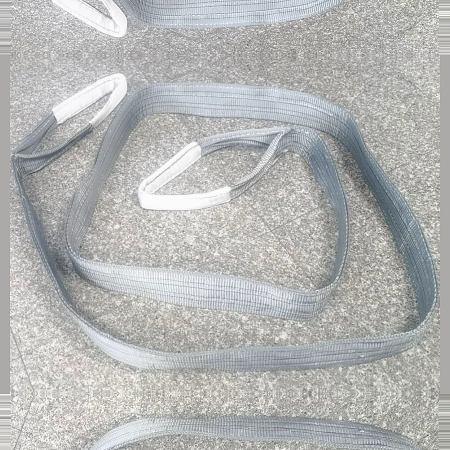
On an article with no second life, the print on the band is the only record of what it is. A single use band is therefore marked with the working load limit, the length it was cut to, and the reference the despatch actually uses – a pack number, an order number or your own part number – because that reference is what ties a band on a quay to a line on a packing list in an office.
- Legible after the journey, not after production. The figures have to survive a lorry, a container and a loading bay. Print that is small, low-contrast or on a face that enters the choke is print that will not be read.
- A colour as a second channel. One colour per pack type, per customer or per tonnage turns a container of identical bands into something that can be sorted at a glance, and it costs nothing on a made-to-order band.
- Language and lettering. Label text in the buyer’s language, or your own reference printed as given, is a printing instruction rather than a translation service – send the exact string to be printed.
- A marking is not a certificate. Where a project asks for a documented figure – a batch test, a declaration, a standard marking – say so on the enquiry and it is confirmed before the order. A single-trip band is not normally issued with the same document package as a reusable certified sling, and assuming otherwise is the commonest documentation mistake on this product.
Supplying them as a kit: one band per pick point, per pack
Single use lifting slings are bought in the same arithmetic as the packing, and the arithmetic is done once because nothing comes back. The count comes from the number of packs, the number of pick points on each pack, and a deliberate allowance for what happens at a loading bay.
- Count from the pack, टनभार से नहीं. Two picks per pack is two bands per pack; a four-point lift is four. A consignment of ninety packs at two picks is 180 bands, and that number belongs on the order rather than in someone’s head.
- Add the handling allowance on purpose. Two to five per cent covers the band that is cut on a sheet edge while the pack is being made up. State it, so the shortfall is a line on the order instead of a delay at the dock.
- Weigh the consignment. The bands are cargo before they are lifting gear, and a bale of 300 mm band is a two-person lift in its own right.
- Pack for the journey. Coiled and labelled, banded bales, cartons or a labelled bag per pack, with the reference on the outside matching the packing list inside.
- Make the three counts one number. The count on the order, the count in the carton and the count on the load have to agree, or the saving that justified a one-trip article is spent on a short shipment and a second freight.
Where the bands are supplied as part of the product – packed inside a crate, strapped to a stillage, taped into a bundle – the sling becomes a line on the bill of materials and is worth treating as one: a part number, a length, a colour and a printing that does not change between shipments. A band specified afresh for every shipment gets re-decided every time, and the re-decision is where the wrong length is ordered.
What changes with the load
The parameter table is the same for every single use sling. What changes with the load is which line of it matters, and the table below is the practical reading of the loads this article is normally bought for.
| The load | The figure that matters most | Why | What else to write |
|---|---|---|---|
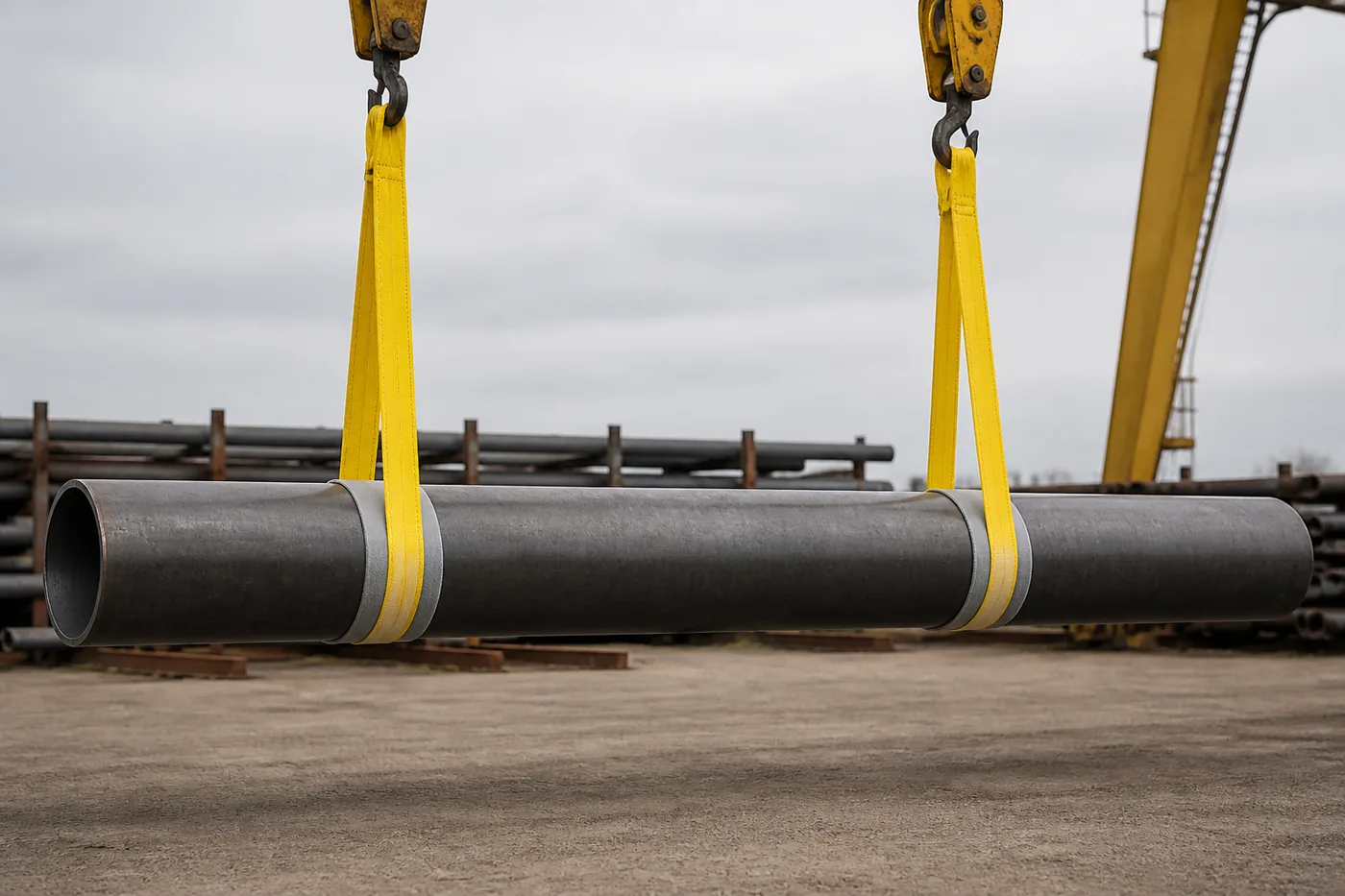
| Coated steel pipe, in joints | Band width | Wide contact is the coating’s only protection from the band doing the lift | Outside diameter, and the two pick positions measured from an end |
| Pipe or tube in bundles | WLL for the bundle | The bundle is the load; each position carries its share of the whole pack | How the bundle is closed, and the girth at each pick |
| Galvanised sheet and profiles | Eye protection and width | A cut sheet edge is a blade against a woven band | Whether edge protectors are used, stack height, and the direction of the band |
| Sawn timber and timber packs | Width at the arris | A narrow band on a sharp corner prints a line and cuts the weave | The pack’s travelling mass, and where the band is allowed to sit |
| Plywood and sheet panels | लंबाई | The band has to reach round a stack, not round a sheet | Whether the band may bear on the face or must stay on the edges |
| Aluminium, mill or anodised | Fibre and width together | The softest load in the table, and the one where a witness mark is a rejection | The finish, and whether a witness mark is acceptable |
| Machinery, castings and precast | Ends | Hardware at both ends, often with a spreader or beam above | The fittings, the beam, and the headroom under the hook |
The inspection at issue
A single use band has one inspection in its life and it happens before the load, when a fault can still be replaced from the same consignment. Four things are looked at, in this order.
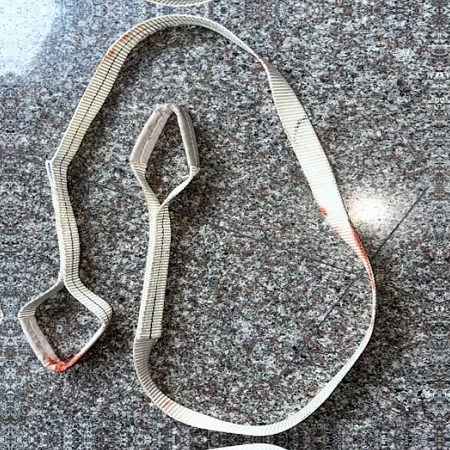
- The weave where it meets the load. Cuts, abrasion, a shiny or glazed face, or a band that has been pinched are all reasons to reject before the lift rather than during it.
- The stitching or sleeving at the ends. The eye is the loaded part of the band; loose or broken stitching at an eye is the failure that gives no warning at the load.
- The label and the marking. If the working load limit or the length cannot be read, the band cannot be matched to the pack it was cut for, and the whole point of the marking was that match.
- What it has been lying in. Grit, swarf, oil and standing water travel into the contact. A clean band is the cheapest protection on the list and the only one that costs nothing to specify.
At the receiving end: re-slinging and disposal
Half the value of a single use sling is decided at the destination, by people who did not buy it. Three things make that handover work, and all three are decided at the works.
- The band arrives with the load, not in a bag in the cab. A band that has to be found before it can be used is a band that will be replaced by whatever is on the lorry.
- The pick positions are marked on the load. A chalk mark, a stencil or a label on the pack repeats the first lift at the far end, where there is no drawing and no rigger.
- The band is disposed of, not stored. Polyester webbing is an industrial textile and goes where the local rules send industrial textiles – it does not become site lifting gear by being hung on a rack. A band that comes home to a store will be issued again, and its marking will then be stating something that is no longer true.
Where a receiver decides to keep a band and use it again, that is a decision for the competent person on that site after inspection, and it does not turn a single-trip article into an inspected, प्रमाणित, returnable one. The honest position is the one on the label: the article was made and priced for one journey.
Six lines on the enquiry
A single use sling is not a catalogue number; it is a short specification. The shortest one that works has six lines on it, and buyers who write all six receive the band they wanted the first time.
| # | The line | What it fixes | What goes wrong without it |
|---|---|---|---|
| 1 | The pack, and its mass as it travels | The load the band actually sees | A band sized on the product instead of on the pack it is packed in |
| 2 | The pick points and their spacing | Where the band sits, and the length that reaches | A band that will not reach round the pack at both picks |
| 3 | The arrangement: खड़ा, basket or choke | The WLL that applies | A figure taken from the load’s total mass instead of the leg |
| 4 | The fittings at each end, with their sizes | Eye type and eye size | An eye that will not take the hook, or a pin that lets the load shift |
| 5 | The safety factor and the market it is sold into | The width column that is cut | A band re-cut after the order, or a factor that does not match the project |
| 6 | Quantity per pack, the reference to print, and the packing | The count and the marking | A consignment that arrives short, or bands that cannot be matched to a load |
अक्सर पूछे जाने वाले प्रश्नों
What is a single use lifting sling?
A rated flat woven band bought for one journey and supplied with the load rather than issued from a store. It is cut to the pick points of the pack it travels with, marked with its working load limit, its length and the reference of the consignment, used once and not recovered. The word describes the journey and the commercial decision; the fibre, weave, factor and marking are specified as for any webbing sling.
Is a single use sling weaker than a reusable one?
नहीं. The two are made to the same discipline: the width follows the working load limit and the safety factor, and the figures printed on the band are the figures that apply to the lift. Buying a lighter band because it is only going one way removes margin that the lift still needs.
Can it be used a second time if it looks perfect?
That is exactly the case the discipline exists to prevent. It looks perfect because one lift does not visibly age a webbing band, and a second use is an uninspected article doing a job nobody rated. Whether a band could be re-used is a decision for the competent person on the site that receives it, after inspection – but the article was made, marked and priced for one journey.
Can single use lifting slings be packed with our product?
हाँ, and it is the usual way they are bought. Bands can be packed inside a crate, strapped to a stillage or taped into a bundle, labelled per pack, and listed as a line on the packing list with the reference that matches the band’s print. Send the pack, the pick points and the quantity per pack and the packing is quoted with the bands.
Can the band be printed with our own part number, colour or logo?
The band can be made in a colour and printed with the working load limit, the length and your own reference. Send the exact string to be printed and the colour to be matched; both are production instructions and are confirmed before the bands are cut.
What is the difference between a single use sling and a disposable sling?
Nothing but the word. एक बार इस्तेमाल लायक, one way, single trip and disposable all describe the same purchase decision: the band is bought for one journey and not recovered. They say nothing about the form of the ends, the fibre or the safety factor, which are separate lines on the order.
What lengths and widths can be supplied?
कार्य भार सीमा से 1 टी को 24 टी, band widths from 25 मिमी से 300 mm on 4 mm or 7.5 mm flat woven polyester, and lengths from 0.5 मी से 100 एम. The minimum length steps up with the width, so a wide band for a soft surface means accepting a longer minimum.
Do single use slings come with a certificate?
Not by default, and it is better to ask than to assume. A single-trip band is not normally issued with the same document package as a reusable certified sling. Where a project needs a batch figure, a declaration or a specific standard marking, put it on the enquiry and it is confirmed in writing before the order.
Where each question goes on this site
A single use sling raises questions that belong to the article, to the pack and to the journey, and this site answers them on different pages rather than repeating them here.
- One way sling – the category this page sits under
- Disposable one way sling – the flat band and the loads it is bought for
- Single-use lifting slings, endless loop – the closed-ring form
- Webbing slings – the returnable members of the same family
- Lifting devices – hooks, shackles and the hardware at the eye
- Lifting spreader beam – when the picks hang from a beam, not the hook
- Cargo lifting net – the same consignment, netted instead of slung
संपर्क
लिफ्ट स्लिंग रिगिंग कंपनी, लिमिटेड makes the article on this page: flat woven single-trip bands in the width, मोटाई, length and colour a pack needs, printed with the working load limit, the length and your own reference, packed to travel with the product and not to come back.
Send the pack, its travelling mass, the two pick positions and the six lines of Table 5, और हम चौड़ाई की पुष्टि करेंगे, the factor, the length and the marking before the bands are cut.
- Telephone and WeChat: 18066002268
- ई-मेल: 702461526@qq.com
- पता: लाइफ़्यूट इंडस्ट्रियल पार्क, ताइझोउ शहर, ज्यांग्सू प्रांत, चीन
- एचएस कोड: 630790