

Lift sling rigging company produce Polypropylene Rope Cargo Net Sling,PP Cargo Net Sling,Polypropylene Cargo Net,מנשא רשת מטען מפוליפרופילן,High Quality Polypropylene Rope Thick Sturdy Safety Net,Cargo Lifting Mesh.
Polypropylene Rope Cargo Net Sling
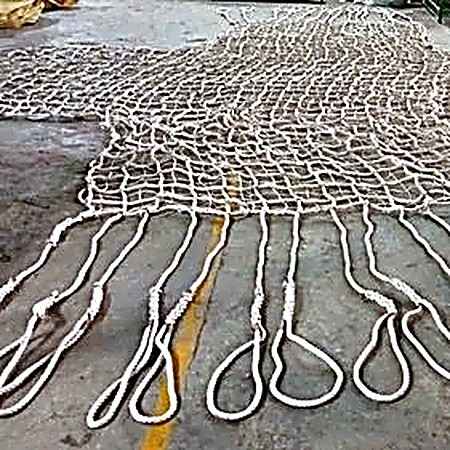
A polypropylene rope cargo net sling is a four-loop synthetic rope net built for general lifting. The cargo sits inside the rope lattice, the four corner loops gather onto the hook, and the net closes on the load as the crane takes up the slack. Every sling is braided from 100 % polypropylene rope in capacities from 0.5 לא ל 20 ט, rope diameters from 6 מ"מ ל 24 mm and mesh openings from 100 מ"מ ל 400 מ"מ, and each one is load tested before it leaves the plant.
Polypropylene is the utility fibre of the rope range: the most economical of the common rope materials, the lightest, and the only one that floats and absorbs essentially no water. That combination is why this is the net that goes on wet work, on quays, in fish farms and in wash-down bays, and why fleet operators standardise on it for mixed general lifts where a nylon net would be over-specified and a wire rope net would damage the cargo.
| פָּרִיט | טווח סטנדרטי |
|---|---|
| קיבולת מדורגת | 0.5 ט – 20 ט, ארבע לולאות פינות, rated on a three-leg basis |
| חֶבֶל | 100 % פוליפרופילן, 6 – 24 מ"מ, 3-גדיל מונח או 8 גדילים קלוע |
| רֶשֶׁת | 100 – 400 מ"מ, ריבוע או יהלום, מסוקס או חסר קשרים |
| Lifting loops | Four spliced corner loops; thimble-lined or steel ring on request |
| מקדם בטיחות | 5:1 / 6:1 / 7:1 |
| יַחַס | Ultraviolet-stabilised (standard for this net) |
| הסמכה | לִספִירַת הַנוֹצרִים / GS / הוּא; ISO 9001; מעבדת CNAS; DNV |
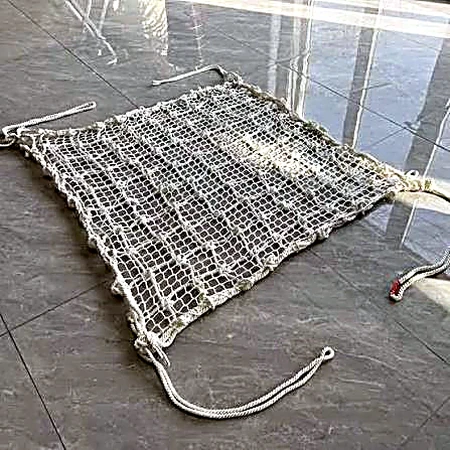
1. What a polypropylene rope cargo net sling is – ומה זה לא
Four features define the product. Each one changes what the net will and will not do, so each one is worth settling before you order.
- חֶבֶל, not webbing. A round-rope lattice is heavier and bulkier than a flat webbing net of the same capacity, but the strand rolls over the load instead of cutting into it, and a damaged rope net can be re-spliced on site – a torn webbing net cannot.
- פוליפרופילן, not nylon. PP costs less, weighs less, צפים, and does not absorb water or rot. In exchange it is more temperature-sensitive, less abrasion-resistant and stiffer in the hand than nylon. סָעִיף 2 puts the three rope fibres side by side.
- Four lifting loops, one at each corner. This is the standard configuration for a general lifting net: the four loops gather onto the hook, the net closes over the load as the slack comes out, and nothing has to be threaded underneath the cargo.
- A doubled border rope. The border carries the whole load from the mesh into the loops, so it is a heavier rope than the mesh and it is spliced – לא מסוקס – at every corner.
מה זה לא: an open rope lattice is not a closed container. Small items fall through, so the mesh must be sized from the smallest item in the load, not from the total weight. For genuinely loose or bulk material the correct product is a closed-bottom net – את רשת הרמה מפוליאסטר – rather than an open cargo net. Nor is it a hot-duty item: polypropylene softens well below nylon, so hot slag, hot castings and welding areas are out of scope at any capacity.
2. Why polypropylene rope – the material decision
Three synthetic fibres dominate lifting rope, and they are not interchangeable. Choosing between them is the single biggest decision on this page, because it sets the price, the working life and the failure mode of the net.
| נֶכֶס | פוליפרופילן | ניילון | פּוֹלִיאֶסטֶר |
|---|---|---|---|
| צְפִיפוּת | 0.90 – 0.92 g/cm3 – צפים | 1.14 g/cm3 – כיורים | 1.38 g/cm3 – כיורים |
| ספיגת מים | Essentially nil, לְהַלָן 0.1 % | Absorbs water and loses strength when soaked | נמוך מאוד |
| Strength loss when wet | אַף לֹא אֶחָד | Small but real | אַף לֹא אֶחָד |
| Rot and odour | חֲסִין | Can rot and hold odour if stored wet | חֲסִין |
| התארכות בהפסקה | לְמַתֵן, אוֹדוֹת 15 – 20 % | גָבוֹהַ – absorbs shock best | נָמוּך – least stretch |
| עמידות בפני שחיקה | הוֹגֶן – the weakest of the three | טוֹב | טוב מאוד – הטוב מבין השלושה |
| Ultraviolet | Degrades quickly unless stabilised | לְמַתֵן | טוֹב |
| עמידות כימית | טוב נגד חומצות, alkalis and aqueous chemicals | מותקף על ידי חומצות חזקות | טוב נגד חומצות, מותקף על ידי אלקליות חזקות |
| טמפרטורת עבודה | אוֹדוֹת -20 ג ל +80 ג | גבוה יותר | הגבוה מבין השלושה |
| עלות יחסית | הכי נמוך | Middle | הֲכִי גָבוֹהַ |
| בחר את זה מתי | רָטוֹב, chemical or general utility lifting on a budget | Shock loads and irregular impact | Maximum strength per diameter and best abrasion life |
Rope for these nets is braided in three polypropylene constructions, and the choice shows up in how the net handles and how long it lasts. Multifilament – many fine filaments twisted into each strand – is the softest and most flexible, the easiest to splice, and the construction most general lifting nets are made in. Monofilament – a single extruded filament per strand – is stiffer and smoother, resists surface dirt better, but is harsher on the hands and less forgiving over a load. Split-film, made from split polypropylene tape, is the most economical and perfectly serviceable for light duty, with lower abrasion resistance than the other two.
The rope comes off the same braiding floor as our חבלי ניילון, and the mesh rope is matched to the diameters used in our רשתות חבל בטיחות – so a mixed order of lifting nets and safety nets can be built from one rope specification.
3. How four corner loops actually share the load
Four loops on four corners is the configuration this product is built around, and it is also where most buyers make their only serious mistake. Four loops do not give four times the capacity of one loop.
Load share in a four-leg arrangement is rated on a three-leg basis. That is standard practice across lifting equipment, and it exists because a real load almost never sits perfectly symmetrically: one corner takes up first, one corner sits slack, the cargo shifts as it leaves the ground. Rating on three legs builds that asymmetry into the number on the label instead of leaving it to the rigger.
The second factor is the leg angle, נמדד מהאנך – not from the deck. As the four loops spread wider from the hook, the tension in each leg rises for the same load and the arrangement carries less. Loop length is what controls it: a longer loop lets the net drop further below the hook and opens the legs wider, so if you lengthen the loops for a deep load, re-check the rating rather than assuming it is unchanged.
| הַחְלָטָה | למה זה חשוב |
|---|---|
| Loops spliced or knotted | A spliced eye keeps the full rope strength; a knot reduces it. Specify spliced for every lifting net |
| Thimble in the eye or not | A thimble protects the eye against the hook and against its own wear – recommended for heavy or daily use |
| אורך לולאה | Sets how far the net drops below the hook and how steeply the legs sit, and therefore the leg angle |
| Corner reinforcement | The corner wears first on a rope net; a doubled border and a reinforced corner are what make the four loops last |
| קישור מאסטר, hooks or beam | One master link gathers all four loops onto a single point; four separate hooks on a beam give a more predictable share than four loops on one hook |
4. פרמטרים טכניים
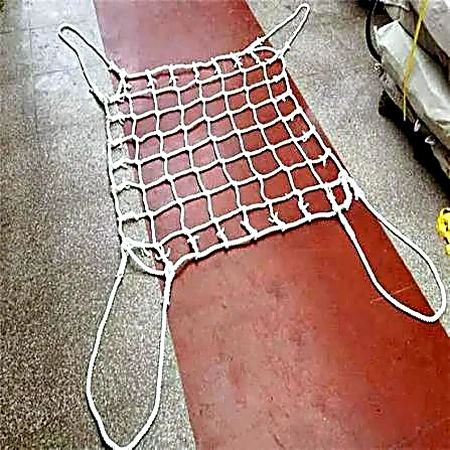
The figures below describe the standard range. קוטר חבל, רֶשֶׁת, גודל נטו, גְבוּל, loop length and capacity are all made to order, so treat this table as the starting point for a quotation rather than a fixed catalogue page.
| פָּרָמֶטֶר | מִפרָט |
|---|---|
| סוג מוצר | Polypropylene rope cargo net sling with four corner lifting loops |
| Rope material | 100 % פוליפרופילן – מולטיפילמנט, monofilament or split-film |
| בניית חבלים | 3-גדיל הניח (תֶקֶן) או 8 גדילים קלועים |
| קוטר חבל | 6 / 8 / 10 / 12 / 14 / 16 / 20 / 24 מ"מ; 12 מ"מ סטנדרטי |
| פתח רשת | 100 – 400 מ"מ, ריבוע או יהלום; 200 מ"מ סטנדרטי |
| קֶשֶׁר | מְסוּקָס (repairable on site) או קלוע ללא קשרים |
| גְבוּל | חבל גבול כפול, heavier than the mesh rope, מחוברים בכל פינה |
| Lifting loops | Four corner loops standard – spliced eye, with or without thimble |
| אורך לולאה | 300 – 600 מ"מ, או להזמין |
| גודל נטו | 1 x 1 מ ל 8 x 8 מ, or made to drawing |
| קיבולת מדורגת | 0.5 ט – 20 ט, set by rope diameter, mesh and lifting arrangement |
| Rating basis | Three-leg basis – the standard assumption for a four-leg arrangement |
| מקדם בטיחות | 5:1 / 6:1 / 7:1 |
| יַחַס | Ultraviolet-stabilised – a requirement, not an option, for polypropylene outdoors |
| צֶבַע | לבן טבעי, שָׁחוֹר, כָּתוֹם, יָרוֹק, blue or a custom colour |
| טמפרטורת עבודה | -20 ג ל +80 ג |
| הסמכה | לִספִירַת הַנוֹצרִים / GS / הוּא; ISO 9001; מעבדת CNAS; DNV |
| התאמה אישית | OEM / גודל ODM, רֶשֶׁת, צֶבַע, מַדבֵּקָה, logo and packing |
5. Standard sizes and rated capacities
Capacity follows rope diameter, mesh and lifting arrangement together. The table below gives the working range for each net size at four corner loops, וו אחד. Heavier duty is quoted from a thicker rope rather than from the same net at a higher number.
| גודל נטו | Rope dia. | רֶשֶׁת | קיבולת מדורגת | שימוש אופייני |
|---|---|---|---|---|
| 1.0 x 1.0 מ | 8 מ"מ | 100 מ"מ | 0.5 – 1 ט | Small parts, תופים, machine components |
| 1.5 x 1.5 מ | 10 מ"מ | 150 מ"מ | 1 – 2 ט | משטחים, מוצרים ארוזים, חומר בשקיות |
| 2.0 x 2.0 מ | 12 מ"מ | 200 מ"מ | 2 – 4 ט | הרמה כללית, bagged and loose cargo |
| 2.5 x 2.5 מ | 14 מ"מ | 200 מ"מ | 3 – 6 ט | עֵץ, drums and mixed loads |
| 3.0 x 3.0 מ | 16 מ"מ | 200 מ"מ | 5 – 8 ט | Bulk material and scrap |
| 4.0 x 4.0 מ | 20 מ"מ | 250 מ"מ | 8 – 12 ט | Logs and large loose loads |
| 6.0 x 6.0 מ | 24 מ"מ | 300 מ"מ | 12 – 20 ט | Quay, hold and yard work |
| עשוי לציור | 6 – 24 מ"מ | 100 – 400 מ"מ | 0.5 – 20 ט | Any size, mesh and loop arrangement |
Where the four loops gather onto a beam instead of a single hook, the arrangement is rated by the beam – לִרְאוֹת הרמת קורת מפזר. Where the load is palletised and needs a flat, closed underside, את רשת מטען משטח מנוף is the closer match than an open lattice.
6. חֶבֶל, רֶשֶׁת, border and loop options
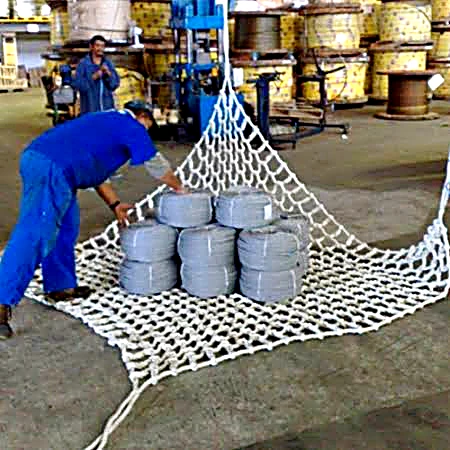
Everything about the construction of the net itself is set on the drawing, and every line below is a choice rather than a default. The two that matter most are the mesh opening and the loop termination.
| פָּרִיט | אפשרויות | בחר את זה מתי |
|---|---|---|
| קוטר חבל | 6 – 24 מ"מ; 12 מ"מ סטנדרטי | Follows the load and the duty – a thicker rope lasts longer on rough work even at the same capacity |
| פתח רשת | 100 – 400 מ"מ; 200 מ"מ סטנדרטי | Sized from the smallest item in the load, לעולם לא מהמשקל הכולל |
| Mesh orientation | Square or diamond | Diamond follows an irregular load as it settles; square is easier to measure and inspect |
| Knot or knotless | Knotted or knotless braided | Knotted can be re-spliced on site; knotless has no knot to wear and hangs flatter |
| חבל גבול | Doubled, heavier than the mesh rope | Always – the border is the load path from the mesh into the loops |
| Corner | Reinforced corner with spliced eye | Always for lifting duty, and essential above 3 ט |
| Loop termination | עין משותפת, thimble-lined eye, or loop over a steel ring | Thimble protects the eye on a hook; a steel ring suits four loops gathering on one master point |
| הֲגָנָה | Sleeve or wear pad at contact points | קצוות חדים, and structure the net rubs against |
7. Where a polypropylene net is the right answer – and where it is not
This net is sold for general lifting, and general means general: עומסים מעורבים, mixed sites, mixed weather. That is exactly what polypropylene rope is good at. It is equally important to know where it stops being the right choice, because buying the wrong fibre is the most common cause of a short service life.
| חוֹבָה | Is this the right net? | What to use instead |
|---|---|---|
| רָטוֹב, יַמִי, quayside and wash-down work | כֵּן – the best of the rope nets here | Nothing needs changing: PP floats and does not absorb water |
| Chemical and fertiliser exposure | כֵּן, for aqueous chemicals | Check first for strong solvents and hot hydrocarbons |
| General utility lifting of mixed cargo | כֵּן – the most economical rope net | חבל פוליפרופילן, כפי שצוין |
| מטען חם, hot slag, welding areas | לֹא – PP softens well below nylon and polyester | מתלים של חבל תיל rated for the temperature, or a chain sling |
| חַד, highly abrasive loads such as scrap plate | Marginal – PP abrades faster than nylon | ה מנשא רשת מטען ניילון כבד with protection sleeves |
| Shock loading and irregular impact | Marginal – PP stretches less than nylon | ה רשת להרמת מטען מניילון, which absorbs shock better |
| Maximum capacity from a thin rope | לֹא – nylon and polyester are stronger per diameter | Nylon or polyester rope, or a flat webbing net |
| Long-term outdoor storage in strong sun | Only if ultraviolet-stabilised | Specify the stabilised rope and inspect for surface chalking |
If your duty falls in the right-hand column, the alternatives are on the same site: את רשת רצועות פוליאסטר להרמה, את רשת להרמת מטען עם רשת ו, for tensioned restraint rather than lifting, את רשת לאבטחת מטען. Tell us the cargo and we will say which one fits rather than quoting the one you asked for.
8. צֶבַע, סימון וזיהוי
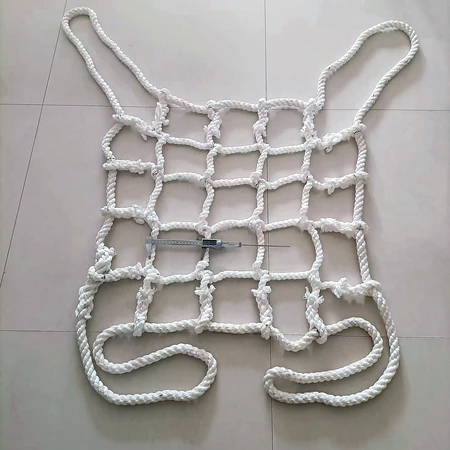
A general lifting net moves between yards, trucks and sites, so it has to be identifiable wherever it ends up – and identifiable at the moment of inspection, when the label may already be dirty.
- מגבלת עומס העבודה, net size and mesh are carried on a sewn capacity label; the rope itself can also be marked.
- Because the rope is dyed rather than printed, colour is the most durable identification on a rope net: natural white, שָׁחוֹר, כָּתוֹם, green and blue are standard, and a custom colour is possible on larger orders.
- The standard colour code can be applied to the label – סָגוֹל 1 ט, יָרוֹק 2 ט, צָהוֹב 3 ט, אָפוֹר 4 ט, אָדוֹם 5 ט, חוּם 6 ט, כְּחוֹל 7 ט, כָּתוֹם 8 ט – so the net can be read from across a yard.
- A contrasting border rope makes the edge and the four corners obvious at the moment of rigging.
- הזמנות OEM יכולות לשאת מותג משלך, כְּתוֹבֶת, warning text or certificate number on the label and in the packing.
- Nets ship folded or coiled in a bag or a crate; a rope net is bulky against a webbing net of the same capacity, so allow for it in storage.
9. בקרת איכות והסמכה
We braid the rope and make the net in the same plant, so diameter, רֶשֶׁת, border and loop length are under our control rather than bought in from a third party and assembled.
- 40 שנים של ייצור ציוד הרמה – נוֹסַד בְּ 1985 בטאיז'ו, ג'יאנגסו, עם יותר מ 200 עובדים, אחד מבסיסי ההרמה והייצור נטו הגדולים בסין.
- מוצרי הרמה עם אישור CE ו-GS, עם אישור JIS על הזמנות יצוא.
- Own testing laboratory with CNAS laboratory accreditation, אישור CE אירופאי ואישור DNV, ו 15 פטנטים מורשים על מוצרי ההרמה שלנו.
- 1000 לא מכונת בדיקה אופקית – the breaking load of every sling is tested and documented rather than sampled, ודוח בדיקה חומרי נוסע עם ההזמנה.
- Every net weighed, measured and marked with its working load limit, גודל נטו ורשת לפני האריזה.
The certificate set is published on our הסמכה עַמוּד, including the CE attestation of conformity to EN 1492-1 for our webbing slings and our ISO 9001 quality management certificate.
10. How to specify a polypropylene rope cargo net sling
שמונה פיסות מידע מספיקות לנו כדי לצטט נכון בפעם הראשונה. The two most often left out are the lifting arrangement and the working environment, and both of them change the recommendation.
| מֵידָע | למה זה חשוב |
|---|---|
| Cargo and how it is presented | Loose, bagged, משטחים, bundled or irregular – this decides the mesh and the net form |
| Gross weight per lift | Sets the rope diameter and the rated capacity |
| Load dimensions and shape | Sets the net size, and whether a flat net or a bag form is right |
| פתח רשת | Sized from the smallest item in the load, לעולם לא מהמשקל הכולל |
| Lifting arrangement | Four loops on one hook, on a master link, or on a beam – this sets the rating |
| Loop length and type | Sets the leg angle, and whether the eye needs a thimble |
| סְבִיבָה | מַיִם, כימיקלים, ultraviolet exposure, temperature and abrasion – this decides whether polypropylene is right at all |
| תיעוד ואריזה | מקדם בטיחות, לִספִירַת הַנוֹצרִים / סימון GS, דוח בדיקה, own-brand labelling and export packing |
11. שאלות נפוצות
What capacity can a four-loop polypropylene cargo net sling lift?
The capacity on the label, for the arrangement you actually use – and it is rated on a three-leg basis even though there are four loops, because a real load rarely sits perfectly symmetrically. Standard nets run from 0.5 לא ל 20 ט; anything above that needs a different product, not a longer label.
Does the leg angle really change the capacity?
כֵּן, and it is measured from the vertical, not from the deck. The wider the four legs spread from the hook, the greater the tension in each leg for the same load. Loop length controls the angle, so if you lengthen the loops for a deep load, re-check the rating instead of assuming it is unchanged.
Why choose polypropylene instead of nylon?
Price, water and chemicals. Polypropylene is the most economical rope fibre, it floats, it absorbs almost no water and it resists acids and alkalis. Nylon is stronger for a given diameter, stretches further and absorbs shock better, but it takes up water and costs more – so nylon is the right answer for impact duty, not for wet general lifting.
Is polypropylene suitable for outdoor use?
כֵּן, provided the rope is ultraviolet-stabilised, which we supply as standard for this net. Unstabilised polypropylene degrades in sunlight quickly: it goes dull and chalky and the filaments begin to crumble. Even stabilised, inspect for chalking and retire the net when the surface has gone friable.
Can the net be used in the sea or in a fish farm?
It is one of the best rope nets for it. The net floats, so it can be recovered if it goes over the side; it does not absorb water, so it does not get heavier or rot; and salt water does not affect it. Rinse it in fresh water and dry it in the shade before storage.
Can I lift bags or loose material in an open net?
Small items will pass through an open lattice. For bags, choose a mesh the smallest bag cannot squeeze through. For genuinely loose or bulk material, an open rope net is the wrong product – use a closed-bottom hoisting net instead.
Can a polypropylene rope net be repaired?
כֵּן, and this is the advantage of rope over webbing. A damaged section can be re-spliced or re-knotted with matching rope by a competent person, and the repair must be recorded. Withdraw the net if a splice has failed, a corner is damaged, or the rope has gone stiff and hard.
איך מוכחת היכולת?
הרשתות מסופקות ב 5:1, 6:1 אוֹ 7:1 כפי שצוין. עומס השבירה של כל מתלה נבדק בעצמנו 1000 מכונה ודוח בדיקת חומרים נוסעים עם ההזמנה; the products are CE and GS certified, our laboratory holds CNAS accreditation, and export orders can be supplied with JIS certification.
12. Why buy polypropylene rope cargo net slings from Lift
We have been making lifting equipment in Taizhou, ג'יאנגסו מאז 1985. Rope braiding, net making, testing and packing happen on one site, which is why a custom net is a production order rather than a special project.
- Own rope production. קוֹטֶר, רֶשֶׁת, גְבוּל, colour and loop length are under our control, so the net is built to your job rather than assembled from a catalogue.
- Tested per net, not per batch. Breaking load is measured on a 1000 t horizontal machine and documented, עם CE, GS, הוּא, הסמכת CNAS ו-DNV מאחורי הטווח.
- Built around the four-loop configuration. Spliced eyes, optional thimbles, loop length set to your leg angle, and a doubled border rope at every corner.
- One supplier for the whole lifting range. Rope net slings, מתלים רצועות, מתלים עגולים, מתלים של חבל תיל and lifting spreader beams.
- OEM ו-ODM. Own-brand labelling, custom rope colours, גדלים מותאמים אישית ואריזת יצוא עבור מפיצים ומפעילי צי.
The rest of the net range is on the רשתות להרמת מטען טַבּוּר, with the flat webbing version on the רשת להרמת מטען page and the רשת רשת ניילון שטוחה for loads that need a closed, non-abrasive surface.
13. בקש הצעת מחיר
Send the cargo, the gross weight per lift, the load dimensions, פתח הרשת, the lifting arrangement and the environment the net will work in – or a sketch of the net you have in mind – and our engineers will confirm the rope diameter, the capacity and the loop arrangement in writing. צור קשר עם המהנדסים שלנו with your specification.
חברת חבלול מתלים להרים – פארק התעשייה ליפוט, העיר טאיז'ו, מחוז ג'יאנגסו, סִין
טל: +86 523 8693 5818 | וואטסאפ: +86 180 6600 2268 | אֶלֶקטרוֹנִי: 702461526@qq.com
קוד HS 630790 – lifting nets of textile materials.