

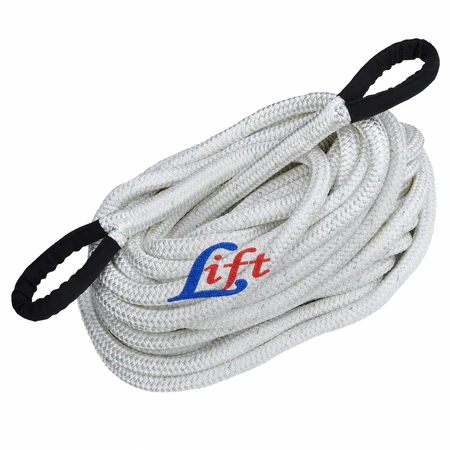
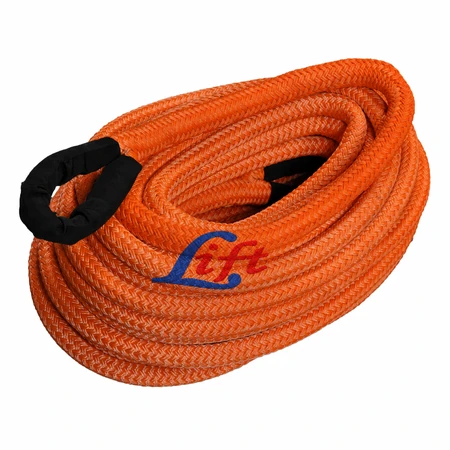
Lift sling rigging company produce Utility Winch Line,high-strength synthetic rope,Winch Line Rope,Synthetic Winch Line,Synthetic Winch Rope.
Utility Winch Line – 12-Strand Braided Synthetic Rope
A liña de cabrestante de utilidade is a braided synthetic rope built to be spooled onto a capstan winch, truck winch or line-stringing winch and worked hard, day after day. Unlike steel wire, a braided synthetic winch line stores almost no energy, so if it ever parts there is very little recoil, and it stays easy to handle with gloves in cold, wet conditions. Lifute manufactures utility winch lines from high-tenacity nailon, polyester and UHMWPE en diámetros desde 6 mm a 24 mm, supplied with spliced eyes, thimbles or hooks, in standard or custom colours and lengths.
Destacados do produto
- 12-strand braided construction– full-load-bearing braid with no core to rotate, so the line will not twist or hockle on the drum.
- Three fibre options– nylon for shock absorption, polyester for all-round outdoor life, UHMWPE for the highest strength at the lowest stretch.
- 6 mm a 24 mm– from light utility pulling to heavy cable stringing and vehicle recovery.
- Spliced eyes and thimbles– professionally spliced terminations that keep most of the rope strength instead of relying on a knot.
- Low recoil, no sharp frays– safer than wire rope around people and vehicles, and it will not kink permanently.
- Flotadores (UHMWPE) or sinks (nailon, poliéster)– choose to suit wet or underwater work.
- UV stabilised and abrasion resistant– made for outdoor utility and marine duty.
- OEM / ODM listo– cor personalizada, etiqueta impresa, reel and packaging for your own brand.
Why Replace Steel Wire With a Synthetic Utility Winch Line
Wire rope is strong, but on utility winches it is also heavy, awkward to handle, and it stores a large amount of energy when it is under load. When a wire line fails, the stored energy whips the broken end through the working area. A braided synthetic winch line stretches far less and carries almost no stored energy, so it drops when it fails instead of whipping. It is also around one eighth the weight of the same strength of steel, it will not develop sharp meat hooks, and it does not need to be greased.
| Propiedade | Braided Synthetic Winch Line | Cable de aceiro |
| Peso | Floats or sinks depending on the fibre, aproximadamente 1/8 the weight of steel at equal strength | Pesado, needs gloves and handling care |
| Failure behaviour | Very low stored energy, minimal recoil | High stored energy, dangerous snap-back |
| Manexo | Soft on hands, no sharp broken wires | Broken wires cut gloves and skin |
| Maintenance | Wash and dry, no lubrication | Requires regular greasing and inspection |
| Abrasion on sharp edges | Needs a chafe sleeve on rough or sharp surfaces | More tolerant of sharp edges |
| Repair on site | Can be spliced or re-spliced in the field | Requires a swaging press or replacement |
Product Specifications of the Utility Winch Line
A seguinte táboa recolle o rango estándar. Diámetro, fibra, colour and termination are all configurable, e producimos o seu deseño ou mostra para pedidos de OEM.
| Parámetro | Especificación |
| Nome do produto | Liña de cabrestante de utilidade (braided synthetic winch rope) |
| Modelo | LF-WL-12S (códigos de modelo personalizados dispoñibles para pedidos de OEM) |
| Construción | 12-trenza única de fío; double braid available on request |
| Opcións de fibra | Nailon de alta tenacidade (PA), poliéster (PES) ou UHMWPE (HMPE) |
| Rango de diámetros | 6 mm – 24 mm (1/4 en – 1 en) |
| Diámetros estándar | 8 mm (5/16 en), 10 mm (3/8 en), 12 mm (1/2 en), 14 mm, 16 mm (5/8 en), 20 mm, 24 mm |
| Rotura mínima
forza ★ |
8 mm aprox. 1,600 kg / 3,500 lb
10 mm aprox. 2,200 kg / 4,850 lb 12 mm aprox. 3,300 kg / 7,275 lb 14 mm aprox. 4,500 kg / 9,900 lb 16 mm aprox. 5,700 kg / 12,560 lb 20 mm aprox. 9,000 kg / 19,800 lb 24 mm aprox. 12,500 kg / 27,500 lb Typical values for double-braided polyester |
| Elongation at break ★ | Nylon approx. 20-25%; polyester approx. 12-15%; UHMWPE aprox. 3-5% |
| Gravidade específica | Nylon 1.14 (sinks); poliéster 1.38 (sinks); UHMWPE 0.97 (floats) |
| Coatings | Polyurethane or marine finish available for extra abrasion and UV protection |
| Opcións de cor | Amarelo (estándar), laranxa, vermello, negro, branco; cores personalizadas a petición |
| Temperatura de traballo | -40 °C a +80 °C (nylon and polyester) |
| Terminacións | Ollo empalmado, ollo de dedal, gancho, or plain whipped end |
| Splicing | 12-strand spliceable; an eye splice retains approximately 90% of rope strength ★ |
| Lonxitudes estándar | 30 m, 50 m e 100 m bobinas; cut lengths and custom coils to order |
| Embalaxe | Bobina con etiqueta, export carton or woven bag; reel packing on request |
| MOQ ★ | Desde 300 kg per diameter and colour; menor cantidade de proba negociable |
| OEM / ODM | Cor personalizada, etiqueta impresa, reel, header card and private-label packaging |
| Lugar de orixe | Jiangsu, China |
Minimum breaking strength is given for reference. The certified value for a specific fibre, diameter and construction is confirmed on the order and can be supported by a test report.
Fibre Options: Nylon vs. Poliéster vs. UHMWPE
The fibre decides how the winch line behaves under load, and it matters more than the diameter in many applications. Choose nylon where the line has to absorb shock, polyester for the best all-round outdoor life, and UHMWPE where you need the highest strength for the least weight and stretch.
| Propiedade | Nylon (PA) | Poliéster (PES) | UHMWPE (HMPE) |
| Elongation at break ★ | 20-25% high | 12-15% medium | 3-5% very low |
| Strength at equal diameter | Medium | Medium | O máis alto |
| Peso | Luz | Luz | O máis lixeiro; floats |
| Resistencia UV | Ben | Very good | Ben |
| Resistencia á abrasión | Very good | Very good | Excelente |
| Absorción de choque | Best | Moderado | Baixo |
| Uso típico | Remolque, mooring and winching where shock loads occur | General winching, capstan winch work and cable stringing | Long pulls, vehicle recovery and high-strength low-stretch duty |
| Coidado con | Higher stretch under steady load | Little shock absorption | Lower melting point; keep it off hot surfaces and sharp edges |
Construción e características principais
The line is a 12-strand braid, which means every strand carries load and there is no separate core. That construction gives three practical advantages on a winch: the line cannot rotate around a core, so it does not twist or hockle on the drum; it stays round under load, so it spools evenly; and because there is no core, it can be spliced on site with a simple fid and no special tools.
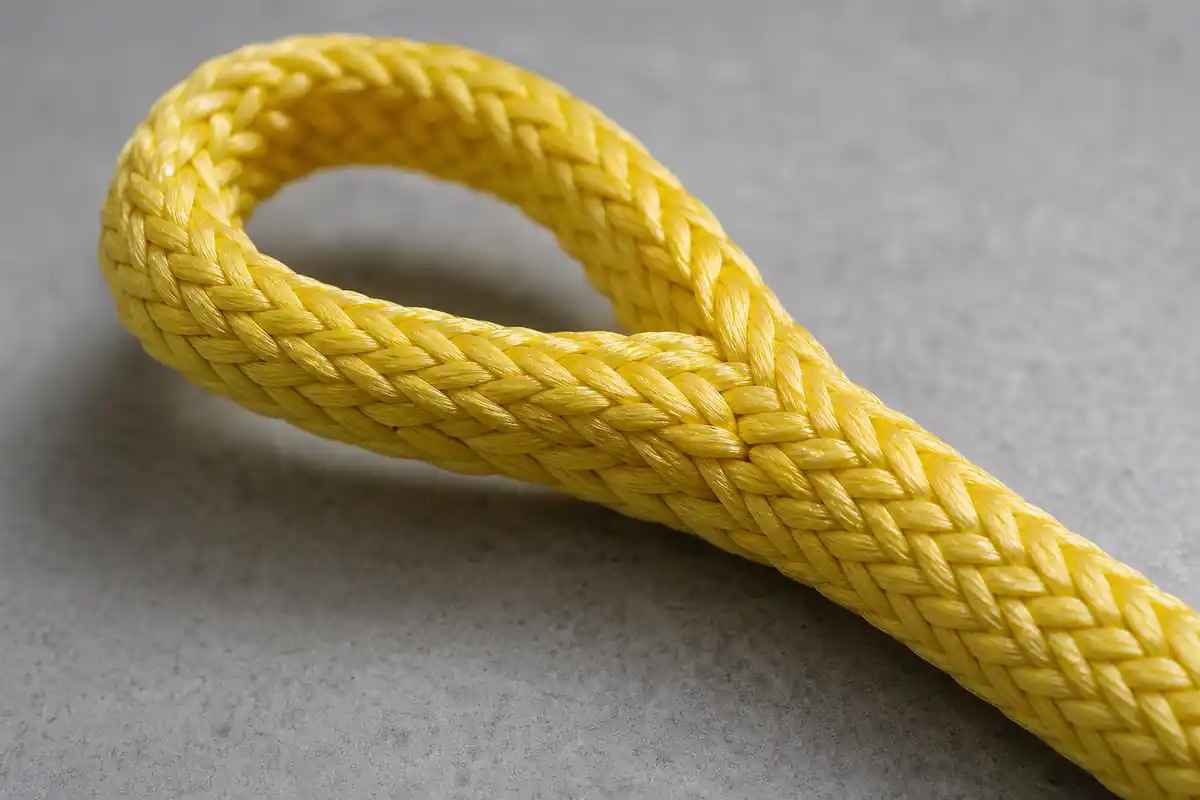
A hand-tapered 12-strand splice. Because the splice tucks the rope back into itself, the eye keeps most of the line strength and there is no knot to work loose.
- 12-trenza de fíos– balanced, torque-free construction that spools evenly and will not kink permanently.
- High-tenacity fibre– nailon, polyester or UHMWPE, selected for the duty you describe.
- UV estabilizado– built for continuous outdoor exposure on utility and marine sites.
- Optional polyurethane coating– stiffens the braid and adds abrasion protection where the line runs over rough ground.
- Spliced eye or thimble eye– a clean termination that connects straight to a shackle, hook or drum fitting.
- Extremos termosellados e batidos– the braid will not unravel in storage or in the field.
- Traceable production– each coil is labelled with the fibre, diámetro, length and production batch.
End Fittings and Terminations
Tell us how the line will be connected at each end and we will supply it ready to use, rather than shipping a plain coil that still has to be spliced on site.
| Terminación | Description | O mellor para |
| Ollo empalmado | 12-strand hand splice, no metal hardware, retains approximately 90% of rope strength ★ | Capstan winches, shackle connection, general pulling |
| Ollo de dedal | Spliced eye fitted with a steel thimble to protect the rope at the bearing point | Hook and drum connections where the eye wears against metal |
| Hook | Spliced eye with a plain or self-locking hook | Remolque, recovery and general utility work |
| Plain whipped end | Heat-sealed and hand-whipped | Reeving through sheaves and winch drums, or splicing on site |
| Chafe sleeve | Optional braided sleeve over the working section | Rough ground, concrete edges and abrasive surfaces |
Applications of Braided Utility Winch Lines
We supply utility winch lines to power and telecom contractors, tree-care and logging crews, towing and recovery operators, marine and dock users, and to rope distributors who resell under their own brand.
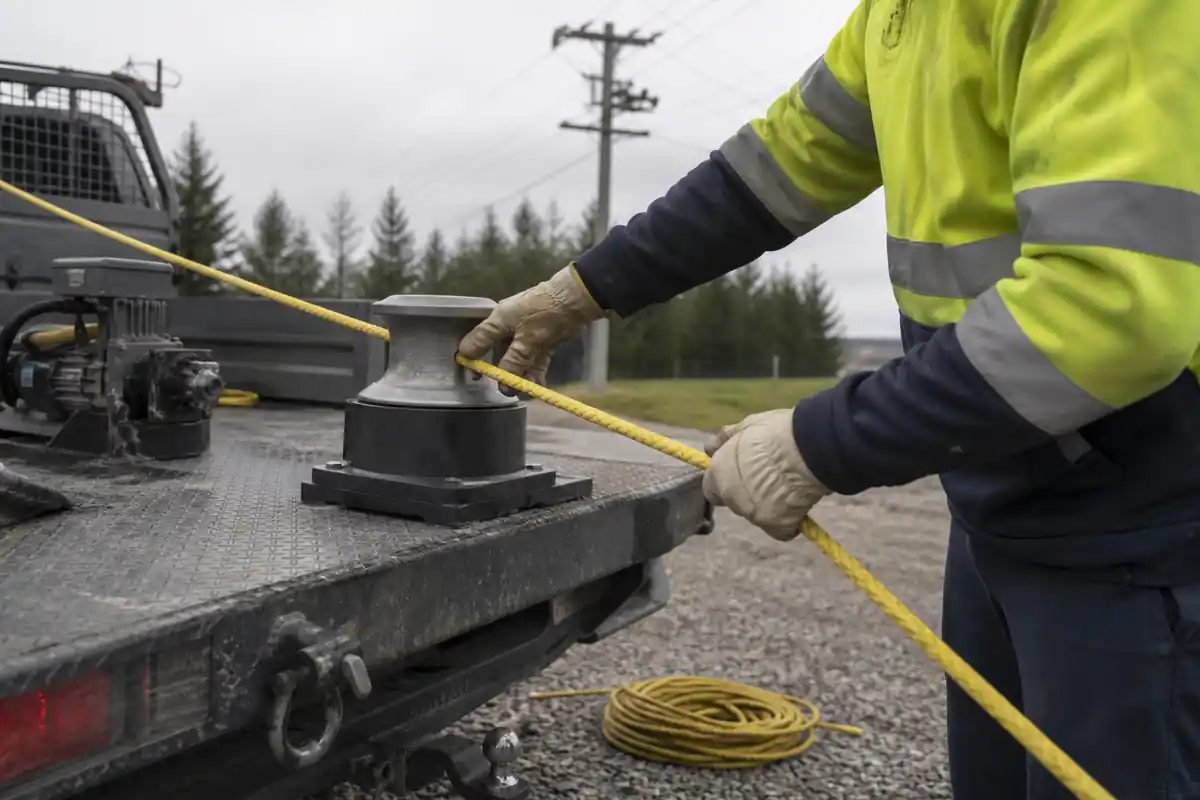
A braided utility winch line running through a portable capstan winch during overhead line work. The soft hand and low recoil of a synthetic line make it far easier to control than wire.
- Utility line stringing, cable pulling and conductor installation
- Portable capstan winch work and pole-mounted pulling
- Camión, trailer and skid winch lines
- 4×4, ATV and UTV recovery winches
- Towing and vehicle recovery operations
- Tree care, arborist rigging and logging pulls
- Amarre marítimo, dock lines and anchor rode
- Material hauling and non-lifting pulls on construction sites
How to Choose the Right Utility Winch Line
- Start from the line pull, not the rope strength.Find the maximum pull the winch can develop and apply a design factor. Como regra xeral, a winch line wants a minimum breaking strength of at least five times the working pull.
- Choose the fibre by the job.Nylon where shock loads occur, polyester for general utility and marine duty, UHMWPE for the highest strength and the lowest stretch over long pulls.
- Check the drum and sheave diameter.A drum that is too small bends the line tightly and shortens its life. Allow roughly eight times the rope diameter or more on the drum and sheaves.
- Pick the diameter.8-10 mm suits light pulling and small capstan winches; 12-16 mm covers most truck winch and line-stringing duty; 20-24 mm is for heavy pulls and large drums.
- Decide the end fittings.A spliced eye for shackles, a thimble eye where the eye wears on metal, a hook for quick connections, and a plain end when you need to reeve the line through a sheave.
- Set the length and colour.Bobinas de 30 m, 50 m ou 100 m cover most winches; tell us your drum capacity. Colour is a working aid as well as branding, so pick something that reads against your ground and vehicles.
-
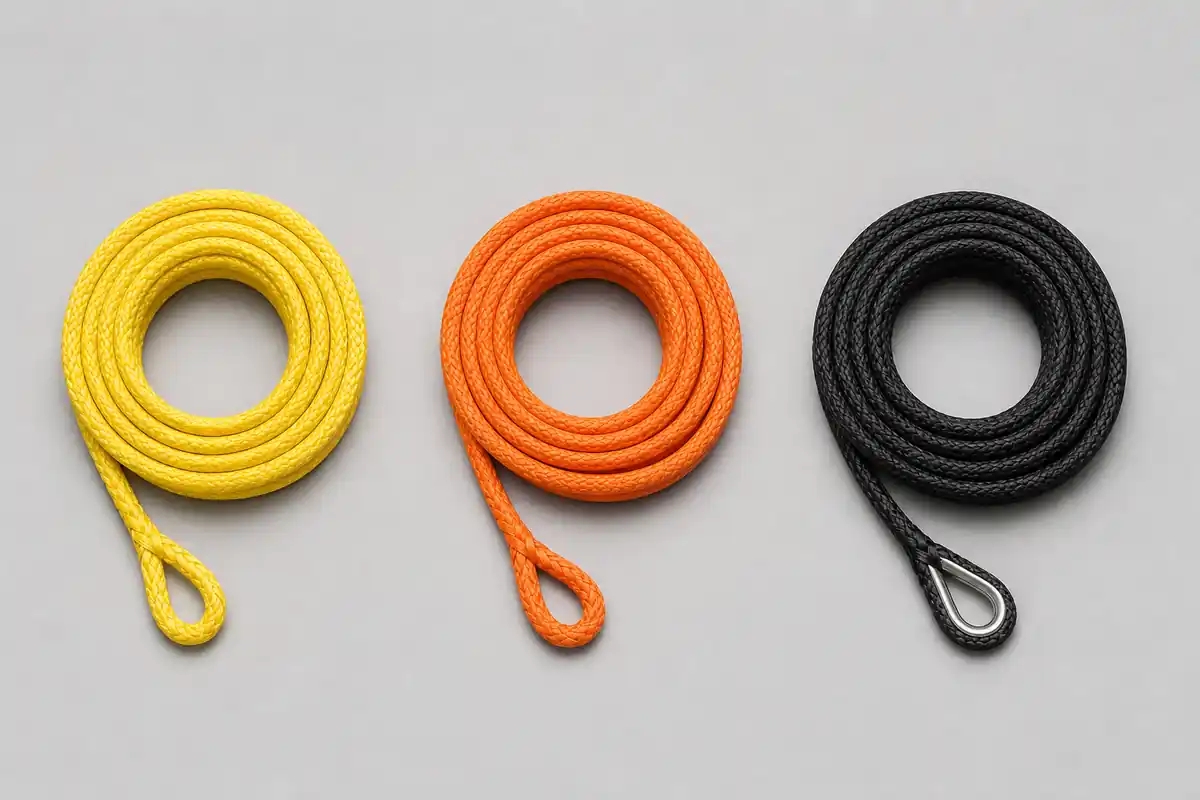
Utility Winch Line
Standard colour options with two termination styles: a spliced eye (esquerda) and a thimble eye (certo). Custom colours and diameters are produced on request.
Coidados, Inspection and Splicing
A synthetic winch line lasts a long time if it is treated properly, and the checks are simple enough to do before every shift.
- Inspect each time you use it.Look for glazed or shiny patches from heat, cut or fused strands, flattened sections, embedded grit and abrasion where the line runs through the fairlead.
- Keep it away from sharp edges.Fit a chafe sleeve or a snatch block anywhere the line crosses a rough or sharp surface.
- Wash and dry before storing.Rinse with fresh water to remove grit and salt, then dry in the shade before coiling it back into its bag.
- Almacenar fóra da luz solar directaand away from heat, solvents and battery acid.
- Retire the line after a shock load or a severe overload.A synthetic line can lose strength internally without looking obviously damaged.
- Re-splice rather than knot.A knot can cut rope strength by half. A 12-strand eye splice is quick to make with a fid and keeps most of the strength.
A utility winch line is a towing and pulling product. It is not a certified lifting sling and must not be used for overhead lifting unless it is ordered as a certified sling with a rated capacity and test certificate.
Why Buy Utility Winch Lines From Lifute
Lift Sling Rigging Co., Ltd. ha fabricado elevación, rigging and rope products in Taizhou, provincia de Jiangsu durante case trinta anos. Rope is our core business, not a sideline, which is why buyers come back for consistency: the same braid construction and the same fibre count order after order, labels that match the shipment, and coils packed so they arrive clean and ready to spool.
- Prezos directos de fábricaon trial orders and full container loads.
- Soporte de OEM e ODM– cor, printed labels, header cards, reels and packaging produced to your artwork.
- Splicing and finishing in house– ollos, thimbles and hooks fitted before shipment.
- Related rope products from the same factory– cordas de nylon, UHMWPE traction rope, safety nets and soft ladders can ship together.
Preguntas frecuentes
Q1. What is a utility winch line used for?
A utility winch line is a braided synthetic rope used on capstan winches, truck winches and line-stringing winches. It hauls and pulls loads in utility work, cable stringing, towing, recovery, tree care and marine duty. Its main advantages over steel wire are far lower weight, minimal stored energy and therefore much less recoil if it fails, and easier handling.
Q2. What is the difference between nylon, polyester and UHMWPE winch line?
Nylon stretches the most, so it absorbs shock loads best. Polyester stretches less and offers the best all-round outdoor life, which makes it the usual choice for general utility and marine winching. UHMWPE is the strongest of the three for the same diameter, stretches very little and floats, but it has a lower melting point and needs protection from heat and sharp edges.
Q3. How do I choose the right diameter for my winch?
Work from the maximum pull of the winch and apply a design factor of about five to one, then check that the drum and sheaves are large enough. Como guía, 8-10 mm suits light pulling and portable capstan winches, 12-16 mm covers most truck winch and line-stringing duty, e 20-24 mm is used for heavy pulls. Check your winch drum capacity before ordering, because a larger diameter takes up more space on the drum.
Q4. What is the minimum breaking strength of a 1/2 inch winch line?
A 12 mm (1/2 polgada) double-braided polyester utility winch line typically has a minimum breaking strength in the region of 3,300 kg (sobre 7,275 lb). The exact figure depends on the fibre and the construction, and the certified value is confirmed on the order. Never use the breaking strength as a working load – apply a design factor of about five to one.
Q5. Should I choose a spliced eye or a hook?
A spliced eye is the strongest and most versatile termination because it keeps most of the line strength and connects to a shackle or drum fitting. A thimble eye adds a steel liner where the eye bears on metal. A hook is convenient for fast connections in towing and recovery, but it adds a metal component that should be inspected separately. Many utility customers order a spliced eye at one end and a plain whipped end at the other.
P6. Can you supply custom colours, lengths and printed labels?
Si. We produce custom colours, cut lengths, labelled coils, header cards and reel packing as part of an OEM order. Send your vector artwork and colour reference (Pantone ou RAL) with your enquiry and we will confirm a sample of the label and the rope before mass production.
Q7. How do I splice and maintain a 12-strand winch line?
A 12-strand braid is spliced by tucking the rope back into itself with a fid, which is why there is no core to remove and no special press is needed. Keep the line clean and dry, rinse it after use in sand or salt water, and store it in its bag out of direct sunlight. Inspect for glazing, fused strands and flat spots before every use, and retire the line after any shock load.
Q8. What is the MOQ and the delivery time for a utility winch line?
A cantidade de pedido mínima estándar comeza desde 300 kg per diameter and colour, e pódense discutir cantidades de proba máis baixas para un primeiro pedido. O tempo de produción depende da fibra, diámetro, termination and whether OEM labels or reels are involved; confirma a túa cantidade, lonxitude e porto de destino e citaremos un horario co prezo.
Request a Quote for Utility Winch Lines (Bloque CTA)
Send us the line pull of your winch, o diámetro e lonxitude que necesites, your preferred fibre and colour, and the end fittings required. Responderemos co prezo, coil and packing details, and a production schedule. Rope samples and spliced eye samples can be arranged before mass production.
Lift Sling Rigging Co., Ltd. (Dispara) – Parque Industrial Lifute, Cidade de Taizhou, Provincia de Jiangsu, China | Tel / WhatsApp: 18066002268 | Correo electrónico: 702461526@qq.com
Suggested internal links: all nylon ropes; Corda de tracción UHMWPE de alta resistencia; rope ladders; nylon safety nets; eslingas de elevación. Anchor text is defined in the HTML code in Section 5.