

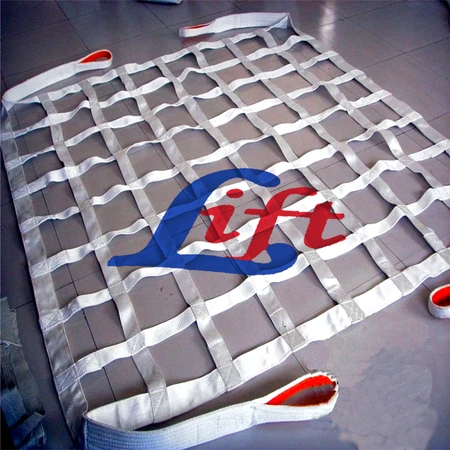
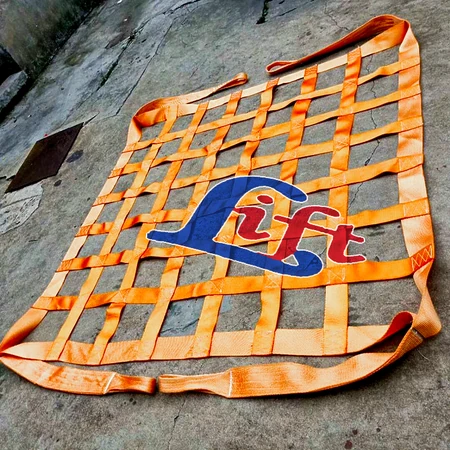
Lift sling rigging company produce Nylon Flat Webbing Net,Flat webbing cargo net,Safety Cargo Lifting Net Straps, Lame nailontropi tõstevõrk,Nylon flat belt hanging net,Cargo secure webbing net,Safety Lifting Net Strap,Nylon Flat Webbing Lifting Net.
Nailonist lamedad rihmad
Open flat lattice · 0.5 t – 10 t · 25–100 mm high-tenacity webbing · printable band
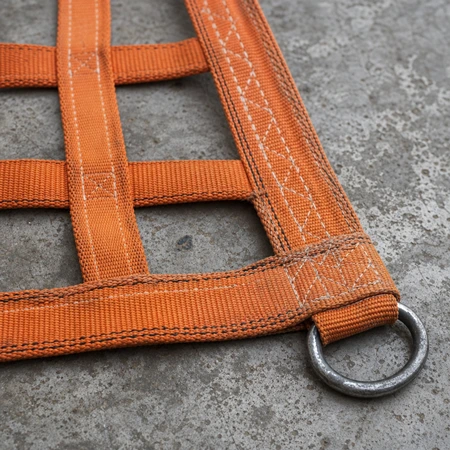
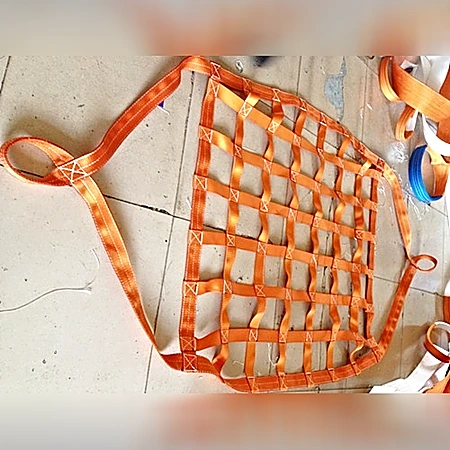
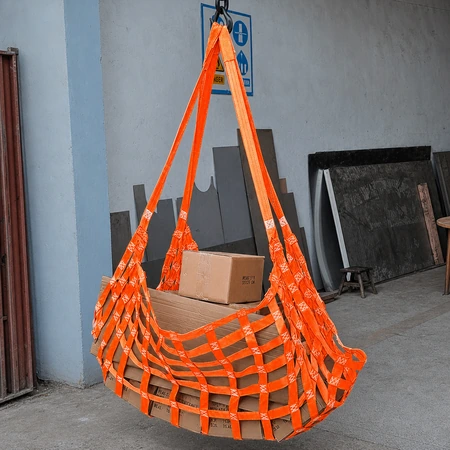
A nailonist lame rihmavõrk is an open lifting lattice, mitte kotti. High-tenacity webbing bands cross at right angles into a square mesh, a folded double-stitched border runs round the perimeter, and four reinforced corner loops are what the crane lifts from. The load sits inside the mesh and is carried as one unit, with the weight spread across the full width of every band underneath instead of a few contact points.
Lift Sling Rigging Company weaves the band, stitches the net and proof-tests every one in Taizhou, Jiangsu. Band width runs from 25 mm kuni 100 mm, võrk alates 50 mm kuni 300 mm, rated capacity from 0.5 t kuni 10 t, and net size, corner loops and printing are made to your drawing. Because the band is flat, töökoormuse piirang, net size and your own brand can be printed straight onto it — identification that cannot be pulled off or washed away.
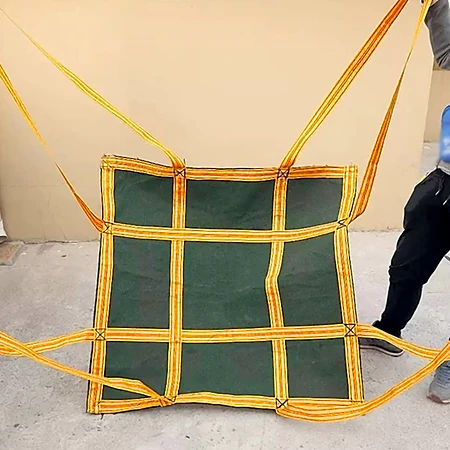
- Three flat webbing materials — nylon for shock loads, high-strength polyester for the lowest stretch, polypropylene for wet and chemical duty.
- Märgistamata, wide-face contact — the flat band lies against painted, plaaditud, bagged and boxed cargo without denting or scuffing it.
- Printable identification — WLL, neto suurus, võrk, fleet number and own brand printed along the band, plus a sewn capacity label.
- Built to your size — 25–100 mm band, 50–300 mm mesh, neli või kaheksa tõstepunkti, square or diamond lattice.
- Certified and tested — CE, GS and JIS certified, ISO 9001 töötab, and every net breaking-load tested on our own 1000 t masin.
Flat lattice, not a bag — what that changes
The difference between this net and a net sling is the bottom. A flat webbing net is an open lattice: the load sits on top of it and the net is lifted from four corner loops, so the mesh stays flat under the cargo. There is no closed pocket, no lifting legs gathering at a master ring, and nothing wraps the load. That is why it suits palletised, boxed and stacked cargo that already holds its own shape, and why it is quicker to load: the net is laid out, the load is set down on it, and the four loops go on the hook.
Where the cargo is loose, rounded or likely to shift, a closed-bottom net sling is the better tool — it contains rubble, scrap and bagged material without strapping. For pallet footprints, the purpose-built kraana kaubaaluste lastivõrk uses the same flat lattice with a tighter mesh and a pallet-sized border.
Because the lattice is open, the net weighs very little for the area it covers: a 2.5 × 2.5 m net in 50 mm band is light enough for one person to lay out, fold and carry, while still carrying several tonnes across its bands. That combination — wide soft bearing face, low weight, fast rigging — is what makes flat webbing the default construction in ports, warehouses and steel service centres.
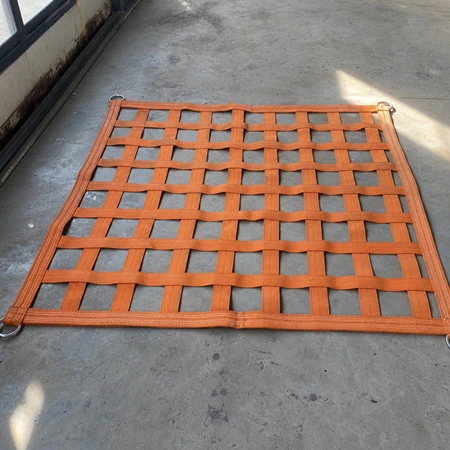
Tehnilised parameetrid
The table covers the standard nylon flat webbing net. Riba laius, kihtide arv, võrk, neto suurus, tõstepunktid ja trükk tehakse kõik eritellimusel, so treat it as the starting point for a quotation rather than a fixed catalogue.
| Parameeter | Spetsifikatsioon |
|---|---|
| Toote tüüp | Avatud lame vöövõre (suletud põhja puudub), four or eight corner lifting points |
| Bändi materjal | 100 % ülitugev nailon (PA); kõrge tugevusega polüester (PET) või polüpropüleenist (PP) nõudmisel |
| Riba laius | 25 mm / 30 mm / 50 mm / 75 mm / 100 mm |
| Riba paksus | 1.5 mm – 3.2 mm sõltuvalt laiusest |
| Bändi kiht | Ühekihiline; dupleks (kahekordne kiht) for abrasion resistance |
| Võrgusilma avamine | 50 – 300 mm; 100 × 100 mm standard |
| Võrgusilma vorm | Ruut (standard) või teemant nõudmisel |
| Neto suurus | 1.0 × 1.0 m kuni 4.0 × 4.0 m standard; 2.5 × 6 m and made to drawing |
| Piir | Folded band, double-stitched along the full perimeter |
| Tõstepunktid | Four reinforced corner loops standard; kaheksa puistetala jaoks |
| Nurga kinnitus | Õmmeldud vööaas, reinforced loop with pad, or master link on request |
| Nimivõimsus | 0.5 t – 10 t; eritellimusel ehitatud raskemad võrgud |
| Ohutusfaktor | 5:1 / 6:1 / 7:1 |
| Pikendus katkemisel | Umbes 12 % – 20 % (nailon); 7 % või vähem töökoormusel (polüester) |
| Pind | Pehme, paindlik, märgistamata |
| Värv | Looduslik valge, oranž, sinine, roheline, must või kohandatud |
| Trükkimine | WLL, neto suurus, võrk, fleet number and own brand printed along the band; sewn label as standard |
| Töötemperatuur | −40 °C kuni +80 °C nailonist; −40 °C kuni +100 °C polüester |
| Standardne alus | Rihmad hinnatud EN 1492-1 |
| Sertifitseerimine | CE / GS / TEMA; ISO 9001; CNASi labor; DNV |
| HS kood | 630790 — tekstiilmaterjalist tõstevõrgud |
Net sizes and working load limits
Net size is always quoted as length × width measured along the border, never as the mesh area. The load has to sit well inside the border: a net the same size as the load will let the cargo slide out at the edges. Every size below is also made to drawing.
| Neto suurus (P × W) | Võrgusilma avamine | Riba laius | Tüüpiline võimsus | Tüüpiline kasutus |
|---|---|---|---|---|
| 1.0 × 1.0 m | 100 mm | 25 / 30 mm | 0.5 t – 1 t | Small components, trummid, üksikud kaubaalused |
| 1.2 × 1.2 m | 100 mm | 50 mm | 1 t – 3 t | Standard pallet footprint, masinaosad |
| 2.0 × 2.0 m | 100 mm | 50 mm | 2 t – 5 t | Kotti pakitud veos, kastid, blokk |
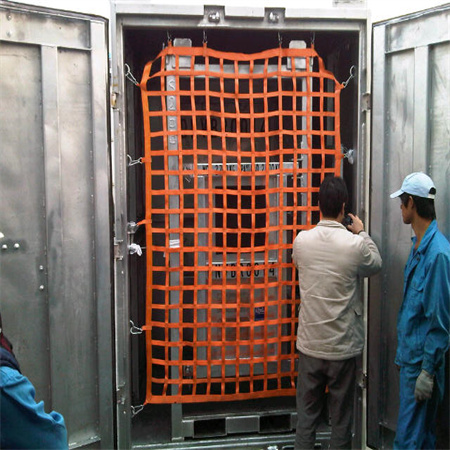
| 2.5 × 2.5 m | 100 – 150 mm | 50 mm | 2 t – 5 t | Kaubaalustele ja kottidesse pakitud kaubad, konteinerite laadimine |
| 2.5 × 6.0 m | 150 mm | 50 / 75 mm | 4 t – 10 t | Pikad kaubad, torukimbud, veoauto laadimine |
| 4.0 × 4.0 m | 150 – 200 mm | 75 / 100 mm | 8 t – 10 t+ | Large pallets, bulk bagged cargo |
| Joonistamise järgi tehtud | 50 – 300 mm | 25 – 100 mm | 0.5 t – 10 t | Veoauto voodi, konteiner, hoide ja laoturi mõõtmed |
Where the load is long or wide, the net is lifted from a beam rather than a single hook: a tõstetav puistetala takes the eight corner loops, keeps the net square and keeps the cargo level.
Nailon, polyester or polypropylene
All three nets are built identically — same lattice, same folded border, same corner loops. What changes is the polymer in the band, and that decides the strength, the stretch and the environment the net survives. Nylon is the material this page is named after; the other two are stocked because they answer jobs nylon does not.
| Kinnisvara | Nailon (PA) | Polüester (PET) | Polüpropüleen (PP) |
|---|---|---|---|
| Jõudu kaalu vastu | Kõrge | Kõrge | Madalaim |
| Pikendus katkemisel | 12 – 20 %, absorbs shock | Madal, 7 % or less at WLL | 15 – 20 % |
| UV / outdoor life | Hea | Parim kolmest | Needs UV stabiliser |
| Water and rot | Rust-free, slow to dry | Rust-free, quick to dry | Ujukid, absorbs under 0.1 % |
| Keemiline vastupidavus | Mõõdukas | Hea | Best against acids and alkalis |
| Hõõrdumine | Toughest of the three | Väga hea, duplex standard | Mõõdukas |
| Tüüpiline võimsus | 0.5 t – 10 t | 1 t – 10 t | 0.3 t – 5 t |
| Parim jaoks | Shock loads, rough handling, printed white bands | Most lifting duty; outdoor and long service | Märjad kaid, mahapesemine, kemikaalid, ujuv tollimaks |
Praktikas: nylon where the load shifts as it is lifted, or where the marking has to print cleanly on a light band; polyester for the lowest stretch and the longest outdoor life; polypropylene where the net works wet, may go over the side, or meets acids and alkalis. The polyester construction is described in more detail on the lint lasti tõstevõrk ja polüestrist rihmavõrk tõstmiseks lehekülgi.
Bänd, võrgu- ja servavalikud
Two nets of the same size and capacity can behave quite differently depending on band width, layer count and how the edge is finished. These are the options quoted most often.
| Võimalus | Mida see teeb | Valige see millal |
|---|---|---|
| 25 / 30 mm riba | Lightest net per square metre | Small nets, kerged koormused, handling weight matters most |
| 50 mm riba | The standard lifting band | Most palletised and bagged cargo; best balance of strength, weight and cost |
| 75 / 100 mm riba | Fewer, wider bands carry the load | Heavy or abrasive cargo, large bearing area needed |
| Ühekihiline | Thinner, kergem, cheaper band | Kerge koormus, clean and dry handling |
| Dupleks (kahekordne kiht) | Two layers stitched as one band | Dragging across pallets or concrete; high-wear duty |
| Volditud ääris | Border band turned over and stitched | Every net — stops the edge band unrolling |
| Tugevdatud nurk | Extra stitching and doubled band at each corner | Every net; corners carry the whole load |
| Ruudukujuline võrk | Bands run parallel to the net edges | Virnastatud, palletised and rectangular loads |
| Teemantvõrk | Lattice rotated 45° so the bands close on the load | Loose or rounded loads that need containing |
| PU coating | Coating stiffens the mesh and resists abrasion | Kõrge kulumiskindlus, or where the net must hold shape when empty |
Corner loops and lifting configurations
How the net is hung decides how much of the load it actually carries. These are the four arrangements built most often.
- Nelja ahelaga tõstuk – standard. The four corner loops are gathered onto a single hook or master ring and the load hangs in the middle of the net.
- Kaheksa punktiga puistetõstuk. The net is lifted from eight loops on a beam: the net stays square, the load stays level and each corner carries a predictable share.
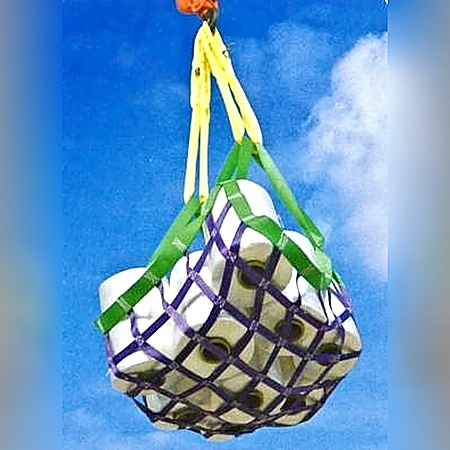
- Basket or bag form. The net is closed around the load and picked from one point for loose or awkward cargo — see the polüester tõstevõrk.
- Lashing or securing duty. Tensioned over or across a load rather than lifted from four corners — a different duty with a different rating, quoted separately from the lifting net.
| Paigaldamine | Kasutatud koos | Märkus |
|---|---|---|
| Õmmeldud vööaas | Flat webbing nets, üksik konks | Standardne; stitched through the border with a doubled band |
| Reinforced loop with pad | Heavy and abrasive cargo | Extra webbing protects the loop where it meets the hook |
| Master link / meistrisõrmus | Nelja kontuuriga tõstuk | Kogub kõik neli silmust ühte punkti konksu alla |
| Säkk või konks | Kaheksa punktiga puistetõstuk | Hinne 80 talaga kaasas olevad liitmikud soovi korral |
| Kaitsehülss | Any sharp-edged load | Libiseb kontaktpunktis üle riba; cheapest way to extend net life |
Trükkimine, marking and OEM
Flat webbing has one advantage the rope nets do not: the identification can be printed directly onto the band, where it cannot be pulled off, washed away or lost. That is the reason most of our net orders are printed rather than labelled.
- Töökoormuse piirang, net size and mesh opening printed along the band on every net.
- Fleet numbers, inspection dates, contract numbers or a certificate number printed for operators and rental fleets.
- Own brand, address and warning text printed for OEM and distributor orders.
- A sewn capacity label is fitted as standard in addition to the print, so the net and the paperwork always match.
- Natural white nylon takes print most cleanly; oranž, sinine, green and black bands are also available.
- Nets ship folded in a bag or a crate — a set of six 2.5 m nets takes the space of one pallet.
Kvaliteedikontroll ja sertifitseerimine
Weaving the band ourselves is what makes a made-to-order net practical: laius, kiht, värvi, mesh and printing are all set inside our own plant, so the net is tuned to the load instead of assembled from whatever band a supplier happens to stock.
- 40 aastate tõsteseadmete tootmist — asutati aastal 1985 Taizhous, Jiangsu, rohkem kui 200 töötajad, üks Hiina suurimaid tõstetroppide ja netotootmisbaase.
- Own weaving mill — the same looms supply our rihmaga tropid ja lõputud ümmargused tropid.
- Own testing laboratory with CNAS accreditation, plus CE and DNV certification of the facilities.
- 1000 t horizontal test machine — the breaking load of every net is tested and documented, ja materjali testimise aruanne läheb tellimusega kaasa.
- CE ja GS sertifikaadiga tõstetooted, eksporditellimustel JIS-i sertifikaadiga.
- Every net is marked with its rated capacity, band width and mesh before packing.
Where flat webbing nets are used
| Tööstus | Mida võrk tõstab | Why flat webbing suits it |
|---|---|---|
| Sadamad ja terminalid | Kottidesse pakitud ja alustele paigutatud kaubad, container stuffing | Soft enough to pull around cargo inside a container |
| Steel service centres | Plaadipakid, lehtede pakid, töödeldud osad | Märgistamata; wide band spreads load over the pack face |
| Ehitus | Tellised, plokid, kottidesse pakitud materjalid, raketis | Holds small units in the mesh without strapping each one |
| Manufacturing and assembly | Maalitud, plated and finished components | No marking, no edge damage on finished surfaces |
| Warehousing and distribution | Kaubaalused, kastid, mixed loads | Fast four-loop lift; folds away when not in use |
| Agriculture | Puistekotid, sööda, toota | Duplex band takes the wear of repeated pallet handling |
| Marine and offshore | Deck cargo and transfer loads | Rust-free and quiet on a moving deck |
| Sõjaline ja katastroofiabi | Palletised relief cargo by crane or helicopter | Printable identification and a net that folds into a bag |
For the wire rope construction used on hot, sharp and abrasive bulk, vaata lasti tõstevõrk; for the round-rope version of this lattice, a nailonist lasti tõstevõrk. The raw band itself is described under nailonist köied and the wider range under lasti tõstevõrgud.
How to specify your net
A lifting net is made to order, and eight pieces of information are enough to quote it correctly the first time. Kui teil on veoauto voodi joonis, konteiner või hoidik peab sobima, saatke see hoopis — töötame regulaarselt jooniste põhjal.
| Vajalik teave | Miks see on oluline |
|---|---|
| Koorma kaal ja koorma kuju | Sets the rated capacity and how many load-bearing bands sit under the load |
| Võrgu pikkus × laius | Võrk peab olema suurem kui koorma jalajälg, et koorem oleks võrgusilma sees |
| Võrgusilma avamine | Hoiab esemeid sees; a smaller mesh is needed for small or loose pieces |
| Riba laius ja kiht | Sets the strength, the wear life and the weight of the net |
| Materjal | Nailon, high-strength polyester or polypropylene |
| Tõstepunktid | Standardvarustuses neli nurgaaasa, või kaheksa puistetala jaoks |
| Kraana, konks või puistur | Määrab nurgaaasadele paigaldatud rõnga või köidiku |
| Environment and documents | UV, soolane vesi, kemikaalid, temperatuuri; CE-märgis, katsearuanne, own-brand printing |
Korduma kippuvad küsimused
What is a nylon flat webbing net made of?
Flat high-tenacity webbing — nylon as standard, with polyester and polypropylene available — woven into an open square lattice, finished with a folded double-stitched border and four reinforced corner loops. Bänd, not the lattice, is what separates it from a rope net.
How is it different from a net sling?
Põhja. A net sling is a bag with a closed bottom and lifting legs that gather at a master ring, so it contains loose material. A flat webbing net is an open lattice lifted from four corner loops, so it suits cargo that holds its own shape and is quicker to load.
Millist võimsust saate pakkuda?
Alates 0.5 t kuni 10 t in nylon, 1 t kuni 10 t in polyester and 0.3 t kuni 5 t in polypropylene, set by band width, layer count and mesh. A 2.5 × 2.5 m net in 50 mm band covers most palletised and bagged duty; larger nets and heavier bands are built to order.
Can the net carry our own brand?
Yes — this is the main reason to choose a flat band. Töökoormuse piirang, neto suurus, võrk, fleet number, your brand or a certificate number can be printed along the band, where it cannot be pulled off or washed away. Colour and packing are configurable as well.
Millist võrgusilma suurust ma vajan?
Size the mesh from the smallest item in the load, mitte kunagi kogukaalust. A 100 mm avaus mahutab kotid, kastid, bricks and small components; 150 mm kuni 200 mm suits larger block and bundles. Send us the smallest piece and we will size the mesh to it.
Will it mark painted or plated cargo?
Ei. The flat band lies against the load instead of biting into it, and the load is shared across the full width of every band underneath, nii pakkimine, värvida, plating and machined faces come through the lift unmarked — which is the difference from wire rope and chain.
Kuidas võimsust tõendatakse?
Nets are supplied at 5:1, 6:1 või 7:1 nagu täpsustatud, with the webbing rated on the EN 1492-1 alusel. The breaking load of every net is tested on our own 1000 t masin ja materjali katseprotokoll sõidab koos tellimusega; the facilities hold CNAS, CE ja DNV sertifikaat.
Can it be used for lashing rather than lifting?
A net tensioned across a load is a securing net, rated differently from a lifting net. Tell us at quotation stage which duty it is for — the tensioned version is the cargo securing net, and the two are not interchangeable.
Küsi hinnapakkumist
Saatke koorma kaal ja kuju, neto suurus, võrgu ava, the band width and the material you have in mind — or a drawing of the truck bed, konteiner või hoidik peab sobima. Our engineers confirm the band, the layer count, nimivõimsus, the printing and the packing, ja tsiteerida ühes vastuses. Et see kõigepealt läbi rääkida, võtke ühendust meie inseneridega.
Lift Sling Rigging Company — Lifute Industrial Park, Taizhou linn, Jiangsu provints, Hiina
Tel: +86 523 8693 5818 | WhatsApp: +86 180 6600 2268 | E-post: lift98@jslift.com