

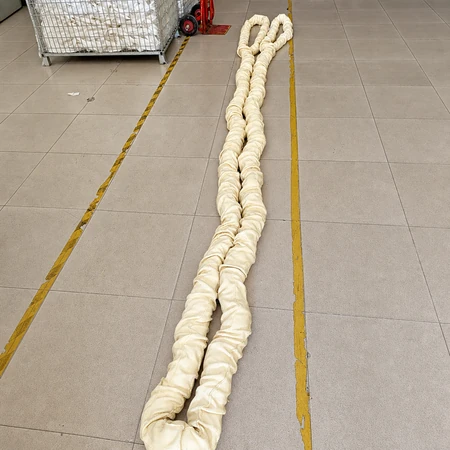
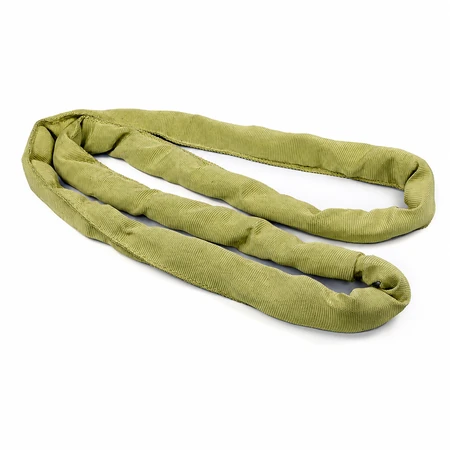
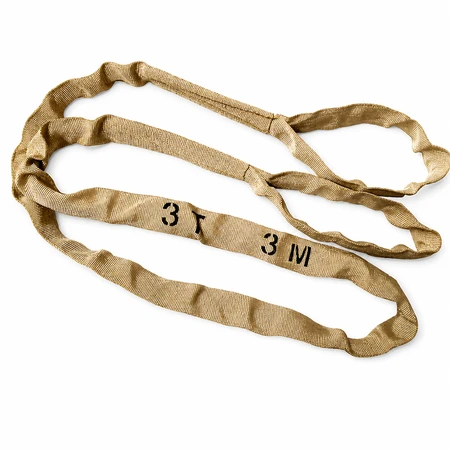
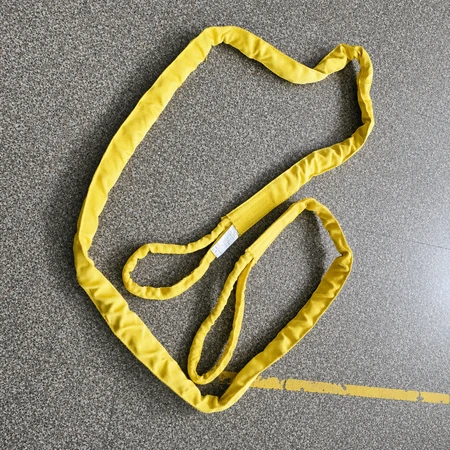
Lift sling rigging company Produce High Temperature Round Sling,Heat Resistant Round Slings,Eye Fireproof Round Sling.
Eslinga redonda de alta temperatura
A Heat-Resistant Sleeve Over a Load-Bearing Core — Where the Protection Is Replaceable
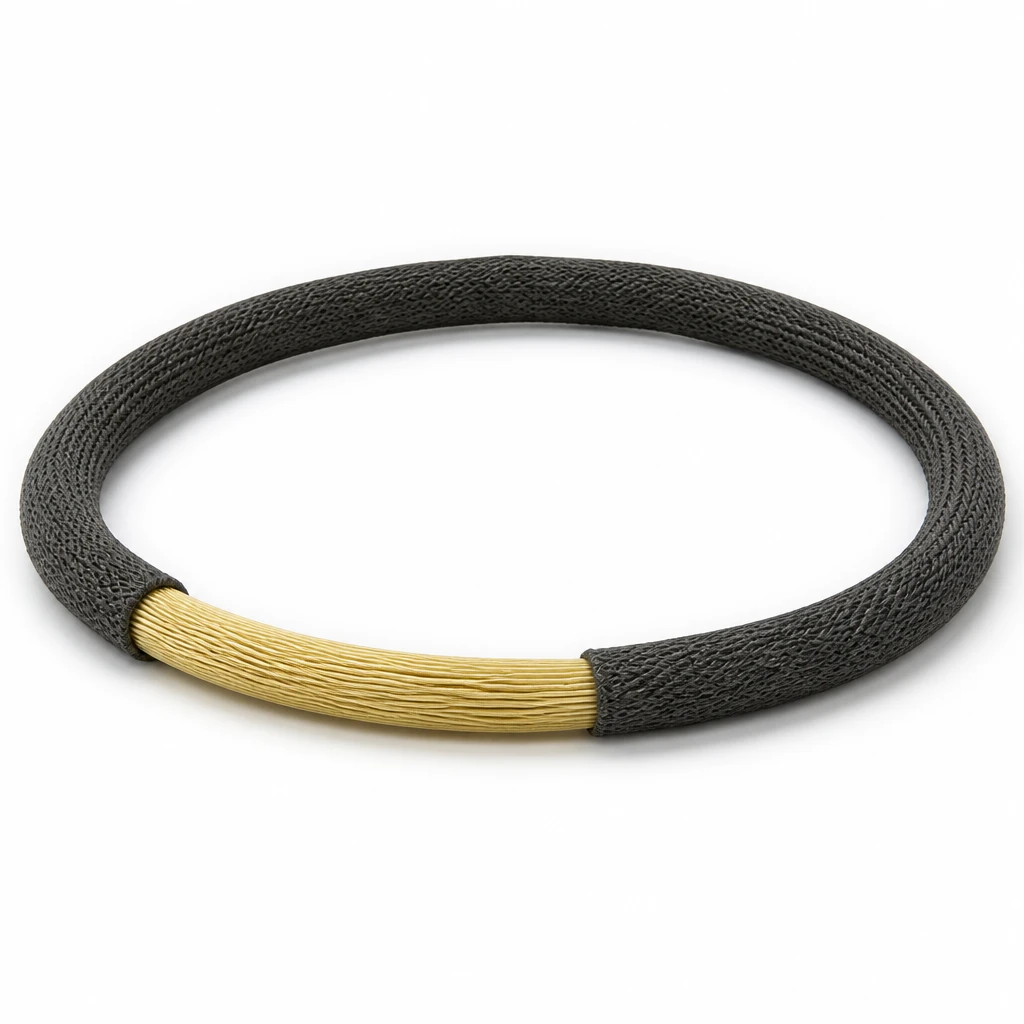
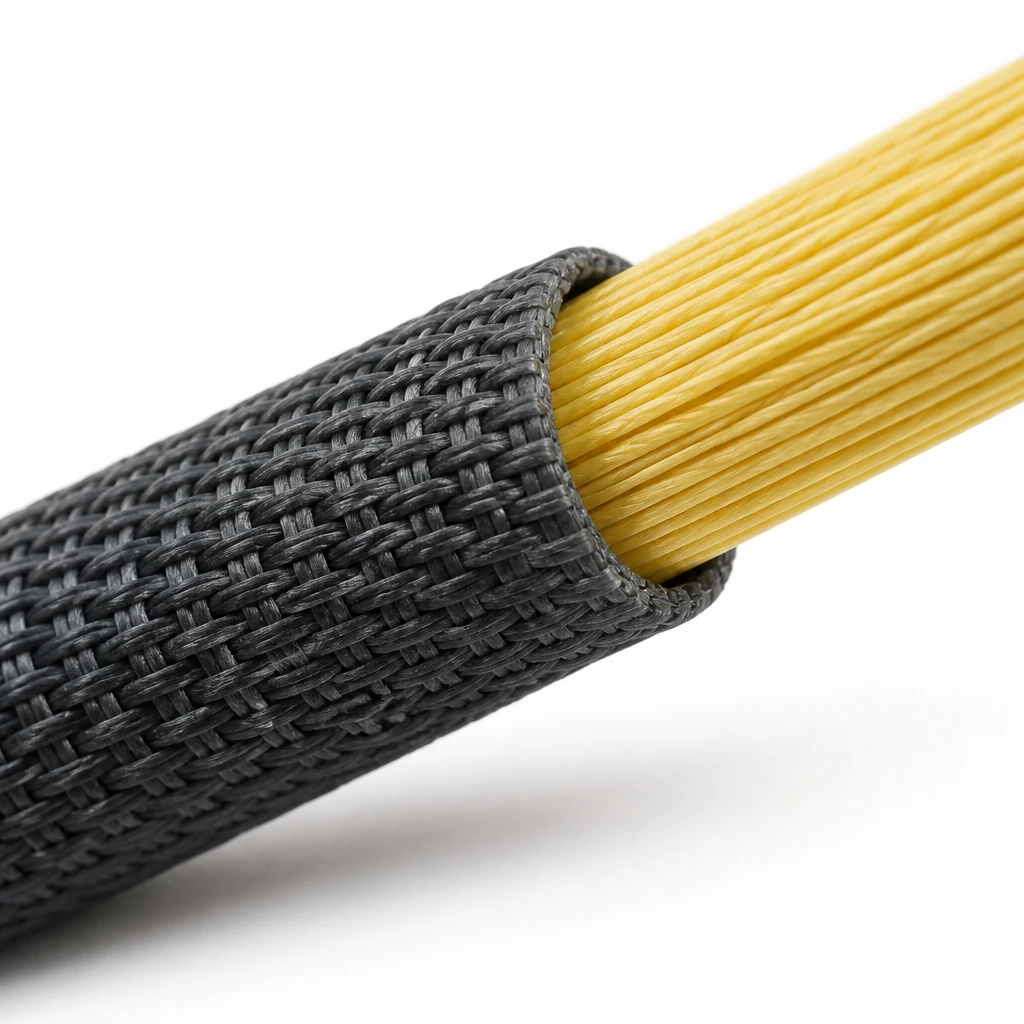
A cabestrillo redondo de alta temperatura is built the same way as any other round sling — a woven sleeve over a load-bearing core — and that construction turns out to be unusually well suited to hot work. Because the part that touches the hot load is a separate sleeve rather than the load path itself, you can put a heat-resistant sleeve over an ordinary core instead of building the whole sling out of an expensive heat-resistant fibre. When the sleeve burns through, you replace the sleeve, no el cabestrillo. And because sleeve and core both stand between the heat and the workpiece, the load is insulated from the heat as well. Poliéster, nylon and polypropylene webbing slings are ruled out above roughly 90 °C; this is the product for everything above that.
- Replaceable heat protection — the sleeve takes the damage, and the sleeve is the cheap part
- Mix the fibres — an ordinary core inside a heat-resistant sleeve is often the economical answer
- Insulates the load — the sleeve and core protect the workpiece, no solo el cabestrillo
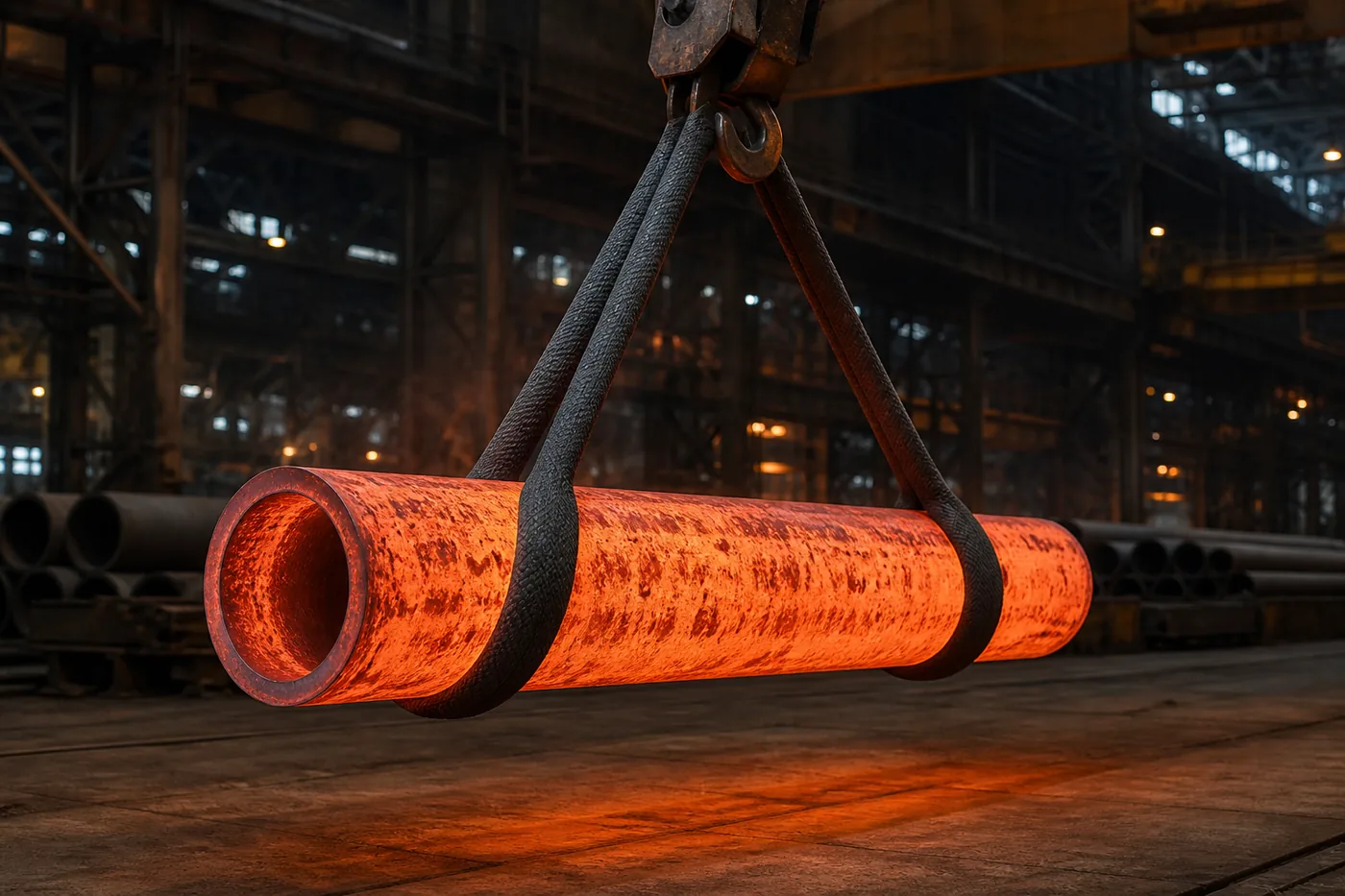
- Built for curved hot loads — rolls, tubería, dies and moulds that a flat band only touches along one line
The Replaceable Sleeve Is the Whole Point
On a flat webbing sling, la banda es la ruta de carga. Heat that damages the band damages the sling, and the only remedy is a new sling. On a round sling the load path is inside a sleeve, and the sleeve is designed to be the part that suffers.
That has three consequences, and together they are the reason this construction dominates hot work.
- You can put the expensive fibre only where the heat is. A heat-resistant sleeve over an ordinary load-bearing core does most of the job of a fully heat-resistant sling, at a fraction of the cost. The core never sees the temperature the sleeve does.
- You replace a sleeve, not a sling. A burnt-through sleeve is a consumable. Taking the sling out of service because of its cover is an expensive way to run a hot shop — and it is what you are forced into with a flat band.
- The load is insulated too. Sleeve and core both stand between the hot surface and the workpiece, so the cargo is not marked or heat-affected. On a flat band, the workpiece takes the contact.
Construction Ladder: Core and Sleeve Combinations
This is the practical advantage of a round sling in heat service. Because core and sleeve are separate parts, they can be different fibres — and the ladder below lets you buy only as much heat resistance as the job actually needs.
| Construcción | Load-bearing core | Manga | Typical working band | Why you would choose it |
|---|---|---|---|---|
| Standard round sling | Poliéster | Poliéster | Up to ~90 °C | The ordinary sling. No derating, and no reason to pay for heat protection. |
| Ordinary core, heat sleeve | Poliéster | Aramid or glass | ~90–150 °C | The most economical step up: you buy a heat-resistant sleeve, not a heat-resistant core. |
| Full high-temperature | aramida | aramida | ~150–200 °C | Both parts rated, so the core is protected even if the sleeve is worn thin. |
| Hot core, hottest sleeve | aramida | Glass fibre | ~200–400 °C, short exposure | The sleeve takes the worst of it and is replaced sooner; the core stays serviceable. |
| Specialist construction | Glass or basalt | Glass or basalt | Arriba 400 °C | Beyond the scope of this page — ask us, and we will specify it or say that it cannot be done. |
Características clave
The Sleeve Is the Consumable
Heat damage and abrasion arrive at the sleeve, which is a separate woven part. It is designed to be replaced, and replacing it is far cheaper than replacing the sling.
Core and Sleeve Can Differ
An ordinary core inside a heat-resistant sleeve does most of the work of a fully heat-resistant sling. You buy heat resistance only where the heat actually arrives.
Insulates the Workpiece
The sleeve and the core both stand between the hot surface and the load, so the cargo is not marked or heat-affected the way it would be by chain or a bare wire sling.
Conforms to Curved Loads
A round sleeve settles into the curve of a roll, tubo, die or truss tube, spreading the bearing pressure. A flat band touches a round load along a single line.
Carries High Capacity Comfortably
The parallel core of a round sling handles heavy loads without going wide and unwieldy — useful where the hot lift is also a big one.
Suave contra la carga
No hooks, thimbles or shackles in the sling itself, and a woven surface that will not bruise a machined, polished or coated hot component.
Why a Round Sling for a Hot Lift
Both forms carry aramid, so the difference is not the fibre — it is where the protection sits and what you have to replace when the heat wins.
| Propiedad | Eslinga redonda de alta temperatura | Eslinga de cincha para alta temperatura |
|---|---|---|
| Dónde se encuentra la protección térmica | In a separate, replaceable sleeve | In the load path itself |
| Lo que reemplazas después de una quemadura | A sleeve | la honda |
| Fibra de núcleo y manga | Can be different — a cheaper core with a heat-resistant sleeve | Must all be the one fibre |
| Transferencia de calor a la carga. | Inferior: tanto el manguito como el núcleo aíslan la pieza de trabajo | Contacto directo de banda |
| Curved hot surface | Settles into the curve | Touches along a single line |
| High capacity | Carried comfortably by a parallel core | The band becomes wide and heavy |
| Inspección del recorrido de carga. | Núcleo oculto dentro de la manga. | Ruta de carga completa visible |
Límite de carga de trabajo, Código de color y configuración
Una eslinga redonda no tiene una capacidad única, tiene una capacidad por configuración. La cifra en la etiqueta es la vertical límite de carga de trabajo, y cualquier otro arreglo se deriva de él por un factor de moda.
| WLL (vertical) | EN 1492-2 color | ahogado (× 0.8) | Cesta 0–7° (× 2.0) | Cesta 7–45° (× 1.4) | Cesta 45–60° (× 1.0) |
|---|---|---|---|---|---|
| 1 t | Púrpura | 0.8 t | 2.0 t | 1.4 t | 1.0 t |
| 2 t | Verde | 1.6 t | 4.0 t | 2.8 t | 2.0 t |
| 3 t | Amarillo | 2.4 t | 6.0 t | 4.2 t | 3.0 t |
| 4 t | Gris | 3.2 t | 8.0 t | 5.6 t | 4.0 t |
| 5 t | Rojo | 4.0 t | 10.0 t | 7.0 t | 5.0 t |
| 6 t | Marrón | 4.8 t | 12.0 t | 8.4 t | 6.0 t |
| 8 t | Azul | 6.4 t | 16.0 t | 11.2 t | 8.0 t |
| 10 t | Naranja | 8.0 t | 20.0 t | 14.0 t | 10.0 t |
| 12 t | Naranja | 9.6 t | 24.0 t | 16.8 t | 12.0 t |
El código de color va desde 1 t a 10 t, con 12 Tambien naranja. Arriba 12 t el color ya no identifica el arnés, por lo tanto, el límite de carga de trabajo impreso en la etiqueta cosida es la cifra que rige; léala, no leas el color. Note also that a heat-resistant sleeve is often supplied in its own working colour rather than the capacity colour, in which case the label is the only marking that counts.
Especificaciones técnicas
| Nombre del producto | Eslinga redonda de alta temperatura / cabestrillo redondo resistente al calor / high heat round sling / fireproof round sling |
|---|---|
| Construcción | Continuous parallel core enclosed in a woven tubular sleeve, cerrado en un bucle sin fin |
| Load-bearing core | High-tenacity polyester as standard; aramida (Clase Kevlar) and other high-temperature cores on request |
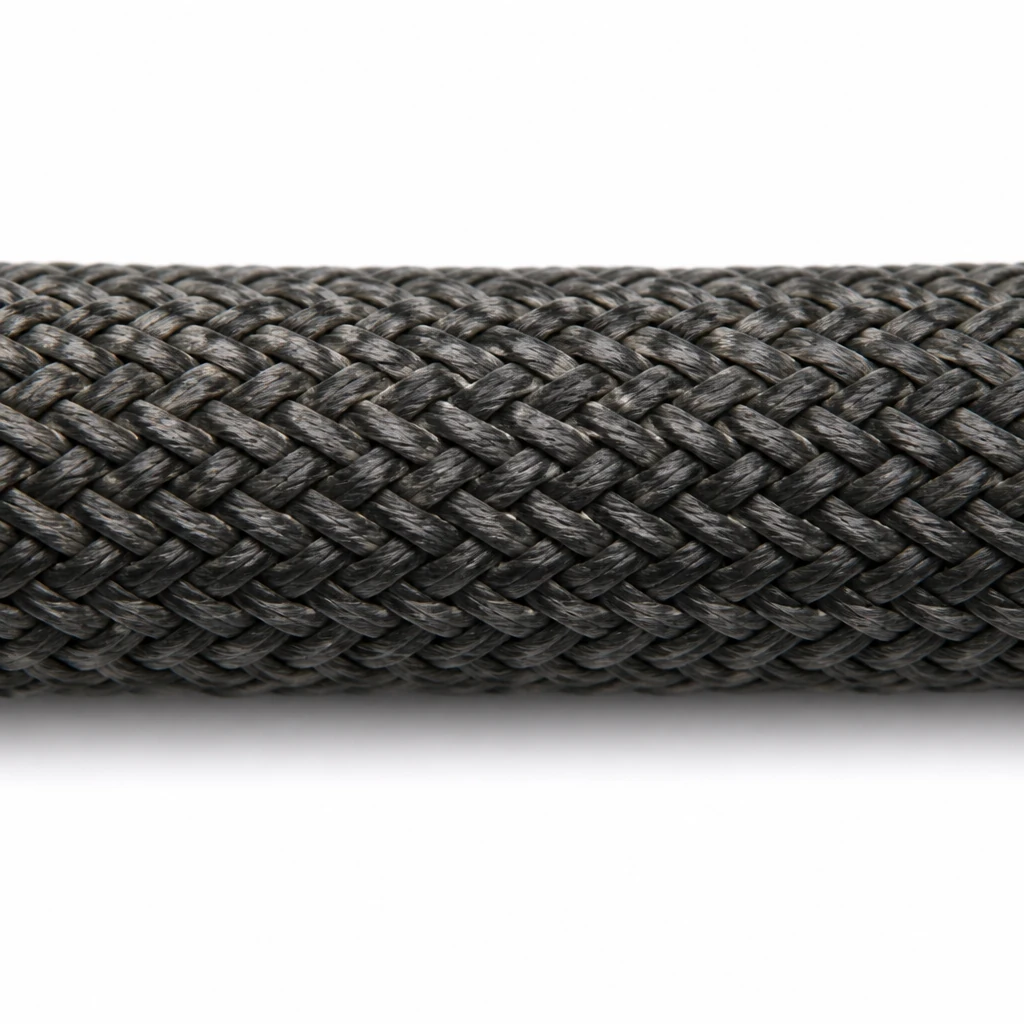
| Manga | Woven heat-resistant sleeve — aramid, glass fibre or coated, capa simple o doble, selected against the temperature and the surface it will touch |
| Límite de carga de trabajo | 1 t a 100 t, en los pasos estándar 1 · 2 · 3 · 4 · 5 · 6 · 8 · 10 · 12 · 15 · 20 · 25 · 30 · 40 · 50 · 100 t |
| Factor de seguridad | EN 1492-2 la practica es 7:1; Otros factores producidos bajo pedido cuando su mercado los requiera. |
| Longitud de trabajo efectiva | 0.5 metro a 20 m como estándar; más tiempo para ordenar |
| Temperature capability | Set by the core and sleeve combination — see the construction ladder above. Tell us the job and we will state the figure for your construction |
| Transferencia de calor a la carga. | Bajo: tanto el manguito como el núcleo se encuentran entre la superficie caliente y la pieza de trabajo. |
| Sleeve replacement | Sleeves are supplied as separate items so a burnt or worn sleeve can be replaced without replacing the sling |
| Calificación | Etiqueta cosida con límite de carga de trabajo., longitud y lote; marca de manga impresa opcional |
| Embalaje | Enrolle en una bolsa de polietileno o bolsa de transporte., cartón etiquetado, embalaje de exportación personalizado |
| Cantidad mínima de pedido & OEM | MOQ bajo para pedidos de prueba; OEM completo: capacidad, longitud, core and sleeve fibre, color de la manga, diseño y embalaje de etiquetas |
Manejo, Inspección y limitaciones
La manga es una parte de trabajo., no es una portada. On a hot job it is expected to discolour, stiffen and eventually fail — and the whole point of this construction is that you notice the sleeve failing instead of the sling.
- Inspect the sleeve after every hot lift, not just at the start of the shift — look for scorching, acristalamiento, a stiffened or brittle feel, parches desgastados, and any place the core is showing.
- Replace the sleeve when it has done its job — a burnt-through, hardened or holed sleeve has finished its service. It is a consumable item and the sling behind it may be perfectly good.
- Inspect the core before you reuse the sling — slide the sleeve back over a working length, or remove it, and look at the core directly before putting the sling back into hot service.
- Note the colour of the core — a dull, brownish or discoloured core has been overheated, and no sleeve replacement will recover it.
- No arrastre una eslinga cargada — friction heat builds quickly and it damages the sleeve from the outside in, donde no puedes verlo comenzar.
- Protéjalo de los bordes afilados — a hot sheared edge will cut a sleeve as readily as a cold one. Use an edge protector.
- Grabarlo — log the hot lifts, the temperature seen and the date each sleeve was fitted. Replacing sleeves on a schedule you can see beats discovering a failure on the shop floor.
Aplicaciones
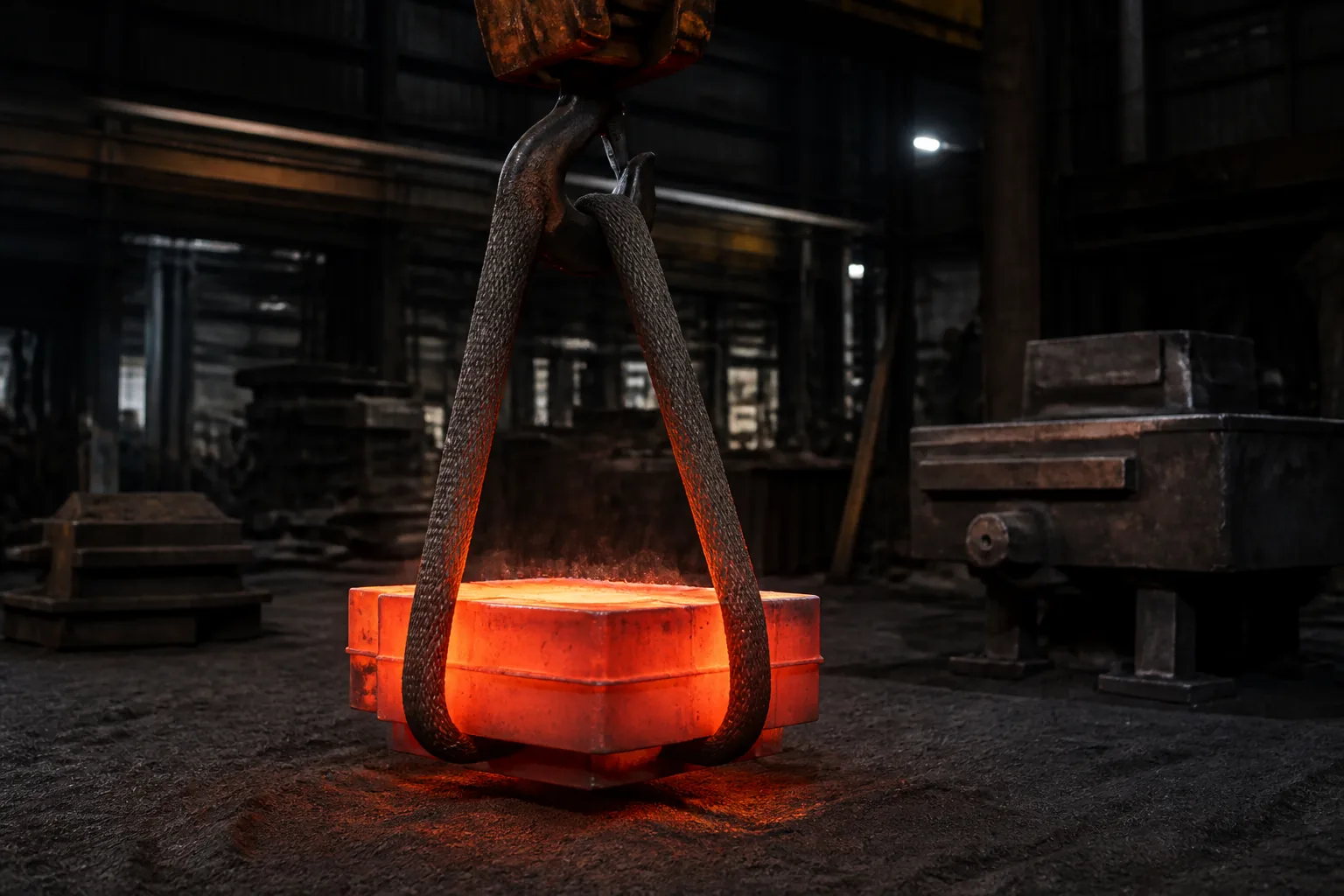
- panecillos calientes, billets, blooms and bars in rolling mills and forge shops
- Seamless and welded pipe mills, donde una manga redonda se asienta en la curva de una tubería caliente
- Foundry and die casting work — moulds, dies and castings handled while still hot
- Vidrios y hornos, where a hot iron mould or article must be moved without marking it
- Hot steel plate, slabs and coils where a replaceable sleeve is preferable to an expensive sling
- Aluminium smelting and any operation where the ambient temperature alone rules out ordinary sling sleeves
- Any hot lift where the alternative would be to scrap a whole sling every time the cover is burnt
Personalización y servicio OEM
A high temperature round sling is specified around the job, because the temperature, the exposure time and the shape of the hot surface are all part of the answer. Tell us what the sleeve will touch and for how long, and we will pair the core and the sleeve to suit.
- Capacidad — 1 t a 100 t, incluyendo pasos intermedios entre los tamaños estándar
- Centro — poliéster de serie; aramid and other high-temperature cores on request
- Manga — aramid, glass or coated, capa simple o doble, positioned to cover exactly the section that meets the hot load
- Mangas de repuesto — supplied separately so a burnt sleeve can be replaced on site without replacing the sling
- Longitud y marcado — longitud de trabajo efectiva bajo pedido; el diseño de tu etiqueta, convención de lenguaje y marcado
- Artículos relacionados — matching heat resistant webbing slings, aramid round slings and aramid rope for the same hot job
Control de calidad
Se comprueba el número de filamentos de cada núcleo., Colocar y colorear antes de cerrar la manga., every sleeve is checked against the section it has to protect, y cada eslinga terminada se verifica en su marca de límite de carga de trabajo, su longitud total, su integridad de la funda y su etiqueta antes del embalaje. Hemos fabricado eslingas, Productos de correas y cuerdas para uso industrial., clientes de seguridad y exportación durante casi tres décadas, y mantenemos el proceso visible: A petición suministramos el certificado de fibra., las cifras de prueba del lote y una eslinga de muestra para que usted pueda manipularla y probarla antes de que comience la producción en volumen.
Preguntas frecuentes
Why can’t I just use a standard round sling on a hot load?
Because polyester and nylon sleeves begin to lose strength long before they melt. Standard round slings are limited to roughly 90 °C — well under the fibre’s melting point — and by the time the sleeve looks damaged it has usually already lost a substantial part of its strength. That is why hot work needs a construction that is rated for it.
What is the advantage of a round sling over a webbing sling in heat?
The heat protection is a separate part. On a round sling the sleeve takes the heat and can be replaced on its own, while the load-bearing core behind it stays serviceable. On a webbing sling the band is the load path, so heat damage to the band means the sling is finished. A round sling also lets you use a cheaper core behind an expensive heat-resistant sleeve, and it insulates the workpiece as well as itself.
Can the core and the sleeve be different materials?
Yes — and that is often the economical answer. An ordinary polyester core inside a heat-resistant sleeve covers the 90–150 °C band that most hot work actually falls into, without paying for a heat-resistant core as well. As the temperature rises the ladder moves through aramid cores, aramid sleeves and glass sleeves; we will pair them for your job.
How often does a heat-resistant sleeve need replacing?
Bajo condición, not on a calendar. A sleeve is finished when it is scorched through, curtido, holed or worn through to the core. In a hot shop that can be often, which is exactly why the sleeve is supplied as a separate item: replacing a sleeve costs a fraction of replacing the sling. Inspect after every hot lift.
¿Cuánto puede levantar en un estrangulador o en una canasta??
La etiqueta indica el límite de carga de trabajo vertical.. Un estrangulador lo reduce a 0.8 veces esa cifra; una canasta en un ángulo estrecho lo aumenta a 2 veces, cayendo a 1.4 tiempos entre 7 y 45 grados y hasta 1 tiempos entre 45 y 60 grados. La configuración que usted realmente monta es aquella cuya figura se aplica.
Are spare sleeves and custom capacities available?
Sí. Construimos desde 1 t a 100 t incluyendo pasos intermedios, a cualquier longitud de trabajo efectiva desde 0.5 estoy arriba, with the core and sleeve paired to your temperature and load, and we supply replacement sleeves separately so a burnt cover does not take a sling out of service. Indíquenos el marcado o certificación que requiere su mercado y le confirmaremos lo que se puede proporcionar antes de realizar el pedido..
Request a Quote for High Temperature Round Slings
Envíanos el límite de carga de trabajo., the temperature the sleeve will actually see, whether it is radiant or contact heat, how long each exposure lasts, and the shape of the hot surface. We will come back with a core and sleeve combination, a spare-sleeve plan and a factory-direct price.