

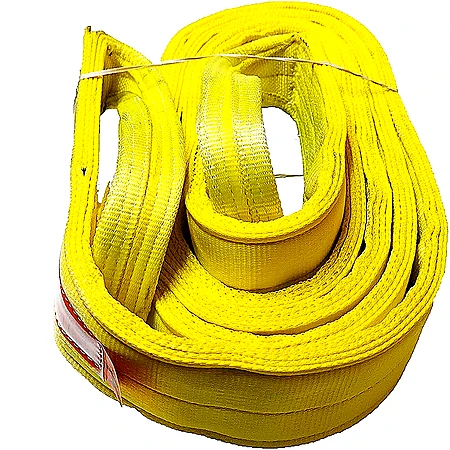
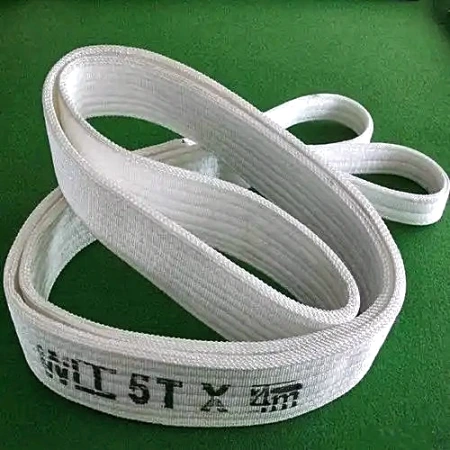
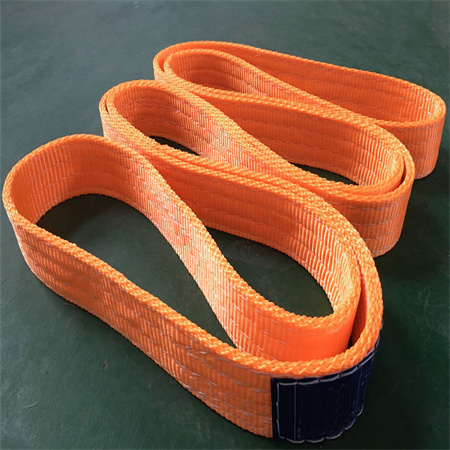
Lift sling rigging company produce Multi-ply webbing sling,duplex webbing sling,duplex endless webbing sling,multi-ply endless flat web sling,Multi-ply endless webbing sling,Flat Multiply Webbing Sling,Multi – Ply Lifting Sling,Multi-Layer Weaving Lift Sling Strap,Multi-ply polyester web sling.
Multi-ply Webbing Sling
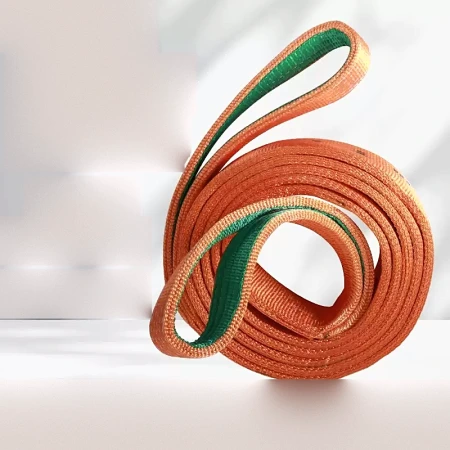
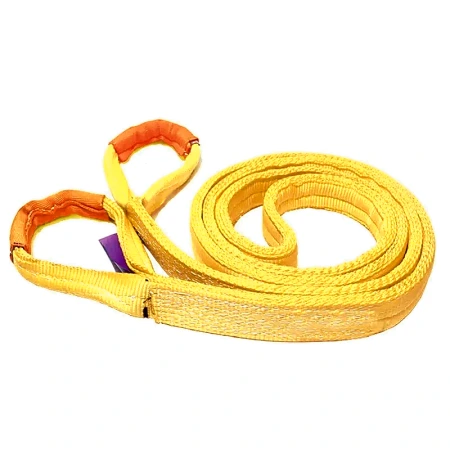
A multi-ply webbing sling is two, three or four layers of high-tenacity polyester webbing sewn into one load-bearing band. The plies are stacked and stitched through, so the cross-section that carries the load is the width multiplied by the number of plies – which is why a шматслаёвы sling reaches in 100 мм what a single layer needs 240 мм to reach. Standard build: 2, 3 або 4 курсіраваць, 100-300 мм wide, 8 т да 48 t per leg in the vertical mode at a 7:1 фактар, elongation of 7 % or less на мяжы працоўнай нагрузкі, rated to У 1492-1 and made to order in any length from 1 м да 100 м.
Што “Multi-Ply” Actually Adds
Capacity in a flat sling is set by the cross-section of load-bearing yarn, and the cross-section is width x plies. There are only two ways to buy a figure: go wider, or go deeper. Going deeper is what this page is about.
- More capacity in the same width. А 100 mm band in two plies carries 8 т за нагу; тое самае 100 mm in one ply does not, and no amount of care will make it.
- An outer layer that is not the load path. The outer ply meets the hook, the shackle and the edge of the load. The inner plies carry the tension. A scuff that would have been a cut into a single band lands on a layer that is not doing the holding.
- A softer body for the same figure. A narrow multi-ply band rolls and folds more easily than a very wide single layer, which matters at the eye and in a tight choke.
- A visible record of abuse. Because the plies are separate layers, damage shows up at the surface before it reaches the middle. That is a margin for inspection, not a licence to keep lifting.
Specifications
| Параметр | Параметры |
|---|---|
| Прадукт | Multi-ply webbing sling / дуплекс, triplex or quadplex flat web sling |
| Будаваць | 2-курсіраваць (дуплекс) · 3-ply (трыплекс) · 4-ply (квадраплекс); аднаслаёвы па запыце |
| Абалоніна | 100 % поліэстэр высокай трываласці (ПЭТ); нейлонавая стужка па запыце |
| Шырыня стужкі | 100 / 150 / 200 / 240 / 300 mm in the multi-ply range (25-300 mm across the full range) |
| Таўшчыня стужкі | 1.8 мм – 6.0 мм, depending on width and ply |
| Ліміт працоўнай нагрузкі | 8 t – 48 т за нагу, вертыкальны рэжым |
| Каэфіцыент бяспекі | 7:1 standard to EN 1492-1; 5:1 і 6:1 па запыце |
| Падаўжэнне пры WLL | 7 % or less |
| End form | Вока і вока (плоскі або вывернуты вачэй), or endless flat; eye length 150-1500 мм |
| Даўжыня | 1 м – 100 м, зроблены на заказ; overall length and effective length both quoted |
| Працоўная тэмпература | -40 °C да +100 °C |
| Колер і маркіроўка | У 1492-1 colour by working load limit, або карыстацкі колер; WLL, даўжыня, mode and date printed into the webbing |
| Код HS | 630790 |
Capacity by Width and Ply
Two numbers set the figure: the width of the band and the number of plies. The table is one leg hanging vertically, гэта лічба, надрукаваная на слінгу. Every other arrangement multiplies it by the hitch factor further down.
| Шырыня стужкі | 2-курсіраваць | 3-курсіраваць | 4-курсіраваць | Тыповы абавязак |
|---|---|---|---|---|
| 100 мм | 8 t | 12 t | 16 t | Сталёвыя вузлы, бетонныя элементы, дэталі машын |
| 150 мм | 12 t | 18 t | 24 t | Long fabrications, трубы і трубныя пучкі |
| 200 мм | 16 t | 24 t | 32 t | Цяжкая вырабленая сталь, адліўкі, moulds |
| 240 мм | 20 t | 30 t | 40 t | Large weldments, верф і партовая пошліна |
| 300 мм | 24 t | 36 t | 48 t | Heaviest standard range, heavy plant |
Вышэй 48 t per leg the sling is built to order. The 5:1 і 6:1 builds reach the same working load limit at a narrower width or one ply less; the figure that applies is always the one on the label, so state the factor on the enquiry and it is confirmed on the drawing.
Narrow and Deep, Against Wide and Thin
This is the decision the ply count really makes, and it is worth putting in numbers rather than adjectives. Take the same 8 т за нагу:
| Будаваць | Шырыня | What you gain | What you pay |
|---|---|---|---|
| 2-ply multi-ply | 100 мм | Narrow band: fits a tight choke, a small eye, a confined lift point; less bulk at the shackle | Higher bearing pressure on the load – a soft or finished surface is marked sooner than under a wide band |
| Single ply | 240 мм | Wide contact: pressure spread over more of the surface, gentler on soft and coated loads | A stiff, bulky band; a large eye; awkward where the lift point is narrow |
Neither is better. They are the same tonnage in two shapes, and the shape has to match the load: a narrow multi-ply band where the lift point is tight or the band will be knocked about, a wide band where the surface is what matters. The single-ply figures are published on the single ply eye-eye webbing sling старонка, so the two can be read side by side.
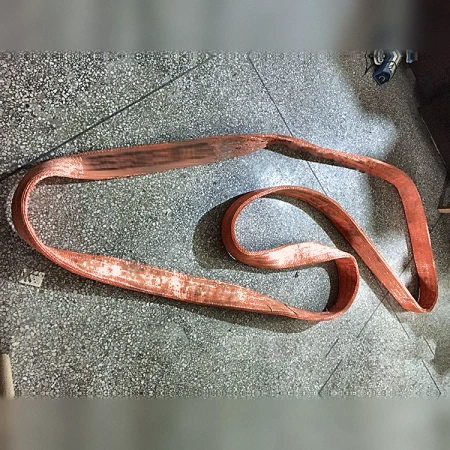
Impact, Краі, and the Life of the Band
A sling rarely dies of overload. It dies of what happens to it between lifts: the band dropped on a corner, dragged over grit, pinched between the load and the floor, swung into the edge of a steel plate. That is where the ply count pays for itself, and it is worth being precise about how.
- The impact lands on the outside. A blow that nicks or glazes the outer ply has not yet reached the yarn that is carrying the tension. On a single layer, that same blow is a defect in the load path.
- The layers spread the contact. Several sewn layers behave like a slightly padded body: the bearing pressure at an edge is shared and the weave is less likely to be cut through in one contact.
- The stitching stops a tear travelling. The bond between plies interrupts a running rip, which is how a woven band usually fails once it is cut – along the weave, quickly.
- It buys inspection time, not immunity. A multi-ply webbing sling is not cut-proof, and the ply count is no substitute for a sleeve. A sharp edge still needs a protective sleeve, and a damaged outer ply still retires the sling under EN 1492-1 – the extra layer gives you a margin to notice, not a reason to keep going.
Service life follows the same logic. A multi-ply band carries the same load over a thicker cross-section, so each layer works further from its limit, and the outer layer absorbs the abrasion that would otherwise thin the only layer there is. In repetitive duty – a press shop, a precast yard, a port – that difference is measured in replacements per year rather than in tonnage.
Choosing the Build: Four Questions
| Step | Question | What it settles |
|---|---|---|
| 1 | What is the working load per leg, in the hitch you will really use? | The figure to buy. А 20 t load in a choke needs a 24 т дыяпазон (20 / 0.8), не а 20 t one |
| 2 | How wide can the band be at the lift point? | Whether the capacity is bought with width or with plies |
| 3 | What does the band meet – finished surface, raw edge, пясчынка, цяпло? | Рукаў, wear pad, or a different fibre altogether |
| 4 | How often, and by whom? | Ply count. Repetitive duty with rough handling justifies 4-ply; occasional clean lifts do not |
Hitch Factors: the Label Is One Number
The figure on the sling describes a vertical lift. Everything else is that figure multiplied by the factor for the arrangement, and on a multi-ply sling the choke is the one most often missed – because a thick band takes a choke so readily.
| Рэжым | Фактар | А 16 t 4-ply sling gives |
|---|---|---|
| Вертыкальны | 1.0 | 16 t |
| Захлынуўся | 0.8 | 12.8 t |
| Кошык, 0-45° | 2.0 | 32 t |
| Кошык, 45-60° | 1.4 | 22.4 t |
| Дзве нагі, 0-45° | 1.4 | per assembly |
| Дзве нагі, 45-60° | 1.0 | per assembly |
Разметка, Length and What Else to Send
Every sling carries its working load limit, даўжыня, mode and date printed into the webbing and repeated on a sewn label – printed into the band rather than onto a tag, so the figure is still legible after a year on site. Length is quoted two ways and both are legitimate: у overall length from eye tip to eye tip, і эфектыўная даўжыня from bearing point to bearing point. State which one you mean; more slings come back for a length misunderstanding than for any other reason.
Адправіць груз, the working load limit per hitch, размяшчэнне, the width the lift point allows, the fittings the eyes must pass, and the surface the band must not mark. A multi-ply webbing sling is quoted from those six answers, not from a stock list, and the width, пласт, the eye reinforcement and the protection come back on a drawing before anything is woven.
Часта задаюць пытанні
What is a multi-ply webbing sling?
Два, three or four layers of high-tenacity polyester webbing stacked and sewn into a single band. Each layer adds to the cross-section that carries the load, so a multi-ply sling reaches a given working load limit at a narrower width than a single-ply sling would need.
Does more plies always mean more capacity?
At the same width, так – the figures run 8 / 12 / 16 t for 100 mm in 2, 3 і 4 курсіраваць. What it does not mean is that you can pick a ply count by eye: the working load limit printed on the label, adjusted by the hitch factor, is the only figure that applies to a lift.
Is a multi-ply sling stronger than a wider single-ply one?
Not stronger – the same figure in a different shape. Ан 8 t load can be carried by a 100 mm two-ply band or a 240 mm single-ply band at a 7:1 фактар. The two-ply is narrower and easier in a tight lift point; the single ply spreads the pressure over a wider face. Choose by what the load needs.
Will a multi-ply sling protect itself from being knocked or cut?
It gives you an outer layer that is not carrying the load, so an impact or a scuff shows up on the surface before it reaches the load path, and the sewn plies slow a tear that starts at an edge. That is a margin, not immunity: a sharp edge still needs a sleeve, and a damaged outer ply still retires the sling.
2-курсіраваць, 3-ply or 4-ply – which should I order?
Read the width you have room for, then take the ply count that reaches the figure you need. If the figure is already met at 2-ply, order 4-ply only for repetitive duty or rough handling, where the outer layers are doing real work.
What safety factor and elongation does a multi-ply sling have?
7:1 as standard to EN 1492-1, з 5:1 і 6:1 па запыце, and elongation of 7 % або менш пры мяжы працоўнай нагрузкі. A different factor is a different article – the same tonnage at 6:1 is narrower – so the factor belongs on the enquiry, not in a footnote.
Can a multi-ply sling be printed with our own reference?
так. Ліміт працоўнай нагрузкі, the length and your own part or asset number can be printed into the webbing as a production instruction, in the exact string and case you send, alongside the standard marking.
Request a Quotation
Send your multi-ply sling specification for a quotation
Telephone / WeChat: +86 180 6600 2268 | Электронная пошта: 702461526@qq.com
Адрас: Індустрыяльны парк Ліфутэ, Горад Тайчжоу, Правінцыя Цзянсу, Кітай | Код HS: 630790