

Lift sling rigging company produce Double Ply Endless Lifting Sling,3 Ply Endless Nylon Flat Sling,2 Ply Polyester Endless Lifting Sling,Double Ply Endless Nylon Lifting Sling,2-Ply Endless Type Web Sling,2 ply Endless Polyester sling,2-Ply Endless Type Web Sling,2-Ply Endless Lifting Web Sling,2 Ply Endless Polyester Web Sling,3-Ply Endless Polyester Lifting Sling,Three Ply Endless Nylon Sling,,4 Ply Endless sling,4 Ply Endless Polyester Lifting Sling,4 ply Endless Nylon Lifting Sling,Double Ply Endless Webbing Sling,Three Ply Endless Webbing Sling,Four Ply Endless Webbing Sling.
Endless lifting sling · duplex and multi-ply · 2, 3 һәм 4 layer
Double Ply Endless Lifting Sling
Two layers in the one band: more capacity at the same width, a thicker and more forgiving bearing face, and abrasion reserve behind the first layer. 1 т тиклем 30 т ат 7:1 ике БЕР 1492-1, with 3-ply and 4-ply built to order.
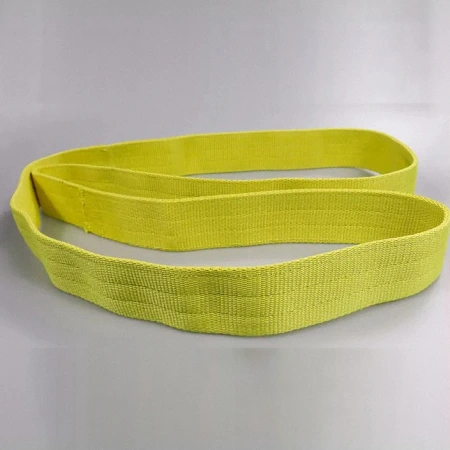
Ике, three and four ply: what the number changes
Ply is the number of layers woven into the one band the loop is made from — not two slings, and not two bands side by side. Each layer added does three things at once, and the third is the one buyers ask about least and notice most:
- It thickens the section. The band becomes a deeper, stiffer beam in cross-section, which is why it lies down on the load instead of draping over it.
- It adds capacity at the same width. That is the whole reason duplex exists above the single-ply ladder — the published range runs to 30 т, һәм юғары 10 t the ladder itself specifies duplex.
- It adds cushioning. The extra layers sit between the load and the load-bearing core of the band: contact pressure spreads over a thicker, more compliant stack, and an edge has more material to work through before it reaches anything structural. That is why 3-ply and 4-ply are asked for on precast, machined and coated surfaces rather than on plain steel.
The four builds, side by side
The comparison below is qualitative on purpose: this site publishes capacities and widths for the single-ply and duplex ladders, and builds 3-ply and 4-ply to order. Ҡалынлығы, weight and working load limit for those two are therefore confirmed against the order, not taken from a table on a web page.
| Бер ҡатлы | Ике ҡатлы (дуплекс) | 3-ҡатлам | 4-ҡатлам | |
|---|---|---|---|---|
| Layers in the band | Бер | Ике | Өс | Дүрт |
| Бүлек | Thinnest in the range | Roughly twice the single-ply section | Thicker again | Thickest build we make |
| Capacity at the same width | Published ladder | Higher — the reason duplex exists above the single-ply range | Built to order | Built to order |
| Cushioning on the load | Төп һыҙыҡ | Noticeably more compliant stack | More again | The most forgiving face |
| Ҡулланыу | Folds small, tight radius | Ҡатыраҡ, sits flat on the hook and the load | Stiffer again | Least supple; carried and stored flat |
| Where it is asked for | General yard work, tight gaps, бәләкәй диаметрлы | High capacity in a narrow width, rough edges, heavy abrasion | Йыйылма, machined and coated surfaces | Heaviest duty, maximum cushioning |
| Published data | Ladder on the single ply page | Ladder and ply column on this page | Confirmed on the acknowledgement | Confirmed on the acknowledgement |
Һыйымлыҡ: where the ply column turns over
Working load limits are straight lift at 7:1 ике БЕР 1492-1, with the ply column exactly as this site publishes it. Read it as an instruction, not a menu: йылдан 2 t upward either build will do, һәм юғары 10 t the ladder itself says duplex.
| ВЛЛ, тура күтәреү | Төҫ | Һылтанма киңлеге | Ҡатлам | Оҙонлоҡ диапазоны | Тығылған (× 0.8) |
|---|---|---|---|---|---|
| 1 т | Фиалка | Заказ буйынса раҫлау | Яңғыҙ | 0.5 – 100 м | 0.8 т |
| 2 т | Йәшел | 50 мм | Яңғыҙ / дуплекс | 1 – 100 м | 1.6 т |
| 3 т | Һары | 75 мм | Яңғыҙ / дуплекс | 1 – 100 м | 2.4 т |
| 4 т | Һоро | 100 мм | Яңғыҙ / дуплекс | 1.5 – 100 м | 3.2 т |
| 5 т | Ҡыҙыл | 125 мм | Яңғыҙ / дуплекс | 1.5 – 100 м | 4.0 т |
| 6 т | Көрән | 150 мм | Яңғыҙ / дуплекс | 1.5 – 100 м | 4.8 т |
| 8 т | Күк | 200 мм | Яңғыҙ / дуплекс | 2 – 100 м | 6.4 т |
| 10 т | Әфлисун | 250 мм | Яңғыҙ / дуплекс | 2 – 100 м | 8.0 т |
| Өҫтә 10 т | Төҫ коды юҡ | Заказ буйынса раҫлау | Дуплекс | Заказ бирергә | Ярлыҡ идара итә |
The range as a whole runs 1 т тиклем 30 т, 25 мм тиклем . 300 мм һәм киңерәк, finished loops 0.5 м тиклем . 100 м, сәғәттә 7:1 standard with 5:1, 6:1 һәм 8:1 заказ бирергә. Final width, ҡатлам һәм әҙер ауырлыҡ заказды раҫлауҙа раҫлана.
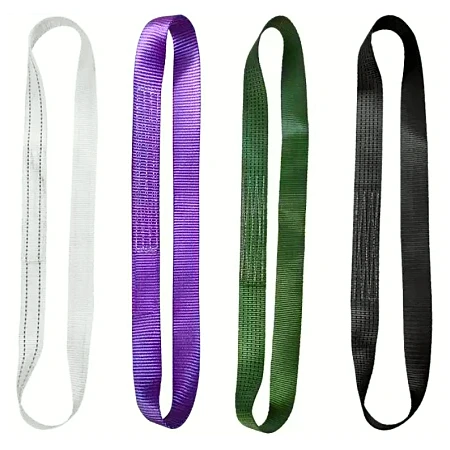
Where the second layer earns its keep
Duplex and the heavier plies are bought for four situations, and in each one a wider single band is either impossible or second best:
- The capacity does not fit the width. A narrow load or a small hook caps the band width; the ply is what is left to raise the figure.
- The edge is rough rather than sharp. Not a burr that will cut — the kind of edge that abrades. A doubled band has a second layer behind the first, so wear has further to go before the load path is compromised.
- The surface must not be bruised. Coated, буялған, machined or precast faces are where the extra thickness reads as extra cushioning: a thicker, more compliant stack over the same footprint.
- The band must sit flat. A duplex band is stiffer and lies down across a plate or a machined face instead of curling up at the edges, which keeps the contact full width.
Three and four ply, honestly
The 3-ply and 4-ply endless slings in this range are the same construction taken further: a third and a fourth layer in the band, a thicker section again, more capacity at a given width and a more forgiving face. They are built to order. We do not publish a web table for them because the figure depends on the weave, the fibre and the finished width, and a number on a page that has not been proof tested is worse than no number at all.
What we will do is quote them properly: tell us the load, ҡапҡас, the width you can live with and the surface you are protecting, and the ply, ҡалынлығы, weight and working load limit come back on the acknowledgement with the test certificate behind them.
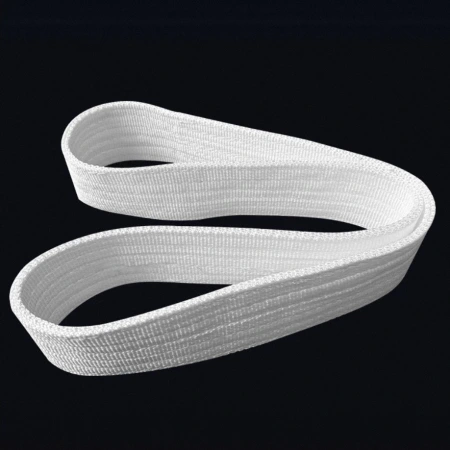
Бер быуын ., and it is thicker here
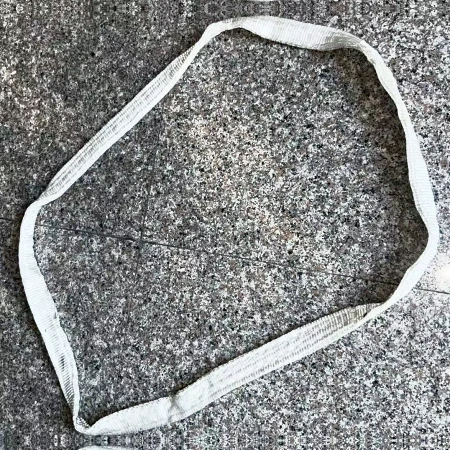
Бөтмәҫ-төкәнмәҫ рогатка ҡулланыуҙа бөтмәҫ-төкәнмәҫ, йөйһөҙ түгел. Таҫма үҙе өҫтөнә ҡапланған һәм тығыҙ параллель рәттәр менән ябылған тегеү, and that lap is the only made connection in the load path. On a multi-ply build the lap is thicker and the stitching passes through more layers, so inspect both faces: өҙөлгән йәки тартылған йөйҙәр, a lap starting to open, and abrasion where the lap crosses an edge.
Past the joint the loop is one continuous band, and on a duplex or 3-ply sling there is no sleeve hiding the core — every part of what is carrying the load is visible on the face. That is the practical difference from a round sling, where only the sleeve can be inspected.
Three hitches, same loop
The label figure is the straight-lift rating and every other arrangement is derived from it. Size to the hitch the crew will rig.
| Хитч | Режим коэффициенты | Был нимәне аңлата сайтында |
|---|---|---|
| Вертикаль | × 1.0 | Ярлыҡ һан туранан-тура ҡағыла |
| Тығылған | × 0.8 | А 4 т йөк дроссель кәрәк а 5 t sling — the wrap grips as the load comes on |
| Кәрзин, аяҡтары вертикаль янында | × 2.0 | Both sides of the loop carry the load and the bearing face is doubled |
| Кәрзин, 7°–45° | × 1.4 | As the legs open the rating falls; plan the angle, ауырлығы ғына түгел |
| Кәрзин, 45°–60° | × 1.0 | At wide angles the basket advantage is gone |
Оҙонлоҡ: circumference or effective working length
Ябыҡ иллюминатор араһында үлсәү өсөн остары юҡ., so the trade quotes the same sling two ways and they differ by about a factor of two. Circumference is the perimeter of the loop; effective working length is the usable height you get, roughly half the circumference because the loop is doubled when it hangs.
| тип килтерелгән. | Ул нимә үлсәй | Шул уҡ рогатка тигеҙ . |
|---|---|---|
| Әйләнә | The perimeter of the loop — total band in the article | 2 м |
| Һөҙөмтәле эш ваҡыты | Ҡулланыу бейеклеге; the loop doubles when it hangs | 1 м |
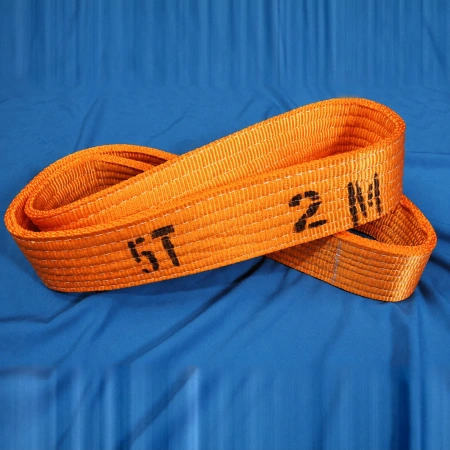
Сүс, colour and marking
The standard build is high-tenacity polyester (ПЭС): no more than 3% elongation at the working load limit and 10% өҙөлгән йөкләмәлә, so the hook height stays predictable, with a working range of −40 °C to +100 °C. Nylon takes the shock and abrasion duties, polypropylene the wet and the cheap, and UHMWPE and aramid the strength-to-weight and heat cases.
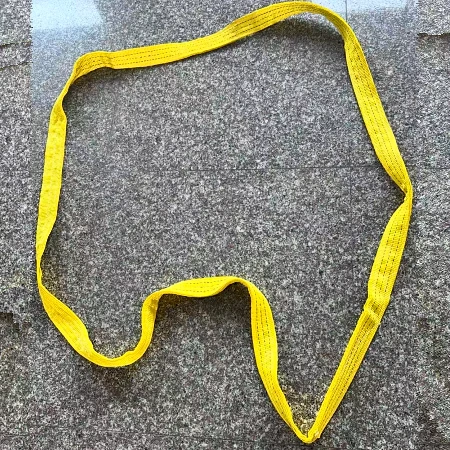
Colour follows EN 1492-1 and marks the capacity band, never the ply — violet 1 т, йәшел 2 т, һары 3 т, һоро 4 т, ҡыҙыл 5 т, көрән 6 т, күк 8 т, әфлисун 10 t — with one black transverse stripe per tonne as an optical second check. Өҫтә 10 t there is no colour code and the sewn label is the only rating: эш йөкләмәһе сиге, материал, стандартлы, оҙонлоғо һәм эҙләү коды.
Testing and paperwork
Every sling is proof tested on our own 1000 t machine before it leaves Taizhou, and the facilities hold CNAS, CE һәм DNV сертификацияһы, producing to EN 1492-1, ISO 4878 һәм Дж.Б./Т. 8521. Each order ships with a test certificate, the blue working load limit label and a packing list; HS коды 630790. Үҙ бренд ярлыҡтары, special weave colours and customer packing are available on OEM orders.
Йыш һоралған
What is the difference between double ply and duplex?
Nothing — they are the same build: two layers of webbing woven into the one band the loop is made from. This site uses duplex in its specification table and double ply in the product name, and both mean two layers.
Does double ply mean double the capacity?
Not literally. Two layers add substantial capacity at the same width, but the figure is set by the finished band and confirmed by proof test — it is not a doubling of the single-ply number. On the published ladder the practical reading is that duplex is what carries the range above 10 т, and what goes on a narrow band where a wide one will not fit.
Why do 3-ply and 4-ply have no table on this page?
Because the figure depends on the weave, the fibre and the finished width, and we would rather quote a combination that has been proof tested than publish a number that has not. Йөктө ебәрегеҙ, the hitch and the width, and the ply, ҡалынлығы, weight and working load limit come back on the acknowledgement with the certificate.
Is more ply really more cushioning?
Эйе, in the sense that matters on site: more layers mean a thicker, more compliant stack between the load and the load-bearing core of the band, so contact pressure spreads and an edge has more material to work through. That is why 3-ply and 4-ply are specified on precast, machined and coated surfaces rather than on plain structural steel.
Can a double ply sling be choked?
Эйе — вертикаль, choked and basket all come from the same loop. A stiffer band chokes less tightly than a supple one, so check that the wrap actually beds onto the load; the choked factor of 0.8 applies as it does to any sling.
Will it mark aluminium or painted steel?
Таҫма синтетик сүс һәм бер ниндәй ҙә монтаж йөк ҡағыла, тимәк, ул сылбыр йәки сымлы арҡан кеүек тырналмаясаҡ йәки ҡырҡылмаясаҡ. Width and ply are the two protection measures: a wider, thicker band spreads the same load over a larger, softer footprint.
Цитата һорау
Йөктө ебәрегеҙ, the hitch and the width you can live with
The load — what it is, its girth at the pick positions, and its surface;
The hitch — vertical, тығылған йәки кәрзин, and the leg angle if it is a basket;
The width limit — the narrowest band the hook and the load will accept;
The ply you are considering — duplex, 3-ҡатлы йәки 4 ҡатлы, and why;
The length — by circumference or effective working length;
Стандарт, destination market and marking, including own-brand labels.
Артабан ҡайҙа барырға .
- The endless lifting sling range — every closed form, compared by load;
- Single ply endless lifting sling һәм бер ҡатлы бөтмәҫ яҫы рогатка for the lighter build and its full size tables;
- Polyester endless flat strap sling for the fibre and specification detail;
- Heavy duty endless loop strap slings һәм яҫы күтәреү рогаткаһы for the widest, heaviest end of the range;
- Ҡорос торба күтәреү ҡайышы for pipe duty and бөтмәҫ-төкәнмәҫ түңәрәк ырғытҡыс for the sleeved alternative;
- Селтәрле рогаткалар in all builds, һәм contact.