



PRODUCT CATEGORY
CONTACT INFO
Contact:Mss Wang
Address: TaiZhou City, JiangSu Province, Lift District ,China
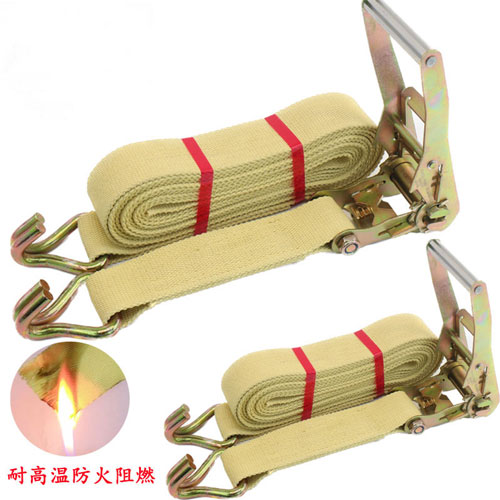
Lift Sling rigging factory produce Aramid lashing belt,flame retardant cargo strap,Heat Resistant Lashing Belt,Kevlar Cargo Lashing Belt
What is an Aramid Lashing Belt?
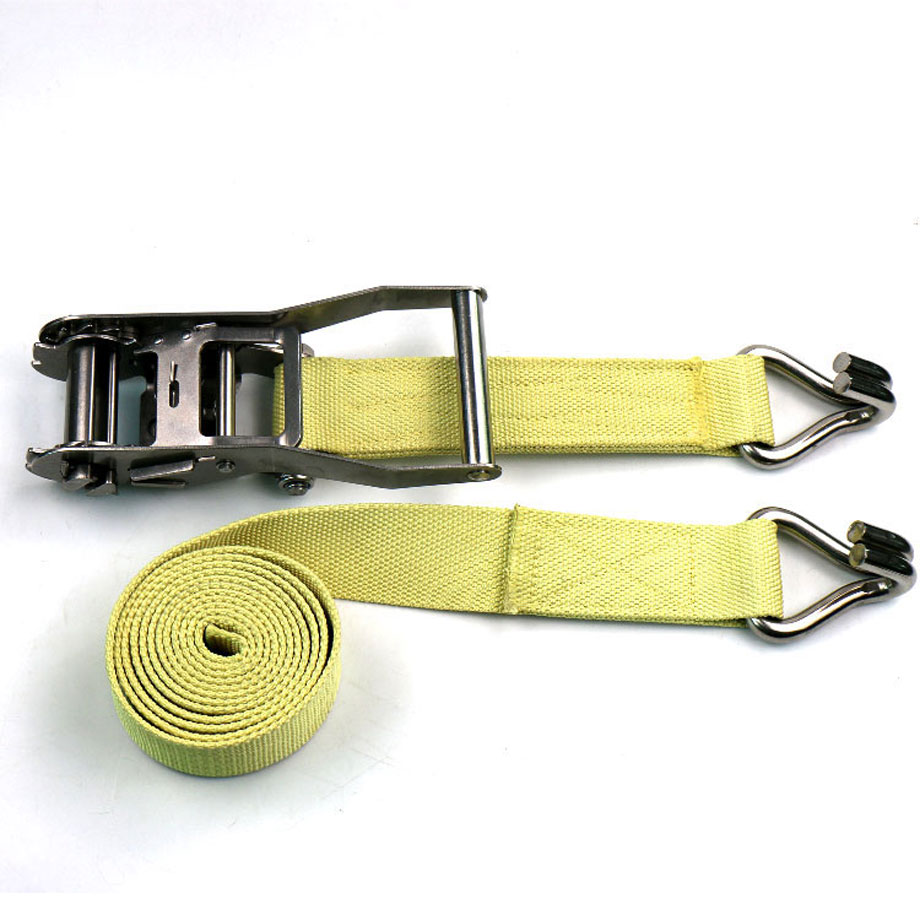
An Aramid lashing belt is a high-performance, heavy-duty securing strap made from aramid fibers—synthetic fibers known for their exceptional strength, heat resistance, and durability. These belts are specifically designed for cargo securing during transportation, ensuring that goods do not shift, fall, or become damaged during transit. The term "aramid" stands for "aromatic polyamide," referring to the chemical structure that gives these fibers their remarkable properties.
Aramid lashing belts are constructed with materials such as Kevlar (a well-known brand of aramid), and they offer superior performance compared to traditional nylon or polyester lashing belts. They typically feature convenient buckles or ratchet mechanisms for easy tightening and releasing, making them ideal for use in trucks, trailers, shipping containers, and warehouses.
Key Properties of Aramid Lashing Belts
1. Exceptional Strength-to-Weight Ratio
Aramid fibers offer an unbeatable combination of lightweight design and tensile strength. The tensile strength of para-aramid fibers can reach 2800–3000 MPa, which is approximately 5 times stronger than steel on a weight-for-weight basis. This means aramid lashing belts can secure heavy loads without adding significant weight to the transportation system.
2. Outstanding Heat and Flame Resistance
One of the most critical advantages of aramid lashing belts is their ability to withstand extreme temperatures810. Key thermal properties include:
• Continuous operating temperature: Up to 200°C
• Short-term heat resistance: Over 300°C, and even up to 500°C for specific grades
• Self-extinguishing: Aramid fibers do not melt or drip when exposed to flames; they self-extinguish within seconds after the ignition source is removed
• No combustible gas emission: Unlike nylon or polyester, aramid does not release flammable gases when burning
This makes aramid lashing belts ideal for high-risk environments such as firefighting, metallurgy, and aerospace applications.
3. Chemical Resistance and Durability
Aramid fibers exhibit excellent resistance to various chemicals, including oils, solvents, and acids. They also demonstrate:
• Abrasion resistance: Superior resistance to wear and tear, even when dragged across rough surfaces
• UV sensitivity: While aramid is sensitive to ultraviolet light, protective coatings can mitigate this issue
• Low elongation: Minimal stretch under load ensures precise and stable securing
4. Electrical Insulation Properties
Aramid lashing belts are excellent electrical insulators, with a resistivity of up to 10¹⁴ Ω·cm8. This makes them suitable for use in high-voltage electrical applications, such as cable bundling and power equipment securing, where safety is paramount.
Types of Aramid Lashing Belts
Based on the construction and application, aramid lashing belts can be categorized as follows:
| Type | Description | Key Features |
|---|---|---|
| Ratchet Lashing Belt | Features a ratchet mechanism for high-tension tightening | Maximum tension, easy operation, ideal for heavy loads |
| Cam Buckle Lashing Belt | Uses a cam buckle for quick tightening and release | Easy to use, suitable for medium-tension applications |
| Endless Loop Lashing Belt | Continuous loop strap without hooks or ratchets | Versatile, reusable, ideal for irregularly shaped loads |
| Multi-Layer Aramid Belt | Constructed with multiple layers for enhanced durability | Used in extreme conditions, such as aerospace fan casing containment |
Applications of Aramid Lashing Belts
Industrial Manufacturing
In manufacturing and mining, aramid lashing belts are used for securing heavy machinery, steel coils, and large equipment components during transportation. Their high strength and low elongation ensure that loads remain stable even during long-haul transportation.
Aerospace and Defense
In aerospace applications, aramid lashing belts play a critical role in securing components within aircraft engines and fuselages. For example, in soft-wall fan casing designs, multi-layer aramid fabric wraps are used to contain released blades during impact events, behaving like a "catcher's mitt". The belts can withstand extreme strains without fragmenting, ensuring full containment.
Firefighting and Emergency Services
Firefighters rely on aramid lashing belts for securing equipment and hoses in high-temperature environments. The belts maintain their structural integrity even when exposed to direct flames, making them a critical safety tool8.
Power and Electrical Utilities
In power plants and electrical substations, aramid lashing belts are used for cable management and equipment securing. Their electrical insulation properties prevent short circuits and ensure worker safety.
Automotive and Heavy-Duty Applications
Aramid V-belts, a specific type of aramid lashing belt, are widely used in automotive and lawn & garden equipment for power transmission. These belts offer superior durability and abrasion resistance compared to standard rubber belts.
Technical Specifications
Typical technical specifications for aramid lashing belts include:
Parameter | Typical Value |
Material | 100% Aramid (Kevlar®) or Aramid blend |
Tensile Strength | 2000–3000 N per 50mm width |
Operating Temperature | -196°C to 500°C (depending on grade) |
Elongation at Break | Approximately 3.5% (para-aramid) |
Width Options | 10mm to 50mm (common: 25mm, 45mm) |
Thickness | 1.2mm to 3.0mm |
Flame Resistance | Self-extinguishing within 3 seconds |
Certifications | UL 94 V-0, GB/T 5455, EN 1161 |
Advantages Over Conventional Materials
vs. Nylon Lashing Belts
• Higher heat resistance: Nylon melts at approximately 250°C, while aramid withstands over 500°C
• Better dimensional stability: Aramid exhibits lower elongation under load
• Superior flame resistance: Nylon burns and drips; aramid self-extinguishes
vs. Polyester Lashing Belts
• Greater tensile strength: Aramid is 3–5 times stronger than polyester
• Better chemical resistance: Aramid resists more types of chemicals
• Higher temperature tolerance: Polyester degrades above 150°C
vs. Steel Chains/Cables
• Lightweight: Aramid belts are significantly lighter, reducing overall load weight
• Flexibility: Easier to handle and store compared to rigid metal chains
• No corrosion: Aramid does not rust, making it ideal for marine or chemical environments
Selection Guide for Aramid Lashing Belts
When choosing an aramid lashing belt, consider the following factors:
1. Load Capacity: Select a belt with a breaking strength at least 2–3 times the expected working load
2. Temperature Environment: For high-temperature applications (above 200°C), choose belts rated for continuous high-temperature use
3. Width and Length: Common widths range from 25mm to 50mm; length depends on the application
4. Certification: Look for UL 94 V-0, EN 1161, or GB/T 5455 certifications for flame resistance
5. Edge Finish: Quality belts have smooth, finished edges to prevent fraying and extend service life
Conclusion
The Aramid lashing belt represents the pinnacle of cargo securing technology, combining unmatched strength, exceptional heat resistance, and superior durability in a lightweight, flexible package. Whether used in aerospace containment systems, industrial manufacturing, firefighting, or heavy-duty transportation, aramid lashing belts provide reliable performance under the most demanding conditions.
As industries continue to prioritize safety and efficiency, the adoption of aramid lashing belts is expected to grow significantly. By understanding their unique properties and appropriate applications, professionals can make informed decisions that enhance both operational safety and productivity.
Remember: In critical situations, a well-chosen aramid lashing belt can be the difference between safety and disaster. Always select certified products from reputable manufacturers and ensure proper usage according to the manufacturer's guidelines.